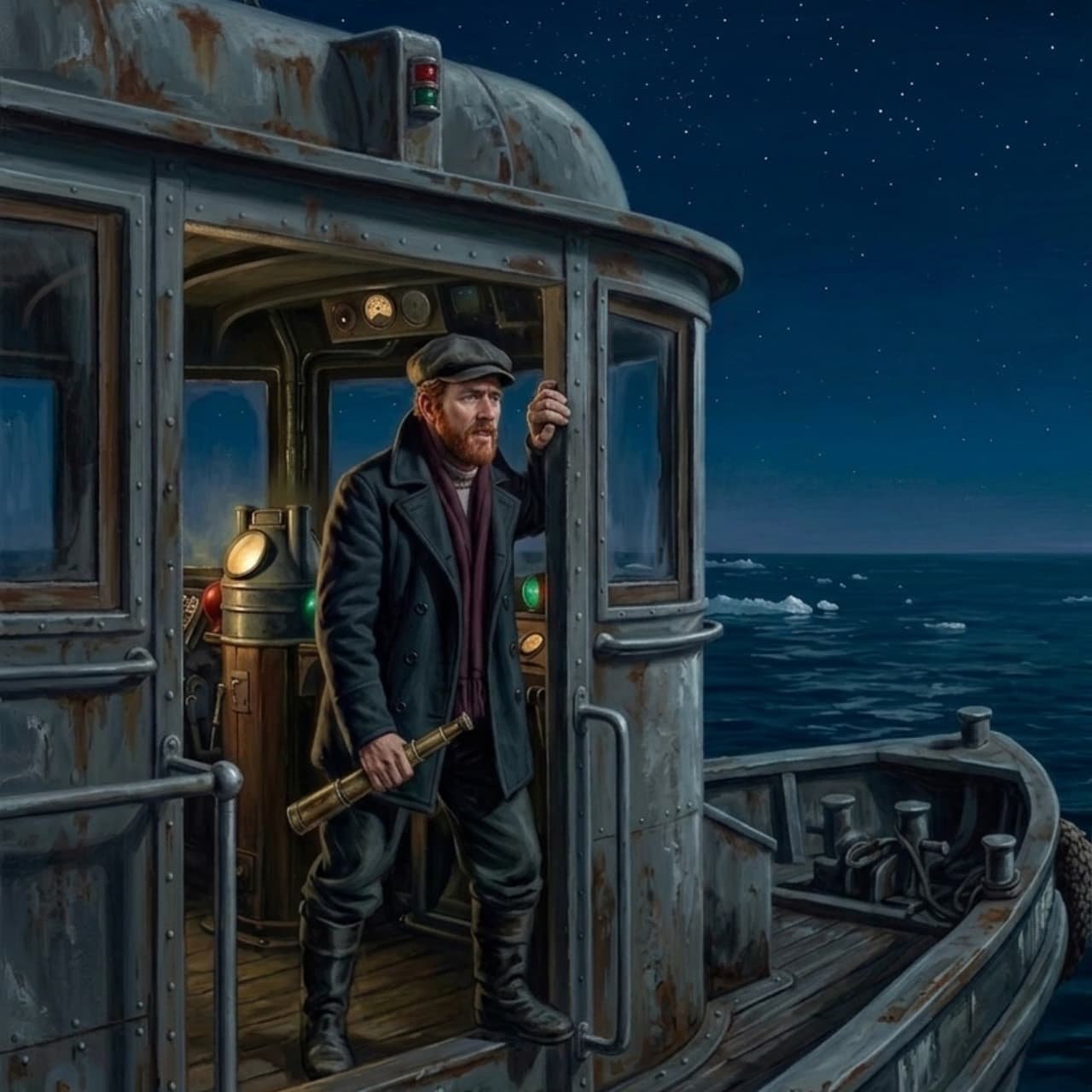

Rory Flynn felt uneasy. It would be an exaggeration to say that the old pirate’s conscience had awakened. He had parted with it back in childhood—cast it into the sea along with a handful of earth during the funeral rite for his fisherman father, who had never returned, buried it along with his mother and sisters, who had died of hunger and disease. Flynn was far from the first Irishman to leave his homeland with empty pockets and hatred for England in his heart. Had he been born three hundred years earlier, his fate would almost certainly have been daring boarding raids and plundering colonial settlements.
But he lived in the age of steam, when pirates were expected to perform a very different kind of work. Deliver cargo so that the consignees could collect it without interference from customs officers? Arrange an “accident” outside a harbor so that a particular ship would arrive late—or never reach its destination at all? Transport people who wished to avoid the attention of the police? Flynn handled such jobs quickly, quietly, and with a guarantee. Every time he realized he had made fools of the servants of the British Crown, Rory rejoiced sincerely, never forgetting to spit upon the monarch’s portrait stamped on one of the coins he had been paid.
This time, however, despite the more than generous payment, Flynn regretted accepting the offer from his old friend Jules. First of all, because on this voyage he felt like a skipper in name only. Not only had Jules, who until now had always preferred the role of a middleman ashore, unexpectedly come to sea and begun acting as though he were in command, he had also brought aboard a lanky countryman who, as it turned out, was a geographer. The unexpected passenger constantly watched the currents and the wind and, consulting his chart, kept demanding that they alter course or increase speed, forcing the engines of the Night Wolf to work under an extreme load. The risk of a catastrophic engine breakdown in mid-ocean was the second reason for Flynn’s foul mood. Had it not been for first-rate Cardiff coal and a doubled crew of stokers, Rory would have refused the “interesting little job,” as Jules had called the adventure, on the spot.
But there was something else that troubled the old Irishman. Though he was a hardened—one might even say devoted—criminal, he was no murderer. The thought of killing someone deliberately revolted him. Whenever he staged collisions “because of faulty steering,” he always did so within sight of land, knowing that even in the worst-case scenario his victims would almost certainly survive. Besides, he knew from personal experience what it meant to abandon a sinking ship. And so, when Sunday came, Flynn, after offering a hurried prayer, suddenly decided to forget the whole affair, return the advance payment, and turn back home.
Contrary to his expectations, Jules, who was smoking on the bridge wing, listened to his rambling explanation in silence, even with a smile. All the while, for some reason, he never took his eyes off the face of his Longines watch.
“Rory, my friend, you’ve surprised me. You’re the last man I would ever have imagined falling in love with his English neighbor. Yes, yes, I know exactly what you’re about to say. That those overfed swine of English bastards are a minority, while the majority are ordinary folk—and that plenty of those ordinary folk are Irish. But forgive me, you’ve chosen a remarkably unfortunate moment to change your mind. No more than half an hour ago, our esteemed Monsieur Jacques informed me that everything requiring our attention has already been done. So you may let our white friend go now.”
Jules gestured with his cigar toward the iceberg.
“But, to set your mind at ease, let me remind you that it won’t be some ancient wooden tub that meets it, but an unsinkable giant of steel. All our clients want is to tarnish the reputation of the lads at the White Star Line a little. A delay of a couple of days will be more than enough for that...”
Viacheslav Sannikov "Almost True". Part I "Humans"