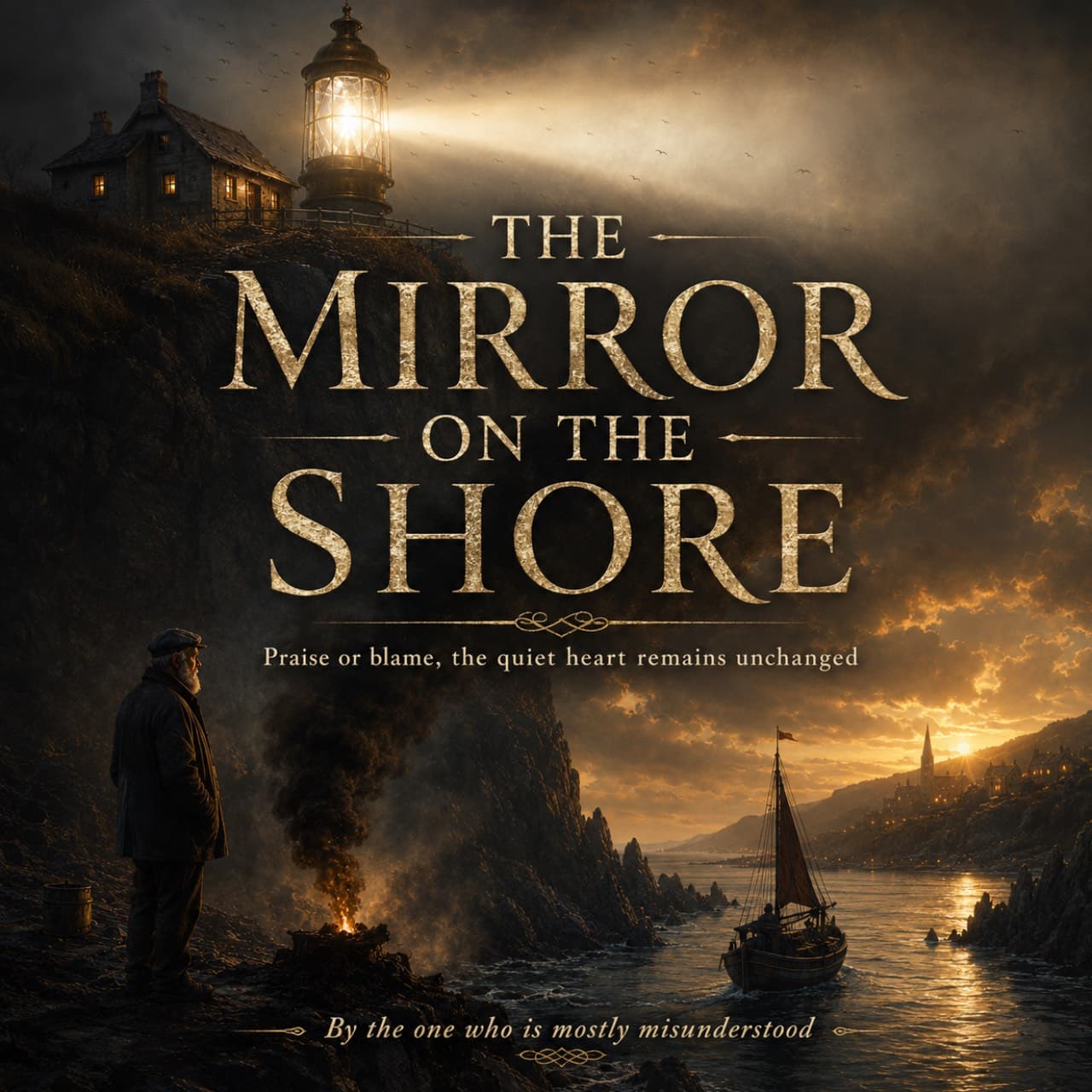

The people of Oakhaven believed a simple thing: the man on the high cliff was a hero, and the man on the low rocks was trouble.
High above the sea lived Master Elias. Every evening, he lit a huge brass lantern that shone a blinding light far into the foggy ocean. The villagers loved him for it. They called his lampThe Saint’s Eye, thinking he spent his cold nights watching over their fishing boats. They left fresh bread, fish, and wood at his door to say thank you.
Elias took the gifts without a word, but he wasn't trying to help the village. He was burning the light for a ghost. Ten years ago, his son went missing at sea, and Elias was trapped in his grief. He believed that if his light was bright enough, his boy would find his way home. He never noticed the birds that crashed into his glass, nor did he care that his bright glare made it hard for sailors to see the dangerous rocks below.
Down on the shore lived Old Thomas.
If Elias was the hero, Thomas was the villain. People whispered that he was a crazy, mean old man who walked the beach in the dark with an iron hook. When Thomas went to the market to buy nails or tea, people pulled their children away and turned their backs on him.
Thomas just chuckled softly to himself. He tipped his hat to a nervous shopkeeper, smiled at a baker, and went on his way. Their judgment didn't hurt him. He had a deep, quiet peace inside and didn't care what anyone thought of him.
While Elias sat in his house with a heavy heart, Thomas worked on the cold beach with a light spirit. Every night in the fog, he moved dark wooden logs and cleared heavy pieces of wood out of the water. He hummed quiet sea songs, taking pride in his work. He knew the truth: Elias’s praised light actually blinded sailors right before they hit the dangerous rocks. Thomas worked all night in the cold just to create shadows over those rocks, helping boats pass safely. He didn't do it for praise or money—he did it simply because it was right.
Then came the night of the Great Storm.
A thick fog rolled in over the rough water. A young fisherman named Daniel was desperately trying to sail his small boat back to safety. Up on the cliff, Elias made his lantern shine as bright as it could. The beam created a wall of blinding white light in the fog. Daniel couldn't see a thing, and his boat headed straight for the sharpest rocks on the coast.
On the beach, Thomas saw the boat in danger. Without missing a beat, he dragged three heavy oil barrels onto the rocks and lit a smoky black fire.
The thick black smoke rose into Elias’s bright beam, casting a big, dark shadow over the rocks. The blinding light was gone. In that sudden shadow, Daniel finally saw the rocks and turned his boat just in time, sailing safely into the calm harbor.
The next morning, the villagers ran down to the beach after seeing the black smoke. They found Daniel stepping off his boat, safe and sound. Next to him stood Thomas, wiping grease off his hands with a rag.
"Thomas tried to burn the shore!" an old man shouted, pointing a finger. "While Master Elias watched over us, this madman lit a fire!"
Daniel stepped forward and stopped the crowd. "No," he said softly. "Elias's light blinded me. I couldn't see the rocks. It was Thomas's shadow that saved my life."
The beach went completely quiet. The villagers looked up at the high cliff. There sat Elias, staring blankly out at the ocean, surrounded by dead birds and untouched food—not even caring that a boy had almost drowned.
Then they looked at Thomas. The villagers felt deeply ashamed. They stood there with their mouths open, struggling to find a way to apologize for years of cruel rumors. They realised they judged the shadow, but miss the light.
Thomas looked at their embarrassed faces and gave a gentle sigh. He didn't wait for an apology. He didn't ask for a single thank-you, nor did he care to watch them feel bad about their mistake.
"Well," Thomas said with a soft smile, tossing his rag over his shoulder. "The boy is safe, and the tide is going out. Good morning, everyone."
He turned around and walked back to his warm cabin, whistling a song into the fresh air, ready to make himself a nice cup of tea.
“The world applauds the illusion, but truth needs no audience.”