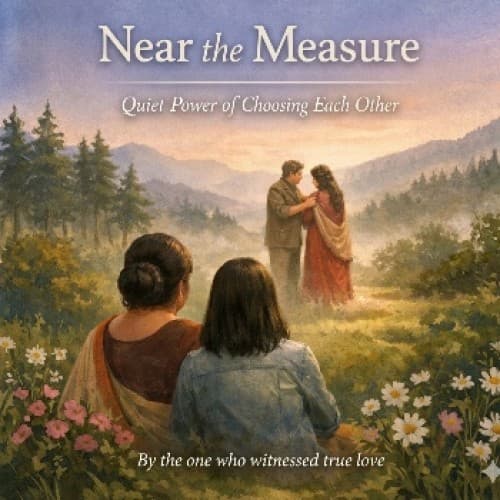

When I was very little, long before I understood words like marriage, legality, or choice, we had tenants visiting to live in part of our vacant house. They were older—quiet, gentle, almost invisible in the way elderly people sometimes become when they don’t demand attention. To a child’s eyes, they looked like an ordinary husband and wife. Nothing about them stood out at first. No loud conversations. No public affection. No visible conflict.
Only later did I realise that some of the most extraordinary lives pass unnoticed.
One day, the man asked to speak to my father privately. I remember the seriousness of that moment more than the words themselves—the way adults suddenly lowered their voices, the way my mother’s face changed even before she knew why. The man told my father the truth. He already had a legally married wife living elsewhere. She was caring for their son, who had special needs. The woman living with him now was not his legal wife, but she and her two daughters were his responsibility—chosen, not hidden.
He explained everything without hesitation—his business, his addresses, and why he did not stay nights, choosing instead to care for his son and to shoulder the burden alongside his legal wife, how he divided his time—not out of desire, but out of duty and care. He said he did not want to lie just to get a rented home. He wanted to be honest from the beginning.
My father admired that honesty. My mother was unsure. She worried—about society, about complications, about what it would mean to let such a truth live under our roof. But eventually, my father convinced her.
That decision quietly altered the course of my inner life.
Soon, the woman and her two daughters moved in. I was excited in a way only a lonely child can be excited—not because of novelty, but because of possibility. I had always longed for companionship. Though I was the middle child, I felt alone in my own way. My elder sister was calm, distant, and emotionally contained. My younger sister was eleven years younger than me—more like a child I watched over than someone I grew up alongside.
I loved having tenants. Especially tenants with children. Babies fascinated me. New people brought movement, warmth, and stories. They made the house feel alive.
With time, the woman became more than a tenant to me. She became family. Her daughters felt like sisters I had borrowed from life. I grew up with them—through my awkward years, my silences, my slow unfolding into adolescence. They lived with us for a long time. Long enough that their milestones became woven into my memory. I watched them marry one by one. I watched them become mothers.
I stayed connected to their in-laws, especially the family of the second daughter. That was where everything shifted. But before I speak of them, I must tell the story of the woman I loved as my aunt. To understand why the peace of that home meant so much—both to her and to me—I must first describe the storm she had escaped.
She had married very young, in an arranged marriage that quickly turned violent. She endured it longer than she should have, because society teaches women endurance before it teaches them dignity. She had two daughters. When she could no longer survive the abuse, she was pushed out—discarded, with children in her arms and nowhere to go.
She traveled. Crossed states. Took whatever work she could find. Construction work. Manual labour. Jobs that asked more from her body than from her voice. During one such job, she worked in a building opposite the man who would later become her anchor.
At first, he simply noticed her struggle. Then he listened. Then he learned her story. His own life was fractured—an unhappy marriage, a son who needed lifelong care, a heart already carrying responsibility. Slowly, with great care and with the full consent of his first wife, he chose to take responsibility for her and her daughters as well.
There was no secrecy. No deception. Only a complicated truth lived with dignity.
Her daughters began calling him “Daddy.” Not out of instruction, but out of safety. Out of trust. Out of love. The past did not disappear, but it loosened its grip. Something new formed—not perfect, not conventional, but deeply human.
I thought that was the most unusual family I would ever know.
Then I went to Ooty.
It was my first long stay away, and I had an abundance of time—time to observe, to absorb, to question. Everything felt new to me. The climate. The quiet. The culture. The rhythm of life in that house. This was the home of the second daughter’s in-laws.
The father came from a military background. So had his own father. There was discipline in the house, but not fear. Order, but not rigidity. He had married for love—a poor, modest young man who had fallen in love with a woman from a wealthy family. They had run away together. Struggled. Built their life brick by brick. Started a business. Raised their children on values rather than appearances.
They had dreams too. One son joined the military, fulfilling a generational hope. The younger son—handsome, gentle—married a widow with a daughter. No hesitation. No whispers. No judgment.
For me, raised among orthodox families where marriage was transactional and reputation mattered more than happiness, this was startling.
But it wasn’t their progressiveness that transformed me.
It was their love.
I had never seen a marriage like that before. Not in my home. Not among relatives. Not among neighbours. Elsewhere, marriage felt like a duty—a contract you honoured because you had signed it. Like paying EMIs for a house you lived in but never loved.
Here, marriage was care.
He made her tea without being asked. When it rained, he forgot himself and worried only about whether she was properly covered. She, in return, made sure he wore socks even while sleeping, worried about his health in ways only long love teaches.
They were attentive in the smallest ways. No performance. No declarations. Just consistency.
They loved each other the way people do when love has survived years, hardship, poverty, social disapproval, and time. Watching them felt intimate, almost sacred. I fell in love not with either of them—but with their relationship.
Until then, my life had been guided by a quiet devotion. I studied in a convent school. I was not interested in boys, romance, or the usual teenage distractions. I wanted to become a nun. I wanted to dedicate my life to service, to God, to something untouched by desire.
Standing in that house, watching them love each other so naturally, something inside me rearranged itself.
For the first time, I realised marriage did not have to be a compromise. Love did not have to fade. Devotion did not belong only to God.
If I ever married, I thought, it would have to be like this—or not at all.
That realisation did not pull me away from my ideals. It deepened them.
Because I understood then that real love is not possession, nor rebellion, nor weakness, but a service, it is patience. It is choosing someone again and again, long after novelty has disappeared.
I was blessed to witness it.
And once you see something that's true, you can never unsee it.
Ooty itself felt like a pause in my life.
The mornings were colder than anything I had known. Mist lingered longer than it should, refusing to lift even when the sun was already awake. The house sat quietly, surrounded by tall trees that seemed to have their own patience. Time moved differently there—not rushed, not demanding. It invited observation—every tourist spot. Crunching through sun-sweetened corns and carrots, the air turned to velvet while wandering the endless, rolling emerald of the tea estates—Greenary. The military canteen was always busy, people drawn by affordability, yet marked by a discipline that made even waiting feel calm. The bus journeys and bike rides along the mountain roads became small freedoms I didn’t know I needed. I spent long hours near the racecourse, watching horses move with a quiet discipline of their own, their steady rhythm and controlled strength mirroring the calm of the place, and in those moments, even without words, Ooty taught me how stillness could feel alive, Nature’s awe. I loved watching the monkeys there; they were almost like humans in the way they lived and danced, moving with a spirit that was such a joy to see. The night of the overwhelming festival of light is something I could never forget, where a massive crowd stood for hours with their heads tilted back, completely captivated by the crackers streaking through the sky and blooming into colours against the clouds. That sense of wonder stayed with me.
I had too much time, and for the first time in my life, nowhere else I needed to be.
I watched everything.
Locked in my heart and clear as a photograph, these scenes remain as vivid as if they were happening right now.
The way the house woke up slowly. The sound of cups touching saucers. The smell of tea leaves boiling. The first sip of Horlicks I had every morning there was a revelation—a perfect, malty embrace that turned a simple cup of milk into a memory you can still taste today. Back home the land was hot and unforgiving, so the constant warmth of heaters and geysers in Ooty felt almost unreal. The deliberate rhythm of their mornings—unhurried, unforced. There was no sense of performance in that home. No one was trying to prove anything. And perhaps that was what unsettled me the most.
The uncle would wake up early, not loudly, not ceremoniously. He didn’t expect attention. He simply did things. I watched him fold the newspaper neatly before handing it to his wife, as if returning something valuable. He pressed every crease from her clothes, a wordless labour of love, mine too without being asked, just like my own father, a simple gesture of kindness. When she dyed her hair, he sat patiently behind her, helping without complaint, without jokes, without embarrassment. His hands moved carefully, respectfully—as though love had trained them over the years.
When she pleated her saree, he stood nearby, adjusting folds, making sure it fell just right. Not because she couldn’t do it herself—but because he wanted to be part of even the smallest rituals of her life.
That distinction mattered.
In the afternoons, when the fog thickened and the temperature dipped unexpectedly, he would instinctively reach for her shawl before reaching for his own. If she coughed even slightly, his entire body seemed to register it. She noticed him just as closely—placing quilt, sweaters and socks near his bed, reminding him gently, not naggingly, as if care was second nature to her.
I had never seen love that lived in attentiveness.
Not loud love. Not dramatic love. But love that paid attention.
At first, I didn’t know what to do with the feelings this stirred in me. I told myself I was simply observing, learning, and appreciating. I was still deeply rooted in my spiritual ideals. I still prayed. I still believed my life would be devoted to service, to God, to something higher than personal attachment.
But something had entered me quietly.
At night, when I lay awake listening to the wind brush against the windows, questions surfaced uninvited. Why had I always believed love distracted people from purpose? Why had I associated marriage with obligation rather than devotion? Why did watching this couple feel… sacred?
I had seen religious devotion before—rituals, prayers, discipline. But here was another form of devotion entirely. One that did not compete with God, but mirrored Him. One that asked for patience, surrender, humility, and daily choice.
It frightened me.
Because if this kind of love existed, then my understanding of holiness was incomplete.
I began noticing how differently I saw other families after that. The transactional marriages I had grown up around now felt hollow. Conversations filled with duty, endurance mistaken for virtue, silence mistaken for peace. I had once accepted those dynamics as normal, inevitable.
Now, they felt unfinished.
I saw that same devotion carried forward in the second daughter’s husband as well, as though love had been taught to him simply by being witnessed all his life; he was gentle with her in ways that did not need explanation, and watching them together—my aunt’s daughter, who felt like my own sister, and the man she married—filled me with a quiet happiness. I was there when he left to return to his military duty, and even that departure held a kind of poetry: no dramatic words, no public breaking down, only restrained emotion on both sides, each of them holding back so the other could remain steady. She swallowed her tears so he could leave with strength; he steadied himself so she would not feel undone. Around them, his parents moved with the same calm familiarity, packing food for the journey, preparing everything without fuss or spectacle, as if love, when practised long enough, learns to express itself through readiness rather than display—and standing there, watching all of it unfold, I understood again how deeply this family had learned to love in silence.
I also noticed how the uncle and his two sons sometimes drank together—not in excess or escape, but in quiet celebration—and instead of discomfort, it felt unexpectedly familial. Until then, I had only known alcohol as something that fractured homes, so witnessing it exist there as a shared, contained joy subtly reshaped my understanding of what harmony could look like.
The uncle’s wife in Ooty, after hearing about my desire to become a nun, smiled and told me that devotion does not have only one doorway—that sometimes, if we keep our eyes closed to the world, we may miss someone meant to walk beside us. She spoke of her husband without naming him, as if his presence itself was her proof, and then, almost playfully, she added that who knew—perhaps the child meant for me was already somewhere, learning to play cricket. I remember laughing, but something in her words stayed with me, quietly open.
During my stay, I also observed how this family treated everyone else. There was no hierarchy of worth. The daughter-in-law’s background was never brought up. The widow the younger son married was never made to feel lesser. Her child was never “extra.” Love did not come with footnotes in that house.
That unsettled me more than anything.
Because my faith had taught me equality in theory—but this family practised it without naming it.
One afternoon, while watching the mist lift slowly from the hills, I realised something that startled me with its clarity:
I had never wanted marriage because I had never seen one worth wanting.
The idea itself hadn’t repelled me. The examples had.
That realisation did not arrive with excitement. It arrived with grief. Grief for the years I had dismissed love as a distraction. Grief for how narrowly I had defined devotion. Grief for how little I had allowed myself to imagine.
I felt torn—not between God and love, but between old certainty and new truth.
Could one serve God through love?
Could marriage be a form of surrender rather than possession?
Could caring for another human being with this level of consistency be its own sacred calling?
These questions didn’t demand answers immediately. They simply stayed with me, gently undoing old beliefs.
By the time I left Ooty, I had not abandoned my spiritual ideals. But they had softened, widened. They now made room for something human, something tender.
I understood that if I ever chose marriage, it would not be because society demanded it. It would not be because fear required it. It would be because I had witnessed what love could be—and would not accept less.
That house in Ooty did not convince me to seek love.
It taught me what love looks like when it is real.
And once that image settles into you, it becomes a quiet standard. Not negotiable. Not dramatic. Just there—waiting.
Leaving Ooty felt like waking up from a dream that hadn’t announced itself as one.
The journey back was long, winding, and quiet. As the hills flattened and the air grew warmer, something inside me tightened—not because I was unhappy, but because I knew I was carrying something fragile back with me. With the bus windows open to the cold, my black-and-red dupatta slipped away into the wind, and I did not reach for it. It felt as though something within me had been gently released—as if God, in that small and ordinary loss, was loosening a part of me that was ready to change. A new understanding. A new tenderness. Something I did not yet have language for.
Home looked the same. The same walls. The same routines. The same familiar sounds. But I wasn’t the same person who had left.
Almost immediately, the contrast revealed itself.
Conversations felt transactional again. Marriages around me seemed heavy, spoken of in terms of duty, sacrifice, endurance—as though love were something you survived rather than something that sustained you. Women spoke of compromise as if it were a virtue in itself. Men carried authority like a birthright rather than a responsibility.
I noticed everything now.
The silences weren’t peaceful.
The jokes that masked resentment.
The “adjustments” that were actually erasures.
Earlier, I had accepted these as facts of life. Now, they unsettled me.
At home, I resumed my prayers, my routines, my familiar spiritual discipline. On the outside, nothing had changed. On the inside, something kept asking questions.
Why had I equated holiness with renunciation alone?
Why had I believed love diluted devotion rather than refined it?
I didn’t speak about Ooty much. Some experiences don’t survive explanation. They become smaller when spoken to too soon. I carried it quietly, like a lamp covered with cloth—still burning, but protected.
Sometimes, when I watched couples argue over trivial things, or saw women shrink themselves to maintain peace, a strange sadness came over me. Not judgment. Just sadness.
Because I had seen another way.
For a long time, I wrestled silently with what I had witnessed.
I was still deeply drawn to God. That had not changed. If anything, my faith felt more alive, more personal. But now, it had texture. It had warmth. It had context.
I began to understand something essential:
Devotion is not defined by what you avoid.
It is defined by how deeply you commit.
I had thought becoming a nun was the highest form of surrender because it asked for solitude, discipline, and sacrifice. And perhaps for some, it is. But I realised that choosing to love another human being—with patience, humility, consistency—asked for a different kind of surrender. One that was daily, unglamorous, unseen.
In Ooty, I had watched devotion unfold in kitchens, in small gestures, in ordinary mornings. No prayers spoken aloud—yet everything felt prayerful.
That realisation did not weaken my faith. It purified it.
I no longer saw God as separate from love. I saw Him reflected in it.
The man helps his wife pleat her saree.
The woman was making sure her husband’s feet stayed warm.
The quiet equality in how children were welcomed, regardless of origin.
None of this contradicts holiness. It embodied it.
And so, something in me settled.
I stopped feeling torn between two paths. I understood instead that my path—whatever form it eventually took—would have to be rooted in truth, not fear. In love, not endurance.
Years passed.
Life unfolded the way it does—slowly, unpredictably, without consulting our younger selves. I grew older. Responsibilities accumulated. Idealism met reality, as it always does.
But the image of that house in Ooty never faded.
Whenever I encountered relationships—my own or others’—something in me quietly measured them against what I had once witnessed. Not perfection. Not romance. But care.
Did this love make people more themselves—or smaller?
Did it ask for presence—or obedience?
Did it feel safe—or merely familiar?
I noticed how often society teaches women to endure rather than to be cherished. How love is romanticised at the beginning, but rarely honoured in its maintenance. How staying together is praised more than staying kind.
And every time I felt pressured to accept less—to normalise emotional absence, imbalance, or silent suffering—I remembered Ooty.
I remembered that love can be deliberate.
That marriage can be gentle.
That equality can exist without announcement.
That memory became a quiet boundary inside me.
I didn’t expect love to look dramatic. I expected it to look considerate.
I didn’t expect constant happiness. I expected consistency.
I didn’t expect perfection. I expected effort.
Most importantly, I stopped believing that choosing love meant choosing weakness.
If anything, it required more courage.
Looking back now, I understand how rare it was to witness what I did at such a formative age. Many people go their entire lives without seeing love lived that honestly. Without seeing families that choose compassion over convention.
I was lucky.
That early exposure saved me—from settling, from confusing endurance with virtue, from mistaking fear for faith.
It taught me that whatever form my life eventually took—married or not, traditional or unconventional—it had to be rooted in truth, dignity, and care.
That is what love showed me.
That is what faith deepened in me.
And that is why, even now, I carry Ooty with me—not as a place, but as a reminder of what is possible when human beings choose each other, fully and gently, every single day.
Even now, when I look at my own marriage, I know we are not the couple I once watched in Ooty, and I do not measure our marriage against theirs in search of perfection; but if their love was what first taught me what was possible, then I know that in the midst of odds, misunderstandings, time, and change, my husband and I have learned—imperfectly, steadily—to stay somewhere near that measure, and in that nearness, I recognize a quiet, hard-earned success.