


When Night Fell in Love with the Moon
I. The Taste of Ash
I have lived many lifetimes in the span of a single century. My name is Darius. Once, I was a man—before darkness claimed me, before I became what I am now: a vampire, a shadow among shadows. The memory of my human years has faded, like the last embers of a fire dying in the hearth of an abandoned castle. Yet, sometimes, in the silent hours before dawn, fragments drift back. The warmth of flesh, the taste of food, the sound of laughter—these ghosts haunt me more than any soul I have claimed.
For decades, I embraced the monster I had become. I painted the world crimson, my nights dripping with the blood of the innocent and the guilty alike. I tortured for the pleasure of it, drank men and women dry, their screams echoing in forgotten corridors. I was the thing they feared, the reason mothers warned their children not to wander after dark. I was a legend, and I was alone.
But hunger changes over time. The thrill—once sharp, now dulled—gave way to something hollow. I began to see myself not as a prince of darkness, but as a prisoner, shackled to an eternity of regret. Perhaps, in some hidden corner of my ruined soul, a fragment of my humanity survived—a cell, a whisper, a distant star flickering in the night.
That spark was there before I met her. But it was her—Mira—who made it blaze.
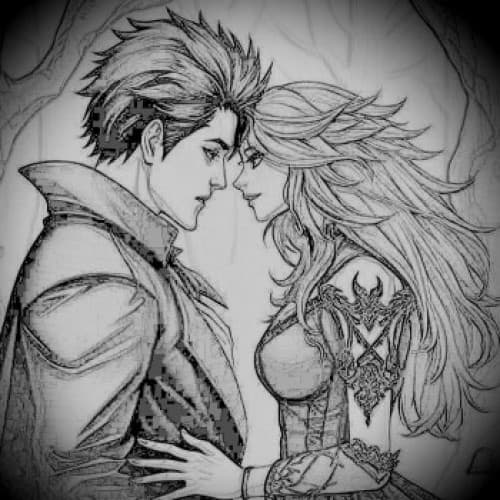
She was the moon to my night, radiant and fierce. Mira was born a werewolf, bound to the wild, sworn to protect the fragile tapestry of the human world. Her kind hunted my kind for centuries, and mine returned the favor. For a vampire and a werewolf to love was forbidden by both clans. It was an ancient law, older than the stones of the castles we haunted. But love—true love—cares nothing for the laws of monsters.
We met in a ruined abbey, half-swallowed by fog and time. I had gone there to feed, drawn by rumors of a young priest who claimed to see angels in his dreams. Instead, I found her—bloody-mouthed and wild-eyed, her hands shaking with the effort to hold herself back. She could have killed me then, ripped my throat with a wolf’s teeth, but she didn’t. There was recognition in her gaze, a sorrow that mirrored my own. We were both outcasts, both tired of the endless cycle of violence.
That night, beneath the shattered rose window, we made a pact: to hide from the world, to protect each other, to try for something resembling peace.
We fled together, leaving behind the packs and covens that had shaped us. Our journey led us north, to the frozen solitude of Alaska, to a town called Anchorage where the nights stretched long and the world felt far away. There, we carved out a life. We lived quietly, moving only at night, careful not to draw attention. We married, binding ourselves by vows deeper than blood. Against all odds, we had a son—a miracle, half-wolf, half-shadow, laughter and sunlight in our home.
For a time, I tasted happiness—a fragile, trembling thing, easily broken.
But monsters do not forgive. The others found us, wolves and vampires both. They came in the night, torches and claws, fangs bared in hatred. I fought—I swear I fought—but there were too many. They tore our world apart. I watched as they took our son, his screams shattering the silence. I watched as they killed Mira, the love of my life, while I was held helpless, broken. Her blood on the snow was the last color I have ever truly seen.
They left me alive. That was their mistake.
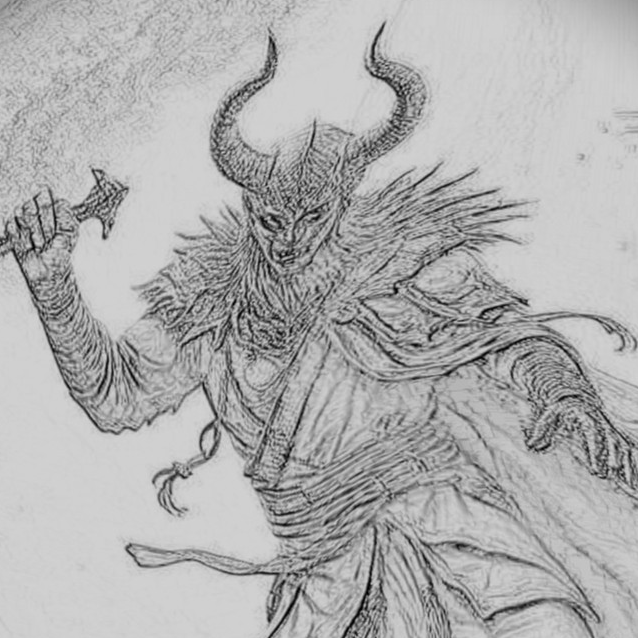
Now, I am taking vengeance. I hunt them, one by one. Vampire, then werewolf, it makes no difference. They took everything from me, so I will take everything from them. The man I was is gone. Love, fear, hope—these things are ashes in my mouth. Only darkness remains, deep and endless. I am night, and I will not rest until all is consumed.
II. The Castle of Regret
Winter in Alaska is a thing of legend: endless dark, ice crusting the windows, the wind howling like a wounded animal. I made my home in the ruins of an old Russian church, its stones blackened by fire, the bell tower leaning at a drunken angle. Here, the world is silent. Only the dead and the damned walk these halls.
I have turned the nave into a chamber of memories. On the altar, I keep a lock of Mira’s hair, silver as moonlight, wrapped in a faded ribbon. Her scent lingers, a ghost of wildflowers and snow. Each night, before I hunt, I kneel there and remember. It is all that tethers me to what I once loved.
The town below fears the church. They see flickers of movement in the stained glass, hear the sound of weeping on the wind. They whisper stories—of a monster who feeds on regret, who cannot be killed, who punishes the wicked and the unlucky alike. Sometimes, I let them see me, just a shadow, just a hint. It is a small comfort to know that monsters can still inspire fear.
But my true prey lies elsewhere. I track them by scent, by rumor, by the trembling of the world when something evil passes through. The vampires who betrayed me, the wolves who tore my family apart—they scatter like rats, but I am patient. I am the storm that never ends.
When Night Fell in Love with the Moon
III. The Blood Debt
Snow fell in heavy, silent drifts, blanketing the world in white. Anchorage slept, unaware of the beast that prowled its frozen edges. I walked the empty streets, the crunch of ice beneath my boots the only sound. The moon hung low, veiled behind a shroud of clouds. Somewhere, a dog howled—a lonely, desperate sound that set my teeth on edge.
Their faces haunted me. The wolves—Mira’s kin—who had torn her from me. The vampires—my own blood—who had laughed as my son was dragged away, his small hands reaching for me as if I could save him. I see their eyes in every shadow. I hear their voices in every gust of wind.
I hunted them, night after night. I grew crueler, colder—every death a drop of water in an ocean of rage. I left messages in blood, warnings scrawled on walls and trees. Let them know I was coming. Let them know there would be no mercy. The hunger that drove me was no longer for blood, but for retribution. The monster I had tried so hard not to be was now all that remained.
I found the first of them in a forgotten cellar at the city’s edge. His name was Viktor—a vampire older than I, his eyes like chips of black ice. He begged for his life, promising secrets, alliances. I silenced him with a single blow, his body collapsing into dust. There was no satisfaction, only emptiness.
The next was a wolf—a massive brute with matted fur and yellow eyes. He remembered Mira; he spat her name like a curse. I tore him apart beneath the full moon, my hands slick with blood, his howls echoing through the wilderness. Still, I felt nothing but the cold.
Each kill brought me closer to oblivion. Each kill hollowed me out further. I wondered, sometimes, if this was my punishment: to become the very thing I despised, to wander the earth as a shell, incapable of love or hope.
IV. The Portrait Room
I returned to my sanctuary, the ruined church, after each hunt. The nave had changed—grown darker, more twisted. The stained glass windows, once vibrant, were now cracked and smeared with soot. Shadows clung to the corners, whispering secrets I dared not listen to.
On the altar, beside Mira’s ribbon, I kept a portrait of my son. It was the only image I had, painted by Mira herself—his eyes bright, his smile mischievous. I would trace the lines of his face with trembling fingers, trying to remember the sound of his laughter, the warmth of his embrace. But time erodes all things, and even memory is not immune.
One night, as I knelt before the portrait, a strange wind swept through the church. The candles flickered, casting monstrous shapes on the walls. I heard footsteps—soft, deliberate—approaching from the shadows. I rose, every muscle tensed, ready for another battle.
She emerged from the darkness—a woman, neither vampire nor wolf, but something older. Her hair was white as bone, her eyes bottomless pits. She carried an air of sorrow, as if she had seen the birth and death of worlds.
“You grieve, Darius,” she said, her voice a winter wind. “You rage against the night. Yet you know, deep down, that vengeance is a cup that never fills.”
I stared at her, uncertain whether to strike or flee. “Who are you?”
She smiled, her lips thin and bloodless. “Call me the Mourner. I come to those who have lost everything. I come to offer a choice.”
I felt a chill deeper than any winter. “What choice?”
“To let go of your pain. To find release. Or to become darkness itself—to embrace the monster, and destroy all you touch.”
I turned away. “There is nothing left for me to release. Only darkness remains.”
She sighed, a sound like falling snow. “Then your path is set. But beware, Darius. The night is long, and vengeance breeds only more sorrow.”
She vanished, leaving me alone with my ghosts.
V. The Last Wolf
Word spread among the supernatural underworld. Darius the Damned, the Night’s Betrayer, was hunting his own kind. The vampires and wolves fled the city, seeking refuge in distant forests, in the bones of old castles and abandoned mines. But none could hide from me.
At last, I found the last of Mira’s pack—a wolf named Elias, her brother. He had been her protector once, her friend. Now, he cowered in the woods, his fur streaked with gray, his eyes haunted.
We fought beneath the northern lights, the aurora painting the snow in waves of green and violet. Our battle was brutal, savage—fangs and claws, blood and bone. In the end, I stood victorious, Elias broke at my feet.
He looked up at me, his breath ragged. “She loved you, Darius. She would not have wanted this.”
I drove my hand through his heart, silencing him forever.
When Night Fell in Love with the Moon
VI. Ghosts in the Belfry
The nights grew longer, the darkness heavier. Winter in Anchorage was merciless—ice crept along the walls of my sanctuary, and my breath became a pale mist in the cold air. The ruined church seemed to breathe with me, its timbers creaking like ancient bones, its bell silent save for the echoes of memory. It was here, amid the broken pews and the drifting snow, that the dead began to visit me.
At first, it was only their voices—Mira’s laugh, soft as falling petals, my son’s playful footsteps echoing through the nave. I would turn, searching for them in the gloom, but I always found only emptiness. Then came the faces: pale and wraithlike, painted in moonlight and regret. They hovered at the edge of my vision, watching, judging.
I tried to drive them away. I screamed at the shadows, tore at my own flesh, and begged for silence. But the dead do not listen. They are patient, tireless. They know that all things return to them in time.
One night, as I sat before the altar, Mira appeared to me—not the memory I cherished, but a ghostly vision, her eyes hollow and accusing.
“Why, Darius?” she whispered. “Why do you refuse to let go? Why do you cling to vengeance when love could have saved you?”
I reached for her, desperate. My hands passed through her like mist.
“They left me with nothing,” I said. “They turned my heart to stone.”
She shook her head, sorrowful. “No one can take your soul but you. You are the architect of your own damnation.”
She faded, leaving me colder than before. I buried my face in my hands and wept, the sound lost amid the ruins.
VII. The Feast of Shadows
Word of my carnage spread. The supernatural world trembled. The last of the Anchorage vampires—once my sworn brothers—banded together in a final, desperate stand. They gathered in the remains of an old mansion on the outskirts of the city, a place of opulence now overgrown and dying, the walls crawling with ivy and rot.
I came to them as the storm broke, lightning splitting the sky above. The gates hung open, a silent invitation. Inside, the air stank of fear and old wine. My former brethren waited, armed and trembling, their eyes wild with the knowledge that none would survive the night.
I moved through them like a shadow, my fury cold and precise. The first fell with a scream, his blood painting the faded wallpaper. The others fought, but despair had made them weak, and I was beyond mercy. One by one, I ended them—each death a dull drumbeat in the growing silence.
At last, only one remained: Lucien, the eldest among us, the one who had once called me brother. He fell to his knees, blood streaming from his lips.
“Darius,” he gasped. “What have you become?”
I looked down at him, feeling nothing. “What I always was. What you made me.”
He laughed, weak and broken. “No. You did this to yourself. We all do, in the end.”
I silenced him, then stood alone amid the ruin, the storm raging outside. The world was emptier now, the silence absolute.
VIII. The Last Candle
The nights passed, indistinguishable from one another. I wandered the empty halls of the church, the snow piling against the doors, the wind howling through the broken glass. My memories grew thin, unraveling like old threads. I tried to remember Mira’s touch, my son’s laughter, but their voices faded, replaced by the roar of darkness within me.
One night, as I sat before the altar, the last candle flickered and died. The church was plunged into utter blackness. I sat in the dark, listening to the beat of my own dead heart, waiting for the end.
It did not come. Instead, there was only silence—a silence so deep it seemed to swallow the world.
I rose and walked to the shattered window, staring out at the endless night. Snow fell, heavy and silent, covering all traces of my existence. I felt myself fading, becoming one with the darkness, a shadow among shadows.
And somewhere, far away, I heard Mira’s voice, soft and distant:
“Let go, Darius. Let the night take you.”