


He Wears Your Face Last
My name is Dexter Brown, but most people just call me Dex. I’m twenty-two years old. Not exactly a kid, not quite an adult either, or at least that’s how I feel most days—suspended somewhere between. I live with my mom and my younger brother Jack in a small, fading town called Mount Pleasant, Michigan. You’ve probably never heard of it. It’s the kind of place you drive through without looking up, where every house looks like it’s been waiting for something to happen for decades. Nothing ever does, not until last year.
Jack was sixteen. He was sharp, funny, the kind of kid who could get away with anything because he looked so harmless—pale skin, curly brown hair, a smile that made people forget whatever it was they were mad about. My mom, Paula, worked two jobs: she was a nurse at McLaren Hospital and cleaned local offices in the evenings. I helped out where I could, but mostly, I looked after Jack when she wasn’t around.
We weren’t rich, but we got by. Our house was a squat little place with creaking floorboards and a backyard that ran up against a line of woods—dense, dark, and always whispering with wind or things you hoped were just animals. Jack spent a lot of time back there, building ramps for his skateboard and rollerblades. Sometimes I’d join him, just to see how high he’d go, how wild he’d get before he wiped out and started laughing like he was invincible.
It was just us—three people glued together by love and necessity, and I guess a little bit by fear. Not the kind of fear you put words to. Not monsters-under-the-bed fear. The kind that sits in your stomach, heavy and silent, whispering that someday, something will go wrong and you’ll never get it back.
I remember the last ordinary day we had before everything changed. It was early September, hot enough that the air tasted like metal. Mom was home for once, her scrubs still smelling like antiseptic, and she was taking pictures of us in the backyard. Jack was dropping into a homemade halfpipe, arms flailing, while I tried to look cool on my old skateboard.
I wish I could remember what we talked about. I wish I’d listened harder, looked longer. But nobody knows when the world’s going to end, not until it does.
2. The Disappearance
A week before Jack went missing, things started to get weird. Not in the way you see in movies—not all at once. It was little things: the sound of whispering in the hallway at night, always just on the edge of hearing. Sometimes, I’d wake up to what sounded like Jack’s voice, faint and urgent, but when I got up to check, he’d be asleep in his room or already out back, skating before school.
One night, I was in the kitchen making ramen. I heard a knock at the back door—three sharp raps, like someone knew exactly how to hit the old wood to make it echo in your bones. I went to check, thinking it was Jack playing a trick. But when I opened the door, there was nothing but the backyard, moonlight shining on the halfpipe and the trees standing silent and still.
I told myself it was just kids from the neighborhood, or maybe I’d imagined it. But then, the next morning, Jack was gone.
He’d left his skateboard and rollerblades behind, which was weird—he never went anywhere without them. His phone was on the nightstand, dead, the charger still plugged in. Mom called the police after a few hours, her voice thick with panic even though she tried to sound calm. They searched the woods, the streets, the old railroad tracks behind our house, but Jack was just… gone.
Days turned into weeks. The police said maybe he’d run away, maybe he was hiding out with friends. But I knew better. Jack had been scared. I saw it in his eyes the night before he disappeared. Something had been after him, something he couldn’t talk about.
3. The Photos
It’s strange the things you do when you’re grieving. Some people lose themselves in work, others turn to old habits or new vices. For me, it became a kind of obsession—going through every photo, every scrap of memory, every pixel where Jack’s face might still be smiling back at me. I spent hours hunched over Mom’s laptop, clicking through pictures from that last summer. Sometimes I’d stop and just stare at his face, willing myself to remember every detail—the way his eyes crinkled when he laughed, the chipped tooth he always tried to hide.
I must have looked at those backyard photos a hundred times before I saw it. At first, it was just a shape, a blur at the edge of the frame. In one picture, Jack is coming down the ramp, hair blown back, arms out like wings. I’m in the background, half out of frame. Behind us, near the trees, there’s something else. It’s hard to see—a figure, tall and thin, standing perfectly still.
I zoomed in, expecting to see one of the neighbor kids, maybe even a trick of the light. But the closer I looked, the less sense it made. The figure was too tall, its limbs stretched in a way that didn’t look human. Its face was wrong—at first just a smudge, then, as I sharpened the focus, a chill crawled up my spine.
It was Jack’s face.
Not a lookalike, not some blur that could be anyone if you squinted. It was my brother’s face, stretched over something too big, too strange. The mouth was too wide, the eyes too far apart. But the expression—God, the expression—was almost pleading.
I scrolled through the rest of the pictures, my hands trembling. In every one, the figure was there, always just at the edge, always blurry, always wearing Jack’s face like a mask that didn’t quite fit.
I printed out the photos and circled the figure in red marker. I showed them to Mom, but she just shook her head, her eyes empty with exhaustion and denial.
“It’s nothing, Dex,” she said softly. “Just shadows. Don’t do this to yourself.”
But I knew what I’d seen. And I knew, deep down, that Jack hadn’t run away. Something had taken him—and it was still out there.
4. The Search
The police did what they could, but as days turned to weeks, their visits grew less frequent, their questions more routine. I couldn’t sit still. I started searching for Jack myself, retracing the paths we used to walk as kids, calling his name into the empty woods until my voice was raw.
Most nights, I’d walk the length of our street, flashlight in hand, scanning the shadows for any sign of him. Sometimes I thought I saw someone moving through the trees—a flicker of movement, a pale face glimpsed between the trunks. My heart would leap, hope and terror colliding in my chest, but whenever I tried to get closer, the figure would vanish, melting into the darkness.
One night, as I was heading home, I saw him—or, at least, I thought I did. At the far end of the block, under the sickly yellow glow of a streetlamp, someone was standing. He was too tall to be Jack, his limbs awkward and angular, but he was wearing Jack’s face. The same brown curls, the same crooked smile, but stretched, wrong, like a mask made of wax left too long in the sun.
I froze, my breath caught in my throat. The figure didn’t move, didn’t speak. But somewhere in the quiet, I thought I heard whispering—soft, desperate, threading through the night like a breeze.
“Dex… help me…”
I blinked, and the figure was gone.
After that, I started seeing him everywhere—reflected in windows, lurking at the edge of crowds, always just out of reach. Sometimes I thought I was losing my mind. But every time I looked at those photos, the truth stared back at me: Jack was gone, and something else was wearing his face.
5. The Whispering
The whispering got worse after that. At first, it was only at night—a murmur just outside my door, rising and falling like the wind. But soon, I started hearing it everywhere: in the hum of the refrigerator, the static of the TV, the rustle of leaves outside my window.
No matter how hard I tried, I could never make out the words. It was always just beyond understanding, a secret language meant only for me. Sometimes I thought I heard my name, or Jack’s, or the sound of someone crying.
I stopped sleeping. I stopped eating. All I could do was listen.
One night, I woke to find my bedroom door open. The whispering was louder now, urgent, insistent. I followed it down the hall, through the kitchen, to the back door—the same door I’d heard the knocking at before Jack disappeared.
The backyard was pitch black. I stood there, shivering, the whispering swirling around me like cold hands. Then, out by the halfpipe, I saw movement. A figure, tall and thin, hunched beneath the trees. It turned to face me, and even in the darkness, I could see Jack’s face, pale and pleading.
“Dex…” The voice was warped, twisted, as if coming from underwater. “Please…”
I took a step forward, but the figure retreated, melting into the shadows. The whispering faded, leaving only the sound of my own racing heart.
I knew then that Jack was gone, but he wasn’t gone. Whatever had taken him was still here, wearing his face, whispering in the dark.
6. The Revelation
It wasn’t enough just to see Jack’s face on that thing. I needed to understand what it was, where it came from, why it had chosen him. I started searching the internet for stories about disappearances, about people seeing strange figures in their photos. Most of what I found was nonsense—urban legends, creepypastas, grainy YouTube videos of shadowy shapes in the woods. But every so often, I’d come across something that made my skin crawl.
There was a forum—buried deep, hard to find—where people posted about “the Last Seen Man.” The stories were all the same: grainy photos with a stranger in the background, always blurry, always just before someone vanished. Some described hearing whispers or seeing the missing person’s face on the figure. None of the stories ended well.
I messaged a few of the posters, desperate for answers. Most never replied. One did—a woman named Carla, from Ohio. Her sister had gone missing two years before. Carla described the same pattern: the whispers, the tall figure, the face that wasn’t quite her sister’s. She told me to burn the photos, to forget what I’d seen.
But I couldn’t. I had to know more.
I started going through every photo I could find—my own, the ones my friends posted online, even pictures from local news reports about missing people. The more I looked, the more I saw him. The Last Seen Man. Sometimes, if I zoomed in close enough, the face would shift—first like Jack’s, then like the person who’d gone missing next.
I realized with a sick certainty that the face he wore belonged to his next victim.
7. Dex's Descent
I started to lose track of time. Days bled into nights. I barely spoke to Mom, who was barely there herself, lost in her grief. I stopped going to work. I stopped answering my friends' texts. All I could do was search—through woods, through photos, through memories that twisted every time I closed my eyes.
Sometimes, on my walks, I’d catch glimpses of the thing at the edge of the woods. He was always too tall, always with Jack’s face. Sometimes, I’d hear him calling, the voice broken and wrong:
“Dex… come here… help me…”
I’d follow, heart pounding, but the closer I got, the more the thing would retreat, always melting into the trees, always leaving me alone with the whispers.
One night, I came home to find the back door standing wide open. My mom was gone—at work, I hoped. The house was silent, but I could feel something watching me. I went to my room, pulled out the printed photos, and spread them on my bed. In every one, the Last Seen Man stared back with Jack’s face. My hands shook as I reached for a lighter.
That’s when I heard the knock—three sharp raps, just like before.
I froze, lighter in hand. The whispering started, louder than ever, filling the house, the words almost clear now.
“Dex… let me in…”
8. Climax: At the Edge
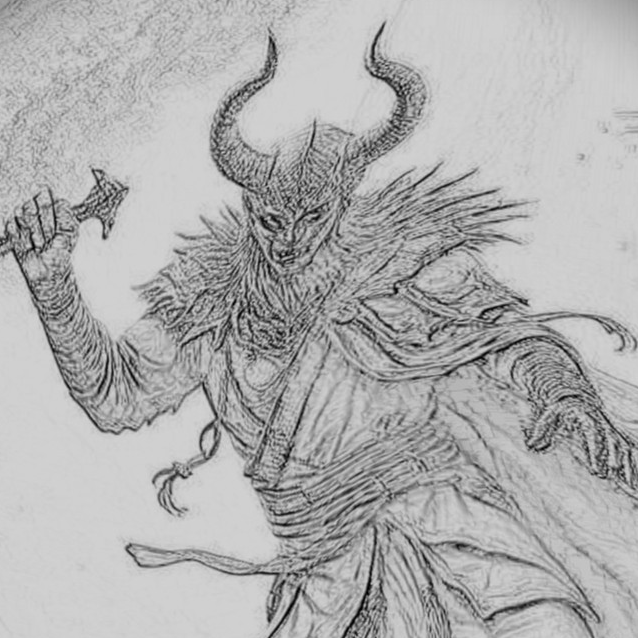
I don’t remember walking to the door. I don’t remember opening it. I just remember the cold, the way it bit into my skin like teeth. The yard was shrouded in mist, the trees looming, the halfpipe nothing but a shadow. And there—standing at the edge of the woods—was the thing. He was taller than ever, his limbs impossibly long, his movements jerky and unnatural.
He wore Jack’s face, but it was changing now, twisting, the features stretching and sliding like clay. For a moment, it looked like my own face—wide, terrified, pleading.
“Dex… help me…”
I stepped back, heart pounding. The thing stepped forward, matching me, its face flickering between mine and Jack’s.
I turned and ran. My feet found the old trail behind our house, the one Jack and I used to take to the abandoned train tracks. I ran until my lungs burned, until the whispering faded and the woods closed in around me.
But I could still feel him behind me—always just out of sight, always watching, always waiting to put on a new face.
9. Aftermath: The Warning
That was months ago. I don’t go home anymore. I move from place to place, sleeping in motels, keeping the lights on, never staying anywhere long enough for the whispers to find me. I burned the photos, but it didn’t help. Sometimes, when I look in a mirror, I see Jack’s face staring back at me, pleading.
I know what the Last Seen Man is now. He’s not a ghost or a demon. He’s something older, something that feeds on faces, on names, on the memories people leave behind. He finds you in photos, in the places you love, in the moments you think are safe. He wears your face last.
If you ever see a stranger in your pictures—always blurry, always in the background—burn them. Leave town. Don’t look back. Because the next face he puts on will be yours.
And if you hear whispering outside your door at night—don’t answer. Don’t listen.
Because some faces are meant to stay lost.