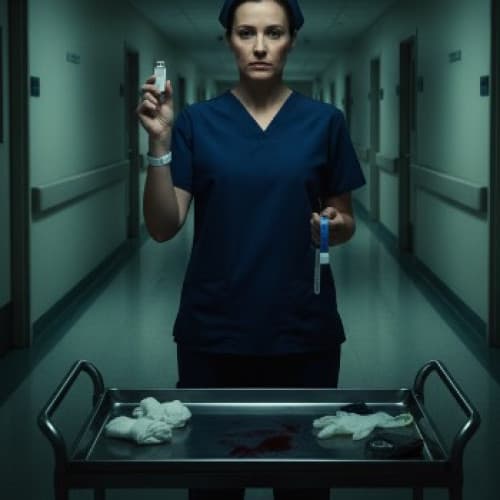

At precisely 3:12 a.m., a patient was brought into the emergency room exhibiting a mysterious laceration, its cause unknown, and the edges sharply defined. Despite displaying signs of heavy sedation, a blood alcohol test revealed a reading consistent with someone who had ingested significant amounts of alcohol. Yet, there was no trace of alcohol in their system upon further examination. The medical chart provided little information, leaving the attending physician to rely on their instincts. With a hasty flick of the wrist, the physician signed the discharge forms with only a solitary initial, hinting at an unsettling breach of protocol. The entire situation reeked of something inexplicably off, raising the question of what had truly transpired before the patient's arrival.
Mara leaned over the case files scattered across her desk, a sense of unease creeping in as she scanned the details. For the past two weeks, she had been treating a string of patients, all presenting with strikingly similar injuries—bruises, contusions, and a haunting look of fear in their eyes. Each file, though packed with medical jargon, had a troubling commonality: a redacted line that hinted at something sinister and a corporate billing code that sent chills down her spine, one she had never encountered before.
Intrigued and alarmed, Mara felt an insatiable urge to dig deeper. One late night, her instincts led her to a rundown motel on the outskirts of town after a tip-off from a hesitant friend. Pushing open the door to a grungy room, her heart raced at the sight of a frail figure huddled in the corner.
The patient, a woman in her thirties, looked up with wild eyes filled with terror. Mara gently assured her she was safe, but the woman’s trembling hands revealed the depth of her fear. As she spoke in hushed tones, a chilling phrase escaped her lips—one that echoed in Mara’s memory. It matched a line from a confidential consent form that Mara had glimpsed in her frantic research.
“What did they do to you?” Mara whispered, realizing with a sinking sensation that she was on the edge of uncovering a dark web of deception that went far beyond her initial suspicions. This mystery held the potential to shake the very foundations of her hospital and the corporate machinery behind it. The thrill of the unknown gripped her; she was no longer just a doctor—she was a detective in a race against time, and she needed to uncover the truth before it silenced her and her patients for good.
Mara felt an insatiable curiosity pull her deeper into the shadowy undercurrents of the hospital, where unsettling activities seemed to hint at darker truths. Over the past few weeks, she had observed an alarming pattern: patients arrived with injuries that had no clear origins, their conditions shrouded in mystery, and then were discharged in a hurried manner that left her unsettled. Whispers of something sinister buzzed in her mind like a persistent fly, and she couldn’t shake the feeling that the hospital was hiding something far more ominous than she could imagine.
Determined to uncover the truth, Mara took on her nursing duties with an acute sense of vigilance. Each shift, she kept meticulous notes, documenting the strange cases she encountered and capturing photos when she thought no one was watching. The air was thick with tension, and every fleeting glance exchanged between staff members only deepened her suspicions. Who could she trust in a place where secrecy masked itself as routine?
As the days turned into weeks, she began to notice a pattern emerging—an unspoken code among the staff, a series of coded conversations that felt like pieces of a puzzle she was desperate to solve. Then, one fateful night, while reviewing her notes under the dim light of her office, Mara stumbled upon a name that made her heart race: Dr. Kline. Rumors swirled around him—whispers of unethical experiments and disappearances that had been carelessly brushed aside by the administration.
Just as she began to connect the dots, an unexpected knock on her door sent her heart into overdrive. She quickly closed her notebook, her pulse pounding in her ears. A familiar figure stepped into the room—her colleague, Sarah, looking pale and frantic. “Mara, I need to talk to you. It’s about the patients... and Dr. Kline. We need to get out of here. Now!”
As Mara glanced around the room, her heart raced. The flickering lights cast an eerie glow, illuminating the corners where shadows seemed to twist and pulse. She could feel eyes watching her, chilling her spine as she strained to listen for any sound that might indicate danger.
Suddenly, a loud crash from the adjacent room broke the silence, causing her to jump. Mustering her courage, she took a deep breath and moved cautiously toward the door. With each step, she felt the weight of uncertainty pressing down on her.
Peering through the slightly ajar door, she caught a glimpse of movement—a figure shrouded in darkness. Her mind raced, questioning whether it was friend or foe. "I won't let fear dictate my actions," she whispered to herself, grounding her resolve.
In a swift motion, she pushed the door open, ready to confront whatever lay beyond. "Who's there?" she called, her voice steady despite the adrenaline coursing through her veins. The figure turned, and for a moment, time seemed to freeze.
"Mara," they said—a voice both familiar and disquieting. It was someone she thought she could trust, but now doubt crept in like a thief in the night. As the shadows flickered again, the uncertainty of their intentions loomed large. Would this ally become an enemy, or was there a greater threat at hand?
She took a step closer, her instincts screaming to assess the situation. "What are you doing here?" she demanded, her heart pounding as the figures around her blurred into the encroaching darkness. The stakes were high, and each answer could tip the balance between safety and danger.
Mara sat hunched over her laptop in the dim light of the hospital break room, the flickering fluorescent bulb casting eerie shadows across the walls. The hum of the vending machine was a weak backdrop to the adrenaline coursing through her veins. She meticulously cross-referenced charts, her fingers dancing across the keyboard, searching for patterns that the hospital administration had clearly tried to bury. Her eyes darted from one screen to another, scrutinizing the data for any anomalies.
After hours of sifting through information, Mara decided to interview the night staff. They were often the unsung heroes of the hospital, but more importantly, they might have glimpsed glimpses of troubling behavior amid their late-night duties. As she gathered insights, each story painted a darker picture—whispers of patients being treated differently, of a secretive protocol that no one could quite explain.
Determined to uncover the truth, Mara remembered a locked research folder she had encountered earlier in the week. With a mix of anxiety and determination, she prepped her tools and tackled the lock. After an intense few minutes, she succeeded, prying open the digital door to shocking revelations. Inside were details about a private trial run by one of the hospital's pharmaceutical partners, testing a new drug with potentially dangerous side effects—side effects that were apparently being hidden from both the staff and the patients.
Just as the pieces of the puzzle began to align, a shadowy figure appeared at her door, a whistleblower within the hospital. With a furtive glance over his shoulder, he handed her a small USB drive. “You need to see this,” he whispered, urgency lacing his tone.
Mara's heart raced as she plugged the drive into her laptop. The screen flickered to life, revealing grainy video footage. Her stomach churned as she watched scenes unfold—patients being dosed with the mysterious drug, their expressions hazy and lost as they were quietly moved to a private wing, away from prying eyes.
And then she saw it—an all-too-familiar face. There, on the screen, her former editor, laughing and chatting with hospital staff, was posed against the unsettling images of patients being sedated. The sight sent chills down her spine, a stark reminder of her past and a connection to the present that she had never anticipated.
The stakes had doubled. This was no longer just an investigation; it had become deeply personal. She wrestled with the certainty that someone was willing to go to great lengths to keep this secret buried. The urgency to uncover the truth was now intertwined with a quest for justice. Mara leaned back, steeling herself for what lay ahead, knowing that she was standing on the precipice of something monumental—both for her and for the lives of those caught in the crosshairs of this dangerous experiment.
Security begins tailing Mara; a trusted colleague is fired; a patient she promised to protect has disappeared. Mara’s phone has been wiped, and her access badge has been suspended. As the tension mounts, Mara decides she can’t wait for answers. She slips into the shadows of the hospital, skillfully avoiding the watchful eyes of security. Her heart races, fueled by a mix of fear and determination. What could have happened to her patient, and why were her trusted allies being turned against her?
With her phone wiped clean, she can’t rely on it for information. Instead, she heads to the staff lounge, where whispers fill the air. Grabbing a leftover cupcake, she overhears snippets of conversations. Rumors are swirling about a secret investigation targeting the hospital's upper management. The words “embezzlement” and “corruption” echo in her mind.
Mara knows she must dig deeper. She sneaks into the staff rooms after hours, searching for clues. In the corner of her eye, she catches a flicker of movement—it's her former colleague, Jules, who was recently fired. Caught off guard, Mara confronts her. Jules’ eyes dart nervously, but a flicker of defiance surfaces. She reveals that the patient Mara promised to protect was involved in something much bigger—an illegal trial that the hospital was trying to keep under wraps.
Suddenly, an alarm blares through the hospital. The lights flicker ominously, plunging them into darkness momentarily. In the chaos, whispers of “they're coming for us” fill the air. They have no choice but to team up, racing down the dimly lit corridors, plotting their next move. Turning a corner, they are met with a security team, faces obscured by masks, who block their escape.
With quick thinking, Mara remembers the service elevators. Heart pounding, she and Jules sprint towards the nearest one, praying it wasn’t locked. Just as they slip inside and press the button, the world above them erupts into complete chaos. A series of ominous, muffled voices echoes through the halls as Mara’s mind races with the question: how far does the conspiracy reach, and what will it take to uncover the truth?
As the elevator descends, she feels the weight of uncertainty. They might be headed into a deeper mystery, but the stakes have never been higher. Time has run out—it’s a matter of life and death, and they are now more entwined in the darkness than they ever anticipated.
Although Mara misses her career as a journalist, she has no regrets about becoming a nurse. With a strong commitment to uncovering the truth, she makes the tough decision to leak incriminating footage to a trusted independent journalist. However, she soon learns that the journalist has been compromised and can no longer be relied upon. Faced with this setback, Mara must think quickly to ensure that the evidence is made public.
She decides to confront the hospital board at an upcoming fundraiser, knowing this high-profile event will draw significant attention. As the evening unfolds, the atmosphere is filled with mingling guests, elegant decor, and the hum of whispered conversations—a stark contrast to the dark secrets hidden within the hospital walls. Mara takes a deep breath, her heart racing, as she plans her public exposure.
With a hidden camera in hand, she steps up to the microphone and presents the shocking footage to the audience. The room falls silent, eyes widening in disbelief as the evidence of unethical practices and unauthorized clinical trials is projected for everyone to see. Mara’s heart pounds as she watches board members react with panic, and security quickly moves to detain her.
Just then, a series of events spirals out of control: doors slam shut, locking guests inside, and a code red alert blares throughout the hall. Amid the chaos, someone in the crowd collapses in the lobby, their face contorted in pain. The sight shakes Mara; the very patients who were meant to be cared for are now caught in the web of conspiracy she’s trying to dismantle. As the board members huddle, whispering frantically, Mara knows that this moment—this eruption of chaos—might be her only chance to force action.
The emergency prompts an external investigation into the hospital's practices, and the conspiracy begins to unravel. Some board members are arrested in connection with the exposed crimes, while others vanish without a trace, leaving behind a trail of unanswered questions. This partial victory feels bittersweet to Mara, who is left to reckon with the moral cost of her methods. The weight of her actions presses down on her as she considers the lives affected by the hospital’s unethical practices.
Amidst the turmoil, she flashes back to her early days as a reporter, recalling a fateful exposé that ended disastrously for one of her sources. The memory of the fallout—a lost friend, a career tarnished—haunts her, solidifying her vow never to make the same mistakes again.
Now, Mara faces another dilemma: to protect a whistleblower patient in the private wing, she must decide whether to release unredacted footage that could identify vulnerable individuals. The tension churns within her; she recognizes that while revealing the complete truth would serve the public interest, it could also put innocent lives at risk.
As the live broadcast continues, the tension in the room becomes palpable. Mara senses the weight of her choice, her heart pounding as she watches the donations tick upward. Despite her commitment to protecting anonymity, she can’t shake the feeling that some viewers are sensing something amiss. The obscured faces, although necessary, seem to create an invisible barrier between the audience and the reality of the patients’ struggles.
Just then, a notification flashes on her screen—an anonymous comment that sends a chill down her spine: “What are you hiding? Show us the truth!” Mara’s breath catches as she glances at her producer, who looks equally uneasy. In the flurry of new donations, there has been an unmistakable shift in the atmosphere; excitement mixed with potential danger looms over the event.
Suddenly, her tablet buzzes with a private message. It’s a familiar name. Someone from her past. They’re warning her to stop the broadcast immediately. Conflicting emotions swirl inside her: should she disregard this warning, continue to uphold her ethical standards, or heed the advice of someone who knows the darker side of her world all too well? The room begins to murmur with speculation as viewers engage with each other over the live comments, some growing suspicious and demanding answers.
As the clock counts down to the end of the fundraiser, Mara feels the pressure mounting. She can sense that she’s on the edge of a precipice—not just for the patients, but for herself. Would revealing the harsh truths be a betrayal of her commitment to protect, or is it her only choice to preserve her credibility? A decision looms, heavy with consequences, and the moment hangs in the balance.
Then, without warning, the screen flickers and the feed goes dark for a split second, throwing everyone into silence. The comments explode with confusion. “What just happened?” “This can’t be part of the broadcast!” Panic ripples through the chat. Mara’s heart races as she frantically works to bring the stream back online, but the tension has reached a breaking point. What—or who—could be behind the sudden disruption? The answer could change everything. The conspiracy wasn’t defeated. It had simply been forced into the open.
As Mara watched the footage replay on dozens of guests’ phones—faces blurred, truth intact—she felt the weight of her vow settle over her again. Protecting people would take more than one night of courage. It would take strategy, allies, and a long fight ahead. But for the first time, she wasn’t running from her past. She was confronting it. And she wasn’t done.
The sirens faded long before Mara’s pulse settled. Hours had passed since the fundraiser erupted into chaos, yet the images still replayed in her mind: the collapsing guest, the flickering screens, the board members scattering like startled birds. Now she sat alone in a small interview room, its walls the color of old paper, its single fluorescent bulb buzzing overhead.
A federal investigator had stepped out “for just a moment” nearly twenty minutes ago. Mara suspected the delay wasn’t accidental. They were watching her—gauging her reactions, her patience, her fear. She folded her hands in her lap to keep them from trembling.
Her tablet lay on the table, dark and cracked from the scuffle. The last thing she saw before the feed cut was the anonymous message: Stop the broadcast. Now. The sender’s name still burned in her mind, a ghost from a life she’d tried to leave behind.
The door clicked open.
Agent Rios entered, a folder tucked under her arm. She didn’t sit immediately. Instead, she studied Mara with a look that was neither hostile nor sympathetic—just precise.
“You caused quite a scene tonight,” Rios said.
Mara exhaled slowly. “I didn’t cause anything. I exposed it.”
“That’s one way to frame it.” Rios finally sat, flipping open the folder. “We’ve confirmed that several board members attempted to leave the premises before we arrived. Two were detained. One is missing.”
Mara’s stomach tightened. “Missing how?”
“Security footage shows him entering a service corridor. He never came out.”
A chill crept up Mara’s spine. She thought of the private wing, the locked doors, the patients who vanished without a trace. “You think he was taken?”
Rios didn’t answer. Instead, she slid a printed still image across the table. It showed a blurred figure in a lab coat, half-turned toward the camera. The timestamp was from earlier that night—minutes before the fundraiser began.
Mara leaned closer. Her breath caught.
It was Elias.
Her former editor. The man who once taught her how to chase truth without mercy. The man she’d trusted. The man she’d seen on the footage was overseeing the unauthorized trials.
Rios watched her carefully. “You know him.”
Mara nodded, throat tight. “I did. A long time ago.”
“Long enough for him to know how you operate?”
Mara hesitated. “Yes.”
Rios closed the folder. “Then you understand why we’re concerned. Someone sabotaged the livestream. Someone wiped the hospital’s internal records. Someone knew exactly how to make the truth look incomplete.”
Mara swallowed hard. “You think I did that?”
“If you had, you wouldn’t be sitting here.” Rios leaned forward. “But someone wants you discredited. Someone wants the narrative to shift.”
Mara’s mind raced. The anonymous message. The flickering screen. The sudden blackout. Elias’s calm face on the footage. The missing board member.
The conspiracy wasn’t collapsing—it was adapting.
Rios stood. “We’ll need you to stay available for questioning. Don’t leave town. And Mara—” She paused at the door. “You did the right thing tonight. But the people you’re up against don’t care about right.”
When the door closed, Mara finally let herself breathe. Her hands shook as she picked up her tablet. The screen flickered weakly, then died. She set it down and pressed her palms to her eyes.
A soft knock startled her.
Rosa slipped inside, still in her catering uniform, her face pale but determined. “They let me in for a minute,” she whispered. “I thought you should know—Jonah’s badge was used tonight.”
Mara’s head snapped up. “What? He was fired. His access was revoked.”
“I know.” Rosa stepped closer. “But someone used his badge to enter the private wing. After the fundraiser started.”
Mara felt the room tilt. “Jonah didn’t—”
“No,” Rosa said firmly. “He didn’t. But someone wants it to look like he did.”
Mara’s pulse hammered. “Why?”
Rosa hesitated, then pulled a folded piece of paper from her pocket. “Because of this. I found it taped under a workstation in the wing.”
Mara unfolded it with trembling fingers.
A list of patient numbers. Dates. Dosages. And at the bottom, a single line written in hurried pen. Mara’s breath hitched. “They’re not stopping.”
Rosa shook her head. “They’re moving.”
The door opened again, and Rosa slipped out before the agent returned. Mara tucked the paper into her sleeve, her mind already racing ahead. The fundraiser had exposed the truth—but only part of it. The rest was still buried, shifting, preparing. And if Phase Two was coming, then the people she’d tried to protect were in more danger than ever. Mara stood, steadying herself.
She wasn’t a reporter anymore. She wasn’t just a nurse. She was the only person who had seen the full shape of the conspiracy—and the only one willing to chase it into the dark. She stepped into the hallway, the fluorescent lights buzzing overhead like a warning. The fight wasn’t over. It was just beginning.
The morning after the fundraiser felt unreal, as if the world had shifted a few degrees off its axis. The hospital parking lot was half‑empty, cordoned off with yellow tape and patrolled by federal agents. Reporters clustered at the edges like restless birds, shouting questions at anyone who dared walk past.
Mara kept her head down as she crossed the lot. She wasn’t here to work. She wasn’t even sure she still had a job. She was here because she couldn’t stay away.
Because of the list, the words pulsed in her mind like a heartbeat. Inside, the hospital felt wrong. Too quiet. Too still. The usual hum of night‑shift exhaustion had been replaced by a brittle tension, as if the walls themselves were listening.
Rosa waited for her near the elevators, eyes shadowed with worry. “You shouldn’t be here,” she whispered.
“I know,” Mara said. “But I need to see the files. The ones on the list.”
Rosa hesitated only a moment before nodding. “Follow me.”
They slipped into the stairwell, descending two flights to the sub‑basement. The air grew colder, the lights dimmer. This level was rarely used—storage, old records, forgotten equipment. Perfect for hiding things no one wanted found.
Rosa unlocked a metal door with a key she wasn’t supposed to have. Inside, rows of filing cabinets stretched into the darkness.
Mara’s pulse quickened. “These are the originals?”
“Some of them,” Rosa said. “The ones they didn’t digitize.”
Mara pulled out the folded list and scanned the patient numbers. She opened the first drawer. Empty. She tried another. Empty. A third. Empty.
Her breath caught. “They’re gone.”
“All of them,” Rosa whispered. “Every file on your list. Someone cleared them out last night.”
Mara leaned against the cabinet, the cold metal biting her palms. “They knew we’d come looking.”
Rosa swallowed. “There’s more.”
She led Mara to a small desk in the corner. A single manila folder sat on top, as if deliberately placed there. Rosa opened it.
Inside were photographs—grainy, low‑light images of patients in hospital gowns, sitting on beds in a room Mara didn’t recognize. Their faces were blurred, but their postures told a story: fear, confusion, resignation.
“These are the ones who vanished,” Rosa said softly. “Before the fundraiser. Before the investigation.”
Mara flipped through the photos, her throat tightening. “Where were these taken?”
“I don’t know. But look at this.”
Rosa handed her a final photo. It showed a hallway—sterile, brightly lit, with a distinctive blue stripe running along the wall. At the end of the hall was a door marked with a symbol Mara had never seen before: a circle with three intersecting lines.
Her stomach dropped. “This isn’t part of the hospital.”
“No,” Rosa said. “But someone wanted you to see it.”
A chill crept up Mara’s spine. “Who?”
Before Rosa could answer, footsteps echoed in the hallway outside. Heavy. Purposeful.
Rosa’s eyes widened. “We have to go.”
They slipped out the back door of the records room and ducked into the stairwell just as two men in suits entered the sub‑basement. Mara held her breath, listening.
“Check everything,” one of them said. “If she finds the location, Phase Two is compromised.”
Mara’s pulse hammered. They weren’t federal agents. They were something else.
Something worse.
Rosa tugged her arm. “Come on.”
They climbed the stairs two at a time, emerging into a deserted hallway. Mara’s mind raced. The missing files. The photos. The symbol. The men searching for her. Phase Two wasn’t just a continuation of the trials. It was a relocation. A disappearance. A purge.
They reached the lobby, where sunlight streamed through the glass doors. For a moment, Mara felt the weight of everything pressing down on her—the fundraiser, the sabotage, the missing patients, the threat closing in. Then her phone buzzed. A new message. No name. No number. Just a single line: You’re looking in the wrong place. They’re not gone. They’re being moved. Tonight.
Mara’s breath caught. She showed Rosa the screen.
Rosa’s face went pale. “What do we do?”
Mara looked toward the exit, toward the world outside the hospital’s walls. For the first time, she felt the full scope of what she was up against—not just a corrupt board, not just a rogue trial, but a network willing to erase people to protect its secrets.
“We find them,” Mara said. “Before Phase Two begins.” Her voice trembled, but her resolve did not.
She stepped into the sunlight, the message burning in her hand like a warning—and a call to action. The ones who vanished weren’t lost. They were waiting to be found. And Mara was done being afraid.
The message still burned on Mara’s phone as she and Rosa stepped out into the sunlight:
They’re not gone. They’re being moved. Tonight.
The words followed her all the way home, echoing in her mind long after she shut the door behind her. She didn’t sleep. She didn’t even sit. She paced her living room until the shadows shifted across the floor.
By late afternoon, she knew she couldn’t do this alone. She needed someone who understood the hospital’s inner workings. Someone who wasn’t already compromised. Someone she trusted. She needed Sarah.
Sarah had been Mara’s closest friend on the night shift—sharp, steady, and unflinchingly loyal. She was also one of the few nurses who hadn’t been reassigned, suspended, or intimidated into silence after the fundraiser.
When Mara knocked on her apartment door, Sarah answered instantly, as if she’d been waiting.
“Mara,” she breathed, pulling her inside. “I saw the news. Are you okay?”
“No,” Mara said honestly. “And it’s about to get worse.”
Sarah’s expression hardened. “Tell me everything.”
Mara laid out the list, the missing files, the photos, the symbol on the door, the men searching the basement, and the message about tonight. Sarah listened without interrupting, her jaw tightening with each detail.
When Mara finished, Sarah didn’t hesitate.
“What do you need?”
Mara blinked. “You’re not even going to question it?”
“I’ve worked there long enough to know when something’s rotten,” Sarah said. “And I’ve seen too many patients disappear from my charts. I thought I was imagining it. I wasn’t.”
Mara exhaled, relief washing through her. “There’s a location we need to find. Somewhere off‑site. Somewhere, they’re moving the patients.”
Sarah nodded. “Then we start with the symbol.”
She grabbed her laptop and pulled up the photo. The circle with three intersecting lines glowed on the screen.
“I’ve seen this before,” Sarah murmured. “Not in the hospital. On supply crates. The ones that bypass central inventory.”
Mara’s pulse quickened. “Where do they come from?”
“Not where,” Sarah said. “Who?”
She typed rapidly, pulling up a vendor list. One name appeared again and again beside the symbol: TriSpan Logistics. A private transport company contracted for “special handling.”
Mara leaned closer. “Do they have a facility nearby?”
Sarah clicked through the records. “Yes. Twenty minutes outside the city. A warehouse complex.”
Mara felt her breath catch. “That’s where they’re moving them.”
Sarah closed the laptop with a decisive snap. “Then we go. Before they disappear for good.”
The warehouse sat at the edge of an industrial district, surrounded by chain‑link fencing and floodlights that hadn’t yet flickered on. The sun was sinking, painting the sky in bruised purples and reds. Mara and Sarah crouched behind a row of abandoned shipping containers, watching the entrance. A white transport van rolled through the gate. Then another. Then a third.
Sarah whispered, “That’s them.”
Mara’s heart pounded. “We need proof.”
Sarah pulled out her phone. “I’ll record. You get closer.”
Mara nodded, slipping along the fence line until she reached a gap where the metal had rusted through. She squeezed inside, keeping low, her breath shallow.
Voices drifted from the loading bay.
“…Phase Two starts at midnight.”
“…make sure the sedatives hold.”
“…no mistakes this time.”
Mara crept closer, peering around a stack of crates. Her blood ran cold.
Patients—still in hospital gowns—were being unloaded from the vans. Some were conscious, dazed, and stumbling. Others were strapped to gurneys. All of them wore wristbands with the same trial code.
Mara’s throat tightened. These were the ones who vanished.
A hand suddenly grabbed her shoulder.
She spun, ready to fight—
—but it was Sarah, eyes wide with fear.
“Mara,” she whispered urgently. “We have to go. Now.”
“Not yet,” Mara hissed. “We need—”
“No,” Sarah insisted, pulling her back. “Someone saw you.”
Mara froze.
A man in a black jacket stood at the far end of the bay, staring directly at them. He lifted a radio to his mouth.
“Two on the perimeter.”
Sarah didn’t wait. She dragged Mara toward the fence, both of them sprinting as shouts erupted behind them.
They dove through the gap just as a spotlight swept across the yard.
Mara hit the ground hard, gravel scraping her palms. Sarah grabbed her arm, hauling her to her feet.
“Run!”
They didn’t stop until they reached the car, lungs burning, adrenaline surging.
Mara slammed the door shut. “We have to tell Rios. Now.”
Sarah shook her head, breathless. “No. Not yet.”
“Why not?”
Sarah held up her phone.
“I got it,” she said. “Everything. The vans. The patients. The symbol. The men who were talking about Phase Two.”
Mara stared at her, stunned. “Sarah… you just saved them.”
Sarah’s voice trembled. “No. We just started something we can’t undo.”
Mara looked back at the warehouse, its floodlights now blazing, shadows moving inside like restless ghosts. Phase Two had begun. And they were already in its crosshairs.
The following night, Mara and Sarah devised a plan to infiltrate the facility and help the patients escape. They had a detailed strategy outlining how they would execute their mission. What could go wrong?
Night settled over the industrial district like a heavy curtain, swallowing the last traces of daylight. The Tri Span warehouse loomed ahead—silent, monolithic, its floodlights casting long, skeletal shadows across the cracked pavement. Mara and Sarah crouched behind a rusted dumpster, the cold metal biting through their jackets.
“You ready?” Sarah whispered.
“No,” Mara admitted. “But we’re doing it anyway.”
Sarah gave a tight nod. “Then let’s move.”
They slipped through the same gap in the fence as before, careful to avoid the cameras sweeping the yard. The air smelled of oil and damp concrete. Somewhere inside, machinery hummed—a low, rhythmic pulse that made Mara’s skin crawl.
They reached the loading bay door. Sarah pulled a small device from her pocket.
“Where did you get that?” Mara whispered.
“Borrowed it,” Sarah said. “From someone who won’t miss it until tomorrow.”
She pressed the device to the keypad. After a tense moment, the lock clicked open.
Inside, the warehouse was colder than the night air. Rows of crates towered overhead, each stamped with the Tri Span symbol—the circle with three intersecting lines. The hum grew louder, vibrating through the floor.
Mara’s breath hitched. “They’re here.”
Sarah lifted her phone, recording everything.
They moved deeper into the facility, weaving between crates until they reached a corridor lined with metal doors. Behind one, Mara heard muffled voices—weak, disoriented.
Patients. She reached for the handle. A hand clamped down on her wrist. Mara spun, heart lurching—— and froze. “Jonah?”
Her former tech stood in the shadows, pale and trembling. His badge hung crookedly from his shirt. His eyes darted between Mara and Sarah, wide with fear.
“Mara,” he whispered. “You shouldn’t be here.”
Sarah stepped forward. “Jonah, what are you doing? They fired you.”
Jonah swallowed hard. “They didn’t fire me. They… recruited me.”
Mara’s stomach dropped. “What?”
“I didn’t have a choice,” he said, voice cracking. “They threatened my sister. They said if I didn’t help, she’d be next.”
Mara’s pulse hammered. “Jonah, listen to me. You can walk away. Come with us.”
He shook his head violently. “I can’t. They’re watching. They know you’re here.”
Sarah stiffened. “How?”
Jonah’s eyes filled with tears. “Because I told them.”
The words hit Mara like a blow. Footsteps echoed down the corridor. Heavy. Fast.
“Run,” Jonah whispered. “Please. Before they—”
A shout cut him off.
“Stop!”
Mara grabbed Sarah’s arm. “Go!”
They sprinted down the corridor as men in black jackets rounded the corner. A spotlight beam sliced through the darkness, catching the edge of Mara’s jacket. She ducked behind a crate, pulling Sarah with her.
“Jonah sold us out,” Sarah whispered, breathless.
“No,” Mara said, chest tight. “He’s compromised. There’s a difference.”
They crawled along the wall, keeping low. The footsteps grew louder. Closer.
A door ahead stood slightly ajar, a faint blue glow spilling from inside.
Mara pointed. “There!”
They slipped through the door and shut it quietly behind them.
The room was small, lined with monitors displaying live feeds of the warehouse. One screen showed the loading bay. Another showed the corridor they’d just escaped. A third showed a room filled with patients—sedated, strapped to beds, IV lines snaking into their arms.
Sarah’s hand flew to her mouth. “Oh.”
Mara stepped closer, her pulse roaring in her ears.
This was it. Proof. Evidence. Everything they needed to expose Phase Two. She reached for the keyboard.
A voice behind her froze her in place.
“Step away from the console, Mara.”
She turned slowly.
Elias stood in the doorway, calm as ever, hands clasped behind his back. His expression was unreadable—somewhere between disappointment and admiration.
“Always digging,” he said softly. “Always chasing the truth, no matter the cost.”
Mara’s throat tightened. “You’re behind this.”
“I’m part of it,” Elias corrected. “Just like you were, once.”
Sarah stepped in front of Mara. “Stay back.”
Elias smiled faintly. “You must be Sarah. Loyal. Resourceful. A shame you got dragged into this.”
Mara’s voice shook with anger. “You’re experimenting on people. You’re erasing them.”
“We’re saving them,” Elias said. “Saving everyone. But progress requires sacrifice.”
Mara’s hands curled into fists. “You don’t get to decide who’s sacrificed.”
Elias sighed. “You always were sentimental.”
He lifted a small device from his pocket. A remote.
Mara’s heart lurched. “What is that?”
“The failsafe,” Elias said. “For when someone gets too close.”
He pressed the button. The monitors flickered. The lights dimmed. A siren wailed through the facility.
Sarah grabbed Mara’s hand. “We have to go. Now!”
Elias stepped aside, letting them pass.
“Run if you want,” he said. “But Phase Two has already begun.”
Mara didn’t look back.
She and Sarah sprinted through the darkened corridor as alarms blared and red lights flashed overhead. Doors slammed shut around them. The facility was locking down.
They reached the loading bay just as the main gate began to close.
“Faster!” Sarah shouted.
They dove under the gate, rolling onto the pavement as it slammed shut behind them.
Breathless. Shaking. Alive. But barely. Mara looked back at the warehouse, its floodlights now pulsing red. Jonah’s face flashed in her mind—terrified, trapped, compromised. Elias’s words echoed after him. “Phase Two has already begun.”
Mara stood, her resolve hardening.
“Then we stop it,” she said. “No matter what it takes.”
Sarah nodded, eyes fierce. “Together.”
And for the first time, Mara believed they could.
The warehouse looked different in the dead of night. The floodlights were dimmer, the yard quieter, as if the facility itself were holding its breath. Mara crouched behind a stack of pallets, her pulse thudding in her ears. Sarah knelt beside her, clutching the phone she’d rigged to record everything.
“You sure about this?” Sarah whispered.
“No,” Mara said. “But we’re out of time.”
They had returned to the facility with a plan—simple, desperate, and dangerous. Get in. Get the patients who were conscious enough to move. Get out before Tri Span realizes they were back.
Mara peeked around the pallets.
Two guards patrolled the loading bay. A third stood near the entrance, checking a clipboard. The vans were lined up again, engines idling softly.
“They’re moving them now,” Mara murmured. “We have to go.”
Sarah nodded, jaw tight. “Let’s do it.”
They slipped through the shadows, hugging the wall until they reached a side door Sarah had spotted earlier. She pulled out the bypass device again, hands steady despite the tension.
The lock clicked open.
Inside, the air was cold and sterile. The hum of machinery vibrated through the floor. Mara led the way down a narrow corridor, following the faint sound of voices—weak, disoriented, pleading.
They reached a room marked with the Tri Span symbol.
Mara pushed the door open.
Patients lay on gurneys, some sedated, others blinking groggily at the harsh lights. IV lines dripped into their arms. Wristbands glowed faintly under the fluorescent bulbs.
Sarah gasped. “Oh my goodness…”
Mara stepped forward. “We’re here to help. Can you walk?”
A woman with trembling hands nodded. A young man struggled to sit up. Another patient whispered, “Please… don’t let them take us.”
Mara swallowed hard. “We won’t.”
They began unstrapping the patients, helping them to their feet. Sarah guided them toward the exit, whispering reassurance. But Mara’s instincts prickled. Something was wrong. It was too easy and too quiet. She turned toward the hallway and froze. A shadow moved across the far wall, while footsteps moved closer.
“Sarah,” Mara whispered urgently. “We need to move. Now.”
Sarah nodded, ushering the patients toward the side door.
Mara grabbed the last patient’s arm, helping him stand—
A voice echoed down the hall.
“Leaving so soon?”
Mara’s blood ran cold. It wasn’t Elias, but someone else. A tall man stepped into the doorway, dressed in black, his expression unreadable. His eyes locked onto Mara with chilling precision.
“I’ve been looking for you,” he said.
Sarah stiffened. “Who are you?”
He ignored her. “Mara Ellis. You’ve caused a great deal of trouble.”
Mara’s grip tightened on the patient’s arm. “Let us go.”
“That’s not how this works.” He stepped forward. “You were warned.”
Mara’s breath caught.
The anonymous message.
The flickering livestream.
The sabotage.
This was the one sent to silence her.
Sarah moved in front of Mara, voice shaking but firm. “You’re not taking her.”
The man tilted his head. “I don’t need to take her. I just need to stop her.”
He reached into his jacket.
Mara’s heart lurched.
“Run!” she shouted.
Sarah grabbed the nearest patient and bolted toward the exit. Mara pushed the others ahead, her pulse roaring in her ears.
The man lunged.
Mara slammed the door shut behind her, locking it from the outside. She heard him pound against it, the metal rattling violently.
“Go!” she yelled.
They sprinted down the corridor, patients stumbling beside them. Sarah led the way, guiding them through the maze of crates toward the loading bay.
The side door was in sight. Freedom. Then— A shout.
“Stop them!”
Guards swarmed the yard, flashlights slicing through the darkness. Mara pushed the patients forward, adrenaline surging.
“Keep going!” she cried.
Sarah reached the fence first, helping the patients through the gap. Mara followed, shoving the last patient to safety.
A hand grabbed her shoulder.
She spun, ready to fight—
—but it was Jonah.
His face was pale, eyes wide with terror.
“Mara,” he gasped. “You have to go. They’re coming.”
“Jonah—come with us,” Mara pleaded.
He shook his head. “I can’t. They’re watching. They’ll hurt her.”
“Your sister?” Mara whispered.
Jonah nodded, tears streaking his cheeks. “Please. Just run.”
A shout rang out behind them.
Jonah shoved Mara through the fence.
“Go!”
Mara stumbled into the dirt, Sarah pulling her to her feet. The patients huddled behind them, trembling.
Mara looked back.
Jonah stood in the spotlight, hands raised, surrendering himself to the guards.
“Jonah!” she cried.
He met her eyes. And mouthed one word: Run
Sarah dragged her away as the guards closed in on him. They fled into the night, the facility shrinking behind them, alarms blaring, floodlights sweeping the yard. When they finally reached the car, Mara collapsed against the door, breath ragged.
Sarah placed a hand on her shoulder. “We saved them,” she whispered. “We got some of them out.”
Mara nodded, tears burning her eyes. But her voice was hollow. “And we lost Jonah.”
Sarah squeezed her hand. “We’ll get him back.”
Mara stared at the warehouse, its lights still flashing like a warning.
“No,” she said softly. “We’ll end this.”
But deep down, she knew the truth. Elias had escalated. The conspiracy had teeth.
The safehouse was nothing more than an abandoned community clinic on the outskirts of town, its windows boarded, its sign half‑fallen. But it was quiet, forgotten, and—most importantly—off the grid. Mara and Sarah guided the rescued patients inside one by one, their footsteps echoing in the empty halls.
The air smelled of dust and old antiseptic. The flickering emergency lights cast long shadows across the peeling linoleum.
“This place gives me the creeps,” Sarah muttered, helping a patient onto a cot.
“It’s temporary,” Mara said. “Just until we figure out our next move.”
But even as she said it, she felt the weight of the moment pressing down on her. They had crossed a line—one they couldn’t step back from. They weren’t just whistleblowers anymore. They were protectors and fugitives. Mara checked each patient, assessing vitals, adjusting IV lines, whispering reassurance. Some were lucid enough to speak; others drifted in and out, their minds fogged by whatever Tri Span had pumped into them.
One woman clutched Mara’s wrist. “They’ll come for us,” she whispered. “They always come.”
Mara squeezed her hand gently. “Not this time.”
But even as she said it, she felt eyes on her. Not the patients. Someone else. Outside, the night was too still.
Sarah stood by the boarded window, peering through a crack. “We need supplies,” she said. “Food, blankets, meds. We can’t keep them stable without more.”
“I know,” Mara said. “We’ll take turns going out.”
Sarah nodded, but her expression was tight. “Mara… someone followed us.”
Mara froze. “When?”
“On the way here. A black SUV. It kept its distance, but it was there.”
Mara’s pulse intense. “Did it stop?”
“No. But it circled the block twice before disappearing.”
Mara’s stomach twisted. “He’s hunting us.”
Sarah didn’t need to ask who he was. It was the man Elias sent. The one who had cornered them in the facility. The one who said he only needed to stop her.
Mara swallowed hard. “We need to reinforce the doors. And no one goes outside alone.”
Sarah nodded. “Already on it.”
But Mara could see the fear in her eyes.
“Sarah,” Mara said softly. “You saved lives tonight.”
“So did you,” Sarah replied. “But we’re not out of this.”
No. They weren’t. Not even close. Hours passed. The patients slept fitfully. Sarah dozed in a chair, her head resting against the wall. Mara sat by the door, listening to the wind rattle the boards. Then— A sound, a soft footstep.
Mara’s breath caught. She stood slowly, moving toward the window. She peered through the crack. Nothing. Then, a shadow moved across the far end of the lot. Mara’s heart clenched. He was here.
She backed away from the window, pulse hammering. “Sarah,” she whispered urgently. “Wake up.”
Sarah jerked upright. “What?”
“He’s outside.”
Sarah’s eyes widened. “How many?”
“I only saw one.”
Sarah grabbed her phone. “We need to call Rios.”
“No,” Mara said quickly. “If we call her now, she’ll bring a team. They’ll take the patients into custody. We’ll lose control of what happens to them.”
Sarah hesitated. “Mara… we can’t fight him alone.”
Mara swallowed hard. “We don’t have to fight him. We just have to buy time.”
A loud bang echoed through the clinic. He’s at the front door.
Sarah jumped. “He’s trying to get in.”
Mara grabbed a metal IV pole, gripping it like a weapon. “Help me move the cabinet.”
They shoved a heavy steel cabinet in front of the door just as another bang rattled the frame. The patients stirred, murmuring in fear.
Sarah rushed to them. “It’s okay. Stay calm. Stay quiet.”
Another bang. Harder. Mara braced herself. Then—Silence. A long, suffocating silence.
Sarah whispered, “Did he leave?”
Mara shook her head. “No. He’s thinking.”
A soft scraping sound drifted from the back of the clinic.
Sarah’s eyes widened. “He’s trying another entrance.”
Mara’s pulse roared in her ears. “We need to move the patients. Now.”
They guided the patients toward the old supply room at the far end of the clinic—a room with no windows and only one door. Sarah locked it behind them.
Mara stayed outside.
Sarah grabbed her arm. “What are you doing?”
“I’ll hold him off.”
“No,” Sarah said fiercely. “We do this together.”
Mara met her eyes with fear, determination, and loyalty.
“Okay,” Mara whispered. “Together.”
They moved down the hallway, the dim lights flickering overhead. The scraping grew louder. Closer.
Mara tightened her grip on the IV pole. Sarah held a fire extinguisher like a club. The back door creaked. A shadow slipped inside. Tall, quiet, and predatory. Mara’s breath hitched. He stepped into the hallway, his face half‑hidden in shadow.
“You can’t run forever,” he said softly.
Mara lifted the IV pole. “Watch us.”
He smiled. And lunged. The struggle was fast, chaotic, brutal. Mara swung the IV pole, metal clanging against his arm. Sarah blasted him with the fire extinguisher, a cloud of white powder filling the hall. He staggered, coughing, blinded.
“Go!” Mara shouted.
They ran, dragging the patients out of the supply room, guiding them toward the back exit. The man roared behind them, stumbling through the haze. They burst into the night air, the cold wind hitting their faces like a slap.
“Keep moving!” Sarah yelled.
They reached the car. Mara shoved the patients inside, heart pounding. The man burst out of the clinic, eyes wild. Mara jumped into the driver’s seat.
Sarah slammed the door. “Drive!”
Mara hit the gas. The tires screeched. The man lunged as his hand slapped the trunk and fell away as the car sped into the darkness. They didn’t stop until they reached the outskirts of town, pulling into an abandoned gas station. The patients were shaken but alive.
Sarah leaned back in her seat, trembling. “He’s not going to stop.”
“No,” Mara said quietly. “He’s not.”
She looked at the patients—frightened, exhausted, clinging to hope. Then she looked at Sarah—loyal, brave, terrified. And she made a decision.
“We’re done hiding,” Mara said. “It’s time to take this public. All of it.”
Sarah nodded slowly. “Then we need a plan.”
Mara stared out at the empty road, the night stretching ahead like a warning.
“And we need to be ready,” she said. “Because Elias won’t let us get that far.”
The abandoned gas station was silent except for the soft hum of the engine cooling. The rescued patients huddled in the backseat, exhausted but alive. Mara stood outside the car, staring at the horizon as dawn crept over the rooftops.
Sarah joined her, rubbing her arms against the cold. “We can’t keep running. We need help.”
Mara nodded. “Rios.”
Sarah blinked. “You trust her?”
“I trust that she hates corruption more than she hates me,” Mara said. “And right now, that’s enough.”
Agent Rios arrived at the safe meeting point—a shuttered diner off the interstate—with two unmarked cars and a face carved from stone. She stepped out, eyes scanning the area before settling on Mara.
“You look like hell,” Rios said.
“Feels accurate,” Mara replied.
Sarah handed over the phone containing the footage from the warehouse. “This is everything. The patients. The transport vans. The Tri Span symbol. The guards talking about Phase Two.”
Rios took the phone, her expression unreadable. She watched the first few seconds of the video, then exhaled sharply.
“This is enough to open a federal raid,” she said. “But not enough to shut them down permanently.”
Mara stepped forward. “Then we get the rest.”
Rios studied her for a long moment. “You’re not law enforcement. You’re not protected. If you go back in—”
“We’re already in it,” Mara said. “And they’re still moving patients.”
Rios’s jaw tightened. “Then we do this together.”
For the first time, Mara felt the weight on her shoulders lighten. She wasn’t alone anymore.
By noon, the diner had transformed into a war room. Rios’s team spread out maps of the Tri Span facility.
Sarah coordinated medical supplies and triage plans. Rosa arrived with two more nurses who had quietly resisted the hospital’s corruption. A local journalist—one Rios trusted—set up a secure livestream channel. A legal advocate for patient rights joined, ready to file emergency injunctions. Mara looked around the room, stunned. These weren’t just allies. They were an army.
Rios tapped the map. “Tri Span is moving the remaining patients tonight. We intercept the transport, secure the facility, and broadcast everything live. No more shadows.”
Sarah squeezed Mara’s hand. “We’re bringing it all down.”
Mara nodded, heart pounding. “Let’s finish this.”
Night fell fast. The convoy moved in silence—three unmarked SUVs, two ambulances, and a van carrying the livestream crew. Mara rode in the passenger seat beside Rios, watching the Tri Span warehouse grow larger in the windshield.
Floodlights glared. Guards patrolled. Vans idled, ready to transport the last of the patients. Rios spoke into her radio. “Teams Alpha and Bravo, move in.” The SUVs surged forward. Guards shouted. Spotlights swung wildly.
Sarah and Rosa leapt from the ambulance, rushing toward the loading bay with stretchers. Mara followed, adrenaline burning through her veins. Inside, chaos erupted. Guards scrambled. Doors slammed as the sirens wailed like an animal in pain.
Mara sprinted down the corridor toward the patient ward. She threw open the door and froze. The remaining patients were strapped to gurneys, sedated, IV lines dripping with a clear fluid. Sarah rushed in behind her. “We need to move them now!”
Mara nodded, ripping out IV lines, checking pulses, whispering reassurance. “You’re safe. We’re getting you out.”
Rios’s voice crackled over the radio. “We’ve secured the loading bay. Move fast—Tri Span reinforcements are en route.”
Mara and Sarah pushed the gurneys toward the exit. Then, a shadow stepped into the hallway. It was the man that Elias sent. His eyes locked onto Mara.
“You just don’t know when to stop,” he said.
Mara’s breath caught.
Sarah stepped in front of her. “Back off.”
He smiled. “You’re too late. Phase Two is already—”
A gunshot rang out. He staggered.
Rios stood behind him, weapon raised, expression cold. “You’re done.”
He collapsed.
Mara exhaled shakily. “Thank you.”
“Don’t thank me yet,” Rios said. “We still have to get out alive.”
Outside, the journalist’s crew had set up a mobile livestream station. As the rescued patients were loaded into ambulances, the cameras rolled. Rios stepped into frame, holding up the evidence. Sarah stood beside her, explaining the medical implications. Rosa spoke about the missing files. The legal advocate outlined the charges. Then the journalist turned to Mara.
“Mara Ellis,” he said. “You were the first to expose this. What do you want the public to know?”
Mara looked into the camera. Her voice trembled—but only for a moment.
“These patients were treated like data points and lab rats. Like disposable bodies. But they’re people. They deserve justice. And we’re not stopping until they get it.”
The livestream exploded with comments.
Support.
Outrage.
Demands for accountability.
The truth was out.
And this time, no one could bury it.
Within hours, Federal agents raided Tri Span headquarters. The hospital board was placed under investigation. Elias vanished; a warrant was issued for his arrest. The compromised journalist was exposed. The patients were transferred to a protected medical facility. The operation had fallen. Not quietly, or cleanly, but in its entirety. As dawn broke, Mara stood outside the clinic where the patients were being treated. Sarah joined her, leaning against the railing.
“We did it,” Sarah said softly.
Mara nodded. “We did.”
But she knew the fight wasn’t over. There would be hearings. Lawsuits, reforms, and somewhere out there, Elias was still hiding. But for the first time, Mara felt real hope.
Sarah nudged her shoulder. “So… what now?”
Mara looked at the rising sun, and a sense of purpose and fulfillment ensued.
“Now,” she said, “we rebuild. And we make sure nothing like this ever happens again.”
Sarah nodded.
The federal safe facility was quiet, the kind of quiet that felt earned. The rescued patients rested in clean beds, monitored by nurses who weren’t afraid to look them in the eye. Mara stood at the window of the observation room, watching the sunrise paint the sky in soft gold.
For the first time in days, she allowed herself to breathe.
Sarah joined her, holding two cups of coffee. “We did it,” she said softly.
Mara nodded. “We did.”
But the words felt fragile. Temporary. Because Elias was still out there. And silence from a man like him was never a good sign.
Later that morning, Rios approached Mara with a clipboard. “One of the patients is awake enough to talk. He asked for you.”
Mara followed her into a private room where a young man sat propped against pillows, his eyes clearer than they’d been the night before. His wristband had been removed, but the faint indentation remained like a ghost of what he’d endured.
“Mara Ellis?” he asked, voice hoarse.
She nodded. “You’re safe now.”
He shook his head slowly. “No one’s safe. Not yet.”
Mara pulled up a chair. “Tell me what you remember.”
He swallowed hard. “They moved us at night. Always at night. They said it was for our protection, but… I heard things. Saw things.”
“What kind of things?”
He stared at his hands, trembling. “There was another facility. Not the warehouse. Somewhere colder. Underground, maybe. They called it the Deep Wing.”
Mara felt a chill crawl up her spine. “Deep Wing?”
He nodded. “They said Phase Two wasn’t the end. It was the beginning.”
Sarah stepped closer. “Do you know where it is?”
“No,” he whispered. “But I know who does.”
Mara’s breath caught. “Who?”
The patient looked up, fear etched into every line of his face.
“Elias.”
Rios burst into the room, her phone in hand. “We have a situation.”
Mara stood. “What happened?”
Rios turned the screen toward her. A video was playing. Elias. Calm. Composed. Standing in a dimly lit room with concrete walls.
“Mara,” he said, as if speaking directly to her. “You’ve done well. Better than I expected.”
Mara’s stomach twisted.
“But you’ve only uncovered the surface. The real work continues. The real facility remains untouched. And the patients you rescued?” He smiled faintly. “They were expendable.”
Sarah gasped. “He’s taunting us.”
Elias leaned closer to the camera. “You think you’ve won. But the Deep Wing is already operational. And Mara—”
He paused.
“—you’re running out of time.”
The video cut to black.
Rios lowered the phone. “We traced the signal. It bounced through six countries. He wanted us to see it.”
Mara’s pulse is pounding harder than before. “He’s daring us to come after him.”
“No,” Rios said grimly. “He’s warning you to stay away.”
Mara shook her head. “That’s not a warning. That’s a challenge.”
As they left the patient’s room, Sarah grabbed Mara’s arm. “There’s something else.”
Mara turned. “What?”
Sarah hesitated. “One of the patients… the older woman with the silver hair? She woke up briefly. She said she recognized someone.”
“Who?”
Sarah swallowed. “Jonah.”
Mara froze. “What?”
“She said he was there. In the Deep Wing. Not as a prisoner.” Sarah’s voice trembled. “As staff.”
Mara’s breath caught. “No. Jonah wouldn’t—”
“He was compromised,” Sarah whispered. “We knew that. But what if they didn’t just threaten him? What if they recruited him? Conditioned him?”
Mara felt the world tilt. Jonah, her friend, ally, victim, and now betrayer. Or was he something else entirely?
Rios approached them, face pale. “We just got intel from a confidential source. Tri Span isn’t shutting down. They’re relocating. And they took someone with them.”
Mara’s heart pounded. “Who?”
Rios met her eyes.
“Jonah.”
That night, Mara stood outside the facility, staring at the horizon. The wind carried the faint scent of rain. Sarah joined her, silent for a long moment.
“What are you thinking?” Sarah finally asked.
Mara exhaled slowly. “That Elias isn’t finished. That Jonah’s alive. And that the Deep Wing is real.”
Sarah nodded. “So what do we do?”
Mara looked at her, resolve hardening like steel.
“We find it.”
Sarah smiled faintly. “Together?”
Mara returned the smile.
“Continuously.”
Behind them, the rescued patients slept peacefully. Ahead of them, the darkness waited. And somewhere in that darkness, Elias watched. Planning, preparing, and waiting for Mara to take the bait. She stepped into the night, the wind whipping her hair across her face.
“This isn’t over,” she whispered. Not even close.