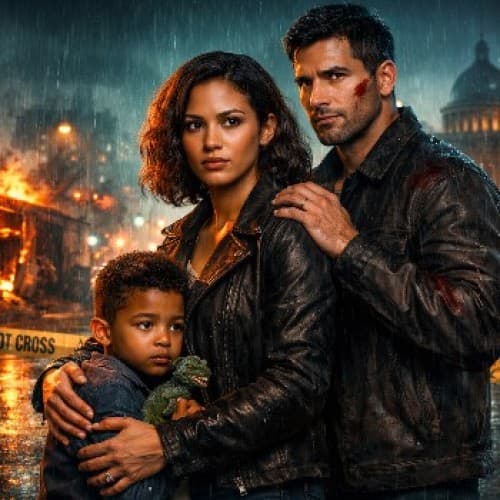

Raiyn had always carried the world like a familiar weight, steady, concise, the kind of person who tightened the straps on everyone else’s burdens before she noticed her own. She moved through days with a practiced kindness: warm smiles, quick laughter, hands that soothed and fixed. Her esthetician studio smelled of citrus and steam, a small sanctuary where she could make other people feel whole. Still, when the lights dimmed and the last client left, the room felt too quiet, the air too thin for the hope she kept folding into the corners of her life.
She wanted a brighter tomorrow, but the present read like a gray photograph. She longed for a partner whose presence would be more than a passing warmth; she wanted someone who would stay. Watching friends exchange vows and baby photos left a hollow ache she tried to hide behind jokes and extra hours at work. Resentment, small and bitter, threaded through her when she saw their married faces—an ache she could not name without feeling ashamed. At night, she asked the same question until it sounded like a cracked record: Why not me? What is wrong with me?
Her business had been her answer for six years, a place where her hands could do honest work and where people left feeling lighter. Yet the old hurts had a way of settling into her bones, a quiet conviction that something inside her was broken beyond repair. She wanted compassion, a mirror that reflected not just her competence but her worth.
Then, on an ordinary afternoon between racks of clothes and fluorescent lights, the world tilted. Vincent stepped into her orbit like a sudden draft: short black hair catching the light, light brown eyes that watched with an easy curiosity, a broadness to his shoulders that suggested steadiness. He smelled faintly of cedar and motor oil, a scent that felt both domestic and dangerous. Raiyn felt the familiar, ridiculous flutter—surprise that anyone like him could be interested in someone like her.
She was beautiful in ways people noticed—light caramel skin, shoulder, length waves that caught the sun, a fit, compact strength in her frame, but compliments had become background noise. They never reached the place inside her that kept tally of past betrayals. Her son, Darious, was the center of her small universe: five years old, bright, and unaware of the private grief she carried. Men had praised her independence and loyalty until those words felt like accusations. She wondered if her steadiness scared them away.
Still, she took a chance. She gave Vincent her number with a guarded smile and, after tucking Darious into bed that night, dialed Vincent. Their first conversation stretched into hours, easy, probing, honest. She asked the questions she always asked first: Are you single? Do you have children? Are you who you say you are? He answered with a calm clarity: marketing executive by day, carpenter and classic, car devotee by heart. He spoke of wood grain and engine hum with the same reverence she reserved for the small rituals of her work. She liked that he was good with his hands.
They traded stories like people testing the temperature of a bath, slow, careful, then finally willing to sink in. Raiyn told him about the long nights, the bluntness that kept her safe, the kind of partner she needed. Vincent listened in a way that made her feel seen rather than judged. On their first date, he remembered the things she loved: art and science, and led her through an expo where paintings breathed, and sculptures held their own quiet secrets. She watched him watch her, and the world narrowed to the space between their glances.
When she surprised him with a trip to a classic car show, his smile was the kind that reached his eyes. They fit into each other’s rhythms with a cautious ease, and soon they were dating in a way that felt honest: not a rebound, not a game. For the first time in a long time, attraction arrived without apology.
After six months, the day came to introduce Vincent to Darious. Anxiety braided with hope as she buckled her son into the car, imagining every possible misstep. She did not want Vincent to feel obligated; she did not want to ask too much of a man still learning their edges. The meeting surprised her. Darious gravitated toward Vincent with a quick, unselfconscious trust that warmed her more than she expected. Watching them together, something in Raiyn unclenched.
Happiness, however, casts new shadows. Friends who had once been close grew distant, their smiles thin with something like envy. Raiyn felt their skepticism like a chill at the back of her neck. Vincent suggested she speak to them, to clear the air; if that failed, he told her to follow what felt right for her and Darious. He wanted them to be safe and happy.
The next day, as she locked up the studio, Vicki appeared in the parking lot—familiar, abrupt, the past arriving in a single breath. “Hi, Raiyn. I heard you’re seeing someone. Tell me about him. Where did you meet? What’s his name?” she asked, voice too casual for the weight of what lay between them.
Raiyn’s patience thinned. “Why is that any of your concern? You haven’t talked to me in three years. What do you want?” Her words were sharp, a shield she’d learned to raise.
Vicki’s apology came in a rush—weddings, a father’s death, excuses that tried to soften absence. Raiyn listened, the memory of betrayal like a live wire under her skin. When she spoke, the hurt poured out raw and precise: the night Darious’s father died, the secret that had been kept, the betrayal that had cut deeper than any wound.
“You slept with Darious’s father while we were together,” she said, each syllable a small, controlled blow. “I know that you were with him the night he died. The police never found out what caused the crash. It’s funny how you managed to get out without a scratch. You left me feeling hurt and betrayed. I had to tell my son his father wasn’t coming home. Do you know what that felt like? Now, I have to get home.”
Vicki reached for something, a receipt with a name on it, and slipped inside the window of the car before Raiyn had turned the key in the ignition. She drove away with the rearview mirror framing Vicki’s small, shrinking figure, feeling anger and a sorrow that tasted like iron. Why return now, after vanishing when she was needed most? The question hung in the air, unanswered, as the road ahead blurred into possibility. Raiyn picked up Darious from his afterschool program and headed home.
The road blurred into a smear of streetlights and late summer heat. Raiyn kept the radio low, a thin hum behind the steady thrum of the engine. Darious slept in the backseat, his small face turned toward the window, mouth slack with the kind of trust that made her chest ache. She watched him in the rearview mirror and felt the old, familiar tightening, protective, reflexive—then let it go like a breath she’d been holding too long.
At home, the house smelled of lemon oil and the faint residue of the studio. She carried Darious inside on autopilot, the weight of him a warm, living thing against her hip. She tucked him in, smoothed the blanket over his shoulders, and lingered at the doorway until his breathing evened. Only then did the adrenaline that had kept her upright begin to ebb, leaving a rawness that felt like a bruise.
She sat at the kitchen table with the engine of the day still running in her veins. The streetlight through the blinds painted bars across the counter. Vicki’s words replayed in a loop, precise, impossible to unhear. Raiyn could feel the old wound under her ribs, the one that had hardened into a private map of what to avoid and whom to trust. She had rehearsed this moment a thousand times in the dark: the question she would ask, the accusation she would make, the way she would keep Darious safe. But the rehearsal had never included the small, human details, Vicki’s voice cracking on the word sorry, the way she reached for something that wasn’t there.
Her phone buzzed on the table. Vincent’s name lit the screen. For a second, she considered letting it go to voicemail, letting the silence hold the shape of what had happened. Instead, she answered.
“Hey,” he said, the single syllable greeting steady in the quiet.
“Hi,” she said, and the word came out smaller than she intended. “Can you talk?”
There was a pause, then, “Always. What’s wrong?”
She told him, not the whole history, she didn’t have the energy for that kind of excavation, but the facts that mattered: Vicki’s sudden appearance, the accusation, the memory of the night she’d been left alone with a son and a question that had no answer. She kept her voice even, the way she did with clients who needed to hear the truth without being overwhelmed by it.
Vincent listened. She could hear him moving, maybe pacing, maybe leaning against something solid. When he spoke, his voice was careful. “Do you want me to come over?”
She surprised herself by saying yes. Not because she needed rescuing, she had never wanted that, but because the idea of someone else holding the edges of the moment felt like a small mercy. She wanted a witness who would not flinch at the mess.
He arrived with a thermos of coffee and a quilt that fit around her like a blanket. He sat across from her at the table and watched her with the same steady curiosity that had first drawn her in. “Tell me everything,” he said.
So, she did. She told him about the crash, about the nights she had spent explaining absence to a child who deserved a father, about the way betrayal had taught her to measure affection in degrees of safety. She told him about the hollow ache that had become a companion, and about the small, bitter resentments that had threaded through her when she saw other people’s married faces.
Vincent did not offer platitudes. He asked one practical question after another: dates, names, the police report, and then, when the facts had been laid out, he asked the question she had not been able to ask herself: “What do you want to happen?”
Raiyn thought of Darious asleep two rooms away, of the life she had built that was both fragile and stubbornly whole. She thought of Vicki’s small, shrinking figure in the parking lot and the way the past had arrived like a storm front. “I want the truth,” she said finally. “I want to know why she left, why she came back, and whether there’s anything I don’t know that could hurt Darious.”
Vincent nodded. “Then we find it,” he said. “Together.”
It was not a promise to fix everything. It was not a vow to erase the past. It was, instead, a small, practical alliance: two people agreeing to look at what had been hidden and to decide, with eyes open, what to do next. Raiyn felt something unclench inside her at that, less a surrender than a reallocation of weight. For the first time in a long while, she imagined carrying less of it alone.
They made a plan. Raiyn would pull the old police report and any paperwork she still had. Vincent would see if he could find anyone who remembered the night neighbors, the tow yard, or anyone who might have seen the car. They would keep Darious’s life steady while they looked, and they would tell him only what he needed to know, when he needed to know it.
When Vincent left, he kissed her forehead the way someone tucks a blanket around a sleeping child. It was a small, domestic gesture, and it landed with more force than she expected. She stood in the doorway and watched him go, the porch light swallowing him until he was gone. The house felt quieter, but not empty. The weight she carried had shifted; it was still there, but now it had a partner.
She sat back down at the table and opened a drawer where she kept old receipts and a folded copy of the police report. The paper was thin and yellowed at the edges. She smoothed it out and read the lines again, as if the act of reading could rearrange the past into something that made sense. Outside, a car passed, and the sound of its tires on wet pavement was ordinary and indifferent.
Raiyn folded the report and put it in her bag. Tomorrow she would call the precinct. Tomorrow, she would start asking questions she had avoided for years. Tonight, she let herself sit with the small, steady knowledge that she did not have to carry everything alone anymore. The thought felt like a light she could keep, carefully, cautiously, on the table beside her.
The next day, Raiyn followed through on their plans. Raiyn remembered how the precinct smelled faintly of coffee and old paper. Raiyn sat at her kitchen table with the police report spread like a map between them; Vincent leaned over the page, thumbs tracing dates and names as if they could be coaxed into meaning. The light from the window cut the paper into bright strips; Darious’s drawings were stacked at the edge of the table, a child’s world pressed up against the adult one she was trying to read.
“Look here,” Vincent said, tapping a line about the tow yard and a time stamp that didn’t match the story she’d been told. He read the officer’s shorthand aloud, carefully, as if the cadence might reveal a lie. Raiyn listened to the sound of his voice and felt the old reflex, catalog, assess, protect, soften into something else: a willingness to let someone else hold a piece of the work.
She called the precinct and left a message, then texted a number Vincent had found for the tow yard. Each small action felt like a stitch. Inside her, the question had been a cracked record. Why not me? lost a little of its pitch. She was still the one who tightened straps, but now she was asking someone to help with the knots.
When Vincent suggested they drive by the old neighborhood that night, she agreed. The streets were quiet, porch lights like watchful eyes. Raiyn watched him watch the houses, the way his jaw set when something didn’t add up. She felt a new muscle working in her chest: the muscle that let her ask for help and accept it without shame. It was small and awkward at first, like learning to use a new tool, but it worked.
They found a neighbor who remembered the night, an old woman who kept a careful ledger of comings and goings. Her memory was a patchwork of smells and sounds: a late engine, a shout, the flash of headlights. She mentioned a man who’d been at the curb earlier that evening, someone who’d helped push a car into the driveway. The name she offered was a sliver of something Raiyn had never expected to hear. Vincent wrote it down without comment. Raiyn felt the air shift; the past was no longer a sealed box.
Back at home, Raiyn sat on the floor of Darious’s room with his small shoes lined up like sentries. The receipt Vicki had given her was folded into her palm; the name on it matched the neighbor’s memory. It was a thread she could pull. Vincent’s presence was steady in the next room; he was making tea, the kettle’s whistle a domestic punctuation. Raiyn felt the old reflex to fix everything herself, but the memory of the precinct and the neighbor’s ledger had changed the shape of that reflex.
She called Vincent into the doorway and said, simply, “I need you to be with me on this.” The sentence was a small surrender and a clear boundary at once. She would not let Vicki’s confession become a private burden she carried alone, nor would she let it become a spectacle that upended Darious’s life. She wanted truth; she wanted protection; she wanted to choose the timing and the terms.
They made a plan that balanced care and action. Vincent would follow up on the tow yard and the man who’d been seen at the curb; Raiyn would request the full file from the precinct and speak to the officer who’d written the original report. They agreed on one rule: nothing would be said to Darious until they had facts and a plan for how to explain them in a way that would not fracture his sense of safety.
As they worked, Raiyn noticed a subtle change in herself. When she called the precinct, she did not simply recite facts; she asked for help navigating the bureaucracy. When she spoke to the neighbor, she did not swallow the neighbor’s memory into a private ache; she let it stand as evidence. Asking for help no longer felt like weakness. It felt like a strategy. That evening, after Darious was asleep, Raiyn sat with Vincent on the couch and let herself be small in a way she had not allowed in years. She told him about the nights she had learned to be the steady one, about the tally she kept of betrayals. He listened without trying to fix the past; he offered a steady presence and practical steps. “We’ll do this together,” he said. “We’ll keep him safe, and we’ll find out what really happened.”
Raiyn believed him. Not because she had stopped being wary, but because she had begun to trust that asking for help could be part of her strength. The next morning, a message from the tow yard arrived: a scanned image of a receipt with a license plate number and a timestamp that did not match the official report. It was a small, stubborn clue, enough to pull on. Raiyn folded the paper into her pocket and felt, for the first time in a long while, the future as something she might shape with other hands beside hers.
After dropping her son off at his grandmother’s the next day, they went to the tow yard, which smelled of oil and old rubber, a metallic tang that sat in Raiyn’s throat. Rows of dented cars glinted under sodium lamps; a chain-link fence kept the world at bay. Vincent moved with a quiet purpose, his hand on the clipboard as if it were a tool he’d been born to use. Raiyn watched him watch the lot—how he read the angles of a hood, the way a fresh scratch told a story. She felt the old reflex, catalog, protect, but it no longer closed her in. It opened her to the work.
They met the tow yard manager, a man named Luis who had the slow, careful speech of someone who’d learned to keep his head down. He handed over a photocopy of the intake log: dates, license plates, a hastily scrawled note about a “private tow.” The timestamp didn’t match the police report. Vincent’s finger hovered over a line; Raiyn’s pulse tightened in a way that felt like a rope being pulled.
“Who dropped it off?” she asked, and the question came out steadier than she felt.
Luis shrugged. “Guy in a dark jacket. Said he’d handle it. Paid cash. Left quickly.” He tapped the paper. “Plate’s registered to a shell company. We get those sometimes.”
Raiyn’s mouth formed the shape of a name she’d never heard aloud: shell company. It sounded like a thing that belonged in other people’s lives, not the one she’d built with Darious. Vincent leaned in. “Do you have surveillance?”
Luis nodded toward a battered office. The grainy footage showed headlights, a figure moving too fast for the camera’s frame. The man’s face was a blur, but his gait—an easy, practiced stride- was distinct. Vincent rewound and froze the frame. Raiyn squinted until the blur resolved into a posture she recognized: the way someone carried a weight they were trying to hide.
Outside, the wind picked up, and the yard’s chain-link fence rattled like a loose tooth. Raiyn felt the air change—small, ordinary things that meant someone else had been here, had touched the edges of her life. She had expected facts; she had not expected the way the facts would rearrange the furniture of her heart. Asking for help had been one thing. Letting the help do its work was another.
They left with a photocopy and a name: a tow yard receipt with a license plate and a timestamp that put the car somewhere it shouldn’t have been; it was a garage. That was their next stop. Vincent drove; Raiyn rode with the paper folded in her palm like a talisman. The city slid by in a smear of neon and rain. She thought of Darious asleep at his grandmother’s, of Vicki’s trembling hands, of a man she’d loved who had kept a life in the dark. The thought did not break her. It sharpened her.
The garage smelled of varnish and gasoline, a place where hands left their signatures in metal shavings and sweat. The man who answered the door—short, with a face like a map of small compromises—introduced himself as Marco. He had the easy, practiced politeness of someone who’d learned to talk his way out of trouble.
Vincent didn’t waste time on pleasantries. “We’re looking for information about a car towed last year. A 1998 Chevy. Plate ends in 7-2.”
Marco’s eyes flicked, then narrowed. He stepped back and let them in. Inside, the garage was a cathedral of parts: chrome stacked like offerings, engines on stands like sleeping beasts. Marco moved among them with the familiarity of a man who’d spent his life coaxing order from chaos.
“You’re poking at old ghosts,” he said. “That car belonged to Malik.” The name landed like a stone. Raiyn felt the room tilt.
“Malik?” she repeated. The name had been a soft echo in her life—Darious’s father, the man whose absence had been a permanent ache. Hearing it spoken by someone else made the ache concrete.
Marco’s jaw tightened. “He was in over his head. Not with the usual stuff, gambling, this was different. He got mixed up with people who move parts and people. They used cars to hide things—parts, receipts, sometimes money. Malik wanted out. He tried to fix up that Chevy, make it something clean. He thought that if he could sell it, he could pay off what he owed. He was trying to be a different man.”
Raiyn’s hands went cold. “Who are they?”
Marco’s laugh was a dry thing. “Names don’t help much. There’s a crew, small but dangerous.
They run shipments through the city and use garages like mine as drop-off points. Malik got a job moving a crate. He said it was just parts. He didn’t know what was inside until it was too late.”
Vincent’s face hardened. “Did he say who he was working for?”
Marco shook his head. “No. He was scared. He started missing payments. People started asking questions. He tried to pay them back with the Chevy. They didn’t take the car. They took him.”
Raiyn’s throat closed around a sound that was almost a laugh and almost a sob. The story fit into the spaces she’d been avoiding: a man trying to be better, a debt that grew teeth, a secret life that had nothing to do with the family she’d known. It explained the late-night calls she’d never heard, the sudden absences she’d been left to explain to a child.
“Why didn’t you tell me?” she asked Marco, but the question was for herself as much as for him.
Marco's eyes were tired. "You weren't supposed to know. People like Malik keep their messes private. I tried to help him. I told him to run. He wouldn’t. He said he had to fix it, that he had to make things right for Darious." He looked at her, and for a moment, the garage felt too small under the weight of his words. "He was scared, lady. Scared of what they’d do if he walked away. But you know what? He did have something stashed in a storage facility across town. I’m not sure what he has in there, but here’s the address. He told me to hold on to it for leverage."
"I had no idea what he was doing all this time. I feel like a fool. First, he messed around with Vicki, and now I find out he was living a double life. This is too much," she said, letting out a sigh.
Marco paused before answering. "I am so sorry. He was hoping you’d never find out about what he’s been up to. Check out the storage facility. I hope you find what you’re looking for."
Raiyn felt something inside her shift from ache to a cold, practical clarity. Fear had driven the secret; fear had kept Malik in place. If she wanted answers, she would have to confront that fear at its source. She would have to stand where he had stood and uncover what had been hidden from her. She and Vincent had their next stop.
They found the crate at a storage facility on the edge of town, a corrugated metal building that smelled of dust and old cardboard. The unit number matched the tow yard receipt. Vincent’s hands were steady as he pried the lock; Raiyn’s heart hammered in her throat like a warning drum. The storage unit opened onto a dim room where wooden crates sat stacked like anonymous coffins.
Inside, the air was stale and the light thin. They lifted a crate lid and found not engines but a tangle of electronics, circuit boards, wiring, and devices wrapped in plastic. The kind of equipment that could be used for something ordinary, or for something that made people dangerous. Vincent’s fingers traced the components as if reading a language he didn’t want to know.
“Explosives?” Raiyn whispered, the word a small, sharp thing.
“No,” Vincent said. “But these could be used to make things that start fires. Or to rig systems. This is not just parts. This is infrastructure.”
A sound at the door made them both turn. Suddenly, they heard footsteps. Raiyn’s breath hitched. She had imagined danger as a distant thunder; here it was, a shadow at the threshold. Someone had been watching the unit. They moved fast. Vincent grabbed the crate; Raiyn grabbed her phone. The footsteps stopped, then retreated. A car door slammed outside—too casual, too practiced. Someone wanted them to know they’d been seen.
Back in the car, the city lights smeared into streaks. Vincent drove with a new urgency. “We call the precinct,” he said. “We don’t touch anything else.”
Raiyn’s fingers tightened on the steering wheel. She wanted to call Vicki, to demand more answers, to ask why she’d been left with a secret that could burn. Instead, she called the officer whose name was on the old report. The line rang and rang until a voice answered, tired and clipped.
“We found a storage unit,” she said. “There are components in there. We were seen. We need someone to check it out.”
The officer’s pause was a small, formal canyon. “We’ll send someone,” he said. “Stay put. Don’t touch anything.”
They waited in the car, the engine a low hum. Raiyn watched Vincent’s profile in the rearview mirror, set, determined, a man who had learned to hold steady in the face of things that could break. She felt the old reflex to shoulder everything alone, to keep Darious safe by carrying the weight herself. But the night had taught her another muscle: to let someone else stand beside her while she did the hard work.
A siren wailed in the distance, then another, then silence. The storage facility’s lights flickered. A smell rose—sharp, chemical, the metallic tang of something that wanted to burn. Raiyn’s stomach dropped. She thought of the crates, of the devices inside, of the way secrets that are left to fester find oxygen.
“Move,” Vincent said, and his voice was a command that carried the weight of a promise.
They drove. Behind them, the storage facility’s lights flared, and a thin column of smoke began to thread into the sky. Raiyn watched the glow in the rearview mirror and felt the world tilt toward a new axis: truth was no longer a private excavation. It was a danger that could spread, and the people who had kept it were not finished.
She thought of Malik, of the man who had tried to fix a life and been swallowed by the machinery he’d touched. She thought of Vicki, of the receipt and the confession and the small, stubborn attempt at repair. She thought of Darious, asleep and trusting, and felt a fierce, hot clarity settle in her chest.
They would not let the past burn without answering for it. The choice was no longer whether to carry the weight alone; it was whether to stand in the fire with other hands and pull the truth out before it consumed everything.
The storage facility still smelled of hot metal and wet cardboard when they returned the next morning. A police tape fluttered like a wounded flag; investigators moved with the slow choreography of people who had rehearsed disaster. Raiyn stood at the edge of the lot, the glow from last night’s blaze still ghosting the corrugated walls. Her hands were empty except for the photocopy of the tow yard receipt, the paper now a small, stubborn relic of something that had tried to be hidden.
Vincent kept his voice low. “They moved fast,” he said, eyes on the scorched wood. “Too fast.”
A uniformed officer, young, with a face that tried for neutrality, approached and offered the kind of condolences that are meant to close a conversation. Raiyn watched his badge number as he spoke, the metal catching the sun. It was the same number she’d seen in the grainy footage from the precinct’s archive, the one that had been circled in a handwriting she didn’t recognize. Her stomach tightened.
“Can we see the report?” she asked.
The officer’s smile thinned. “The investigation is ongoing. You’ll have to speak to Detective Wilson.”
They headed to the precinct to see the head Detective like the young police officer had said. Detective Wilson’s office smelled of stale coffee and paper. He was a broad-shouldered man who wore authority like armor. He read the photocopy without surprise and then set it aside. “You found a storage unit,” he said. “You saw something. That’s dangerous. You did the right thing calling us.”
His tone was practiced. Vincent’s jaw tightened. “Someone was here last night after we left.”
Vincent said. “We were followed. The lock was fresh. We saw footprints.”
Wilson’s eyes flicked to the window as if he’d expected that answer. “You did the right thing leaving it alone,” he repeated. “We’ll handle it.”
Raiyn felt the old reflex—catalog, protect—rise like a tide. She wanted to press, to demand the surveillance footage, the chain of custody, the names of officers on duty. Instead, she asked a smaller question, the one that would not let the moment close: “Who authorized the early burn? The fire crew said they were told to clear the unit.”
Wilson’s face hardened. “We don’t comment on operational decisions.”
Outside, Vincent’s hand found hers for a second, a small anchor. She squeezed back, and the squeeze said what words could not: we are not done. As they left the precinct, a patrol car idled at the curb. The officer inside watched them with a casual attention that felt like a measuring stick. Raiyn noticed the way his fingers tapped the steering wheel—an impatient rhythm that matched the one she felt in her chest.
Back in the car, Vincent pulled up the footage they’d downloaded from the tow yard. He paused on a frame where a shadow moved near the storage facility the night before the fire. A badge glinted in the blur. Not a number, just the shape of authority. Raiyn’s breath left her in a small, sharp sound.
“Some of them are in on it,” she said, the words a flat stone dropping into a well.
Vincent didn’t argue. He drove with a new, careful speed, eyes on the rearview mirror as if expecting the world to answer with headlights. The city felt smaller and colder, as if the places she’d trusted had been rearranged while she slept.
Vincent’s suggestion came like a practical prayer. “Let Darious stay with your mother for a few days,” he said. “We’ll move faster without worrying about him. We’ll keep him safe.”
Raiyn’s first reaction was reflexive refusal. The idea of handing Darious over felt like handing away a piece of herself. She pictured his small shoes by the door, his laugh in the kitchen, the way he curled into her side at night. But the image of the storage unit—open, watched, vulnerable, kept surfacing. She had not yet learned to carry danger and a child at the same time.
She found herself bargaining in small, precise terms. “Two days,” she said. “No more than two. I’ll call every hour.”
Vincent’s face softened. “Two days. I’ll come with you when you drop him off. We’ll make a plan for check-ins. We’ll be back before he knows we were gone.”
They packed a small overnight bag for Darious with the kind of care that felt ceremonial: his favorite dinosaur tucked between socks, a crayon drawing folded into the pocket of a jacket. Raiyn watched Vincent fold the jacket the way someone folds a promise—neat, deliberate, with the crease in the middle.
At her mother’s house, the porch light was on. Her mother opened the door with the same quick, practical movements she’d used when Raiyn was small, hands that could fix a broken toy or a broken heart. Darious ran into her arms without hesitation, and Raiyn felt the tug of guilt and relief in the same breath. “Be careful,” her mother said, not as a warning but as a fact. “You two look like you’re walking into something.”
Raiyn nodded. She wanted to say she would keep him safe, that she would be back before the moon changed. Instead, she kissed Darious’s forehead and let him go. The act felt like a small, necessary fracture: a letting go that made space for other hands to hold what she could not hold alone.
On the drive back, Vincent’s silence was not empty. He hummed a low tune, a way to fill the car with ordinary sound. Raiyn watched the city pass and felt the newness of the arrangement settle into her bones. She had given away a piece of herself and, in doing so, had made room to do the work that might keep that piece whole.
Finally, they made it to their next location. Hopefully, it wasn’t another dead end. The industrial supplier was a low, brick building with a sign that had lost half its letters. Inside, the air smelled of sawdust and solvent. The man behind the counter, an accountant by the look of his glasses and the careful way he stacked invoices, kept his eyes on the ledger as if it were a living thing.
Vincent asked for records. Raiyn watched the man’s hands move, the way he flipped pages like someone who had memorized the rhythm of transactions. The ledger was a dense thing, columns of numbers and initials. At first, it looked like the ordinary commerce of a city that never stopped trading favors. Then Vincent’s finger stopped on a line: a payment to Malik, a date, and beside it a set of initials Raiyn recognized from the precinct’s roster.
Raiyn’s throat went dry. The initials matched the detective who’d told them the investigation was ongoing. The numbers matched the amounts Malik had been trying to raise. The ledger was a map with a red X.
“Who else has access to these records?” she asked.
The man’s eyes flicked to the door. “A few regulars. We don’t ask questions.”
They left with a photocopy and a new, heavier certainty. The ledger tied the supplier, the storage unit, and the precinct into a single, ugly knot. Someone had been moving money, and someone in uniform had been taking it.
On the drive back, Vincent’s phone buzzed. He glanced at the screen, and his face went still. A text from an unknown number read: Stop digging. This is bigger than you. Raiyn felt the words like a physical shove. Her hands tightened. “Who sent it?” she asked.
Vincent scrolled. No number, no trace. Just the message, blunt and cold. He started the car and took a different route, one that cut through alleys and side streets. The city’s geometry felt suddenly treacherous; every turn could be watched, every stop a place to be boxed in. They parked two blocks from the house and walked the rest of the way, eyes on reflections in shop windows. On the way, shadows moved. At a crosswalk, a black sedan idled too long at the light. Its driver met Vincent’s gaze for a second that stretched like a wire. When the light changed, the sedan followed them for three blocks before turning away.
Back at the house, Raiyn unlocked the door with hands that trembled just enough to be human. She checked the locks, the windows, the small, private geometry of the rooms. The house felt smaller now, as if the walls had ears. She thought of Darious asleep at his grandmother’s, of Vicki’s confession, of Malik’s ledger, and of the badge number that had glinted in the footage.
They had more questions than answers. Who in the precinct had the initials in the ledger? Who had authorized the burn? Who had sent the text? Each answer seemed to open another door into a room that smelled of smoke and money and fear.
Vincent sat at the kitchen table and spread the photocopies between them like a battlefield map. “We keep going,” he said. “But we do it smarter. We document everything. We don’t go alone. We don’t touch anything we can’t prove.”
Raiyn nodded. The old reflex to shoulder everything alone still lived in her, but it had been tempered by a new muscle: the ability to plan with other hands. She felt the tension coiling in her chest—fear, yes, but also a fierce, hot focus. The danger had become real, and with it the stakes for Darious and for the truth.
A knock at the door made them both startle. Vincent moved first, hand on the knob. Through the peephole, there was no one, only the porch light and the smear of a shadow that could have been anything. On the mat lay a single scrap of paper, edges singed as if it had been through fire and then cooled.
Raiyn picked it up with fingers that did not shake. On the scrap was a single line in a handwriting she did not know: You should have left it buried. The scrap of paper burned in Raiyn’s palm like a small, cold coal. You should have left it buried, the handwriting had said, edges singed as if whoever left it wanted to remind them of the fire that had already been set. Vincent watched her from the kitchen doorway, the light catching the line of his jaw. He moved toward her with the slow certainty of someone who had learned how to steady other people.
“It’s a warning,” he said, and the word was both fact and balm. He folded the scrap and slid it into an envelope, then set the envelope on the table as if containing the message might contain the danger too.
Raiyn laughed once, a short, brittle sound. “Or it’s a threat,” she said. “Either way, it’s telling us to stop.”
Vincent came closer and put his hands on her shoulders. He did not try to fix the world for her; he offered a steadier thing—presence. “We don’t stop,” he said. “We get smarter. We protect Darious. We document everything. We move as we mean it.”
She wanted to believe him. The thought of handing Darious over to her mother for a few days had felt like a fissure in her life, but the scrap had widened the fissure into a crack that could swallow them if they stayed. She pictured Darious asleep at his grandmother’s house, safe and oblivious, and felt both relief and a new, raw fear.
“Maybe this is too much,” she admitted, the words small and honest. “Maybe I should have left it buried.”
Vincent’s hand cupped her cheek. “You didn’t bury it,” he said. “You found it. That’s brave. That’s what matters.”
The argument dissolved into something quieter. They moved toward each other not with urgency but with a careful tenderness. The house, for a few hours, became a place where the world could be held at bay. They made love in a way that was warm and protective, a mutual shelter rather than a blaze. Afterwards, Raiyn lay with her head on Vincent’s chest and listened to the steady beat beneath his ribs. The rhythm was a small, human proof that she was not alone.
When she finally slept, it was not the brittle, watchful sleep she’d carried for years. It was a sleep that let her shoulders drop, that let the tightness in her throat loosen. Vincent’s arm around her felt like a promise that did not need words: we will stand in this together.
The next days moved with the compressed intensity of people who had decided not to be surprised again. They worked in pairs and in lists: call the precinct, copy the ledger, visit the tow yard, cross-reference timestamps. Each small fact was a stitch that either held or frayed.
A surveillance clip from a convenience store camera put Detective Wilson near the storage facility the night before the fire. The footage was grainy, but Wilson’s silhouette and the way he walked—hands in pockets, head down, matched the badge shape Vincent had frozen from the tow yard frame. When they took the clip to a retired cop who owed Vincent a favor, the man’s face went flat.
“That’s not a coincidence,” he said. “If Wilson was there, someone higher up signed off. You don’t torch evidence without a reason and a green light.”
They followed the ledger’s money trail to a construction firm that did more than pour concrete. The firm’s invoices were padded, payments routed through shell companies, and one recurring line item matched the amount Malik had been trying to raise. A name on a subcontractor list—R. Calloway—kept appearing beside payments and storage unit rentals. Calloway was not a name Raiyn recognized, but it was a name that kept surfacing like a bruise. Raiyn checked on Darious and let her mom know she needed a little more time. She and Vincent were finally on the right track. Her mom told her that she loved her and to be careful.
On the third day, a man from the supplier’s office called Vincent and asked to meet in a public place. He arrived with a face that had been worn thin by fear. “You don’t know what you’re getting into,” he said. “There are people who will make this go away.”
Vincent’s reply was steady. “We already know it’s dangerous. We’re not going away.”
The man slid an envelope across the table. Inside were photocopies of bank transfers and a note: Keep your heads down. He refused to say more. When he left, he walked like a man who expected to be followed.
That night, Vincent replayed the surveillance again and again. Each time, the same badge glinted in the frame. Each time, the same shadow moved like a hand across the evidence. Raiyn watched him work and felt the tension coil tighter. They were no longer chasing a single man’s secret life. They were unraveling a network that used cars, storage units, and municipal contracts to hide something larger.
The city felt like a map with certain streets erased. Every call they made, every person they met, left them with more questions than answers. The ledger suggested money. The storage units suggested infrastructure. The badge in the footage suggested protection from inside the system. The pieces were beginning to fit, but the picture they formed was worse than either of them had imagined.
On the fourth day, a small, unexpected lead arrived: a USB drive found in Malik’s old toolbox at Marco’s garage. Marco had been cleaning out the bench and found the drive taped under a false bottom. He handed it to Raiyn with a look that said he knew the risk of giving her anything at all.
They took the drive to a friend who could read files without leaving fingerprints. The folder names were bland—inventory, routes, payments—but inside were spreadsheets and scanned receipts that matched the ledger. There were names, account numbers, and a list of storage units with dates. One spreadsheet had a column labeled drop and another labeled clearance. In the margins, someone had typed a single word repeatedly: Calloway.
Raiyn’s stomach dropped. The drive did not give them everything. It gave them enough. Enough to show that Malik had not been a lone man in trouble. He had been a small part of a larger operation that moved things through the city under the protection of people who wore badges. As they sorted the files, Vincent’s phone buzzed. A photo arrived from an unknown number: the exterior of their building, taken from across the street. The timestamp was from an hour ago. The message that followed was simple: We told you to stop.
Raiyn felt the room tilt. The files on the screen were proof; the photo was a threat. The two together made the danger immediate and personal. Vincent’s hand found hers and squeezed. “We lock the doors,” he said. “We change routines. We go to safe places. We don’t let them scare us into silence.”
She wanted to be brave in the way she had once been, unflinching, solitary, but the image of Darious sleeping at his grandmother’s house kept surfacing. The thought of him in harm’s way made the fear sharp and precise. She thought of Vicki’s confession, of the burned storage unit, of the ledger’s initials, and of the badge in the footage. The conspiracy had teeth, and it had friends in places that should have protected them.
They made a plan that night: document everything, make copies of the drive, send encrypted files to a trusted journalist contact, and prepare to move if necessary. Vincent would follow the money trail to Calloway’s listed addresses; Raiyn would request the precinct’s chain-of-custody records and press for the surveillance footage through a lawyer. They would not act alone.
Before they slept, they checked the locks, set a lamp on a timer, and left a light on in Darious’s room even though he was at his grandmother’s. Raiyn lay awake for a long time, listening to the city breathe. The files on the screen had given them a partial truth and a new, sharper fear. The pieces were beginning to fit, but the picture they formed was a machine built to hide things, and now that machine knew they were looking.
Outside, a car idled at the corner for a long minute and then drove away. Inside, Raiyn felt the weight of the coming days settle on her shoulders. She had asked for the truth. The truth had answered with danger. She closed her eyes and let Vincent’s hand find hers in the dark. The promise between them was no longer only about comfort. It was a pact: they would follow the thread, together, until they either unraveled the whole thing or it unraveled them.
The house felt smaller at night, the shadows in the corners like waiting things. Raiyn sat at the kitchen table with the photocopies spread out—ledgers, the USB printout, the tow yard receipt—each sheet a small, stubborn truth. Her fingers traced the same line on the ledger until the ink blurred. The initials R. Calloway repeated like a pulse; Hargrove’s badge number kept surfacing in frames and receipts. The more she fit pieces together, the more the picture looked like a machine built to hide itself.
Vincent came back from the window with two mugs of tea. He set one down and watched her without hurry. “You look like you’re carrying the whole city,” he said, and the attempt at lightness landed like a hand on her shoulder.
She let out a breath that was half laugh, half sob. “Maybe I am,” she said. “Maybe I dug up something that should have stayed buried.”
He sat opposite her and folded his hands around the mug. “Then we bury it better,” he said. “We don’t run. We don’t panic. We plan.”
Raiyn wanted to believe him. She wanted to be the steady person she’d always been—the one who tightened straps and kept the world from tipping. But the scrap of paper, the burned storage unit, the surveillance badge in the footage: they had a way of turning steadiness into stubbornness. She felt the old reflex to shoulder everything alone, and beneath it a new, sharper fear: if they pushed too hard, someone with power would push back harder.
Vincent reached across the table and took her hand. His thumb rubbed the back of her knuckles in a slow, steady rhythm. “You don’t have to carry it alone,” he said. “Let me carry some of it with you.”
She let herself lean into that small, practical comfort. The contact was not a cure; it was a tether. For the first time since the scrap had appeared on the mat, she allowed herself to imagine a path forward that included other hands.
Later, when the city had gone quiet, they moved together in a different kind of soft, careful way of closing the day that felt like a promise. It was not an escape from fear; it was a small, human defiance against it. In Vincent’s arms, Raiyn slept with her shoulders down for the first time in weeks.
The next morning, they split tasks with the efficiency of people who had learned to trust each other’s strengths. Vincent followed a paper trail to a subcontractor listed under Calloway’s firm; Raiyn filed a formal request for the precinct’s chain-of-custody records and reached out to the retired cop who’d warned them about Wilson. Each call, each meeting, felt like stepping onto a floor that might give way.
At the construction office, Vincent met a foreman who answered questions with the careful cadence of someone who’d been coached. The foreman’s name was Steven Calloway—the R. Calloway on the ledger, and his smile was the kind that practiced innocence. He offered plausible deniability and a stack of invoices that looked tidy until Vincent pointed out the shell-company routing. Steven’s jaw tightened, then smoothed. “We subcontract a lot,” he said. “Paperwork gets messy.”
Vincent left with a name and a new suspicion: Calloway was not just a name on a ledger; he was a node. The man’s reach touched municipal contracts, storage rentals, and suppliers. The more Vincent dug, the more the network’s edges revealed other hands, men who moved money and men who moved silence.
Raiyn’s day was a different kind of excavation. The precinct’s records clerk was slow and officious until she mentioned a lawyer friend and the word public. Suddenly, the clerk’s tone shifted; she produced a photocopy of a chain-of-custody log with a line missing where the storage unit’s evidence should have been. The missing line was a hole with a name stamped beside it: Wilson.
When Raiyn and Vincent compared notes that evening, the room felt charged. The ledger, the drive, the missing chain-of-custody entry: they were no longer isolated anomalies. They were a pattern. And patterns, once seen, demanded answers. They celebrated the small victories with a quiet meal and a plan: document everything, back up files in multiple places, and reach out to a journalist contact who had a reputation for following dangerous threads. The journalist’s reply was cautious but interested. “If you have proof,” she wrote, “we can make noise. But be careful—this is not small.”
The warning tightened the air. Danger had a way of moving from abstract to personal. That night, as Raiyn checked the locks and Vincent scanned the street from the window, she felt the first real weight of what they’d uncovered: enemies with resources, with badges, with the ability to make evidence disappear. The stakes were no longer only about truth. They were about safety.
The next few days accelerated like a storm front. Small, telling things began to line up: a subcontractor’s ledger that matched the USB’s dates; a storage unit rental paid in cash with the same shell-company name; a bank transfer that traced back to a municipal account tied to a public works contract. Each connection tightened the net around Calloway and, by extension, the precinct officers who had been paid to look the other way.
Then a new name surfaced in the files—Mendoza, a contractor who handled disposal and incineration for several city sites. Mendoza’s company had cleared debris from the storage facility the night of the fire. The invoice was clean; the timing was not. When Vincent called Mendoza’s listed number, a woman answered and hung up without explanation. When they visited the disposal yard, a foreman refused to speak without a lawyer present.
The pattern was ugly and precise: money flowed from municipal contracts to shell companies; shell companies paid for storage and disposal; storage units held components that could be used to build dangerous devices; and when evidence threatened to surface, the units were cleared and the records altered. The ledger’s initials and the badge in the footage were no longer coincidences. They were the scaffolding of a cover-up.
As the net tightened, so did the pressure. Anonymous calls came in the night—breathing on the line, then silence. A car idled outside the house for an hour and then left when Vincent stepped onto the porch. Someone keyed the side of Raiyn’s car with a message that read like a promise: STOP. The threats were no longer subtle.
Raiyn felt the old, familiar panic rise—an animal reflex to protect her son at all costs. She found herself oscillating between fury and a bone-deep exhaustion. Vincent noticed the way she flinched at every knock and the way she checked the locks twice. He did not chastise her for fear. He made lists, set up a schedule for check-ins with Darious’s grandmother, and slept in the living room with the lamp on.
Their relationship deepened under pressure. The danger forced them into a new intimacy: practical, fierce, and honest. They argued about how much to risk, about whether to go public, about how to explain the truth to Darious if it came to that, but the arguments ended with plans and with hands finding each other in the dark. Raiyn discovered that asking for help did not make her less; it made her more capable. Vincent discovered that standing beside someone in danger was not only about protection but about trust.
Then, late one night, the journalist called. Her voice was low and urgent. “I’ve been digging,” she said. “Calloway’s firm is a front. Mendoza’s disposal contracts tie back to a municipal procurement officer—Wilson’s partner. There’s a paper trail, but it’s thin. I can run it, but I need more, something that ties the money to the people who signed off on the burn.”
Raiyn’s hands tightened on the phone. The journalist’s words were both a promise and a gauntlet. They had the beginnings of a case, but the final link, the smoking gun, was still missing. Whoever had orchestrated the cover-up had been careful. Whoever had paid to keep it quiet had power.
Outside, a heavy-duty truck rumbled softly at the curb, its engine emitting a low, rhythmic ticking as it reluctantly idled in the evening air. Inside the small, dimly lit office, Raiyn felt her focus sharpen, narrowing down to a singular bright point: the cluttered files scattered across the table in front of her. With each passing second, the weight of what lay ahead pressed down harder on her shoulders. Beside her, Vincent's steady presence provided a sense of grounding in the midst of the storm.
They had come a long way, through shadows and deception, and now the enemies they faced were no longer nameless threats lurking in the darkness; they had become tangible figures with names, elaborate contracts, and the chilling ability to erase any evidence of their misdeeds without a trace. Anxiety coiled tightly in Raiyn's chest as she realized that the next move they made would carry immense risk, where one misstep could cost her everything dear to her—her career, her peace of mind, and perhaps even the people she loved most.
Turning her gaze to Vincent, their eyes locked in a silent understanding—an unspoken agreement that resonated deeper than words could convey. They were in this together, and there would be no turning back. They would tug at the thread of this intricate web of lies and corruption until it unraveled completely, exposing the truth… or until it ensnared them, dragging them down into the chaos.
The tension in the room was palpable, broken only when Raiyn pulled out her phone and saw a message from the reporter: "Watch the news; it’s big." A dangerous sense of urgency tinged her words, hinting at the storm that was about to break and the unfolding drama that awaited them outside the confines of their precarious haven.
The newsroom lights were harsh and honest, the anchor’s voice a steady metronome that made the city feel smaller and louder at once. Raiyn and Vincent watched the segment on a borrowed tablet, the screen between them like a window into the thing they’d been digging at for weeks. The reporter’s voice threaded the evidence together—ledgers, the USB files, the tow yard footage, the chain-of-custody gap, and then, like a hammer, the surveillance still that showed a badge-shaped silhouette near the storage unit the night it burned.
The clip rolled again and again. Names scrolled beneath the anchor: R. Calloway, Mendoza, Detective Wilson. The journalist read aloud the bank transfers, the invoices, and the disposal contracts. She had a lawyer’s letter in hand and a stack of corroborating documents; she had also, quietly, a whistleblower who’d signed an affidavit. The newsroom had done what the precinct would not: make the paper trail public.
Outside, car horns began to sound in a distant, rising chorus. On the tablet, a city councilman’s office issued a terse statement; a precinct spokesperson promised an internal review. Social feeds lit up with the clip—angry, triumphant, fearful. For a moment, Raiyn felt the dizzying lift of vindication: the files were not just hers and Vincent’s anymore. They were a public thing, a truth that could not be quietly folded away.
Vincent’s hand found hers and squeezed. “They can’t unsee this,” he said.
She nodded, but the relief was a thin thing. The broadcast had pulled the curtain back, yes, but it had also painted a target. The reporter’s piece had named names; it had also shown the badge in the footage. If the people behind the scheme had friends in power, they would not go quietly. Raiyn felt the old animal fear—protect the child—rise like bile. The city had been exposed, and exposure had a way of making people dangerous.
They watched the comments scroll: threats, support, calls for arrests. A live feed from outside the precinct showed a small crowd gathering—some with signs, some with cameras, some with fists. The journalist’s phone buzzed; she whispered into it and then looked up at the camera with a face that had been steeled by risk. “We have more,” she said. “We’ll have an update tomorrow.”
Raiyn turned the tablet off and set it face down. The room felt suddenly too bright. Vincent stood and paced once, twice, then stopped and came back to her. “We need to be ready,” he said. “If they retaliate, it’ll be fast.”
She let herself be steadied by him, by the practical lists they made—backup copies, safe houses, encrypted messages to the journalist. Their hands moved in tandem, folding plans into contingency like origami. The broadcast had opened a door. What came through it might be rescue, or it might be fire.
Vincent left before dawn the next day to follow a lead: a name on a subcontractor list that matched a shell company address. He told Raiyn he’d be careful; he kissed her like a gentle benediction and left with a small backpack and a face that had learned to look ordinary. She watched him go and felt the old reaction count, measure, and hold kick in until it became a physical ache.
Hours later, the call came. The voice on the line was breathless, then clipped: “He’s been hit. There’s blood. He’s at St. Mary’s. Please—” The rest of the sentence fell away into static. Raiyn’s world narrowed to a single, bright point of panic. She grabbed her keys, her coat, the photocopies she’d been carrying like talismans, and ran.
The hospital hummed with fluorescent lights, casting a sterile glow that felt both oppressive and clinical. Vincent lay on a narrow bed, the crisp white sheet pulled tightly to his chin, as if seeking comfort from its confines. A dark bruise was blossoming across his temple, a stark contrast to the pallor of his skin, while a bandage wrapped around his head served as a grim reminder of his recent ordeal. His jaw was swollen, giving him an appearance both fragile and defiant, and his left hand was encased in thick gauze, a testament to the struggle he had endured.
When she sat down beside him, he opened his eyes slowly, a flicker of recognition sparking within their depths. A small, stubborn grin tugged at the corners of his lips, an attempt to mask the pain he was in.
“You scared me,” she said, her voice raw with worry, the emotion palpable in the musty air of the hospital room.
Vincent reached for her hand, clasping it in his, his grip firm yet desperate, as if she were an anchor in the turbulent sea of his injuries. “I’m okay,” he lied, flashing a half-hearted grin that didn’t quite reach his eyes, revealing the discomfort hidden behind his bravado. “They wanted to send a message. I was ambushed while following a lead. I think it was a setup, and before I could react, I heard a shot, and then I was on the ground.”
Raiyn's chest tightened at his words, a visceral reaction coursing through her. The room buzzed with the efficient movements of doctors, their faces a study of determined calm as they flitted in and out, each absorbed in their own tasks. A nurse had remarked on his luck that the blow hadn’t been worse, but the scent of antiseptic combined with the lingering air of fear wrapped around them like a shroud. Outside the curtained room, a detective—one who did not bear Wilson’s badge—stood, taking notes with a meticulous neutrality, his presence a reminder of the danger that lingered just beyond the hospital's sterile walls.
Raiyn wanted to stay. She wanted to sit at his bedside and watch the rise and fall of his chest until the bruise faded and the swelling went down. But her mother’s voice on the phone was a practical thing that cut through the fog. “Raiyn, you need to come get Darious. Now. This is getting too close.” Her mother’s tone left no room for argument; it was the voice of someone who had raised a child and learned how to make hard choices.
Raiyn’s insides split. She looked at Vincent, at the way his fingers tightened around hers, at the small, stubborn set of his mouth, and felt the pull of two lives: the man who had stood beside her and the son who had always been the center of her world. Vincent saw the decision in her face before she spoke.
“You have to go,” he said, voice rough. “Take him. Keep him safe. I’ll be fine. I can handle this.”
“I’m don’t want to leave you, but my son needs me. I love you,” she said.
“You have to. If they want to hurt what I care about, they’ll come for what I love. Darious is the most important thing. Your mother can keep him safe, but you need to be with him. I’ll be fine. I love you too.”
Her throat closed. She thought of the scrap on the mat, the keyed message on her car, the sedan that had followed them. She thought of Vincent’s blood on the pavement and the way the city had suddenly become a place where truth came with a price. She thought of Darious’s small face, of his laugh, of the way he trusted the world. Her mother arrived at the hospital with a bag and a look that said she had already decided. She hugged Raiyn with a fierce, practical tenderness and said, “You go. I’ll keep him. You do what you have to do.”
Vincent squeezed her hand one last time. “Be careful,” he said. “Call me every hour. Don’t take the same route twice. If anything feels off, don’t stop. Promise me.”
She promised, though the promise felt like a fracture. She kissed him—soft, urgent—and left with her mother, the hospital corridor swallowing her like a tunnel. In the car, her mother’s hands were steady on the wheel. Raiyn watched the city blur past and felt the weight of the choice settle into her bones. She would have never opened this wound if all of these were going to happen. She only wanted closure as to what happened the night Malik died.
The reporter’s follow-up ran that evening with more force. The journalist had published the USB contents, the ledger, and a whistleblower’s testimony that tied Calloway’s firm to municipal contracts and Wilson’s partner to disposal approvals. The city reacted like a body that had been shocked awake: arrests were announced, a precinct internal affairs unit opened a file, and a handful of men with familiar names were taken in for questioning. The broadcast showed footage of armored vans and men in suits being led away.
But the victory was jagged. The arrests were selective; some names were conspicuously absent. Calloway’s face did not appear on camera, and Mendoza’s company issued a terse denial. The journalist warned on air that the network they’d exposed had deep roots and that retaliation was likely. The newsroom’s legal team had prepared for threats; the reporter’s phone had been scrubbed and her apartment secured. The city’s underbelly had been exposed, and exposure had a way of making people desperate.
Raiyn’s phone buzzed with messages—support, congratulations, and a few that were thinly veiled threats. One read: You should have left it buried. Another was a photo of Darious’s school, taken from across the street. Her mother saw the messages and tightened her grip on the steering wheel. “We’re moving him tonight,” she said. “We’re going to my sister’s. Farther out.”
Raiyn wanted to argue. She wanted to stay with Vincent, to be the person at his bedside, to watch him heal. But the image of a black sedan idling outside her house and the memory of the man who’d shot Vincent chose for her. She had to be practical. She had to be a mother first and keep fighting for the truth.
Before she left, she called the journalist and asked for one favor: a secure copy of the files, sent to a lawyer and to a national outlet. The journalist agreed, voice low and urgent. “We’ll keep pushing,” she said. “But be careful. They’re dangerous.”
That night, as she tucked Darious into a bed that was not his own and listened to his slow, even breathing, Raiyn felt the world split into two urgent fronts: the fight for truth and the fight to keep her son safe. Vincent’s voice on the phone was a low, steady thing. “Be careful. Don’t go anywhere alone. If anything changes, call me first.”
She obeyed. She also began to plan. The evidence had been aired; the city had been shamed into action. But the people who had profited from the cover-up were still free, and freedom made them dangerous. Raiyn understood, with a clarity that felt like cold iron, that the showdown was not over. It had only begun.
The bedroom at her aunt’s house was dim, lit only by the glow of Raiyn’s laptop. Her mother and Darious slept in the next room, their breathing a soft rhythm that made the danger feel both closer and more unbearable. Raiyn scrolled through Malik’s hidden folder again, the one she’d found buried inside the USB’s encrypted partition. She hadn’t opened it earlier; she’d been afraid of what it might hold. Now she knew why.
Inside was a single video file. Grainy. Shaky. Recorded from a dashboard camera, Malik must have hidden in his car. She clicked play. Malik’s voice filled the room, low, tense, terrified.
“I’m done. I’m not moving anything else. You tell Calloway I’m out.”
A second voice answered, cold and familiar. Detective Wilson.
“You’re not out. You’re a liability.”
The camera caught the flash of a gun. Malik’s startled breath. The sound of a struggle. Then the headlights swerved, metal screaming, glass exploding. The crash. Not an accident. Not even close. Raiyn’s hand flew to her mouth. Her heart hammered so hard she thought it might wake the house. She replayed the last few seconds again and again, until the truth carved itself into her bones. Malik had been murdered.
And the men who killed him were still out there, still watching, still hunting. Her phone buzzed. A message from an unknown number: We know what you found. Her breath caught. She shut the laptop, grabbed the USB, and backed away from the window. Outside, a car rolled slowly down the street, headlights off. They were close. Too close.
Meanwhile, Vincent woke to the soft beep of a heart monitor and the faint scent of antiseptic. The hospital room was dark except for the hallway light spilling under the door. A nurse slipped inside, her face pale.
“Mr. Hale,” she whispered urgently. “Two men came asking for you. They weren’t family. They weren’t police. They had… weapons.”
Vincent’s pulse spiked. “Where are they now?”
“Downstairs. I told them you were in imaging. You need to go. Now.”
He didn’t argue. Pain shot through his ribs as he pulled out his IV, but adrenaline steadied him. He grabbed his clothes, his phone, and the small notebook where he’d been tracking leads. The nurse guided him through a staff hallway, past supply closets and dim emergency lights.
“Take the service exit,” she whispered. “And don’t come back.”
He squeezed her hand. “Thank you.”
Outside, the night air hit him like a slap. He limped toward the parking lot, staying low, staying in shadow. A black SUV idled near the main entrance. Two silhouettes stood beside it, scanning the doors. They were hunting him. Vincent ducked behind a dumpster, breath ragged. He dialed Raiyn. No answer. He tried again. Still nothing. He texted her instead: They’re coming. Get out. Protect Darious. I’m on my way. Then he disappeared into the night, pain radiating through his body, determination burning hotter than fear.
Raiyn jolted awake to the vibration of her phone. Vincent’s message glowed on the screen like a warning flare.
They’re coming. Get out. Protect Darious. I’m on my way!
Her stomach dropped. She rushed to the living room where her mother sat in the dark, already awake, already listening.
“I heard a car,” her mother whispered. “It’s been circling.”
Raiyn peeked through the blinds. A dark sedan idled at the corner, engine humming like a predator’s breath. Another car rolled slowly past the house, windows tinted.
They weren’t hiding anymore.
Her mother grabbed her arm. “Raiyn, we need to leave. Now.”
Raiyn nodded, but her mind raced. The video. The USB. Malik’s murder. If she handed this over, the city would explode. If she didn’t, the men who killed him would keep hunting her family. She packed fast: laptop, USB, clothes for Darious, the burner phone Vincent had given her. Her mother woke Darious gently, whispering that they were going on a trip. He clung sleepily to her shoulder, unaware of the danger pressing in from all sides.
As they slipped out the back door, a twig snapped in the yard. Raiyn froze. A shadow moved near the fence. Then another.
Her mother’s grip tightened. “Go. Go!”
They ran to the car, Raiyn fumbling with the keys, heart pounding so loud she could barely hear the engine start. As they pulled away, a man stepped into the driveway, reaching inside his jacket. Her mother floored it. The tires screeched. The man shouted. A second car peeled out behind them. They were being chased.
Raiyn dialed Vincent again. This time, he answered, breathless.
“I’m close,” he said. “Listen to me. Don’t stop. Don’t go home. Don’t go to the police. They’re compromised. Head toward the highway. I’ll intercept you.”
“Vincent—” Her voice cracked. “They know about the video.”
Silence. Then:
“Then they won’t stop until they have you. Raiyn… be careful.”
The line went dead.
Raiyn gripped the wheel, knuckles white, her mother praying under her breath, Darious crying softly in the back seat. The night around them felt alive with danger, headlights in the mirror, shadows in the trees, the hum of engines closing in. And Raiyn knew, with a clarity that chilled her to the bone: This wasn’t just about Malik anymore. This was about all of them. And the men hunting them would burn the whole city down before letting the truth come out.
Rain hammered the windshield as Raiyn sped down the highway, her mother gripping the dashboard, Darious half-asleep in the backseat. The dark sedan behind them had been trailing for miles, headlights off, a silent predator.
Her phone buzzed.
Vincent: “I see you. Slow down. I’m merging in.”
She checked the mirror, and there he was. Vincent’s pickup roared onto the highway from an on-ramp, sliding into position behind the sedan. Even injured, even limping from the hospital escape, he drove like a man who had decided he would not lose her again.
“Vincent—don’t!” she shouted into the phone.
But he was already moving.
He swung the truck into the sedan’s blind spot, forcing it to swerve. The sedan jerked, corrected, then accelerated. Vincent matched it. Metal scraped metal. Sparks flew.
“Raiyn, keep driving,” he said, voice steady despite the chaos. “I’ll hold them.”
“Vincent, you’re hurt—”
“I’m not dead. Go!”
The sedan rammed Vincent’s truck. His vehicle fishtailed, tires screaming. Raiyn’s heart lurched into her throat. Then—miraculously—he regained control. The sedan backed off, regrouping. Vincent pulled alongside Raiyn’s car long enough for their eyes to meet through the rain-streaked windows. His expression was fierce, determined, and full of something that made her chest ache.
He mouthed: I’m here.
Then he dropped back, positioning himself between her family and the threat. The sedan lunged again. Vincent hit the brakes, letting the attacker overshoot. The sedan swerved, clipped the guardrail, and spun out in a shower of sparks. Raiyn didn’t breathe until the headlights behind them disappeared entirely. When they finally pulled into an abandoned rest stop, Vincent staggered out of his truck, soaked and pale but alive. Raiyn ran to him, throwing her arms around him with a sob she didn’t realize she’d been holding.
He held her tight, breath warm against her hair. “I told you,” he whispered. “I’m not leaving you.”
But the relief was short-lived. Because headlights appeared at the far end of the lot. Not one car, but three. The rest stop lights flickered overhead as the three vehicles rolled to a stop, engines idling like beasts waiting to pounce. Doors opened. Men stepped out armed, coordinated, wearing dark jackets that hid badges or weapons or both.
And at the center of them, stepping out of a black SUV with the confidence of a man who believed he owned the night—Calloway.
He smoothed his coat, eyes landing on Raiyn with a smile that chilled her blood.
“Raiyn,” he said, voice smooth as oil. “You’ve caused quite a mess.”
Vincent stepped in front of her, despite the pain etched across his face. “You’re done, Calloway. The reporter aired everything.”
Calloway chuckled. “Not everything. Not the part that matters.”
He nodded to one of the men, who held up a phone. On the screen was a paused video, Malik’s final moments. The dashboard footage.
Raiyn’s stomach dropped.
“You think you’re the only one who had a copy?” Calloway asked. “Malik sent it to me first. Insurance. He thought he could bargain.” His smile sharpened. “He was wrong.”
Raiyn’s mother clutched Darious close, whispering prayers under her breath.
Calloway stepped forward. “Give me the USB, and I’ll let you walk away. You and your family.”
Vincent’s voice was low, lethal. “You’re lying.”
“Of course I am,” Calloway said pleasantly. “But you’re out of time.”
The men raised their weapons. Raiyn’s pulse thundered. She reached into her pocket, fingers brushing the USB, the evidence that could destroy Calloway, the precinct, the entire network. If she handed it over, they might live. If she didn’t…
Vincent leaned close, whispering, “Don’t give it to him.”
Her breath shook. “They’ll kill us.”
“They’ll kill us anyway,” he murmured. “But if you give it to him, Malik died for nothing.”
The world narrowed to a single, impossible choice. Then, a shout split the air.
“POLICE! DROP YOUR WEAPONS!”
Floodlights exploded across the lot. Unmarked vehicles screeched in. Officers in tactical gear swarmed, weapons drawn. Internal Affairs. The journalist had sent them. Chaos erupted. Calloway’s men fired. IA returned fire. Raiyn grabbed Darious and ran behind a concrete barrier, her mother right behind her. Vincent tackled one of the attackers who lunged toward them, fighting through pain and adrenaline.
Calloway tried to flee, but IA cornered him. He raised his hands, smiling even as they cuffed him.
“This isn’t over,” he called to Raiyn. “You think you won? You have no idea what you’ve started.”
His words echoed as they dragged him away. The rest stop was a war zone of flashing lights, shouting officers, and the metallic scent of gunpowder. Raiyn held Darious tight, her mother gripping her arm as if afraid she might vanish.
Vincent limped toward them, blood on his shirt, exhaustion in every line of his body—but alive. She threw her arms around him. “You’re hurt.”
“I’ve been worse,” he said, though his voice wavered.
IA officers approached, asking questions, taking statements, and securing evidence. Raiyn handed over the USB—the final piece. The officer who took it nodded with grim respect.
“This will bring the whole network down,” he said. “You did the right thing.”
But as the adrenaline faded, a new fear crept in.
Calloway’s last words.
You have no idea what you’ve started.
Raiyn’s mother touched her shoulder. “Raiyn… we need to go. Darious needs to be somewhere safe.”
Raiyn looked at Vincent—bruised, battered, barely standing. But her son… Her mother… They were still targets.
Vincent cupped her face gently. “Go with them,” he whispered. “Please. I’ll be okay.”
“You’re not okay,” she said, voice breaking.
“I will be,” he insisted. “But if they come after you again, I need to know you’re somewhere safe. Take Darious. Take your mom. Lay low until IA finishes the sweep.”
Tears blurred her vision. “I don’t want to leave you.”
He kissed her gently. “You’re not leaving me. You’re protecting our future.”
She held him one last time, memorizing the warmth of him, the steadiness, the way he whispered:
“Be careful. Don’t trust anyone. Call me when you’re safe.”
Then she climbed into the car with her mother and son. As they drove away, Raiyn looked back through the rear window. Vincent stood alone under the flashing lights, watching her go. And in the shadows beyond the police tape, a figure watched him.
The cabin her mother chose sat deep in the woods, far from streetlights and neighbors, the kind of place where silence pressed against the windows. Raiyn stood at the kitchen sink, staring out into the dark tree line. Every rustle sounded like footsteps. Every shadow felt like a watcher. Darious slept on the couch, curled around his dinosaur plush. Her mother dozed in a chair, rosary wrapped around her fingers. The air smelled of pine and fear.
Raiyn opened her laptop again, the screen’s glow carving her face into sharp lines. She replayed Malik’s final moments — the dashboard footage she’d uncovered. Each time she watched, her stomach twisted tighter. Malik hadn’t just been murdered. He’d been executed. And the man giving the order wasn’t Calloway.
It was someone else. A voice she recognized but couldn’t place. A voice that had spoken with authority, with confidence, with the ease of someone who believed he was untouchable. She scrubbed the audio, isolating the background noise. A faint radio crackle. A dispatch code. A call sign. Her blood ran cold. It was a police call sign.
Not Wilson’s. Someone higher. Someone is still active. Someone who had not been arrested. Her phone buzzed.
A message from Vincent: “I’m safe. Lying low. Healing. But Raiyn… there’s more. Calloway wasn’t the top. Someone else is pulling strings.”
She typed back with trembling fingers: “I know. I found something. I think it’s a command officer.”
Before she could hit send, a branch snapped outside.
Her mother jolted awake. “Raiyn… someone’s out there.
Raiyn grabbed Darious, heart pounding. She peeked through the blinds. A figure moved between the trees. Then another. They had been found, but how?
Meanwhile, Vincent lay on a cot in a mechanic’s back office, the smell of oil and metal thick in the air. Marco — the same man who had once helped Malik — stitched the cut above his eyebrow with steady hands.
“You’re lucky,” Marco muttered. “They wanted you dead.”
Vincent winced. “They still do.”
Marco tied off the stitch and sat back. “You need to know something. Calloway wasn’t the boss. He was a middleman. The real power? He’s been in the system for years.”
Vincent’s pulse quickened. “Who?”
Marco hesitated, glancing toward the door as if expecting someone to burst through it. “A captain. High-ranking. Old-school. The kind of man who knows where everybody is buried because he put half of them there.”
Vincent’s breath caught. “Name.”
Marco swallowed. “Captain Rourke.”
Vincent froze. Rourke — the precinct’s golden boy. The man who had spoken at Malik’s memorial. The man who had shaken Raiyn’s hand and told her he was “sorry for her loss.”
The man who had been in charge of the crash investigation.
Vincent’s stomach twisted. “He killed Malik.”
Marco nodded grimly. “And he’ll kill anyone who can prove it.”
Vincent grabbed his phone, fingers shaking. He dialed Raiyn. No answer. He tried again. Still nothing.
He texted: “Raiyn, Rourke is the one. Get out. NOW.”
Marco grabbed his arm. “If Rourke knows you’re alive, he’ll come for you too.”
Vincent stood, ignoring the pain in his ribs. “Then I need to get to her before he does.”
He limped toward the door, determination burning through every injury.
Behind him, Marco whispered, “God help you both.”
Back at the cabin, the lights were off. Raiyn held Darious close, her mother clutching her arm as they crouched behind the kitchen island. The only sound was the wind, and the soft crunch of boots on leaves outside. Her phone buzzed silently in her pocket.
Vincent’s message: “Rourke is the one. He’s coming for you.”
Her breath hitched. Captain Rourke. The man who had hugged her at the funeral. The man who had promised justice. The man who had lied to her face. A flashlight beam swept across the window.
Her mother whispered, “Raiyn… we have to run.”
Raiyn shook her head. “If we run, they’ll see us. We wait for Vincent.”
Another beam of light. Closer.
A voice outside, calm, authoritative, chillingly familiar.
“Raiyn. Open the door. We need to talk.”
Rourke.
Her mother’s hand tightened painfully around hers. Darious whimpered softly. Raiyn’s heart hammered so hard she thought it might crack her ribs.
Rourke’s voice came again, smooth and patient. “You have something that belongs to me. Give it to me, and no one gets hurt.”
A lie. She could hear it in the way he breathed.
A second voice joined him, one of the officers who had been at the storage unit fire.
“We know you’re in there. Come out.”
Raiyn’s pulse roared in her ears.
She texted Vincent with shaking hands: “He’s here. Hurry.”
A shadow moved past the window. A hand tried the doorknob. Her mother whispered a prayer. Darious clung to her shirt.
Rourke’s voice dropped to a deadly whisper. “Last chance.”
A loud crash shattered the night’s silence. Glass fragments flew as a heavy boot smashed through the door, sending splinters flying. Raiyn’s heart raced as she screamed, her voice piercing the chaos. In a protective instinct, her mother quickly shielded Darious, pulling him close. Outside, an engine roared to life, drowning out the sound of their fear. Bright headlights sliced through the darkness, illuminating the yard in stark contrast. Vincent’s truck barreled toward the porch, tires screeching on the gravel. Rourke spun around, shouting warnings just as gunfire erupted in a cacophony of chaos.
Vincent’s truck skidded to a stop in front of the cabin, headlights slicing through the dark. Rourke spun toward the noise, gun raised, barking orders to his men.
“Take him!”
Two officers broke off toward Vincent. Vincent didn’t hesitate. He threw the truck door open and charged, pain forgotten, adrenaline burning through every injury. The first officer swung a baton; Vincent ducked, grabbed the man’s arm, and slammed him into the porch railing. The second lunged with a flashlight, but Vincent caught him by the collar and drove him backward into the mud.
“Raiyn!” he shouted. “Get out! Take your mom and Darious!”
Inside the cabin, Raiyn grabbed her son, heart pounding so hard she could barely hear. Her mother clutched her arm, whispering prayers as the front door hung crooked on its hinges.
Rourke stepped inside, gun raised, eyes cold.
“Raiyn,” he said softly. “You should’ve stayed quiet.”
Raiyn positioned herself between him and her family. “You murdered Malik.”
Rourke’s jaw tightened. “He made choices. Bad ones. You’re about to make the same.”
Outside, Vincent fought like a man who had nothing left to lose. He took a blow to the ribs, staggered, then drove his shoulder into the officer’s chest. The man went down hard. Vincent grabbed his dropped radio and hurled it into the trees.
“Rourke!” he shouted. “Come face me!”
Rourke smirked. “You’re not my problem, Hale.”
He aimed at Raiyn.
Vincent roared and sprinted toward the cabin.
Rourke stepped closer, gun steady, voice calm. “Give me the USB, Raiyn. You don’t know what’s at stake.”
Raiyn’s mother pulled Darious behind the kitchen island. Raiyn stood her ground, shaking but unbroken.
“You killed Malik,” she said. “You killed him!”
Rourke’s eyes flickered, the first crack in his mask. “He was going to expose us,” he said. “He recorded everything. He thought he could bargain. He thought he could save you.”
Raiyn’s breath caught. “Save me?”
Rourke nodded. “He knew they’d come for you if he talked. He begged me to keep you out of it. But he didn’t understand how deep this goes.”
He raised the gun.
“And now you know too much.”
A crash behind him, Vincent barreled through the doorway, tackling Rourke. The gun fired, the bullet punching into the wall inches from Raiyn’s head. Vincent and Rourke hit the floor hard, grappling, rolling, fists flying.
“Run!” Vincent shouted.
But Raiyn didn’t run.
She grabbed the fallen officer’s flashlight and swung it with every ounce of fear and fury she’d carried for years. It connected with Rourke’s shoulder. He snarled, twisting, but Vincent used the opening to pin him.
Rourke spat blood and laughed.
“You think this ends with me? You think Malik didn’t try this? You think he didn’t beg?”
Raiyn froze.
“What did he say?” she whispered.
Rourke’s smile was cruel. “He left you a message. Didn’t you wonder why he hid the drive? Didn’t you wonder why he recorded everything?”
Vincent tightened his grip. “Tell her.”
Rourke’s voice dropped to a whisper.
“He said he was sorry.”
Raiyn’s breath broke.
“He said he loved you. And he said you’d never be safe unless he died.”
The room spun. Her mother gasped. Vincent’s grip faltered for a fraction of a second, just enough for Rourke to twist free and scramble toward the back door.
Vincent lunged after him. “Raiyn, go! Take Darious! Now!”
They fled into the woods behind the cabin, branches whipping their faces, Darious clinging to Raiyn’s neck. Vincent limped behind them, blood soaking through his shirt, but he kept moving, kept pushing them forward.
Rourke’s men crashed through the trees behind them, flashlights slicing through the dark.
“Fan out!” Rourke shouted. “Find them!”
Raiyn’s mother stumbled, but Vincent caught her, steadying her with one arm while holding his side with the other. They reached a clearing, moonlight spilling across the ground like a spotlight. Raiyn’s phone buzzed. A notification. New file unlocked: MALIK_FINAL.MP4
Her breath caught. The USB had synced to her cloud backup. Hands trembling, she opened the video. Malik appeared on the screen, tired, scared, but alive. He sat in his car, dashboard lights reflecting in his eyes.
“Raiyn,” he whispered. “If you’re seeing this… I didn’t make it out.”
Her knees buckled. Vincent steadied her.
Malik continued, voice breaking.
“I tried to leave. I tried to protect you and Darious. Rourke… he’s not what he seems. He runs everything. The storage units, the shipments, the fires, the weapons, and the arms deals. If he finds out you know, he’ll come for you. I’m so sorry, I got mixed up in this mess. For some reason, I listened to an old friend from my past when I used to run the streets, and he told me about this. How could I say no? There were things that you didn’t know about me. I’m sorry for everything, lying, cheating, everything.”
A twig snapped behind them.
Rourke’s voice echoed through the trees. “Raiyn!”
Malik’s voice grew urgent. “Don’t trust anyone in uniform. Don’t go to the precinct. Don’t let them take our son. Run. And if you can… finish what I couldn’t.” The video ended.
Raiyn’s tears blurred the screen.
Vincent whispered, “He died trying to save you.”
Rourke stepped into the clearing, gun raised, breath ragged.
“Touching,” he said. “But it ends here.”
Raiyn stood, wiping her tears, fury burning through her fear. “No,” she said. “It ends with you.”
Rourke fired. Vincent shoved Raiyn aside. The bullet hit him in the chest. He fell. Raiyn screamed. And the night exploded into chaos. The gunshot still echoed in Raiyn’s ears as she dragged her mother and Darious into the trees. Vincent lay on the ground behind them, blood blooming across his shirt, Rourke’s men shouting in the clearing.
“Don’t look back,” her mother whispered, voice trembling but firm. “Just run.”
Branches whipped their faces. Mud stuck to their shoes. Darious clung to Raiyn’s neck, sobbing into her shoulder. The forest swallowed them, thick and cold, the moonlight barely cutting through the canopy. Behind them, chaos erupted. A second gunshot. A scream. Then silence. Raiyn’s legs burned, lungs on fire, but she didn’t stop until they reached the old service road that cut through the woods. Her mother bent over, hands on her knees, gasping.
“Raiyn… Vincent—”
“Don’t,” Raiyn whispered, voice cracking. “If we go back, we die. Vincent saved us.”
Darious whimpered. She kissed his forehead, tears streaking her cheeks. They stumbled toward the car they’d hidden earlier, a rusted sedan tucked behind a fallen tree. Raiyn shoved the keys into the ignition, hands shaking so hard she nearly dropped them. The engine sputtered, then roared to life.
As they sped away, the forest behind them glowed faintly, flashlights sweeping, men shouting, the last remnants of the showdown. Raiyn gripped the wheel so tightly her knuckles whitened. She didn’t know if Vincent was alive. She didn’t know if Rourke was dead. She only knew one thing: They had to disappear.
Back in the clearing, the moonlight revealed the aftermath. Rourke lay on the ground, gasping, clutching his side where Vincent’s last desperate tackle had driven him into a jagged stump. Blood seeped through his fingers. His gun lay several feet away. He tried to crawl toward it. A shadow stepped out from the trees.
One of his own men, the younger officer who had hesitated earlier, the one whose eyes had flickered with doubt when Rourke ordered the cabin breach.
“Help me,” Rourke rasped. “Get me up.”
The officer didn’t move.
Rourke snarled. “That’s an order.”
The officer shook his head slowly. “Internal Affairs is already on its way. They know everything. You’re done.”
Rourke’s face twisted with rage. “You think they’ll protect you? You think you’re clean?”
The officer didn’t answer. He simply stepped back as Rourke’s strength drained away, his breath growing shallow. Rourke’s final words were a hiss of disbelief.
“This city… was mine.” Then he went still.
The officer exhaled shakily, pulled out his radio, and whispered:
“This is Officer Lane. I need backup. Captain Rourke is down. Suspects fled into the woods. And… there’s a civilian male here. He’s alive but unconscious.”
He knelt beside Vincent’s body. Vincent’s pulse fluttered weakly beneath his fingers.
“Hang on,” Lane murmured. “You’re not dying tonight.”
Vincent drifted in and out of consciousness as Officer Lane dragged him deeper into the woods, away from the clearing, away from the sirens beginning to echo in the distance. But Lane wasn’t alone. A second figure emerged from the trees, tall, broad‑shouldered, wearing a weathered coat and carrying a hunting rifle slung over his back. His beard was thick, his eyes sharp and assessing.
“Found him bleeding out near my land,” the hunter said. “Didn’t want the wrong people finding him.”
Lane nodded. “He’s one of the good ones.”
The hunter crouched beside Vincent, checking his wounds with practiced hands. “A bullet grazed him. Lost a lot of blood. Needs warmth and stitches.”
Lane hesitated. “IA will want him.”
“They’ll get him,” the hunter said. “But not until he’s alive enough to talk.”
He lifted Vincent with surprising gentleness, slinging him over his shoulder.
“Cabin’s a mile north,” he said. “Fire’s already going.”
Lane stepped back, torn between duty and instinct. “Take care of him.”
The hunter nodded once. “I will.”
As he carried Vincent through the pines, the forest swallowed them in darkness. Vincent’s head lolled against the hunter’s shoulder, breath shallow but steadying.
The cabin appeared through the trees — small, isolated, smoke curling from the chimney. Inside, the hunter laid Vincent on a cot near the fire, wrapped him in blankets, and began stitching the wound with steady, unhurried hands.
“You’re lucky,” he muttered. “Most men don’t get second chances.”
Vincent stirred, eyes fluttering open for a moment.
“Raiyn…” he whispered.
“She got away,” the hunter said. “Your girl’s alive.”
Vincent exhaled a shaky breath, relief washing over his battered face.
The hunter poured hot water into a basin, his movements calm and deliberate.
“Rest now,” he said. “You’ll need your strength. Because whoever was after you?”
He glanced toward the window, where distant sirens echoed through the night.
“They’re not done.”
Vincent drifted in and out of consciousness, the fire’s warmth pulling him back from the edge. When he finally woke fully, the cabin was quiet except for the crackle of burning logs and the soft clink of metal tools. The hunter sat at a wooden table, sharpening a knife with slow, practiced strokes. His coat hung on a hook, revealing a faded sheriff’s badge pinned to the lining — old, tarnished, no longer in use.
Vincent pushed himself upright, wincing. “Who… are you?”
The hunter didn’t look up. “Name’s John Hale.”
Vincent froze. “Hale?”
John finally met his eyes. “Your father’s brother.”
Vincent’s breath caught. “My uncle died years ago.”
John gave a humorless smile. “That’s what they told you. Easier that way.”
Vincent stared, stunned. John continued, voice low and steady.
“I was a sheriff in the next county over. Got too close to the wrong people. Same people Malik got tangled with. Same people you and that girl are fighting now.”
He set the knife down.
“They tried to kill me. I disappeared instead.”
Vincent swallowed hard. “Why save me?”
John leaned back, studying him.
“Because you’re family. And because Malik was a good man. He came to me once — scared, desperate. Told me he had evidence that could bring the whole network down. I told him to run.”
John’s jaw tightened. “He didn’t run fast enough.”
Vincent’s chest tightened. “Raiyn… she needs to know.”
John nodded. “She will. But not yet. Rourke’s dead, but the men under him? They’re scrambling. Cornered animals bite hardest.”
He stood and poured Vincent a cup of water.
“You heal. I’ll handle the rest.”
Back in the city, Internal Affairs tore through the precinct like a storm. Files were seized. Computers confiscated. Officers questioned for hours under harsh lights. The truth emerged in disjointed pieces, each one more shocking than the last: Rourke had been orchestrating the elaborate operation for years, pulling strings from the shadows. Calloway, slick and cunning, managed the finances, making sure everything was neatly covered up. Mendoza, cold and calculating, dealt with the destruction of evidence, ensuring no trace remained.
A network of corrupt officers falsified reports, including the troubling details surrounding Malik’s crash, painting a misleading picture for anyone seeking answers. The recent storage unit fires were not just accidents; they were strategic moves commanded to eradicate incriminating shipments that could unravel their web of deceit. Even Malik’s tragic death had been choreographed to resemble a mere accident, a heartbreaking lie cloaked in grim reality.
The most devastating revelation hit when Internal Affairs unveiled the complete version of Malik’s video—a recording that Raiyn had painstakingly unlocked. The footage was explosive, capturing the chilling moment Rourke issued orders, Calloway confirmed payments with a nod, and Malik's desperate pleas echoed through the air, begging for their mercy for Raiyn and Darious. The city was set ablaze with fury and turmoil. News outlets saturated the airwaves with harrowing reports, the flicker of screens reflecting the anger and disbelief of the populace. Protesters gathered in droves outside the precinct, their voices a cacophony of demands for justice, while the mayor, overwhelmed by the public outcry, called for a federal investigation, sending shockwaves through the ranks of the police force. Officers loyal to Rourke found themselves suspended under the weight of the accusations; some were even arrested, their badges tarnished by the unfolding scandal.
Yet, the most staggering revelation lay hidden within the depths of financial records, a name that sent chills down spines: Councilman Everett Shaw. He wasn’t just any politician; he was the man behind the funding of Rourke’s so-called “community initiatives,” a charming figure who had stood at Malik’s funeral, delivering words of praise for the precinct’s so-called “integrity.”
But beneath that polished facade was a mastermind who had greenlit the creation of shell companies, ensuring that darkness lingered beneath the surface. He had orchestrated payments to silence dissent and had ordered the final cleanup of any incriminating evidence. And now, as the storm raged on, he remained elusive, shrouded in mystery, his whereabouts unknown, leaving the city grappling with the horrifying truths that had come to light.
The cabin where Raiyn hid with her mother and Darious was quiet, but her nerves were not. She paced the small living room, checking the windows every few minutes. Her mother tried to soothe her. Darious colored quietly at the table, unaware of the danger still circling them. Her phone buzzed. A number she didn’t recognize. Her heart lurched.
She answered. “Hello?”
A deep voice replied. “Raiyn?”
Her breath caught. “Who is this?”
“My name is John Hale. I’m with Vincent.”
Raiyn’s knees nearly buckled. “Vincent—? Is he—?”
“He’s alive,” John said gently. “Hurt, but alive. I’ve got him safe.”
A sob tore from her throat. She pressed a hand to her mouth, tears spilling down her cheeks. Her mother rushed to her side. “Raiyn? What is it?”
Raiyn could barely speak. “He’s alive.”
John continued, voice steady. “He’ll need time to heal. But he wanted you to know he’s fighting. And he wanted me to tell you something.”
Raiyn wiped her face. “What?”
“He said: Tell her I’m coming back. Tell her to stay safe. Tell her I love her.”
Raiyn’s breath broke.
John added, “And Ms. Raiyn… the men who were after you? They’re not done. Rourke’s dead, but the man above him — Shaw — he’s still out there. And he’s dangerous.”
Raiyn straightened, wiping her tears, resolve hardening in her chest.
“Then we finish this,” she whispered.
John paused. “You sound like Malik.”
Raiyn closed her eyes.
“I’m his son’s mother,” she said. “And I’m done running.”
Outside, the wind howled through the trees. Inside, Raiyn held her son close, her mother’s hand on her back, and for the first time since the nightmare began, she felt something fierce and unbreakable rising inside her. She was ready for what was to come.
The cabin was quiet except for the soft breathing of Darious and the low hum of the heater. Raiyn sat at the small table, laptop open, eyes burning from hours of digging. Her mother slept on the couch, rosary still wrapped around her fingers. Councilman Everett Shaw had vanished. Not fled. Vanished. No credit card activity. No phone pings. No security footage. No staff statements. It was as if the city itself had swallowed him.
But Raiyn knew better. Shaw wasn’t hiding. He was preparing. She sifted through the files John had sent: bank transfers, shell companies, encrypted emails. Shaw’s name appeared everywhere Rourke’s did, but always one step removed. Always insulated. Always clean. Until now. A single email thread caught her eye, a message from Shaw to Rourke, timestamped the night Malik died. “Handle it. No loose ends.”
Her stomach twisted.
Another message followed:
“If the woman becomes a problem, remove her.”
Her breath caught.
Her mother stirred. “Raiyn… what is it?”
Raiyn turned the laptop toward her. “He ordered it. All of it. Malik’s death. The cover‑ups. The threats.”
Her mother crossed herself. “Then he won’t stop.”
“No,” Raiyn whispered. “He won’t.”
Her phone buzzed.
A message from John: “Shaw’s on the move. I have a location. Sending coordinates. Vincent’s awake. He’s coming.”
Raiyn’s heart stuttered. Vincent is alive and coming to her. She closed her eyes, letting the relief wash through her — brief, fragile, but real.
Then she stood, grabbed her coat, and whispered to her mother:
“Stay with Darious. Lock the doors. I’ll finish this.”
Her mother’s voice trembled. “Raiyn, don’t go alone.”
“I won’t,” Raiyn said softly. “Vincent’s coming.”
The coordinates led to an abandoned municipal warehouse on the edge of the river, a place where the city dumped old equipment and forgotten secrets. Fog rolled off the water, thick and cold, swallowing the streetlights. Raiyn stepped inside, heart pounding. The warehouse was cavernous, lit only by a few flickering bulbs. Crates were stacked like tombstones. The air smelled of rust and damp concrete.
A voice echoed hauntingly from the depths of the shadows, reverberating through the dimly lit warehouse.
“Raiyn,” it called, a single name laced with authority and menace.
Shaw emerged into the flickering light, his presence as polished as ever. His tailored coat hugged his body perfectly, each crease immaculate; polished shoes gleamed beneath the muted illumination. His expression remained unnervingly calm, resembling an individual poised to deliver a carefully rehearsed press conference rather than a fugitive backed into a corner.
“You’ve caused quite a disruption,” he remarked, his voice smooth, almost condescending. “Rourke was sloppy in his dealings. Calloway was swept away by his greed. But you… You are persistent.” The weight of his words hung heavy in the air.
Raiyn felt her jaw tense, the anger boiling within her. “You killed Malik,” she retorted, the anguish in her voice unmistakable.
Shaw let out a deep sigh, unfazed. “Malik made choices,” he explained, his tone almost dismissive. “He stole from us, threatened to expose our operations. He was a liability we could not afford.”
“He was a father!” Raiyn snapped back, her voice rising with emotion. “He was doing everything he could to protect his family!”
Shaw’s eyes turned cold, like steel. “And now you’ve become a liability too,” he said, his gaze unwavering as he nodded subtly behind Raiyn.
Suddenly, footsteps resonated against the concrete floor, and two armed men materialized from the shadows, weapons drawn and aimed with lethal precision. Raiyn’s breath caught in her throat, panic coursing through her veins. Shaw stepped closer, his intentions clear. “Give me the files, Raiyn. The originals, the backups—everything. Hand them over, and maybe your son grows up with a mother,” he said, a chilling smirk playing on his lips.
Raiyn’s pulse thundered in her ears, adrenaline surging as she instinctively reached into her coat, feeling the weight of what she had in her possession.
But before she could act, a booming voice erupted from the rafters above.
“Step away from her,” it commanded.
Vincent.
He descended from the catwalk above like a dark shadow, landing with a weighty thud but maintaining his ground with unwavering steadiness. John followed closely behind, rifle at the ready, his sharp gaze scanning the room for threats. The tension escalated as Shaw’s men whirled around, caught off guard. John fired a warning shot; the bullet ricocheted off a nearby crate, sending a shower of sparks into the air and breaking the standoff.
In that split second, Vincent sprang into action, tackling one of Shaw’s men with an impressive display of force, knocking the weapon from the thug’s grip. The second assailant lunged at Raiyn, but with a swift motion, she seized a metal pipe lying on the floor and swung it with all her strength, striking his arm and sending his gun clattering away.
In the midst of the chaos, Shaw began to retreat, his earlier composure fracturing as panic seeped into his demeanor. “You don't know what you’re doing!” he shouted desperately, his eyes darting around. “This city needs men like me!”
Vincent, fueled by determination, grasped Shaw by the collar of his coat and slammed him against a stack of crates, wood splintering under the force. “This city needs the truth,” he asserted, his voice low but powerful, each word dripping with conviction.
Shaw struggled against Vincent's grip, his eyes wide with wild fear. “You think this ends with me? There are others—far more dangerous—who will come after you!”
John advanced a step, his rifle steady and unwavering as he locked eyes with Shaw. “And we will find them too,” he stated firmly, his resolve unshaken. The air crackled with tension, and in that moment, the urgency of their situation permeated the room. Shaw’s shoulders sagged, the fight leaving him as the distant wail of sirens pierced the stillness outside—IA was on its way, responding to John’s anonymous tip.
Shaw's gaze shifted to Raiyn, hatred twisting his features into a grimace. “This was all because of you,” he spat, venom lacing his words.
Raiyn stepped forward, her posture steadfast, voice composed but filled with an intensity that cut through the chaos. “No,” she replied, the truth ringing clear. “This was because of you.”
IA stormed the warehouse, cuffing Shaw and his men. Flashlights swept the space. Officers shouted commands. The city’s corruption, years deep, was finally dragged into the light. Raiyn stood in the center of it all, chest heaving, hands shaking. It was over. Almost. When the warehouse finally emptied, when Shaw was taken away, and John gave his statement, when the last echo of sirens faded into the night, Raiyn turned.
Vincent stood a few feet away, bruised, stitched, exhausted. Alive. Her breath caught. He took one step toward her. She took two toward him. They collided in the middle of the warehouse, arms wrapping around each other with a force that knocked the air from her lungs. Vincent buried his face in her hair, trembling.
“I thought I lost you,” he whispered.
“I thought you died,” she choked out. “I thought—”
He pulled back just enough to cup her face, his thumb brushing away a tear. “I’m here,” he said. “I’m not going anywhere.”
She pressed her forehead to his. “You saved us.”
“You saved yourself,” he murmured. “You saved all of us.”
John cleared his throat softly from a distance. “We should get you two home. Your boy’s waiting.”
Raiyn smiled through her tears. Home. For the first time in years, the word didn’t feel fragile. It felt possible. Vincent kissed her, slow, steady, full of everything they’d survived.
Then he whispered, “Let’s go back to Darious.”
And together, they walked out of the warehouse, into the cold night, into the beginning of something new.
A few months later, the warmth of the spring sun spilled gracefully across the weathered courthouse steps, casting a golden hue that made the world feel freshly washed and vibrant. Raiyn stood poised in a simple yet elegant ivory dress, the fabric soft against her skin. Her mother flitted around her, adjusting the hem with gentle insistence, smoothing out imaginary wrinkles as she fussed. Nearby, Darious tugged at Vincent’s sleeve, his excitement evident as he wore a tiny suit that seemed almost too big for his small frame, his grin stretching from ear to ear, mirroring the joy in the air.
“You ready?” Vincent asked, his voice low and soothing, eyes warm with a blend of love and hope as he regarded Raiyn.
With a nod that was both resolute and filled with emotion, Raiyn replied, “I’ve been ready for months,” her throat tightening with a mix of nerves and exhilaration.
As they stepped inside together, hand in hand, the air thick with quiet anticipation enveloped them, almost electric in its stillness. The judge, a kind and steady woman with years of experience lined on her face, welcomed them with a gentle smile. She had followed their case through the news, her heart touched by their story.
“You two have been through quite a journey,” she said, her voice warm and encouraging. “It’s an honor to officiate this.”
The ceremony unfolded in a small, intimate setting, devoid of crowds and grandiosity. It was a sacred space filled only with the people who mattered most—family and a few close friends whose love encircled them like a protective veil.
When the moment arrived, Vincent, his hands trembling slightly with emotion, slid the ring onto Raiyn’s finger. The intimacy of the act felt monumental, symbolizing so much more than just a piece of jewelry.
“I choose you,” he whispered, his earnest gaze locked onto hers. “Every day. Every storm. Every quiet morning.”
Raiyn’s eyes welled with tears, glistening in the sunlight as she replied with heartfelt sincerity, “You saved my life, and I want to spend the rest of it saving yours right back.”
Their kiss was soft yet profound, a perfect blend of tenderness and assurance, sealing the promises exchanged between them. Darious, unable to contain his enthusiasm, clapped his small hands together with glee, causing the judge to chuckle, her laughter a bright note in the emotional air.
As they stepped back outside, the world greeted them anew, feeling lighter, more vibrant, and full of uncharted possibilities. For the first time in years, Raiyn sensed a profound shift within herself—she wasn’t bracing for impact anymore. Instead, she was boldly stepping into a future filled with hope, love, and adventure.
Two weeks later, they returned to the courthouse for something even more significant. Darious sat between them, swinging his legs nervously. He held Vincent's hand in one and Raiyn's in the other.
The judge smiled warmly. "Darious, do you know why you're here today?"
Darious nodded. "Because Vincent's going to be my dad."
Vincent held his breath, and Raiyn squeezed his hand.
The judge continued, "Vincent Hale, do you understand the responsibilities of adopting this child?"
Vincent didn't hesitate. "I do."
"And Darious," the judge said gently, "do you want Vincent to be your father?"
Darious nodded again, more vigorously. "He already is."
Raiyn's heart opened in the best way.
The judge stamped the papers. "Then it's official. Congratulations, Hale family."
Darious launched himself into Vincent's arms, laughing. Vincent held him tight, his eyes shining. Raiyn watched them—her son and her husband—and felt a sense of peace settle inside her, something she hadn’t felt since before Malik died. It was not a fragile kind of peace, but an earned one.
Things had finally settled into a comfortable rhythm for Raiyn, allowing her to breathe deeply for the first time in what felt like an eternity. Following their tumultuous journey, her bond with Vincent had not only survived but flourished, culminating in the thrilling venture of starting a business together. The modest sign hanging on the office door bore the name with a quiet pride: HALE Private Investigations Discretion. Truth. Justice.
The office itself was a cozy space, illuminated by the warm glow of sunlight filtering through the blinds, casting playful shadows that mingled with dust motes dancing like tiny fireflies in the air. Inside, two desks stood side by side, a jumbled array of case files already stacking high on one side, while an aging coffee maker sputtered and sighed in a corner, more prone to creating noise than brewing the perfect cup.
Vincent leaned back in his chair, a look of contentment spreading across his face as he watched Raiyn pin a new case note to their ever-growing board, her focus intense and determined.
“You know,” he said with a teasing lilt in his voice, “most newlyweds take a honeymoon.”
Raiyn couldn’t help but smirk, amusement dancing in her eyes. “Most newlyweds didn’t just dismantle a corrupt police network and expose a city councilman.”
He let out a soft chuckle, the sound warm and familiar, filling the space with an easy affection. “Fair point,” he acknowledged, shaking his head in playful disbelief.
Crossing the room, she leaned down and pressed a light kiss to his lips, her heart swelling with love and gratitude. “Besides, this feels right. Helping people, uncovering the truth—doing it together makes it even better.”
He wrapped an arm around her waist, drawing her closer. “You’re incredibly good at this.”
“So are you,” she replied, meeting his gaze with shared confidence.
Just then, the door creaked open, and their son Darious peeked in, his small hand gripping a juice box as he bounced with excitement. “Mom? Dad? Can I help with a case?” he asked, eyes wide with eagerness.
Vincent’s face broke into a smile, the joy in his expression evident. “You can help by being our best lookout!”
With a dramatic salute that would make any soldier proud, Darious replied, “Yes, sir!” before dashing off to his appointed role with uncontainable enthusiasm.
Raiyn chuckled, her heart brimming with warmth as she watched her family come together. Through every pitfall, every danger, and every sleepless night filled with doubts about their future, they had arrived at this remarkable point. Justice had been served, and the truth persevered against all odds. More than just love, she had discovered a true partner, a vibrant family, and a profound sense of purpose. As Vincent pulled her close, their son ran joyful circles around the desks, laughter echoing in the air. Raiyn’s gaze lingered on the sign that marked their endeavors: HALE Private Investigations Discretion. Truth. Justice. It wasn’t merely a business; it symbolized a new chapter in their lives, filled with promise and hope.