


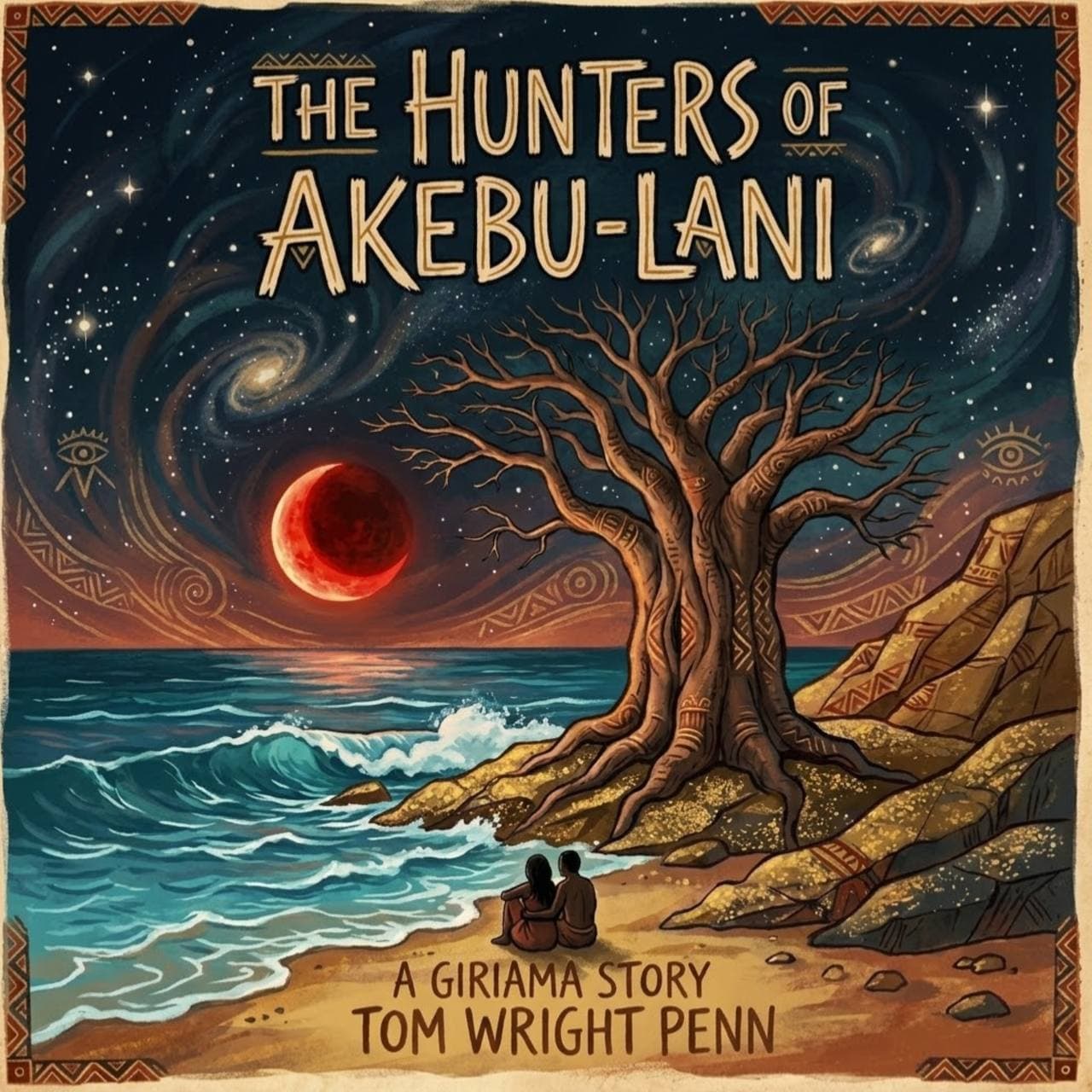

Thousands of our kind were killed that time, but history will not remember a single one. We arrived at Mutara wa Tsatsu in the forgotten years, invited by our dreams, smiling at our future, our young romping about like lion cubs. We came seeking peace but never saw the signs of the nightmare to come. We rowed for many days upon foam crowned blue seas, defeating the veritable tempest of the waters. As the black silk of the night wrapped us, we touched the shore. As petals of sunrise gently curled out, we woke up to our dreams in a land yet lived, where waters never tasted drooled, where marine and terrestrial worlds collide, and where the eyes of the falcon and the roar of lions rule. We called the land Mutara wa Tsatsu, our land, our home. We were the remnants of the nine tribes, the remnants of the hunted, unsung heroes with the brave blood of our ancestors coursing in our veins like ruffled rivers. We were the Giriama, the bakers of freedom.
We are the descendants of Akebulani, the mother of mankind. Many stories have been told by our glorious dead, though most have been lost in the ruins of time. One story, which I suppose you have heard a wandering fiddler sing with teary eyes, is our story, but now it is a speckle in our memories, a distant echo in our hearts. Many stories have been told by foreigners of our history and bandits upon our land, by blacksmiths of misery and slavers, by miscreants and thieves, by hunters of man and hunters of the future, by assassins of hope and blacksmiths of dusk. The enemies of history have told our story; do not believe them. Believe this story, our story. It lurks and screams from the fog of our history, aching in our hearts from sores that pester, making this writer convulse from the unspeakable terror unleashed on us, a terror that left Mutara wa Tsatsu grinning with skulls. This is the true story, the story the criminals of yesterday and the deceptors of our young want us to forget. But we shall not forget our pain, our sorrow, and the cost of our freedom, because anything horrible you can imagine happening to us actually happened. This story should never be forgotten.
Upon a gold speckled shore two sat, their nascent souls kicking in the tender shell of youth, their velvety whispers drowned by the azure voice of the sea. Beguiled by the foamy ribbon of blue sea, a ribbon that shrank to oblivion, Mwarandu's arms harmlessly hung round Mwakio's shoulder, their fingers intertwined in passion just like their hearts. Mwakio's lush lips formed a cupid’s bow, and provoked by love, the two swapped spit.
Souls galloped with spasms. Muddled rhymes beat in the rib cage, not balladry, yet poesy, the dictation of their hearts, the music of love. Mwakio's eyes sparkled with liquid silver, and the bearded Mwarandu's did too. Corneas locked in lavish surrender, melting from the effect of each other. One drop fell, then another, a drop of bliss, of passion, of a future bursting with colors, ripples, and gleams, of reminiscences, a flow from their souls destined to each other’s heart. Mwarandu son of Menza and Mwakio daughter of Zighe clasped onto each other, tangled like yarn, woven with threads of passion. Their eyes saw rainbows of hope, the rainbows you see when it softly rains over meadows, the band of color that paints periwinkle skies, the spectral arch you smile at when it beams over emerald fields.
"I would not have known love had I not been loved by you. You are made of loyalty, forgiveness, and selflessness. You poured bliss upon my heart, my love for you cannot be bought with kingdoms," love like honey melted from Mwakio’s lips.
"Oh love, you are the darkest paradise my heart has always longed for, a dew kissed night," the lad's brittle voice pealed in her heart. "With wholehearted devotion you have earned my love. You are the beauteous, the handpicked and peculiar pearl of womankind."
And when the twilight appeared dressed in a swirl of mauve, orange, and gold, Mwarandu son of Menza and Mwakio daughter of Zighe entwined their hands. To their peaceful village of Mutara wa Tsatsu two swans drifted, tender waves of bliss stroking their hearts. Sighing in their hearts were blissful notes, a sanguine tune rippling through the rib cage to the limitless cosmos and eternity.
"Our baby’s little legs curl around my womb. I feel the miniature fingers of our scion tenderly stroking my belly. My heart is warmed by sunshine I have never felt before," Mwakio the daughter of Zighe cooed.
"By the grace of the ancestors, we shall embrace our star of hope before the spell that follows the seventh Moon."
"What name shall we give our baby?" Mwakio asked.
"We shall name the bond of our blood Nyota!" Mwarandu replied.
"Yes, Nyota!"
"Nyota will be great in a dominion of his own. Valor will inhabit his heart. Darkness will never drown his glow."
"Nyota will be an envoy of bliss. He will twinkle and speckle the hopeless voids with pulses of hope."
"He will be an heir of courage, with the rectitude of a warrior. Nyota will never turn tail, and from noble pursuits he will return unharmed."
"Nyota will be made of gracious mystery, adept in courage, fortunate and safe in it. A wandering fiddler will sing of Nyota’s majesty. Nyota's name will be graven in books and stone tablets, a legend stories are made of."
"The mighty of the universe will order the steps of Nyota, and the nine hills of Mijikenda will be dazzled by the mystery of Nyota."
It is strange how things change. The swirls of orange seemed to change into spits of venom over Mutara wa Tsatsu, and a bloody crescent moon appeared over the Giriama land. The very familiar color of darkness fell, and with it toothy cold, the cold that gnaws bones and numbs the mind.
It was then that screams so terrible echoed from Mutara wa Tsatsu, cries of wild panic, bordering on terror, echoing in the ears. Mutara wa Tsatsu was a village that had prospered in grinning peace since the mist was stirred.
The wails rooted the two. Mwakio the daughter of Zighe clung to Mwarandu and peed on herself.
Should he stand like a statue or sprint to action? Heed the warrior's call or be a poltroon? His well fed fingers curled around Kisu the sword, decision made.
There stood a massive baobab strongly holding onto the ground, great for cover. Because of its low spreading arms, Mwarandu pleaded with his pregnant bride to hide amongst the branches and wished to go alone to investigate the turmoil. Mwakio was vain in restraining him, and so Mwarandu’s strong limbs sprang away with the agility of youth, his heart full of courage and pity for his sad woman.
Upon the Gongoni hills Mwarandu son of Mwandime stood. The warrior of the Giriama saw monstrous tongues of fire lick up Mutara wa Tsatsu, and great odd shapes of smoke like ghosts twisting up into the void. The land that had grinned peacefully since the mist of time lay ruined before him. While Mwarandu inhaled the intoxication, wrath that knew no bounds frothed in his guts, and he hasted down the steep gorge so that he might battle the marauders. One hand tightly reined on boulders and the other held his good sword Kisu, which shone like fire in the bloody crescent moon.
Weapons clanged the air of the night and echoed amongst the Gongoni and Marafa hills. The good sword Kisu felled thirty hunters of man.
The attackers' murderer fire and thunder spitting weapons killed Mwarandu's two uncles: Mwamganga and Mganga a Mburuga the diviner, and his elder brother Makwere, Mganga wa Kumbo the healer. Gone too was Mwarandu’s grandmother, Mwajuma, who had coddled forty grandchildren, given husband care instructions to a dozen daughters-in-law, and kept her three husbands blissful.
Soul upon soul blurred, roses plucked too soon. Fathers, sons, and future; mothers, daughters, and tomorrow. Scores fell never to stir again. The future of the Mijikenda took a foggy road. Darkness engulfed tomorrow because women and men no longer recognizable as humans lay still. Some eyes struggled to move.
Faint groans came from the rabble, the last sobs of babies groping to breastfeed, but their mothers' tits had long frozen. Mothers lay lifeless; tiny voices floated through the forever night. A fatally wounded mother faintly held her hurt baby. The baby’s little cry rattled in slow gasps. The baby’s little fingers failed to reach for withering tits. The baby sucked acrid air, its soul crumbling on her fingertips. Mama’s lashes brimmed heavy with tears. Death in a scythe appeared. Death's dark sockets stared at mama and child, now cold. Death crouched closer. Death lifted a scythe. A blow landed. The blood eclipse darkened; the mother’s soul spilled out.
Sorely spent, Mwarandu saw an attacker aim at a pregnant woman. Mwarandu hurled his Kisu. The Arab fell like a baobab.
He did not recognize the woman at first. She wailed, lurched over the wounded woman: her mother!
Mwarandu recognized her and cried, "Run, fly! Mwakio, go!"
With these words Mwarandu fell from a shot in the rib. A child of the land was surrounded on all sides by the marauding Arabs. Mwarandu fell a victim to the hunters of man, the ones that history will never call gangsters, the bandits who came by boats, the hunters of man, and the slavers.
A morning of dreary air hung over Mutara wa Tsatsu, the land of the Mijikenda and the nine tribes. Mutara wa Tsatsu lay in long slumber. Huts rendered no more than frayed piles of debris. Wisps of smoke curled up. The smell of blood invited vultures and hyenas for a human feast.
A train of young women and men, barely clothed, captured, and metal shackled, were frog marched from the fallen Mutara wa Tsatsu to an imposing edifice by the sea. Their necks were sore, some harboring acacia thorns deep in their flesh, some backs sliced and bloodied from severe lashing, their faces streaked with blood and sweat.
That edifice! A gigantic stone devoid of the love and charm of a grave, an edifice built out of hate, built to mutilate human dignity, built by the hunters of man, the slavers, men who came by boat to take and never give, never to love, never to respect the natives. And so the engines of evil were at work in the edifice, inspecting the "goods," the "creatures," the "wild heathens" as they were called. They desired the goods with a full set of teeth, strong bones, full breasts, and the glow of youth. The rest were chopped off.
In the woeful morning of the third day, the goods were whipped out of the dungeon for auction to Portuguese merchants so that the Portuguese could sell them at a profit for use as slaves on coffee, tobacco, cocoa, sugar, and cotton plantations in the Cape Verde and Madeira islands in the eastern Atlantic. Mwarandu was found to be a straight limbed man, strong in every aspect, with good teeth like pomegranates, and so Mwarandu was traded for five bottles of wine.
Ship by ship by the sea shore was loaded. Mwarandu cried with more strength than the sea waves, and his throat became sore from wails. Mwarandu son of Menza spoke to Mwakio daughter of Zighe, as if Mwakio was listening:
"Sorry those hunters of hope snatched me away from you. Sorry that my arms were shackled, my wings clipped. Sorry that I did not fight harder for our love, for Mutara wa Tsatsu, for our tribe the Giriama, for the nine tribes of the Mijikenda.
"I wish I could tell you that I will return, Mwaki, and enfold us, and enfold Nyota, the bond of our blood, our scion.
"Mwakio, do not nurse a secret hope that I will return to Mutara wa Tsatsu. I wish you love, I wish you all the love I pledged. Mwakio, do not be alone in the world. Be mindful of the love of another man, marry and find happiness in the bliss of marriage. Drink from the quenching cup of dreams we dreamt together."
A mother collapsed for she could not exist without her only child Mwandime, whom she loved with the fierceness of a hurricane. A father tried to smile at his daughter once more.
Ship by ship upon the waves set sail. The horizon of the land they knew as home disappeared behind, and there was not a single dry eye left in the Giriama land. The noses of the captives caught the familiar smell of darkness; darkness fell and closed the day, and so they never again saw the light.
Bound together, the slaves were packed tightly into tiers and crammed below decks under lock and key. The low ceiling did not allow them to sit upright. The Atlantic was horrendously cold, the oxygen levels so low that candles would not kindle.
The captives withered like scrubs. A malnourished boy cried in such a desolate way that the slavers could not bear to listen for long. The frail pieces of refuse were tossed into the bottomless belly of the Atlantic. From the deep dark blue, the strong hand of death claimed his soul.
Scores upon scores succumbed to beatings. A woman cried for water and was offered drops strongly impregnated with salt.
A large number of slaves who had been bundled inside the vessels' bowels were murdered by the crew, cooked, and served with rice to other captives.
The poet cried: In this endless sea of dusk Who can tell how much longer the light will battle the dusk Who can tell the fate of man when he reaches the edge without a sign When shall the Lord of light arise and scatter the dusk Will slaves ever be free from dungeons How long will the eternity of despair end Who can tell if the warrior of dawn will return with the lords of the rainbow Who for sure can say we shall escape this nightmare Who can say a void man, a man sterile of faith, has hope of eternity Who can say this sea of dusk is not a blinding eternity And who can truly say faith cures it Will faith resurrect and speak for itself
Five captors crouched into the dim deck, loosed a girl’s hands and feet, and dragged her. They were almost out when Mwarandu screamed. The crew turned their turbaned heads.
"Please slacken my limbs a moment, my Lord," asked Mwarandu, "that I may utter a prayer."
"A sacred wish, I pray to my ancestors to bless our journey. I have seen with my very seer eyes a monstrous storm heading our way. I beg for your safety, to loosen me so that I can pray for the safety of you my lords and for the cargo to arrive safely."
His arms were loosened, and Mwarandu asked the captives and crew to close their eyes in prayer and each to call their gods. While everybody closed their eyes in sacred reverence, Mwarandu slipped to the deck’s entrance and closed the metallic hatch from the inside.
With veritable strength, Mwarandu charged at the miscreants and slew them all with his bare hands. In the main hold beneath the dark and dank decks, he found a rusty file and sawed through the shackles of the captives. The men dared to go up on deck and, armed with knives, attacked the crew, triumphantly gaining control of La Meli. Mwarandu suffered a fractured arm. Twenty crew members were condemned into the voracious belly of the sea. Some crew were spared so that they could guide the ship back to Akebulani, the motherland of mankind.
Mwarandu and his fighters ordered La Meli the ship to sail to the east coast of Akebulani, the motherland of mankind and home of the Giriama. He made the survivors understand that in the high seas there is wonder beyond your comprehension, fears waiting to be faced, skies waiting to be admired, wilderness waiting to be explored, monsters waiting to tear you apart, and barbarians to fight.
And so La Meli sailed through uncharted darkness. The sea was glassy, the wind was kind, and La Meli sailed as if drawn by swans. Weeks rolled by and they approached the savage isles. A man saw the eastern sky darken, staining the crescent moon. The wind morphed up into mountains of angry waves. A storm violently slammed the rain onto their faces. The ship slanted at forty five degrees and crashed down, grating their bones. They held tightly onto the mast, onto ropes, onto anything. It was difficult to hang on as the storm tossed the vessel like a plastic doll.
The scribe will tell us if they defied the fury of the sea and what else.
Now, Mwarandu had a sister. Her hair stood firm and kinky like shrubs on a rock, each strand thorny, defying the wind’s blow. Her eyes pierced you like thorns when she was angry about injustices. The eyes melted rivers of compassion upon suffering souls. She smiled the way girls do when they are visionary. She was named Mekatilili wa Menza; others called her Myanzi wa Menza, the only daughter in a poor family of five.
Mekatilili had helplessly seen Mwarandu being captured. She escaped into the vast wilderness of Boni, pursued by a hideous hunter of man with arms like logs. To the cliffs of Gongoni she misled the pursuing marauder, and the doomed man hurtled to his death fathoms below.
Myanzi wa Menza convulsed in tears, dreaming of revenge. Mekatilili’s heart panted to wage a battle of emancipation. As spells rolled into years, the Arabs and the Portuguese continued to lay waste to Mutara wa Tsatsu and the nine hills of the Mijikenda.
Once caught in the padlocks of life but later widowed, Mekatilili collected a great number of Giriama people in preparation for a rebellion against the British. The British too had incused the land to fish for slaves. Mekatilili led public gatherings at Chakama to protest the Brits’ recruitment of African porters for the First World War and the seizure of the fertile Sabaki valley. The Britons responded with fire into the unarmed horde. Scores, including defenseless babies, perished.
On the third Chakama gathering, the unbowed Myanzi wa Menza spoke to the Giriama people, firing their hearts to deeds of audacity. History will call it the address of Chakama:
"How long shall we live in shackles? How long in fear?
"Fear is a breach of self, an impeachment of honor, an illness; fear is a life threatening poison. It numbs the soul, the glow we call life. Fear is cunning, wily, and treacherous. It does not respect man, woman, the laws of the land, or dreams and plans. Fear is a brute! It targets the most vulnerable, the weakest. It shakes the core and immobilizes the will and limbs. Fear is a rudimentary instinct, the mind being its genesis, but fear can be defeated. The sure way I know about defeating fear is taking it by the horns. How long must the bakers of misery torment us? How long, my people? I have no fear of loss since I remember Mwajuma, Mwamburi, and Mwarandu, the epitome of manhood. Loss represents an opportunity to improve and shine like a spear that hurtles across the skies.
"My people, there is no honor in poltroonery, not now when veritable bakers of misery are about to kill the last of us. Let’s march boldly and foil any attempt on you.
"Will you, my Giriama people?"
And the crowd howled "ndioooooooooooo!"
The struggle raged, and the fruits it bore were sweet. Myanzi wa Menza successfully blocked the British from cheaply hiring African labor. She blocked them from collecting taxes from the Giriama. Mekatilili inspired the Giriama with legends of Mepoho. Mepoho had prophesied the coming of men with hair like sisal fibers aboard vessels flying in the air and gliding upon the blue.
So Myanzi wa Menza rallied a numerous train of women and warned that the Giriama land would be curse struck and fertility lost if they did not stand down. The movement grew larger and stronger. She was marked an enemy for administering the mukushekushe oath among the women and Fisi among the men. The Brits labeled her a witch and prophetess of doom.
The oaths forbade the Giriama from cooperating with oppressors in any way. A kiraho spell was cast on those who disobeyed. Curses both loud, deep, and lethal were uttered. Mekatilili was spoken of in bated breath. Her charisma was stronger than an army of men with their swords, arrows, and bows.
To attract hordes to her meetings, she moved with marvelous agility from one village to another, dancing Kifudu, a revered dance that was only performed during Giriama funerals. The women would follow marching, with the men in tow.
One evening a messenger arrived at Mekatilili’s hidden caves beneath the hills of Ngongoni. By means of flattery and sweet words, the messenger, a fellow Giriama, told Mekatilili that the British wanted a truce. Mekatilili was accompanied by a warrior named Wanje wa Mwandorikola. They did not return to the caves of Gongoni, having fallen prey to the enchantments of a betrayer.
The brave pair was locked up at the outskirts of man beyond the Great Rift Valley.
"Beware of her, for she is a terrible witch, cunning in charm and voodoo," it was ordered.
For three years, Myanzi sat dreamily in her cell, tasting nothing but dank stone, with no hope of freedom or escape.
One evening, while the Brits snored under the effects of an unknown brew, the ground of her cell started moving from beneath. A tall, strong limbed youth with a handsome manly face emerged through an underground passage, the fruit of three days of covert hard work.
"Who are you?" Mekatilili rattled.
"I’m here to rescue you. Make haste, wake up, and wake up Wanje."
The British had been weakened by alcohol that night, or so it was thought. The three covertly slipped out through the tunnel in a night without a single star and crept behind the enemy’s shelters.
They were nearly into the thickets when a British soldier saw silhouettes as he took a leak and sounded the alarm. His gun spat out fire into the dark. Wanje wa Mwandorikola fell.
"If you are fortunate enough to reach Mutara wa Tsatsu, tell my wives that I loved them, tell my five remaining sons to live in peace and be mindful of courage."
Wanje’s words hanged, and he fell into the forever silence when men call fate. Mwanje and Mekatilili parted ways from the world.
All night long, Mekatilili and her young warrior nephew trudged through a labyrinth of thorns, shrubs, and darkness; not a single star was seen winking. A footpath twisted and wound, ascended and descended over mute hills and into the eerily quiet forest. As dawn came on her nascent wings, they found themselves on the pinnacle of a dangerous cliff.
Multiple legged, hissing, and seething creatures emerged and sought to block the pair’s way. A serpent emerged from boulders and gave them a chase down the rocks, its diabolical tongue darting in and out, spitting venom.
The pair played hide and seek with bushy haired creatures, locked eyes with snarling fanged beasts, and dodged the venom of spitting slithers.
They followed the way of a gurgling stream until they gained an open meadow and sought well earned rest in the open. Wild herbs and fruits tempted their appetite. The young warrior, an archer who brought falcons from the heavens, aimed at a wild goat and dropped the plump browser without a bleat. Mekatilili sparked fire from Mawe Meu rocks and they had a feast. The goat crackled when you bit into it. Mwarandu devoured the goat skull, relished the yummy eyes, and washed it down with a copious amount of liquid believed in Mutara to bring luck.
"Who are you, my dear young warrior?" Myanzi wa Menza implored.
With many tears, little by little the young warrior peeled off his secret.
"His name was Babu. Babu wa Boni, a childless hunter, an ascetic of the vast jungle of Boni, confided in me when I reached the age of reason. He was hunting in the vast wilderness one evening when a loud howl echoed from the nethermost and stopped him on his trail.
"When the howl disappeared, he followed the snaky track with keen interest. The footprints were fresh, tracks of an unknown beast. The tracks led the hunter deeper and deeper into the wilderness.
"The trail halted, and the mouth of a cave, so profound and dark, yawned before him. Armed with cracking fire, a cache of arrows, and his good spear, he dared into the depths of the dank cavern. Drops of water drooled intermittently from the roof in solemn sounds, and then his ears caught soft yelps.
"A litter of nascent jackal pups were cocooned, and in the middle a baby boy lay, playing with the whelps, pulling their little tails. Then the huntsman smiled at the infant, lifted it gently, and wrapped the baby in his arms. As he emerged from the den, he stumbled upon a great grey jackal with eyes like coals of fire.
"So enraged was the fiend or savior that it snarled its teeth. The brute advanced, not willing to bite my arm but to take possession of the baby. We wrestled furiously; tiny stones rained from the cave of the wolf and a flurry of bats took off. I defeated the beast, and its amber eyes sought truce, begging not to be killed because she had a young family. Amnesty I granted for not harming the poor baby, though it was in the power of the hunter to dispatch it with poisoned arrows. But where was the mother?
"The hunter was bewildered seeing the creature follow him and thought the jackal was spoiling for another fight. He would in one stroke show it that second chances are not to be squandered, but the jackal evaded the hurl of a spear and dashed ahead, wherefore he followed till they reached a hidden settlement where a sickly woman lay writhing and groaning.
"A deep flush of fever had sunken her cheeks pale, thin as a reed. The woman, barely conscious, narrated her fate and that of her baby to the hunter.
"'She hailed from Mutara wa Tsatsu,' she said. 'When Mutara was raided by slavers, my husband put up a brave fight and slew many a miscreant thanks to his good sword Kisu. He was sorely spent and wounded when he came to my rescue. A slaver had aimed a fire spitting weapon at me. Mwarandu brought down the prowler but soon fell prey. I ran to this haunted forest and made for myself the nest you see. I labored with pangs of birth, and my son was born quietly without anyone except the voracious eyes of vultures waiting for me to die.'
"The sick mother died, struck down by bone ache, but Babu wa Boni splashed kiraho charms on her aching limbs. She finally whispered the name of the child’s father and begged the hunter to find the boy’s surviving kinsmen.
"'I’m going to my death, please find Myanzi wa Menza, she is my sister in law, commit my boy to Myanzi.'"
The young warrior explained to Mekatilili how he had been brought up by Babu in the wilderness of Boni, the very outskirts of Mutara wa Tsatsu.
Mekatilili was not a little astounded when she heard the tale of the young warrior. The gap in the lad’s teeth was a testament of her kinship. She recognized him: a descendant from the bloodline of warriors, the blood of Menza, her nephew! Nyota!
They embraced and there was not a single dry eye.
"It took Babu years to reveal my identity. The promise was unbroken; Babu summoned me to the fireplace one evening and told me the fate of Menza’s family.
"I could bear grief no more. What good would my life be without my only kin? I swore by the oath of Mepoho to find you. Babu had tried to dissuade me. 'Please lay down your courage,' he beseeched.
"'I’m not to be held back,' I told Babu. 'Babu, my plans are made and Mwenge the donkey will be my companion, tame and faithful, obedient to every command, lacking nothing in courage. I have no fixed plans and it doesn't matter the destination. I just want to ramble away. I’m going to look for my only kin, Myanzi wa Menza. It is my endless dream, my heart's burning desire. I will take untraveled roads and start new beginnings every day, and I will find her. I will explore terrains deep, cross rivers grey, wide, and furious. I will go through vales deep, into my mind and soul to see to it that Myanzi is free.'
"As you have heard whispered, Mjukuu, beyond the great gorge that yawns in the far north sprawls a great cerulean ziwa, a wondrous lake the wandering fiddler has sung about. Huffing and puffing for so many a day and night will get you there to the crest. Tread carefully; beneath the Shimba hills afar crouches a serpent of such mammoth proportions, the grim hater of man with a tongue unfurling like flames of fire, guarding mercury treasure jealously, baring fangs, spitting venom. If you are not roasted by the smoldering sun, if you are not devoured by the ferocious lions of Tsavo, you will make it someday. I won't tell you how long or short.
"'I commend you to Mungu and the grace of the ancestors. Mwenge the faithful donkey will take you there. I trust his strong hooves and muscle. Mungu akubariki. Trot on, Mjukuu.'"
Babu blessed my journey. The travel lasted for days, and days rolled into weeks, and at last I sighted the great cerulean lake in the West.
"Son, Mwarandu was an excellent friend of my brother. I believe his wings are unbroken. May he flap and fly through the stormiest seas he was taken to, may he come to us. May he defeat cold nights and lead us out of the darkness. May he never live in the darkest side of the moon. May his spirit wherever he is be dazzled by the sun. His shimmer glows in my heart; his star gleams through you. Stars cannot be drowned by nightmares."
Heaviness fell in their hearts and their limbs, and their eyes became wells. It was more than weeping in the wilderness; it was choking sobs and then desolate crying that comes from a person drained of all hope.
The valiant pair trudged solemnly through the wilderness of Tsavo. Myanzi’s right foot trod on a dark brown worm of about three meters. The sprite dug its fangs into her foot and slithered in a grey mist, out of which a brown hill seemed to rear its head. It is said that the serpent had only one eye. Mekatilili groaned, deadly pale in pain, and had only the strength to gasp rather than speak. The evil would have overpowered her had Nyota not sprinkled healing herbs on her wound.
A limp of many days through wild mountain roads brought the elderly, sickly woman near the mouth of the sea. She saw the stars mirrored on the ocean’s bosom and knew she was home. She needed a rest by the giant baobab that would become her abode till the end of her days.
Upon seeing Myanzi home, Nyota wished to go his separate way until a time they would meet again, but this story is not clear if they ever met ever again. We shall hear if he emerged from the wilderness as time goes on.
"I wish to be alone with the tribe of trees, to seek adventures. I was born of the jungle, and unto the jungle I shall return, rock to rock, mist to mist, and into ethereal silence shall I return."
The sun sank as Nyota sank into the haunted wilderness of Boni.
Limping with the burden of a snakebite, her heavy limbs came to the refuge she had longed for. She reached the shade of a bold, giant baobab that had lifted itself to pearly wisps under the lavender of the heavens. The mighty feat of nature stood by the banks of the grey, wide river Sabaki where it touches the seashore. The tree’s arms spread wide, dancing to the lyrics of the wind, swaying to the cadences of multicolored birds, birds that are no longer of this world.
She threw her arms around the trunk. It felt like a hug from the heavens. When the veil of dusk came to close the day, Mekatilili ringed the baobab with herb charms to insure herself from teeth in the darkness. She laid her head where pink vygies, forget-me-nots, and arum lilies bloomed, her mind floating aimlessly in a pool of her thoughts. Her wounds bathed in blue moonlight, her face smiled upon by the beauties of heaven, her soul soothed by the lullaby of the sea, her lips softly kissed by the breeze, she counted the stars without a name. Drip by drip, she soaked into blackness.
Seagulls in flight stirred her in the dawning as they circled above the river. Petals of dawn unfolded slowly, and when the gates of morning flung open, her Kisu began to dig through the tree trunk. By the time the sun touched the pinnacle of her head, her withered hands had made a shelter inside the baobab. The darkness of her tree room was a sanctuary, a place to revitalize and forget her shackles. So, in the darkness that stole her frame, she was content as nights passed and new daylights streamed in.
Kondo ya Chembete, the Giriama uprising, started just after her prison escape. The Brits retaliated. Over 5000 homes were licked by hungry flames of fire. History doesn’t know if any intact soul escaped the flames; many grave mounds were filled and closed. That was the price of Giriama emancipation, and there was turmoil in many a heart.
That woman with sunken cheeks and heavily lined face could have been anyone’s great-grandmother, except that her heart beat like a toddler's. That woman with nerves of steel, that unbreakable spirit of a woman, that lioness’s roar in the mist, laid down her life before she witnessed her contribution to the emancipation of Kenya. The year was 1913, and Mekatilili was aged 70. Legends say that she died while pounding grain in the field, sinking into the gluttonous belly of the earth. Others talkers say she died from a strange fever in her baobab home, which stands to this day where the mouth of the Sabaki kisses the ocean in Mambrui.
While Mwarandu ordered the children of Akebulani back to the motherland and the village of Mutara wa Tsatsu, the navigator, a son of evil, deceived the Giriama about the route, maneuvering La Meli north along the North American coast until the ship touched the shore of Long Island.
La Meli was captured by men with fire spitting weapons, men in warships, and taken into custody in United States detention. La Meli was locked up on the island. The courts in America were to determine if the Giriama were cargo. The court ruled that the Giriama had been stolen from Akebulani, the mother of mankind in Africa, and had fought in self defense. The court ordered them freed. Thirty five survivors sailed to Africa in the succeeding year, 1842. Dear reader, I wish I could tell you that Mwarandu was united with his son Nyota, but this story tells us that Mwarandu died of a fever when he touched the shore of Mutara wa Tsatsu where this story begins. Somewhere in the mist of time lies the ghost of love.
Millions of Africans were sold for nickels to work like dynamos in the Caribbean. Spanish ships brought captive Africans to the Iberian Peninsula. Many were sentenced to fight on the frontline in battles that were never theirs. Words will fail me if I attempt to describe the trauma that froze those who arrived at the market undead. Anything you picture happening to them indeed happened.