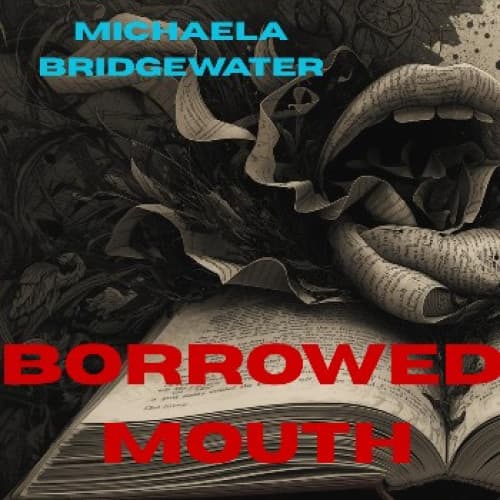

The first time I found a tooth was on my pillow, I assumed it was mine. It lay there, small and pearly, cold enough to sting my fingertip. I tongued my gums and tasted metal-no gap, no blood, only the faint thaw of iron on my breath. I left the tooth on the sill and slept badly with my mouth clenched shut against shapes that wanted in.
In the morning, the tooth had moved. Not rolled. Moved. The window glass held a greasy crescent, as if it had pressed itself to the pane to look out. That was the day the house began to remember me.
I had been a reader, the kind who reads aloud, even when I’m alone. When my mother died, I would read to fill the rooms so her absence had something to drown in. I read in the kitchen while the kettle sobbed, in the hall where the coats hung like husks, in the room at the top of the stairs where the light never warmed. Reading made the house less quiet. It also made it hungry.
It started with our family book. The Tally of Knells, brittle pages in cracked green leather, a Gloucestershire printer’s imprint hung over a river. Men from the Seven used to count deaths with that bell: each toll a mouth that stopped speaking. The book isn’t rare; our copy is.
You shouldn’t read it aloud. I did. The type stares back, there’s an old superstition for it: letters that remember who speaks them. The longer you read, the more the stories learn your mouth.
On the third night, with wind pushing at the sash and the smell of damp stone, I read the chapter called The Mouths that Weren’t Born. It tells of a woman near Stroud who woke to teeth on her pillow, the way I had, and of a voice that grew at the edge of her bed like mould. The mould was grey-white, thick as wool, veined with pink. It learned to grin. She named it the Borrowed Mouth, because when she spoke, it spoke too, and when she slept, it chewed her dreams into a paste.
I stopped there. The kettle clicked off. Something in the calling listened. The floorboards did that long exhale old wood does when it remembers its weight, and a sweet, rotten smell lifted lifted like a hand and cupped my throat. I can say now: I should have closed the book, burned it, and salted teh ashes. Instead, I set it aside, fetched a glass of water, and felt a tooth scratch my lips as I drank.
Teeth kept coming. One on the stairs. Three in the dust under the bed. A molar with a gold filling balanced on the rim of the bath like an egg. They were not mine. Some were too large, some baby-small. I began to sleep with my mouth sealed under a strip of tape. I woke each morning having saliva stringing my chin. Behind the tape I could feel something nudge my lips, like the nose of a rabbit.
On the fifth night, a voice read with me. I had the book open to the chapter called Names That Shiver, my finger on a line about bells dipped into river water so the sound tasted of clay. I spoke the sentence, and to my right, in the doorway, the sentence spoke itself again, slower, pronouncing letters I hadn’t -lingering on sibilants like a wet tongue on glass.
‘‘Who’s there?’’ I asked, stupidly, a child calling a question into a cupboard.
The doorway remained doorway. The sound remained sound. But the white of the skirting board had a smear at ankle height as if something had practiced smiling against it had left a print.
You expect a face. You will not get one. The Borrowed Mouth comes first.
It made itself from what i was. The house taught it: my breath against the spine of the book, the spit i swallowed between lines, the words i dropped into the air to see if grief would answer. It learned the shape of my tongue. It learned the weight of my teeth. That night i found it under the bed, where the shadow lifts like a skirt. It lay there like a rug-the colour of fat under the skin. Teeth were set in it in a crescent, mixed and mismatched, some human, some too wide, the enamel pitted like old bowls. No lips. No jaw. Only gums, slick and shining, and a centre that pulsed once like a throat swallowing.
The voice came from it without breath. When i spoke, it echoed me. when i stayed silent, it whispered the next line of the book, as if reading onward without permission.
I told the air, ‘‘STOP.’’ It whispered, ‘‘Stop,’’ then added, Not yet.’’
There are rules in The Tally of Knells. One : never read a name after midnight. Two: never read a name that is yours. Three: never read from the end backwards; endings wake hungry. I had kept those rules. The Borrowed Mouth had not. It had no clock, no self, no respect. It had only appetite and a library of my sounds.
I tried to starve it. I carried the book to the shed and locked the door. I boiled water and scalded the teeth I'd found, the steam lifting the tang of old blood into the kitchen. I slept with cotton in my ears. Still, the mouth grew. It learned to find my breath in other words: the shopping list, the weather, my muttered apology to the hallway when i bumped my shoulder.
The day it bit, it bit nothing. It hung under the bed like a lit smile and snapped on air. The sound of gums slapping together is a small sound. It’s not the sound that frightens. It’s the sound of the echo-the room answering like a second mouth hidden in the walls, clacking back.
Nights grew thick. In Gloucestershire, damp breeds generous. The plaster bubbled and popped, as if boiled. I could see outlines in the paint-the gentle arc of an incisor pushing from beneath. I spoke less. Silence made the mouth restless. It crawled. I smelled milk turned wrong . I taped the book shut.
On a Sunday, church bells counted rain. I sat on the top stairs and held the book in both hands. I intended to carry it to the Severn and drown it. The Borrowed Mouth rested on the landing like a dog waiting for a walk. As the bells tolled, it mouthed the numbers-one, two, three-without breath, shaping them with its teeth like a child pressing numbers into dough. On the twelfth bell, the book warmed in my hands. On the thirteenth, the binding sighed.
The book wanted opening. The mouth wanted reading. I wanted my mother.
I went down the stairs. Halfway, the mouth slid after me, soft as something freshly peeled. It brushed my ankle. It whispered an old bedtime rhyme in my mother’s voice, a song about hares and lanterns across the fields near Nailsworth. I sat on the second step from the bottom and began to cry. Grief is a blade. The mouth is a whetstone.
‘‘Fine,’’ i said, and i snapped the tape from the cover. I opened to the last story: The House That Ate Silence. There is a line in the story-my family used to read it on a winters night- about how silence has bones and how rooms gnaw until quiet is nothing but gristle. I read four lines. The mouth read four lines. I read six lines. The mouth read six lines. It outpaced me and I chased it.
Reading became hunger, and i forgot the rules. I said my name aloud at the start of a sentence as if I was introducing myself to a dinner guest. At once the room leaned. The window darkened. The lights breathed out. I heard something in the wall break like a twig, a small, personal snap. I tried to catch the words. I fumbled my name in my mouth like a coin i couldn’t swallow.
The mouth laughed. No sound, only teeth clicking joy. Then it bit the air where my voice had been and tore a piece from it. I felt it go, the shape of my sound lifted away like a strip of lining paper. I shouted. I heard myself in two parts: a thin echo from my mouth, a raw grate from my throat. It was reading me.
The skin of the hallway bubbled. White paint split and peeled back, revealing the striated pink underneath-plaster like muscle. The corridor breathed once, long and slow, and the breath went through me like a draught from a door that opens onto a well. The mouth slid to the baseboard and pressed its teeth to the exposed plaster. It bit and chewed. It gummed the wall like a calf at a salt lick. When it pulled away, it left indentations-an arc of teeth marks that smiled forever in the paint.
I stumbled to the kitchen. There are solutions in books: salt, iron, river water. I took salt and poured it in a line. I pressed a horseshoe against the mouth when it came. The iron hissed. The mouth kissed it. My palm blistered. The mouth read a recipe for stew in a tone so tender I trembled.
I fled to the road and ran. The sky had that Gloucestershire grey, wet as wool, flat as a lid on a pot. As i ran, my tongue went numb. The air seemed to cut. I tasted pennies. I reached the river and pitched the book into the Severn. It went in like a fish. A bell rang from nowhere, thin as a silver coin dropped on a tile.
That night i slept in my car. The mouth rode under the seat. I felt its damp through the upholstery, the way a spill leaks through foam. It whispered through the handbrake. It told me a story of a woman who drowned a book and woke mute, her words floating up out of her mouth at night like moths, each with a tiny tooth pressed into its wing.
At dawn i went home. The house had learned me too well to let me go.
It stood wider, somehow, the hallway long and fat with a wet quiet. The mouth lay in the centre of the floor like a rug at a funeral. I stepped over it. It dragged itself against my ankle as if tasting. I went upstairs to the room where the light never warmed and sat in the chair where my mother used to sit. I spoke my name. It didn’t answer. I said i would not read. It didn’t answer. I waited. The mouth did.
It began with a whisper like the sound paper makes when turned very slowly: ‘‘The mouth that wasn’t born learned the reader. It measured the breath. It counted the teeth. It waited for the name.’’ It spoke my story with my voice. It spoke of my mother’s death. It spoke the kettle’s sob and the tape and the salt. It spoke my run to the river. It spoke the car. It spoke the dawn. It spoke of me sitting there with hands like bowls turned wrong. It spoke the moment before the end.
I lifted my hand and showed it the horseshoe again. It kissed the iron, sweet and slow. Its gums left a print like a lip on metal.
I understood then: it didn’t want me to read a story. It wanted me to finish one. Endings wake hungry. The Borrowed Mouth had no mouth o feed itself. It fed on ours. It needed a last line. It needed my last line.
‘‘No,’’ i said, and the word fell to the floor like a tooth. The mouth rolled over it, set it into its gums, and smiled. It had collected the teeth-bit by bit until it could bite back. It gaped wider. It showed me everything it had stolen: shapes of words polished smooth as stones from a river, each with a smudge of my breath pressed into the enamel.
There is a way to deny a mouth. You swallow. You put the thing meant for air into the blood instead.
I opened my throat and swallowed my name. You do it like this: you say it wrong, backwards, quick, hard; you tie it in knots with your tongue and drop it down as if swallowing a pill dry. It hurts, it is a scraped knee on the inside of your neck. My eyes watered. I coughed and felt a lump pass like a fish bone. I sat very still while my name thrashed inside me and went quiet.
The mouth waited. It read the room. It read the breath. It read the silence. It spoke my name, soft, hopeful, like a child guessing a riddle.I did not answer. It spoke it again, louder, teeth clacking, gums wet. I did not answer. It lifted itself like a pale animal begging at the table.
At last it understood. It closed. One by one the teeth set themselves flat, enamel touching enamel, a neat, hard seal. The gums pulled in. It lay like a clean white smile fell from the face of a god and died on my floor. It made the smallest sound like a page turned when no one is looking.
In the weeks after, the house forgot me. The hallway’s teeth marks scabbed and flaked. The kettle’s sob became mere steam. I spoke as little as i could. When the urge to read arose, i went outside, stood in the rain, and breathed through it until words washed away down the gutter.
Only once did i break. On a night when the bells counted fog over the Severn, i went to the top room and opened The Tally of Knells. The book had swollen from the riveer. The words wrinkled like fingers after a bath. I read a line silently. My tongue keppt still. The house did not lean. Nothing spoke. I turned a page and read another. The quiet sat beside me like a widow with her hands folded. I slept easily.
In the morning, a tooth lay on my pillow. It was a small and pearly and cold enough to sting my fingertip. It was a perfect copy of the word i swallowed, pressed into enamel. When i touched it, i tasted iron. It had learned my mouth from the inside, where names go to hide. The Borrowed Mouth has patience. It knows that stories finish. It knows that every reader, sooner or later, reads aloud.
I placed the tooth on the sill. It pressed itself to the pane. It looked out. The window glass took its wet crescent smile and held it until the rain dried and the mark remained. Somewhere in the wall, something broke like a twig.
Downstairs, a voice began to read. It read my story. It read me here, writing this, holding the last line between my teeth like a coin I can’t swallow. It read that I would not speak. It read that I would fail. It read the the end is a mouth and the mouth is waiting.