
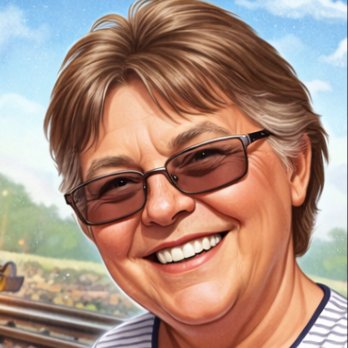
The sky was a reckless, unapologetic blue — the kind that seemed almost indifferent to human fragility. A soft breeze moved lazily through the garden of the institute, stirring leaves, brushing against stone benches, carrying with it a scent that was unfamiliar yet strangely comforting. It smelled clean, almost new. Like something beginning.
Gloria sat there because she had nowhere else to go after breaking apart.
The world had narrowed to the sound of her own breathing earlier that day — sharp, uneven, uncontrollable — but here, among trimmed hedges and quiet pathways, it felt distant. Students passed somewhere beyond the trees, their footsteps muted, their conversations blending into a low hum of ordinary life. The garden did not ask questions. It did not demand explanations. It simply existed — steady, rooted, alive.
And for the first time since the collapse, Gloria wondered if she could exist that way too.
Gloria is stinking rich, she had no need to work, her break up rooted because she was loved because of her financial state
Gloria had never needed the institute. She had never needed a salary, a scholarship, or anyone’s approval. Wealth had built the world around her long before she understood its value — paid for the buildings she walked past, funded the gardens she now hid inside. Money had always arrived before effort. Doors had opened before she knocked.
And that was the problem.
She hadn’t known whether he loved her laugh, her silences, the way she tilted her head when she was thinking — or the inheritance attached to her name. At first, the attention felt like affection. The gifts he refused to let her pay for felt noble. The jokes about her “never having to worry” felt harmless. Until they weren’t.
The breakup had not been loud. It had been polite. Careful. Dignified.
Which somehow hurt more.
Now she sat alone, the breeze lifting strands of her hair, the scent of sun-warmed earth filling the space where certainty used to be. For the first time in her carefully cushioned life, Gloria felt something money could not soften — the suspicion that she had been loved not for who she was, but for what she was worth.
And beneath the blue, indifferent sky, that realization felt heavier than any fortune she carried.
Gloria never knew her mother. She died the day Gloria was born — a beginning that arrived wrapped in loss. There were no lullabies, no soft recollections passed down through warm kitchen conversations. Only photographs in silver frames and a silence that no one in the household dared disturb.
Her father never remarried.
Some said it was devotion. Others said it was guilt. Gloria grew up not knowing which was heavier.
Instead of building a family, he built an empire.
Boardrooms replaced bedtime stories. Contracts replaced conversations. He spent long nights expanding his fortune, acquiring companies, constructing towers that carried his name high above the city skyline. Wealth multiplied under his discipline. Emotion did not.
He provided everything — the best schools, private tutors, security, estates in multiple countries. Gloria never lacked comfort. She lacked presence.
When he died, the empire transferred seamlessly into her name. Lawyers were efficient. The paperwork was immaculate.
Grief, however, was not.
For the first time, Gloria inherited something that could not be measured in shares or valuations: silence. A vast, echoing silence that no acquisition could quiet.
And so, the loneliness she felt in the garden that afternoon was not new.
It was simply familiar.
The empire did not fall into chaos after her father’s death. It never could. He had prepared too well for that.
Its guardians were two men who had stood beside him for decades — Tom Watt and Andrew Long. Officially, they were executors of the estate, trustees of the holdings, architects of continuity. Unofficially, they were the only people who had ever looked at Gloria and seen a child instead of an heiress.
They had no patience for opportunists.
They were precise in business, immaculately composed in public, and quietly formidable in negotiation rooms where men twice their size underestimated them. But with Gloria, they were something else entirely.
Gentle.
They remembered her birthdays without consulting assistants. They asked whether she was sleeping. They listened — really listened — when she spoke. When she made mistakes, they corrected her without condescension. When she doubted herself, they steadied her without taking control.
They had loved her father in their own way — as partners in ambition, as friends, as the only people who understood the cost of building something that large. And perhaps, in caring for Gloria, they were honouring him.
Or perhaps they simply loved her for herself.
In a world that measured her worth in assets and acquisitions, Tom and Andrew treated her as something far rarer: a human being.
They were not her fathers.
But they were the closest thing she had ever known to being protected rather than positioned.
And that, more than the empire, was what kept her from completely unravelling.
Sometimes, in the quiet hours between midnight and dawn, Gloria allowed herself a dangerous wish.
She wished she could disappear.
Not dramatically. Not tragically. Just quietly — into a place where her surname meant nothing. Where no one recognized her face from business magazines. Where introductions did not change the temperature of a room. Where conversations did not tilt toward investment opportunities or subtle calculations of proximity.
She imagined renting a small apartment under a different name. Buying her own groceries without security lingering three steps behind. Taking a job that paid just enough. Learning what exhaustion felt like when it was earned rather than inherited.
She wanted to know who she was without the cushioning of luxury.
Without the assumption that she had never struggled.
Without the invisible glass wall that wealth built between her and everyone else.
Money had given her everything except anonymity. Except sincerity. Except the freedom to fail quietly.
In the institute garden, watching students complain about exams and cafeteria coffee, Gloria felt something close to envy. Their worries were immediate. Temporary. Human.
No one loved them for their net worth.
She did not resent her inheritance. She resented its shadow — the way it arrived before her, introduced her, defined her.
More than once, she had wondered what would happen if she stepped out of it.
If she let Gloria, the heiress fade… and allowed Gloria the person to exist.
The thought both terrified and thrilled her.
Because disappearing, she was beginning to realize, might be the only way to finally be seen.
When Gloria finally voiced the idea aloud, she expected resistance.
Instead, Tom and Andrew listened.
They did not interrupt. They did not dismiss it as impulsive grief or romantic escapism. They asked practical questions — about sustainability, about safety, about how involved she truly wanted to be. And when she finished speaking, when the fear beneath her resolve became visible, they exchanged a look that carried years of shared understanding.
“If you are going to do this,” Tom said gently, “then you must really do it.”
Andrew nodded. “No safety net you can see. No announcing who you are. You build it yourself.”
Within weeks, arrangements were made — quietly, legally, discreetly.
On the far side of the state, in a small town that did not read financial journals, there was a failing coffee shop. Its windows were dusty, its paint chipped, its books drowning in red ink. The owner was exhausted, ready to surrender a dream that had once felt possible.
Tom and Andrew handled the acquisition without fanfare. No press. No corporate restructuring. Just a private transfer.
And then they stepped back.
Gloria arrived with two suitcases and a name no one recognized.
The shop smelled faintly of burnt espresso and old wood. The machines wheezed. The accounts were worse than she had imagined. It was not charming. It was not romantic.
It was a disaster.
And for the first time in her life, something depended on her effort — not her inheritance.
She burned her first batch of pastries. Miscounted inventory. Struggled with suppliers who did not care about her former life. Customers complained. One even suggested she close before she lost more money.
No one knew she had more money than the entire street combined.
They only knew she was the new owner trying not to fail.
Each night, exhausted in her small, rented apartment above the shop, Gloria felt something unfamiliar settle in her chest.
Pride.
Not inherited. Not transferred. Earned.
For the first time, success or failure would not belong to her father’s empire.
It would belong to her.
And in that fragile, struggling little coffee shop — surrounded by chipped mugs and stubborn espresso machines — Gloria began the slow, terrifying work of becoming ordinary.
Which, she was discovering, might be the most extraordinary thing she had ever done.
She named it Second Dawn Café.
Not because the town needed poetry.
But because she did.
The sign was modest — hand-painted cream letters against a muted sage background. No grand opening banners. No influencers. Just fresh flowers in the window and lights that stayed warm long after sunset.
At first, business improved in inches, not leaps.
She replaced the failing espresso machine with one she learned to operate herself. She experimented with recipes until the pastries were no longer burnt but buttery and delicate. She greeted customers by name. She remembered their orders. She listened.
Word began to spread.
Not because it was trendy.
But because it felt sincere.
Students from the nearby college started studying in the corner booths. An elderly couple claimed the window table every Thursday morning. Freelancers discovered the steady Wi-Fi and stronger coffee. The once-empty space filled with low conversation, soft laughter, and the steady rhythm of cups meeting saucers.
Slowly but surely, Second Dawn Café bloomed into a place people wanted to be.
Not extravagant.
Not luxurious.
Comfortable.
There were no marble counters or gold fixtures — only worn wooden tables polished by elbows and time. The air carried the smell of cinnamon, espresso, and something warmer: belonging.
Gloria worked long hours. Her hands grew rougher. Her posture straighter. She learned the weight of payroll, the sting of slow weeks, the triumph of a fully booked Sunday morning.
For the first time in her life, people came to her because they liked the atmosphere she created — not the fortune attached to her name.
They didn’t know she had inherited an empire.
They only knew she made excellent coffee and remembered how they took it.
And each evening, as she flipped the sign from OPEN to CLOSED, Gloria felt the quiet satisfaction of building something that did not arrive preassembled.
It grew.
Because she did.
Brian first walked into Second Dawn Café because his usual place was closed for plumbing repairs.
At least, that was what he told himself.
He was a local mechanic who owned a small garage three streets over — grease permanently lining the creases of his hands no matter how hard he scrubbed. Broad-shouldered, quiet, observant. The kind of man who listened more than he spoke, and when he did speak, it was direct.
The bell above the café door chimed as he stepped in, bringing with him the faint scent of engine oil and winter air.
Gloria noticed him immediately — not because he demanded attention, but because he didn’t.
He studied the menu like it was an engine diagram, serious and focused. When she asked what he’d like, he hesitated, then said, “Just coffee. Black.”
No performance. No charm sharpened for effect. No curious glances at her clothes or questions about her background.
He didn’t look at her like she was an opportunity.
He looked at her like she was the barista.
He came back the next morning.
And the morning after that.
Sometimes he brought a carburettor part to clean at the corner table. Sometimes he sat in silence. Sometimes he offered small observations about the town — which supplier to avoid, which landlord overcharged, which winter months were hardest on small businesses.
One afternoon, when her espresso machine sputtered violently and died mid-rush, Brian was already on his feet before she could panic.
“Mind if I take a look?”
Within an hour, he had it running again — not perfectly, but enough to survive the day.
She offered to pay him.
He shook his head. “First cup tomorrows on me.”
It was the simplest transaction of her life.
No contracts. No lawyers. No trustees.
Just help given because it was needed.
And as Gloria watched him leave that evening, sleeves rolled up, hands stained and unbothered by it, she felt something unfamiliar — not the thrill of admiration, not the anxiety of being assessed.
But the quiet possibility of being known.
Not as an heiress.
Not as a mystery.
Just as the woman who owned the little café on the corner.
And for the first time since she had chosen to disappear, Gloria wondered if perhaps she hadn’t vanished at all.
Perhaps she had finally arrived.
Gloria learned about Debbie on a Tuesday morning.
Brian arrived later than usual, a small pink backpack slung awkwardly over one shoulder, clearly not his. Beside him stood a little girl with dark curls tied into two uneven puffs and boots that lit up when she walked.
“This is Debbie,” he said, almost shyly. “School’s closed today.”
Debbie studied Gloria with serious, assessing eyes — the kind only children possess when deciding whether an adult is safe.
“You make the cinnamon rolls?” she asked.
“I try to,” Gloria replied.
Debbie nodded once, satisfied. “Okay.”
Five years old, Brian explained quietly. Her mother had left when she was two. It had been just the two of them since. He worked long hours at the garage, arranged his schedule around preschool pickups, learned to braid hair from online videos, and kept emergency glitter glue in his truck.
Gloria watched the way he knelt to Debbie’s height when he spoke to her. The way his voice softened without becoming fragile. The way Debbie’s small hand automatically reached for his shirt hem as she moved.
It was not performative.
It was practiced.
Debbie became a small, bright presence in the café on certain afternoons — drawing at the corner table, announcing important things about butterflies and dinosaurs, asking Gloria very direct questions.
“Why don’t you have kids?”
“Why do you live upstairs?”
“Why do you look sad sometimes?”
No one had asked Gloria anything that honest in years.
One evening, after Debbie had fallen asleep in a booth while Brian finished his coffee, Gloria stood watching them. His large, oil-stained hand rested gently on his daughter’s back, steady and protective.
It struck her then — Brian loved someone in a way that had nothing to do with advantage.
Nothing to gain. Nothing to calculate.
Just presence.
And for the first time since her carefully polite breakup, Gloria felt something shift.
If a man could love like that — fiercely, quietly, without negotiation — then perhaps love itself had not been the illusion.
Perhaps she had simply been standing in the wrong light.
Outside, the sun dipped low over the town.
Inside Second Dawn Café, Gloria felt something warmer than hope begin to bloom.
Debbie did not believe in polite distance.
The next time she came in, she climbed onto her usual booth seat, chin in her hands, and watched Gloria move behind the counter.
“Miss Gloria?”
“Yes, Debbie?”
“Are you lonely?”
The question was not sharp. It was not accusatory.
It was simple.
Gloria paused, towel still in her hand.
“Why do you ask?”
Debbie shrugged, swinging her light-up boots. “Cause sometimes you smile like my dad does when he says he’s not tired.”
Across the café, Brian nearly choked on his coffee.
Gloria felt something in her chest tighten — not painfully, but honestly.
“I think,” she said carefully, “I used to be.”
Debbie seemed to consider this deeply, as if filing it into important information.
“My dad says being lonely isn’t the same as being alone,” she offered. “He says alone is when I’m in my room. Lonely is when your heart feels like nobody’s sitting next to it.”
Brian looked both proud and mildly betrayed.
Gloria laughed softly — a real one this time.
“That’s very wise,” she said.
Debbie nodded. “I know.”
There was a quiet moment. The low hum of conversation, the soft hiss of steaming milk.
Then Debbie tilted her head again.
“Do you get a lot of money?”
The café went still in Gloria’s ears.
Brian straightened immediately. “Deb—”
“It’s okay,” Gloria said gently.
Debbie continued, whispering now as if sharing a secret, “cause Mrs. Harper says rich people don’t got to be nice.”
Gloria walked around the counter and slid into the booth across from her.
“Well,” she said, “I think being nice doesn’t cost anything.”
Debbie considered that. Then she smiled — wide and approving.
“Okay. Then you can stay.”
As if she had just granted permission.
Gloria felt it then — the extraordinary gift of being evaluated not for her inheritance, not for her status, not for advantage…
But for kindness.
And somehow, under the steady gaze of a five-year-old with light-up shoes, that felt like the most important qualification she had ever held.
The invitation came three days later.
Debbie marched into Second Dawn Café with unusual seriousness, her small backpack bouncing against her shoulders.
“Miss Gloria,” she announced, climbing onto her usual seat, “you’re invited.”
Gloria blinked. “Invited to what?”
“My kindergarten show. It’s about planets. I’m Saturn.”
Brian closed his eyes briefly, already anticipating the follow-up.
“You got to come,” Debbie insisted. “Cause dads always come. And I want you to come too.”
The words hung in the air — innocent, unfiltered.
Gloria felt something fragile shift inside her.
“Are you sure?” she asked softly.
Debbie nodded. “You make the best cinnamon rolls. That’s important.”
Brian cleared his throat. “Debbie, Miss Gloria is busy. She has a business to run.”
Gloria looked at him — really looked at him — and saw the quiet caution there. The careful boundary. The unspoken don’t feel obligated.
But this wasn’t obligation.
It was invitation.
“I’d love to come,” she said.
Debbie beamed like she had just secured international diplomacy.
The day of the performance, Gloria sat in a small plastic chair in a brightly decorated classroom, surrounded by parents holding phones and bouquets. There were glitter posters and crooked cardboard planets hanging from the ceiling.
And when Debbie stepped forward in a costume made of construction paper rings, she scanned the crowd — searching.
Her eyes landed on Gloria.
She waved.
Not politely.
Not subtly.
With full ownership.
In that moment, Gloria understood something profound: she had spent her life being tolerated, admired, assessed, envied…
But this was the first time she had been claimed.
Not for her wealth.
Not for her name.
But because a five-year-old had decided she belonged.
And sitting there, clapping too enthusiastically for a slightly off-tempo song about the solar system, Gloria felt the quiet miracle of becoming part of something that had nothing to do with inheritance.
Only heart.
As Second Dawn Café grew, Gloria realized she could not do everything alone.
At first, she resisted hiring.
The shop had become her proof — that she could survive without the machinery of an empire behind her. Delegating felt too close to dependence. Too close to the life she had left.
But exhaustion has a way of teaching humility.
The first to join was Marisol, a sharp-eyed university student who could memorize orders after hearing them once. Then came Ethan, recently retired, who claimed he just needed “something to do,” though he ended up fixing half the furniture and reorganizing the storage room with military precision.
They did not know who Gloria had been.
They only knew who she was there: fair, present, and unafraid to scrub floors alongside them.
She paid them well — not extravagantly, but respectfully. She listened to their suggestions. When business improved, she shared the gains through small bonuses and staff dinners after closing.
Trust was not demanded.
It was built.
Marisol began locking up when Gloria had to step out. Ethan handled suppliers without supervision. Inventory balanced. Customers returned not just for the coffee, but for the atmosphere the team created together.
For the first time, Gloria experienced leadership without hierarchy crushing the space between people.
These employees did not orbit her wealth.
They stood beside her effort.
And something unexpected happened — she stopped fearing betrayal. In the empire she had inherited, loyalty often came with contracts and contingencies. Here, loyalty came with shared early mornings, spilled milk, and laughter during slow afternoons.
One evening, as she watched her team closing up — Marisol teasing Ethan, Brian stopping by with Debbie for hot chocolate — Gloria felt something steady settle inside her.
She had not escaped responsibility.
She had redefined it.
This little café was no longer a disguise or experiment.
It was community.
And for the first time in her life, the people around her were there not because they needed her fortune —
But because they believed in what she was building.
And so did she.
It began with a scratch in her throat.
Gloria ignored it.
There were invoices to review, a supplier dispute to settle, and a weekend rush she refused to miss. But by Friday morning, the world felt heavy. Her limbs ached. The warmth behind her eyes burned. By afternoon, she could barely stand upright behind the counter.
Marisol was the first to notice.
“You’re pale,” she said bluntly.
“I’m fine,” Gloria replied — the oldest lie she knew.
She wasn’t.
By closing time, the “scratch” had become a terrible flu. Feverish. Shaking. Dizzy enough that the floor seemed unreliable beneath her feet.
Ethan did not ask permission.
“You’re going upstairs,” he said in a tone that suggested decades of experience ignoring protests. “Now.”
Within an hour, the café was reorganized. Schedules adjusted. Deliveries postponed. Ethan took over management with calm authority, moving through the space like he had been doing it for years.
“Go heal,” he told her. “We’ve got this.”
We.
The word lingered.
Brian found out that evening when he stopped by with Debbie.
He didn’t hesitate either.
“You shouldn’t be alone,” he said simply.
Gloria would later remember fragments — cool cloths against her forehead, the quiet hum of someone moving around her small apartment, soup that tasted like childhood she never had. Brian showed up after closing his garage, sleeves rolled, concern unhidden. Debbie drew pictures at her kitchen table labelled “Get Well Soon Miss Gloria” with exaggerated hearts.
For someone who had grown up with private doctors and on-call staff, this care felt radically different.
No one was paid to be there.
No one had been instructed.
They came because they wanted to.
There were moments in the haze of fever where Gloria woke disoriented, only to see Brian asleep in the armchair, head tilted back, exhaustion etched into his face. Or Ethan’s text updates about the café: Busy morning. Marisol handled it like a pro. Don’t worry.
The shop did not collapse without her.
It stood.
And as she lay there — weak, incapable, human — Gloria understood something that unsettled and comforted her at the same time:
She was no longer holding everything alone.
The empire had once taught her that strength meant control.
But this small, struggling coffee shop — and the people inside it — were teaching her something braver.
Strength could also mean allowing yourself to be cared for.
And in the quiet of her recovery, wrapped not in luxury but in presence, Gloria realized she had finally built something her father never had.
Not just an enterprise.
A family.
Recovery did not arrive dramatically.
It came in degrees.
The fever broke first. Then the heaviness behind her eyes began to lift. The ache in her bones softened into something manageable. Gloria could sit up without the room spinning. She could drink tea without her hands trembling.
Brian still insisted on checking in.
“You don’t look ready,” he’d say, even when she claimed she was.
Debbie appointed herself assistant nurse, bringing over drawings and very serious instructions about hydration. “Daddy says fluids,” she would remind her, as if Gloria might forget.
By the fourth day, Gloria stood by her apartment window, looking down at Second Dawn Café. The lights were on. The door opened and closed steadily. Ethan moved behind the counter with steady confidence. Marisol laughed at something a customer said.
The café was alive.
Without her.
The realization did not wound her pride.
It steadied it.
For the first time in her life, stepping away had not meant collapse. She had not been indispensable in the suffocating way her father had been to his empire. What she built was resilient because it was shared.
When she finally walked downstairs a few days later, pale but upright, the bell chimed and the entire room looked up.
There was applause.
Uncoordinated. Unnecessary. Heartfelt.
Ethan nodded once, satisfied. Marisol rushed forward with a careful hug. Debbie launched herself at Gloria’s legs with zero caution.
Brian just looked at her — relief plain in his expression.
“You’re stubborn,” he said quietly.
“I’m learning not to be,” she replied.
And she meant it.
As Gloria stepped back behind the counter — not to prove something, not to control everything, but simply to participate — she felt the difference inside herself.
She was no longer running from loneliness.
She was walking toward connection.
Recovery, she realized, wasn’t just about the body.
It was about allowing yourself to belong.
When Gloria pushed open the door of Second Dawn Café, the bell chimed its familiar welcome.
Conversation softened.
Light from the front windows caught in her hair, still slightly thinner from illness, her movements slower but steadier now. She looked smaller somehow — not fragile, but real. No guarded composure. No careful control. Just presence.
Brian had seen beautiful women before.
He was not naïve.
But as she stepped fully into the room — smiling shyly at the unexpected applause, brushing a loose strand of hair behind her ear — something shifted in him so suddenly it almost unsettled him.
It wasn’t just that she was beautiful.
It was that she had been weak.
And had allowed it.
He had seen her feverish and stubborn. Vulnerable and unguarded. He had seen her apartment — simple, unpretentious, lived in. He had watched her thank Ethan with tears in her eyes for keeping the shop steady.
There was no performance in her.
No entitlement.
No invisible pedestal.
And standing there now, greeting customers who genuinely missed her, Brian felt something he couldn’t quite name tighten in his chest.
Pride?
No.
It was warmer than that.
Protectiveness?
Maybe. But softer.
It wasn’t the kind of attraction that rushed or burned. It settled. It rooted.
He realized, with quiet clarity, that he did not admire her because she owned the café.
He admired her because she had chosen it.
Chosen the struggle. Chosen the humility. Chosen the risk of being ordinary.
She laughed at something Debbie said, the sound easy and unforced.
And Brian understood — the feeling wasn’t about beauty at all.
It was about watching someone become themselves.
He looked down at his hands — still faintly stained from the garage — and felt something steady rise within him.
Not infatuation.
Not fantasy.
Recognition.
And for the first time, the possibility of wanting more did not feel like danger.
It felt like home.
It happened on an ordinary afternoon.
Debbie was chasing a paper napkin that had escaped through the café door, giggling as the wind carried it along the sidewalk. Brian was locking his truck. Gloria was wiping down the counter.
It took less than five seconds.
A car turned the corner too quickly. Tires screeched — not violently, but sharply enough to freeze the air. Debbie stumbled off the curb in her determined pursuit of the napkin.
Brian’s voice cracked through the street.
“Debbie!”
Gloria didn’t remember deciding to move. She was already outside, heart slamming against her ribs, the world narrowing into a single point of terror.
The car stopped in time.
Too close.
Far too close.
Debbie stood still, wide-eyed but unharmed, the driver pale and apologetic. Brian scooped her up with shaking arms, pressing her so tightly against him she squeaked in protest.
“I’m okay, Daddy,” she insisted.
She was.
No bruises. No blood. Nothing major.
But the scare rattled something deep in both adults.
Brian’s hands trembled long after Debbie was safely inside the café, seated with hot chocolate she didn’t really need. Gloria knelt in front of her, checking her face, her hands, her knees — her own breathing uneven.
When Debbie began talking animatedly about how fast the car had been, as if recounting an adventure, Gloria had to look away.
The what-if was unbearable.
Later, after Marisol offered to close early and take Debbie upstairs for a movie, Brian and Gloria stood alone by the counter.
The adrenaline had nowhere to go.
“I should’ve been closer,” Brian muttered. “I should’ve—”
“She’s okay,” Gloria said softly.
He ran a hand through his hair. “It only takes one second.”
Gloria understood that kind of fear — the kind that attaches itself to love.
Without thinking, she reached for his hand.
He didn’t pull away.
The contact was steady. Grounding.
They stood like that for a long moment — not dramatic, not rushed. Just two people who had imagined loss for a fraction of a second and discovered how much they had to lose.
Brian looked at her differently then.
Not just as the woman who made good coffee. Not just as someone strong.
But as someone who had run toward his child without hesitation.
“You were scared,” he said quietly.
“So were you.”
He nodded.
Something unspoken passed between them — an understanding that caring about Debbie was no longer separate. It was shared.
And in that shared fear, something else had quietly begun.
Not fireworks.
Not urgency.
But alignment.
Later that evening, when Debbie fell asleep on the couch between them during the movie, their shoulders touched. Neither moved away.
The scare had been small.
But it revealed something large.
They were no longer standing beside each other by coincidence.
They were beginning to stand together
The shift after that afternoon was subtle but undeniable.
Brian stayed later some evenings. Gloria closed the café earlier on others. Debbie began referring to “our table” instead of “Daddy’s table.” There were shared dinners upstairs — simple meals, imperfectly cooked, eaten with laughter and the comfortable silence that only grows where trust has taken root.
It wasn’t rushed.
It wasn’t dramatic.
It was steady.
One night, after Debbie had fallen asleep mid-sentence with a colouring pencil still in her hand, Brian and Gloria sat on the small balcony outside her apartment. The town was quiet below them. The air carried the scent of roasted coffee beans lingering from the day.
“Have you ever thought about staying?” Brian asked gently.
She knew what he meant.
Not just in the town.
In their lives.
Gloria stared at the dim streetlights. “I don’t know what staying looks like for me.”
He leaned back in his chair. “For me, it’s simple. I want Debbie safe. I want work that keeps the lights on. And…” He hesitated, then continued, steady. “I want someone beside me who chooses us. Every day.”
The word us settled into her chest.
Gloria had built this life as an escape. A temporary anonymity. A test of who she could be without her inheritance casting its shadow.
But Brian wasn’t building a test.
He was building a future.
And for the first time, the part of her past she had carefully sealed away began to press forward.
He deserved honesty.
Not the curated version of her.
Not the edited background.
The truth.
“I haven’t told you everything about me,” she said quietly.
He looked at her without suspicion. “You don’t owe me anything.”
“I would,” she replied, “if we’re talking about a future.”
The word felt enormous.
Brian reached for her hand — not demanding, not bracing. Just there.
So, Gloria began to understand something difficult and necessary:
She had run to this town to be ordinary.
But loving someone meant being fully known.
And that meant letting Brian see the empire. The inheritance. The magnitude of the wealth. The grief. The reason she left.
She was no longer afraid of being loved for her money.
She was afraid of being rejected for it.
Still, she looked at him — grease beneath his nails, honesty in his eyes, a man who measured life in effort rather than status — and felt something stronger than fear.
Trust.
If there was going to be a future, it could not be built on omission.
It had to be built on truth.
And for the first time since she disappeared into this small town, Gloria was ready to be fully seen.
Brian didn’t interrupt her.
Not once.
They sat at the small kitchen table upstairs, the café dark below them, the hum of the refrigerator the only background sound. Gloria’s hands were folded tightly together at first, then slowly relaxed as the words began to come.
She told him everything.
About her mother dying the day, she was born. About a father who built towers instead of tenderness. About inheriting an empire before she had learned how to grieve. About the polite breakup that confirmed her deepest fear — that she might always be valued more for her wealth than for her heart.
She told him why she left.
Why she needed to know if she could survive without the armour of money.
Why this café was never about profit.
It was about identity.
Brian listened the way he worked on engines — patient, focused, careful not to miss a detail.
When she finally told him the scale of it — the magnitude of what she owned, the reach of her name — the room did not change.
He did not pull his hand away.
He did not sit up straighter.
He did not look impressed.
He just looked at her.
“That must’ve been lonely,” he said quietly.
Not That’s incredible.
Not Why didn’t you tell me?
Lonely.
Gloria’s throat tightened.
“I didn’t tell you because I was afraid,” she admitted. “Afraid you’d see me differently. Afraid it would make things complicated. Afraid…” She hesitated, then forced the words out. “Afraid you’d think I was pretending to be something I’m not.”
Brian leaned forward, elbows on his knees.
“You were pretending,” he said gently. “You were pretending you didn’t deserve to be loved without it.”
Tears slipped down her cheeks before she could stop them.
“I love you,” she said — not dramatically, not in desperation, but steadily. “I love you and Debbie. Not because you don’t care about money. Not because this life is simple. I love you because you’re real. Because you stay. Because when I was sick, you didn’t calculate the cost. You just showed up.”
The words hung between them.
Brian stood, walked the short distance to her chair, and knelt in front of her — not out of performance, but because it brought him eye level with her.
“Gloria,” he said, voice firm and calm, “I don’t care if you own half the state or nothing at all. I care that you ran into the street for my daughter. I care that you built something with your own hands when you didn’t have to. I care that when things get hard, you don’t disappear anymore.”
He took her hands in his.
“I love you too.”
There were no fireworks.
No cinematic swell.
Just certainty.
The kind built in small moments — repaired machines, shared fear, late-night honesty.
For the first time in her life, Gloria felt fully seen.
Not as an heiress hiding.
Not as a woman testing the world.
But as herself — past, present, and possible future — accepted without negotiation.
And in that quiet kitchen above a once-failing coffee shop, the empire she had inherited finally felt smaller than the life she was choosing.
The wedding was small by design.
No society pages.
No business press.
No cathedral ceilings echoing with obligation.
Just sunlight.
They held it in the garden behind Second Dawn Café, where string lights had once been hung for a summer festival and never taken down. Wooden chairs were borrowed from inside. Wildflowers from the local market were arranged in mismatched glass jars.
Debbie insisted on scattering petals — though most landed in one determined pile near her shoes.
Tom Watt and Andrew Long stood together in the front row.
They had flown in quietly. No assistants. No announcements. Tom wore a tailored suit that fit the setting without overpowering it. Andrew carried himself with the same composed elegance he brought to boardrooms — but his eyes were softer than Gloria had ever seen them.
When they embraced her before the ceremony, it was not formal.
It was fatherly.
“We are proud of you,” Andrew whispered.
Not for managing the inheritance.
Not for expanding the portfolio.
For this.
For choosing love without leverage.
The regular customers filled the rest of the chairs — Marisol dabbing her eyes openly, Ethan pretending not to. The elderly Thursday couple sat hand in hand. Even the driver who had once stopped too close at the curb stood awkwardly near the back, hat in hand.
Refreshments were, of course, served at the café.
Cinnamon rolls. Fresh bread. Strong coffee. A modest cake Debbie had helped decorate — slightly uneven, enthusiastically frosted.
When Gloria walked toward Brian — no designer gown, no diamond spectacle, just a simple dress and steady steps — she felt lighter than she ever had beneath chandeliers and silk.
There were no contracts in this union.
No strategic advantages.
Just vows spoken plainly.
Brian promised to keep choosing her.
Gloria promised never to hide again.
Debbie promised to “help with everything.”
Laughter rippled through the small gathering.
Afterward, people lingered inside the café, cups clinking, sunlight pouring through the windows that had once been dusty and forgotten. The place hummed — not with ambition, but with belonging.
Tom and Andrew stood near the counter for a moment, watching Gloria move easily among her guests, her new husband’s hand finding hers without thought.
“She built this,” Tom said quietly.
Andrew nodded. “Yes. And none of it was inherited.”
Outside, the sign above the door swayed gently in the afternoon breeze.
Second Dawn Café.
It had begun as an escape.
It had become a beginning.
And for the first time in her life, Gloria’s wealth was no longer the most defining thing about her.
Love was.