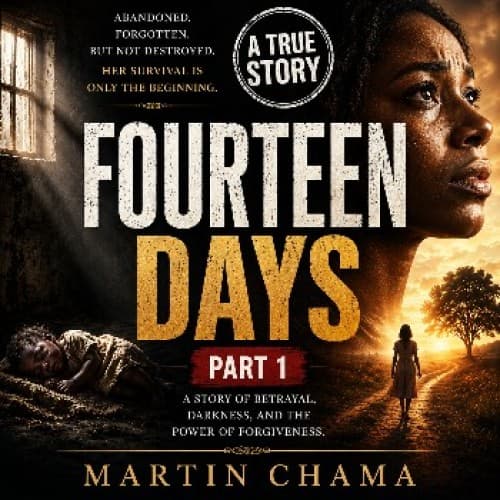

It was about seven years ago when Nandi first shared her story with me. She was usually known for her bright spirit—always laughing, always cheerful. But on that particular day, she walked into my office with a face drained of every trace of joy. Her shoulders were heavy, her eyes swollen, and her voice trembled with pain.
“Nandi, what’s wrong?” I asked gently.
She sat down, stared at the floor… then the tears came—slowly at first, then all at once, as if something deep inside her had burst open.
Trembling, she spoke words I never expected:
“I don’t want that evil woman… that witch in my house… murderer.”
I blinked in shock. As far as I knew, Nandi lived alone.
“Who are you talking about?” I asked softly.
“The one who gave birth to me,” she whispered sharply.
The way she said it startled me, and I corrected her immediately.
“You don’t call your mother such names, Nandi… your mother is your mother… she brought you forth into this world, mind you. And you’re no better off than her.”
She stormed out. I followed her and managed to calm her just enough to talk again.
“Why would you say that to me? I can’t be like her. She’s a killer!” she shouted, shaking. “I trusted you.”
“Sit,” I said gently. “Tell me why you call her that, and I will tell you why I said what I did.”
She sat back down, wiped her tears, and opened a chapter of her life she never wanted to revisit.
A Childhood Buried in Darkness
Nandi was born in a village called Chadza in Eastern Province of Zambia. Her father was a truck driver—hardworking, but unfaithful. Their small thatched house was constantly filled with shouting and broken trust.
One day, a woman came to her mother with news: her husband had been seen in Lilongwe in Malawi with another woman—this time, the headman’s daughter. Nandi was just six months old, unaware of the storm that was gathering.
Her father was expected home in three days… but something in her mother’s heart snapped.
On the third day, Nandi’s mother woke early. She fed her baby porridge, packed her belongings… and made a decision that would haunt three generations.
She picked up her six-month-old daughter, took her into the inner room, covered her tiny mouth, locked the door from the outside…
…and walked away.
She assumed her husband would be in the village that day and deal with the child himself.
But he never did. His truck broke down in Malawi.
And so Nandi lay there—alone, sealed in darkness.
One day passed. Then two. Then seven. Then fourteen.
Fourteen days without food.
Fourteen days without water.
Fourteen days without a voice answering her cries.
Fourteen days in darkness, coldness, and abandonment.
Eventually, two children chasing a hen forced their way into the abandoned house. The bird ran into the inner room. When they opened the door, they froze.
There lay a baby—thin, silent, barely breathing.
Nandi had sores all over her body—sores from both bedbug and rat bites. Her eyes hung loosely in their sockets when she was found. People who found her thought she was already dead, and the stench coming from her tiny body was unbearable. It was truly a horrifying sight. People who rushed to witness the scene turned their faces away in disbelief.
The baby was immediately rushed to a local clinic, but the clinic failed to handle her condition. Four days later, she was evacuated to the University Teaching Hospital in Lusaka.
No one thought Nandi would survive.
But the truth is this: no one can escape death forever… yet sometimes, by the mercy of God, we escape the shadow of death.
Nandi stayed in the hospital for months.
And somehow… she survived.
But survival did not erase the scars.
As an adult, Nandi confessed that there were nights when sleep would escape her completely. She would lie awake imagining those fourteen days. She would picture herself as that helpless child—lying in darkness, hungry, thirsty, too weak even to cry. No one to hold her. No one to clean her. No warmth. No comfort. Only silence… coldness… and the sound of rats moving through the house.
Sometimes those thoughts crushed her so deeply that she felt swallowed by them.
“The past follows me,” she once whispered. “It sits beside me in the dark.”
And truly, when the past haunts you, you become a victim of darkness. Pain becomes the pillow where you lay your head, and hatred and vengeance become the swimming pool of your thoughts. The wounds may no longer bleed outwardly, but inside, the soul keeps reliving the night it was abandoned.
She never knew her parents again. She was raised in an orphanage.
Decades later, the same woman… the one who had left her to die… knocked at her door, begging for shelter.
And Nandi shattered.
“I can’t forgive her,” she sobbed. “No. I can’t.”
The Mirror She Never Expected
Once she calmed down, I spoke gently.
“Nandi, let me tell you why I said what I did.”
I opened the Bible to Jeremiah 17:9:
“The heart is deceitful above all things, and desperately wicked; who can know it?”
I explained carefully:
“Nandi, that last part—‘who can know it?’—means this: we don't even know our own hearts. We don’t realize how deeply broken and corrupt we can be. That’s why we’re always striving to do good—if goodness were in us naturally, we wouldn’t struggle to be good. The very struggle proves we are not pure.”
“What makes us appear innocent is that we haven’t encountered anything strong enough to trigger the evil that resides within us. Every human heart has the capacity for darkness, and under pressure or temptation, that darkness can erupt. Disappointments happen because we trust people—and ourselves—who can fail under pressure. To avoid frustration, we must ultimately trust only God.”
She looked up, her confusion softening into understanding.
“True forgiveness,” I continued, “is not excusing what someone has done. It begins with acknowledging that you, too, have darkness in your heart. It’s a way of releasing that darkness before it destroys you.”
“Yes, what your mother did was horrific,” I added, “but the same brokenness she had lives in all of us. Even in you.”
“In me?” she whispered.
“Yes. Tell me, Nandi—have you ever felt an impulse to harm someone? To do evil?”
She hesitated, then nodded slowly.
“Yes… once. I wanted to poison my best friend after I saw her squeezing my fiancé’s hand. For a moment, something dark stirred in me… something I didn’t recognize.”
I nodded gently. Those words were the beginning of her healing.
A New Ending
“You survived fourteen days in darkness. You survived abandonment. You survived betrayal. But you did not survive all that just to be destroyed by hatred now.”
She listened quietly.
“You are alive because God preserved you,” I said. “This life was not meant to end in revenge. It was meant to rise above it—with forgiveness.”
Her eyes welled, not with rage this time, but with grace.
“You cannot change what she did,” I whispered. “But you can decide who you choose to be. If you hold on to hatred, the same darkness that tried to kill you as a baby will finish its work—not in her, but in you.”
After a long silence, Nandi nodded slowly.
Then she said something I will never forget:
“If God kept me alive for fourteen days in that darkness… then I won’t let hatred finish what the darkness could not. And so it was the pain of betrayal that triggered my mother to do what she did to me?”
“Exactly,” I replied softly. “And it was the pain of betrayal that made you want to poison your friend. So you see, Nandi… you are no better off than your mother. The difference is simply that grace stopped you before the darkness fully grew.”
Nandi lowered her head and wept quietly.
“All these years,” she whispered, “I thought I was different from her… but pain was slowly turning me into the very thing I hated.”
She looked out through the window, her voice trembling like someone finally laying down a burden carried for decades.
“My mother abandoned me in darkness because betrayal poisoned her heart. And I was ready to poison another because betrayal wounded mine. Perhaps evil does not always begin with monsters… perhaps it begins with wounded people who refuse to heal.”
Tears rolled down her cheeks as she breathed deeply.
“I survived fourteen days without food, without water, without light… but the hardest thing to survive is the darkness that tries to grow inside the human heart.”
Then, after a long silence, she whispered the words that finally set her free:
“I will not let pain inherit my soul.”
For a moment, neither of us spoke.
The room was quiet except for the faint ticking of the clock on the wall.
Nandi slowly wiped her tears and stood up. But this time, there was something different about her face. The bitterness that had weighed down her eyes all afternoon seemed weaker now… as though something inside her had finally loosened its grip.
Then she looked at me quietly.
“Boss…”
“Yes, Nandi?”
“May I knock off early today?”
“Why?”
She lowered her eyes.
“I left my mother locked outside the house.”
The words pierced me.
A few hours earlier, she had spoken of her mother with fire in her voice. Now her voice trembled with something else—conviction… guilt… perhaps mercy.
I nodded gently.
“Yes, Nandi. Go and bring her inside.”
She gave a faint nod, picked up her handbag, and walked slowly toward the door.
Just before leaving, she paused.
“Boss…” she whispered without turning back, “do you think God can forgive someone who nearly became the very thing they hated?”
Before I could answer, she walked out.
And somehow, a strange heaviness settled in my spirit.
Hours passed.
The evening grew darker.
Then suddenly, my phone rang.
It was Nandi.
I answered immediately.
“Yes, Nandi, have you reached home?”
At first, I heard nothing.
Only breathing.
Heavy breathing.
Then her trembling voice came through the phone.
“Boss…”
“Nandi? What’s wrong?”
“Boss…”
Her voice cracked badly, as though fear itself had wrapped its fingers around her throat.
“I… I opened the gate…”
My heart tightened.
“And?”
“She’s not here.”
“What do you mean she’s not there?”
“She’s gone.”
A cold silence fell between us.
“What are you talking about, Nandi?”
“I searched around the house… I called for her… but she’s nowhere…”
Then suddenly her breathing became faster.
“But Boss…”
“What is it?!”
“There’s something here.”
“What?”
“Under the door.”
My grip tightened around the phone.
“What is under the door, Nandi?”
“A letter…”
“A letter?”
“Yes…”
Her voice dropped into a whisper.
“It’s thick, Boss…”
“How thick?”
There was silence for a few seconds.
Then she answered shakily:
“Almost twenty pages.”
A strange chill ran through me.
“Nandi… open it.”
I heard her footsteps moving.
Then the sound of paper trembling in her hands.
And then suddenly—
“Boss…”
Her voice changed completely.
Not fear.
Not anger.
Terror.
“Boss… these are not just letters…”
“What do you mean?”
There was silence.
Then I heard something fall.
A gasp.
Then one final trembling whisper:
“Boss… my mother…”
The line went dead.
“Nandi? …Hello? Nandi?!”
Silence.
Absolute silence.
And for the first time that night…
I feared that the real story had only just begun.