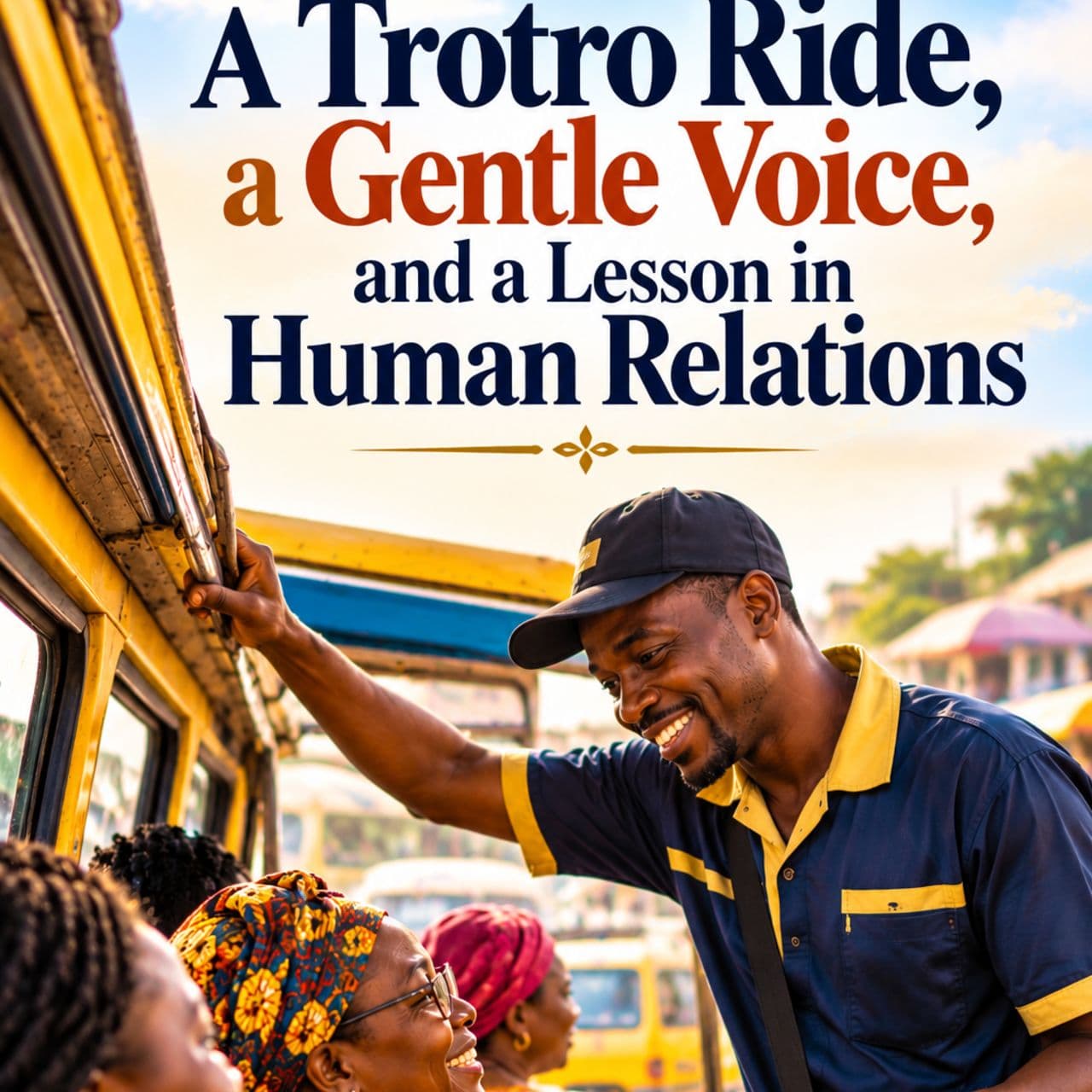

For more than thirty years, I had not travelled in a trotro. Today, I stepped into one expecting nothing more than a ride to my destination. I was unprepared for the encounter that awaited me: a trotro mate whose exceptional courtesy would turn an ordinary journey into a memorable lesson in human relations.
“Ohemaa,” he called.
It was the way he said it that caught my attention. There was warmth in his voice, respect in his manner, and a natural ease that made his courtesy feel genuine rather than rehearsed.
Throughout the journey, he maintained that same standard. His interactions with passengers were marked by politeness and patience. He went about his duties without allowing the demands of the job to rob him of his pleasant disposition.
I found myself paying attention to him.
In a world where impatience has become commonplace and people sometimes mistake rudeness for authority, here was a young man demonstrating that one could be efficient without being abrasive, firm without being discourteous, and busy without forgetting basic human decency.
What struck me most was the consistency of his behaviour. His politeness was not a fleeting gesture reserved for one moment. It was evident throughout the journey.
And I began to reflect.
We spend years pursuing academic qualifications, professional achievements, prestigious positions, and titles. We attend workshops and seminars on leadership, customer service, and emotional intelligence. Yet some of the most powerful lessons in these areas come from ordinary people doing everyday jobs exceptionally well.
This young man reminded me that the dignity of work is reflected not only in what we do, but also in how we treat the people we encounter while doing it.
His job did not require him to know my background or achievements before treating me with respect. He simply offered courtesy as though it were the most natural thing in the world.
And perhaps that is precisely what made it so remarkable.
Human relations is not built only in boardrooms, offices, conferences, or formal meetings. It is built in the small spaces of everyday life: in the greeting we offer, the tone we use, the patience we exercise, and the consideration we show to people who may never cross our paths again.
We often underestimate these moments because they seem insignificant. But a simple act of respect can change the atmosphere of an encounter. It can make a stranger feel welcome, a customer feel valued, or a difficult day feel a little lighter.
As I reflected on the experience, I realised that I had boarded a trotro to travel somewhere, but I was leaving with something more valuable than the journey itself: a renewed appreciation for the power of good manners.
I may not remember every detail of the ride, but I will remember that mate and the effortless courtesy with which he carried himself.
To the young man who addressed me as “Ohemaa,” thank you. You may have been doing your job, but the manner in which you did it made an impression.
The lesson is simple: you do not need a prestigious title to command respect, and you do not need a position of power to make people feel valued. Sometimes, all it takes is a kind voice, a respectful word, and a genuine regard for others.
After more than thirty years away from trotro travel, I never imagined that my return would leave me thinking so deeply about human relations.
Perhaps the most meaningful lessons are not always taught by those standing at the front of a room. Sometimes, they come from a trotro mate moving from passenger to passenger, doing his work with dignity.
And sometimes, an ordinary journey becomes extraordinary because of how one person chooses to treat another.
May we never become so accomplished that we forget to be courteous, or so important that we overlook the power of a simple act of kindness.