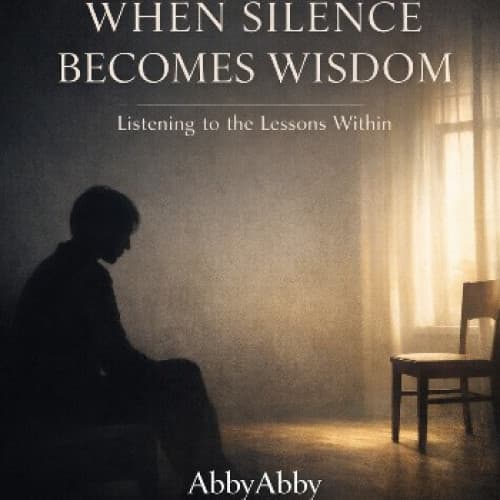

Esi was known for her words.
They came quickly, tumbling out like hurried raindrops on a tin roof, sharp, loud, relentless. She always had something to say. To defend. To explain. To argue. To make sure people knew exactly where she stood, even if they hadn’t asked.
She believed communication was clarity, and clarity meant saying everything. Silence, to her, felt like weakness.
But life has a way of teaching lessons no classroom ever could.
It wasn’t just the passing of birthdays that softened Esi. It was heartbreaks. Friendships that faded without warning. Apologies that never came. The long silences after once lively phone calls. The heavy stillness after arguments where too much was said and not enough was truly understood.
She began to notice not all words heal. Some confuse. Some inflame. Some are thrown like stones in moments of frustration, leaving cracks that “sorry” can’t quite seal.
Silence, she realized, could be more than absence. It could be presence.
One rainy afternoon, Esi sat at her kitchen window, watching droplets race each other down the glass. Her daughter wandered in, curious.
“Mama,” she asked, “why don’t you argue like you used to? You always had something to say before.”
Esi smiled faintly, her gaze still on the rain. “Because sometimes,” she said softly, “the loudest truth is spoken in silence.”
Her daughter frowned. “But doesn’t silence mean you’ve given up?”
Esi shook her head. “No, my child. Silence can mean you’ve chosen peace over proving a point. It can mean you’ve decided not to let anger decide your words. It can mean you’ve realized that not every battle deserves your voice.”
Esi remembered the years when she had fought to be heard, when every disagreement felt like a war she had to win. She remembered the exhaustion of defending herself endlessly, the ache of words spoken too quickly, too harshly.
And she remembered the quiet lessons life had taught her the way silence could soothe where words only wounded.
Her daughter leaned closer. “So… silence is wisdom?”
Esi nodded. “Wisdom isn’t about knowing everything. It’s about knowing what deserves your energy, and what doesn’t. It’s about listening more than speaking. It’s about letting silence carry the weight of what words cannot fix.”
Over time, Esi’s silence became her strength.
In meetings, she no longer rushed to fill the air. In arguments, she paused, letting silence speak louder than anger. In grief, she sat quietly beside others, offering presence instead of platitudes.
People began to notice. Her silence wasn’t empty, it was full. Full of patience, of thought, of compassion.
And Esi realized that wisdom often lies not in speaking more, but in knowing when silence says enough.