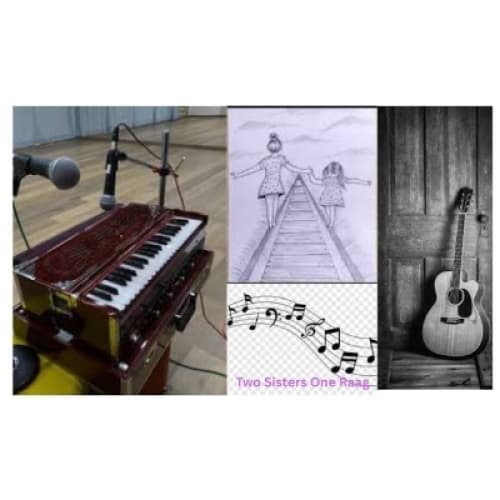

Parineeta and Namita, daughters of acclaimed classical vocalists Ranjan and Leela Dholakia, were immersed in music from an early age, beginning their Riyaz as young children. Their early performances, often during interludes at their parents’ concerts, soon became cherished features, showcasing their growing mastery of classical traditions. Proud of their daughters’ maturity and stage presence, the parents encouraged solo performances when Parineeta turned sixteen and Namita fourteen. The sisters quickly rose to prominence, balancing school with a demanding concert schedule, supported by understanding teachers and careful parental planning.
As their popularity grew, comparisons emerged. Critics and audiences increasingly favoured Parineeta’s emotive depth and vocal richness, leading to more invitations and public acclaim. Namita, though talented, felt the weight of these perceptions, within concert circles, school, and even extended family. Her confidence kept eroding, and she no longer felt seen for who she truly was. At eighteen, she made a bold decision, to leave home and pursue her education abroad, a move that stunned her family. Unknown to them, Namita had been preparing quietly, scoring 90% in her board exams and securing scholarships from international universities to study science. Her departure marked a turning point, one shaped by determination, independence, and the quiet courage to forge her own path.
Parineeta was heartbroken. Namita, her closest confidante since childhood, had concealed her plans to study abroad, and it was the secrecy, more than the decision itself, that felt like a betrayal. They had shared everything, emotions, experiences, silent glances at handsome boys, and an uncanny alignment in tastes. Their bond had been effortless, protective, and profoundly intimate. Parineeta couldn’t understand how Namita, her beloved “Namu”, had chosen silence instead of trust.
Namita, meanwhile, had become resolute. When she informed her parents about her admission to a U.S. university, it wasn’t a request, it was a firm demand for financial support. If money was a concern, she insisted they release the earnings she had accumulated from her past performances. Her father reacted with anger, but her mother stepped in, gently assuring Namita that the finances would be taken care of.
As relatives began visiting, more curious than concerned, Namita withdrew further. She avoided conversations, preferring solitude and in those quiet hours, free from scrutiny, she found a brief sense of peace.
Performance invitations for Namita had dwindled, and she began spending entire days out, often returning late with her own key. Parineeta made efforts to reconnect, staying up in hopes of a conversation, but Namita kept her distance. The once lively dinner table grew quiet, replaced by a silence that echoed louder than any words.
Parineeta, sensing the reasons behind Namita’s withdrawal, tried to help their parents make sense of her growing distance. But when they approached her with quiet concern, Namita brushed it aside. A quiet sorrow crept into the home, hidden beneath the graceful smiles they wore during performances. On stage, they dazzled; offstage, they slowly unravelled.
On the day of her departure to the U.S., Namita broke down in the shower, overwhelmed by years of comparison and invisibility. Her parents, absorbed in their busy performance schedules, missed the signs of her struggle. Parineeta, now a rising star, was increasingly unavailable, and the sisterly bond that once anchored Namita felt irreparably strained. The girl who once couldn’t imagine life without Parineeta now felt alone. For over a year, she had wrestled with the decision to step away from music, not out of defiance, but to protect her mental health and rediscover herself. A choice to breathe, to heal, and to begin again.
In the U.S., Namita quickly found her stride, excelling academically and thriving among driven, curious peers. Yet beneath the surface of success, she was quietly reconditioning herself back together. Her upbringing had centred on vocal music, but in the solitude of her dorm room, she sunk toward instruments, a passion long overshadowed by her family’s vocal legacy. She bought a guitar, its frets mysteriously comforting, and began exploring new sounds, blending technique with instinct.
Some evenings, she poured her thoughts into a journal tucked away in her desk drawer. “I’m not escaping music,” she wrote once, “I’m trying to find the version of it that feels like mine.” A perceptive professor, drawn to her quiet intensity, became a mentor, encouraging her to experiment with fusion and folk traditions. “You don’t have to choose between roots and wings,” he told her.
There were moments of doubt, especially when she came across videos of Parineeta’s soaring performances. But instead of feeling diminished, Namita leaned into her own path. She wasn’t trying to match her sister anymore. She was learning to honour her own rhythm.
When her university announced its annual cultural event, Namita envisioned a fusion band blending Indian classical and Western folk traditions. She gathered a diverse group of musicians and formed “RagaRoots,” taking lead vocals for the Indian segments alongside an Irish vocalist. Their music, rooted yet vibrant, celebrated cultural harmony through Hindi-English lyrics and earthy rhythms.
RagaRoots became a sensation, and Namita emerged as a respected figure on campus, admired for her intellect, creativity, and quiet confidence. She believed in nurturing individual talent over comparison, a philosophy that shaped her journey.
After graduation, Namita secured a role at a top-tier U.S. company while continuing to perform with RagaRoots. Their unique music gained widespread acclaim, and her company supported her dual pursuits, recognizing the brilliance she brought to both worlds.
Back in India, Parineeta had risen to prominence as a celebrated classical vocalist, her career flourishing alongside a deepening relationship with Kunal, a Kolkata-based production designer. Their connection, sparked at a film award function, quickly evolved into something meaningful, not just romantic, but rooted in mutual respect and creative synergy.
Kunal wasn’t just a companion, he became her sounding board, her quiet anchor. His insights, though from a different discipline, often unlocked new layers in her music. Their bond wasn’t built on grand gestures, but on everyday encouragement, texts before performances, shared silences after long rehearsals, and a steady belief in each other’s art. As their relationship matured, marriage became a natural next step, not as a milestone, but as a continuation of a partnership that added depth to both their lives.
During Namita’s years in the U.S., neither Parineeta nor their parents visited. Parineeta was focused on graduation and performances, while the family, conscious of public perception, avoided international appearances to prevent speculation. Despite this, Namita always spoke warmly of her family, affirming there was no strain in their relationships.
In reality, her father hadn’t spoken to her since she left, but Namita stayed connected, chatting with Parineeta when possible and receiving monthly video calls from her mother, through which she kept track of her father’s health.
While Parineeta toured abroad, she saw Namita’s star rising through digital platforms. In every country she visited, Namita’s fusion performances were going viral, mesmerizing audiences young and old. Parineeta watched her sister, guitar in hand, immersed in her music, and felt only admiration. Namita’s ascent was unmistakable and profoundly deserved.
Parineeta felt the moment had come to formally tell her parents about marrying Kunal, even though they already knew the two were seeing each other. Before taking that step, she wanted Namita to meet him virtually. Though Namita knew of Kunal, they’d never spoken face-to-face. Kunal agreed instantly, but as they discussed the call, Parineeta broke down. “I miss her so much… I’m scared to talk to her about the wedding” she sobbed. Kunal comforted her, reminding her of the deep bond they shared. “Let’s talk to her first. We’ll figure out the rest,” he said gently.
Parineeta messaged Namita: “Hi Nami, would love to have a video call with you.” Namita replied instantly: “Calling you now.” Startled, Parineeta asked for five minutes, quickly looped in Kunal, and started the call.
The moment Namita’s face appeared on screen, Parineeta broke into tears. Concerned, Namita asked, “Is everything alright Pari?” Kunal gently stepped in, introduced himself, and assured her that everything was okay. Namita, visibly relieved, smiled warmly. “Hi Kunal! At last, Pari decided to let me see you!” she said with a playful grin.
Parineeta, overwhelmed, couldn’t speak. Kunal gently said, “Pari wanted you to be the first to know we’re getting married.” Namita’s eyes welled up. “Congratulations, Kunal. Take care of my dear sister… she’s the jewel of our family.” Turning to Parineeta, she asked softly, “When are you planning?”
Parineeta whispered, “When you’re free to come to India.” Namita’s head dropped. The silence was heavy. She tried to smile through the ache. “Silly girl… I’ll watch the live stream of my famous sister’s wedding.” Parineeta shook her head, refusing. Kunal urged, “Namita, you must come. We’ll convince Papa.” But Namita, voice cracking, replied, “Not possible. My father won’t bend.”
Looking at them both, she said through tears, “Pari, Kunal… you’ll be the couple of the century.”
And quietly, she ended the call.
Shaken by the emotional video call, Kunal reassured Parineeta they’d meet the next day to plan their next steps.
The following morning, Parineeta brought up her wish to marry Kunal at breakfast. Her parents were thrilled, asking her to coordinate with his family. But then, her tone shifted.
“I will only marry if Namita is present,” she said firmly, turning to her father. “And please don’t walk away like you always do when her name comes up.” Her mother grew visibly tense. Her father, cold and resolute, replied, “Then I’m out. Choose me or your sister.”
Parineeta broke. Her voice rose with anguish. “What has Namita done to deserve this silence? She’s excelled academically, professionally, musically. She didn’t abandon your legacy, she evolved it. She blends classical with Western folk, sings with soul, and plays instruments with mastery. The world celebrates her, and we should too.”
She continued, voice trembling, “We failed her. When comparisons hurt her, we stayed silent. She left because we didn’t see her pain. And now, she’s all alone. I lost my sister, Papa. Seven years without her. If she can’t be part of my wedding, I’ll go to her. I’ll join her in the U.S.”
Her words left the house in a deeper silence than ever before. Later, Parineeta shared everything with Kunal, every word, every emotion. She asked him to speak to his parents but suggested they pause any wedding plans until her father made his decision.
On a quiet Sunday, Parineeta sat with her mother, trying to keep things light while her father remained distant, speaking only in monosyllables. The silence was familiar but now tinged with tension after her recent confrontation with him. Suddenly, the doorbell rang.
To their surprise, Kunal’s parents stood smiling at the door. Parineeta and her mother were caught off guard but welcomed them in. Her father, overhearing, stepped forward and greeted them warmly. Moments later, Kunal appeared, leaving Parineeta stunned, he hadn’t mentioned this visit.
After the initial pleasantries, Kunal’s parents spoke with warmth about the upcoming marriage, expressing deep appreciation for Parineeta and her family. They offered heartfelt praise for both daughters, recognizing Namita’s distinctive musical style and rising acclaim. Commending the parents for raising two accomplished, self-assured young women, they described the union as a beautiful reflection of character and compatibility.
Parineeta, puzzled, wondered if Kunal had hidden the truth about her father’s strained relationship with Namita. She feared her father might react harshly, but to her shock, he responded with grace. “Now that you’re here, let’s begin planning the wedding arrangements,” he said.
Stunned, Parineeta excused herself to the balcony, her mind racing, had her father made up his mind to have Namita in their wedding? Kunal came after her. “You didn’t tell me you were bringing your parents,” she said, visibly upset. “Did you mention anything about my father and Namita to your parents?” Kunal replied calmly, “No.”
Later that evening, after Kunal’s parents had left and the house had quieted, Mr. Dholakia sat alone in the study, the soft strains of a tanpura playing from an old recording. Their words lingered, not just the praise for Parineeta, but the quiet acknowledgment of Namita’s journey. He hadn’t responded then, but something had stirred. For years, he had clung to disappointment, mistaking her departure for rejection. But now, in the stillness, he saw it differently. Namita hadn’t turned away from their legacy, she had carried it forward, in her own way. The realization settled slowly, without drama, just a quiet loosening of something long held. He reached for his phone, hesitated, then dialled.
Namita was deep in a high-stakes project when her phone rang. She was about to decline, until she saw the caller ID: Daddy. In the middle of a tense meeting, she stood abruptly and excused herself, leaving the room in stunned silence.
Before answering her father’s call, Namita stares at the screen, heart racing, unsure if it’s real. In a nearby cabin, her hands trembled as she answered. “Daddy!” she gasped, emotion flooding her voice. Memories surged, his gentle care, his protective scoldings, his quiet presence. On the other end, his voice cracked, “Namu… I’m sorry. Please forgive me.” He sobbed, raw and unguarded. Namita broke down too. “Don’t cry, Daddy… just talk to me,” she whispered.
They wept together, releasing seven years of silence. For nearly an hour, they spoke, father and daughter, finally reunited. Towards the end, Namita said softly, “I’ll be there for Paru’s wedding. And RagaRoots will perform, just as you asked Daddy.”
Returning to the boardroom, her tear-streaked face now glowed with joy. “Alright, folks,” she declared, “tomorrow this project’s going to blow the roof off!” Then, turning to her boss, she grinned, “I’m off for two months, my sister’s wedding prep begins. I’ll work from home when needed. I know you will never object boss. And if any of you can make it, you’re in for a treat. If not, I’ll throw you one when I’m back!”
The doorbell rang again. And again. And again. “Who is it? Have some patience, yaar!” Parineeta shouted, irritated. But the ringing persisted. She flung the door open and froze.
Namita stood there, her sister, her mirror, her mystery. Seven years gone, now suddenly here, laughter in her eyes and a flicker of nervousness in her smile.
Behind her, their mother gasped, “Namu?” voice trembling with disbelief.
Namita walked in, arms outstretched. “Surprise! I asked Dad to keep it a secret; I wanted to see your reactions. Absolutely worth it”
Neither Parineeta nor their mother had any idea that her father had reached out to Namita.
Parineeta touched her cheek, stunned. Then pulled her into a fierce hug. Their mother joined, arms around both daughters, tears flowing freely.
From the corridor, familiar footsteps approached. Namita turned. Her father stood there, quiet, smiling with trembling lips and moist eyes.
She rushed to him and collapsed into his arms. “Dad…” she whispered, sobbing into his shoulder. He held her close, silent, letting her cry. His own tears fell into her hair.
When she pulled back, she bent to touch his feet, forehead resting longer than custom. He placed both hands on her head, his blessing, silent and deep.
She turned to her mother, did the same. Her mother cupped Namita’s face, kissed her forehead, and whispered, “My child is home.”
Namita stood, eyes glittering, heart full. She was home.
Swaralaya, the Dholakia home, pulsed with wedding energy, laughter over chai, marigolds draped across balconies, and relatives rekindling bonds. The house had become a living symphony of celebration.
Just before the wedding rituals began, RagaRoots arrived, Namita’s fusion ensemble, specially invited by Mr. Dholakia.
Eoin, the Irish vocalist; Rohan, the tabla player from Delhi; Jake, the flautist from the U.S.; Marcus, the American drummer; and Luca, the Italian bassist, each brought a quiet warmth, their presence a subtle tribute to Namita’s journey and the father who had finally embraced it. They were absolutely thrilled to witness the vibrance and energy at Namita’s family home, a world so different from their rehearsals yet instantly welcoming.
Namita met Kunal with her parents, her smile radiant, she was genuinely happy with Parineeta’s choice. Close relatives had arrived, filling the home with warmth and joy. Namita, ever the orchestrator, took charge with grace. Her planning was flawless, her delegation precise, chaos turned harmonious under her lead.
The Haldi ceremony bathed Parineeta in golden light and turmeric, elders blessing her with song and laughter. Rehearsals filled the house before the Sangeet, singing, dancing, poetry. That night, under fairy lights, Namita and Parineeta’s duet dance brought the crowd to its feet.
The wedding was serene; vows exchanged beneath jasmine canopies. At The Oberoi Ballroom, the reception sparkled with guests from every walk of life. As the evening deepened, Namita and RagaRoots took the stage ready to enthral.
Namita stood backstage, heart pounding. Her first performance before her entire family. She peeked through the curtain, her parents in the front row, Parineeta and Kunal beside them, all eyes searching for her.
Her father had insisted, “We want to hear only Namita. I want to listen, not lead.” The crowd buzzed with anticipation.
Namita stepped out, walked to her father, hugged him tight. “Daddy… I love you.”
“You’ll bring the roof down,” he whispered. She touched her mother’s feet, received a tearful blessing, hugged Parineeta and Kunal, and greeted Kunal’s parents with folded hands.
Then she turned to the crowd, raised her arms: “Here we go, guys!”
The hall erupted.
The Oberoi Ballroom transformed into a temple of music and emotion. Namita stood centre stage, saree shimmering, breath trembling. “Thank you all for being here. This moment… means more than I can say.” Then, with a grin: “First time performing in a saree… hope it stays on!” Laughter rippled through the hall.
She turned to her parents: “Everything I am… is because of you.”
To Parineeta: “My first stage mate, my fiercest cheerleader, my forever duet… I love you.”
From the youth section: “WE LOVE YOU NAMITA!”
She smiled, glowing.
She strummed her guitar and began Raag Yaman; the raga her parents taught her. Her voice rose, haunting and pure. The hall stilled, drawn into her world. Her notes soared, dipped, and built like a wave. The audience was transfixed. During her Raag Yaman performance, Namita pauses mid-alaap, closes her eyes, and sings a spontaneous verse, one she wrote in solitude years ago.
Then Eoin stepped in, his voice weaving English folk into the raga’s contours. “The Lass of Richmond Hill” echoed longing and return. The fusion was seamless, tabla, bass, guitar, all in sync. Namita and Eoin shared a look, half challenge, half celebration.
Each RagaRoots member stepped forward. The bassist laid a pulsing groove. The flautist fluttered haunting notes. Then came the percussion duel, tabla vs. drums, a rhythmic jugalbandi that electrified the hall. The crowd stood, clapping, cheering.
Namita returned, guitar roaring, voice soaring. Eoin joined in harmony. The flautist trilled. The tempo surged. It was no longer a performance, it was transcendence.
Her parents clutched each other, tears flowing. Parineeta screamed with joy, “That’s my sister!”
Then silence. The final chord echoed. The moment lingered. Unforgettable.
Every musician stood still, breath heaving, heads bowed. Eoin’s hand rested on his heart. The flautist wiped his brow. The drummer stared at his sticks, stunned. Namita stood centre stage, tears slipping silently beneath her curtain of hair, not from exhaustion, but release.
The hall erupted. Cheers, chants, claps, stomps, pure, unfiltered love. Parineeta rushed onto the stage, hugging Namita tight. “My sweetest sister,” she whispered, voice cracking. “You did it.” Namita clung to her, guitar still slung, body trembling with emotion. The crowd roared louder: “We love you Namita! We love RagaRoots!”
Behind her, the band stood overwhelmed. Eoin wiped his eyes. The flautist smiled through tears. The drummer raised his sticks in salute.
In the front row, Mr. Dholakia watched, his daughter embraced by her sister, adored by strangers, revered by peers. He understood: Namita didn’t just perform, she gave. And tonight, she gave everything.
Parineeta turned to the crowd: “I’d like to invite our parents to the stage. They’re the reason this night exists.”
Mr. and Mrs. Dholakia rose, visibly moved. Kunal guided them gently, reverently. Namita met them halfway, arms wide. Her mother kissed her cheeks. Her father wrapped both daughters in his arms. Then came the hugs, each RagaRoots member embraced, welcomed into the family.
Mr. Dholakia took the mic. The hall hushed. “I’ve sung in temples, halls, before strangers and friends. But tonight, I didn’t sing. I listened. And I felt something our family has never felt before.” He turned to his daughters. “You’ve taken our music and made it soar.” To RagaRoots: “You built a home for our daughters. You gave us this night.” To the audience: “Thank you. For seeing them. For loving them. You’ve given us a memory we’ll carry to our last breath.”
Mrs. Dholakia stepped forward, voice gentle but firm. “To every parent here, watch your children. Be with them. Listen to their silly songs, their wild dreams. Not to make them successful, but to help them enjoy life.” She turned to her daughters. “Because when they do… you’ll see this. You’ll see joy. You’ll see magic.”
The hall stood in ovation, not just for the music, but for the love, the legacy, and the family that made it all possible.
Namita sat in Singapore Airlines business class, the cabin immersed in a soft amber glow. Around her, RagaRoots members settled in, some chatting, others asleep. The hum of the engines was soothing, but beneath the calm lay echoes of deep emotion.
Just hours earlier, the airport farewell had been intense. Her parents, Parineeta, and Kunal hugged her tightly, pride and longing in their eyes. Her mother held her close for a whispered goodbye. Her father’s moist eyes met hers with a smile. Parineeta kissed her forehead, saying, “Come back soon. We’ll be waiting.”
Outside, fans shouted, “LOVE YOU NAMITA!” Security gently urged her on. Fame had its rhythm, but goodbyes never got easier.
Aboard the flight, Namita gazed out at the fading lights below, the hum of the engine steady beneath her. The wedding had passed like a dream, unexpected, healing, full of grace. She thought of Parineeta’s smile, her father’s quiet nod, her mother’s pampering, the music that had filled their home once more.
Her phone rang. “Yes, Boss,” she answered.
Her director’s voice came through, cheerful: “Great news, the client’s asked for you again. Head straight to the office once you land. Safe travels!”
As the plane ascended, she reached for her notebook and scribbled a line: “Home isn’t a place, it’s a rhythm you learn to trust again.”