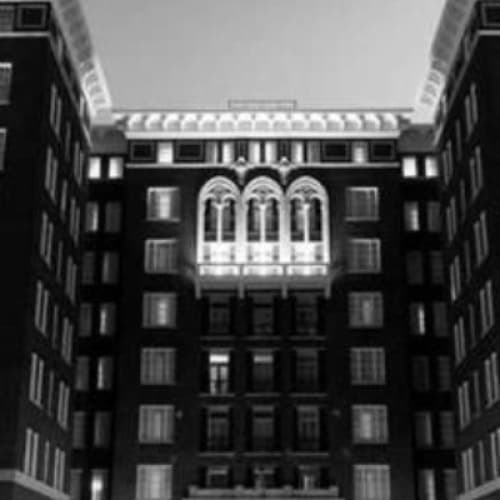
Sarah checked her watch, the lobby's polished gleam reflecting her tense expression. Sixth floor complaints, again. "The Knocker," the night staff whispered, a ghost story she'd always dismissed as charmingly absurd. Built on the foundation of the grand 1914 Tutwiler, this Hampton Inn & Suites was a testament to modern efficiency, not spectral whims.
Room 612. A frazzled conference attendee, Ms. Albright, described a relentless, rhythmic knocking, like someone testing the very limits of patience. Sarah, armed with her maintenance checklist, found nothing amiss: no loose pipes, no faulty wiring, just the sterile, impersonal silence of a modern hotel room.
The hotel's history, a tapestry woven with boom and bust, whispered back. The original Tutwiler, a beacon of Birmingham's ambition, had hosted presidents and movie stars. Major Tutwiler, the coal baron who'd funded its construction, was said to linger, his spirit tethered to the repurposed Ridgely Apartments, now the hotel's sixth floor.
Sarah found herself drawn to the hotel's archives, a dusty room filled with faded photographs and brittle ledgers. One ledger, bound in worn leather, detailed Major Tutwiler's meticulous accounts, his precise handwriting a testament to his exacting nature. She learned he spent a great deal of time in the original Ridgely Apartments.
The paranormal activity escalated. Lights flickered in the empty bar, casting long, distorted shadows. The scent of aged cigars, a phantom aroma, wafted through the lobby. Then, the knocking, a steady thump-thump-thump on the service elevator door, a sound that resonated deep within the building's core.
Ms. Albright, now convinced of a haunting, cornered Sarah. "He's particular," she said, her voice trembling. "He doesn't like change. He doesn't like disorder." Sarah looked at the room, and noticed a picture frame was slightly crooked.
The Birmingham Business Association's annual gala, held in the hotel's ballroom, was a disaster. Doors swung open, lights danced, and the relentless knocking echoed through the room, drowning out the music and the chatter. Guests, a mix of the city's elite and out-of-towners, stared in disbelief. Sarah, facing the chaos, felt a coldness, a distinct presence. "Major Tutwiler," she said, her voice echoing through the stunned silence. "This is your hotel, but it's our hotel now. We honor your legacy, but we have our own way of doing things."
She pulled the crooked picture frame straight.
A hush fell over the room. The lights steadied. The knocking ceased. A sense of calm, a quiet acceptance, settled over the ballroom. Sarah placed a framed, enlarged photograph of the original Tutwiler in the lobby, a grand image of its former glory. She also created a small display of the Major's ledger, and other historical artifacts.
The sixth floor remained quiet, but the lingering scent of cigars and the occasional, almost imperceptible thump served as a gentle reminder of the past. The hotel, Sarah realized, was not just a building, but a living testament to Birmingham's history, a place where the echoes of the past mingled with the rhythms of the present.
(This story is based off the Tutwiler Hotel in Birmingham, AL)