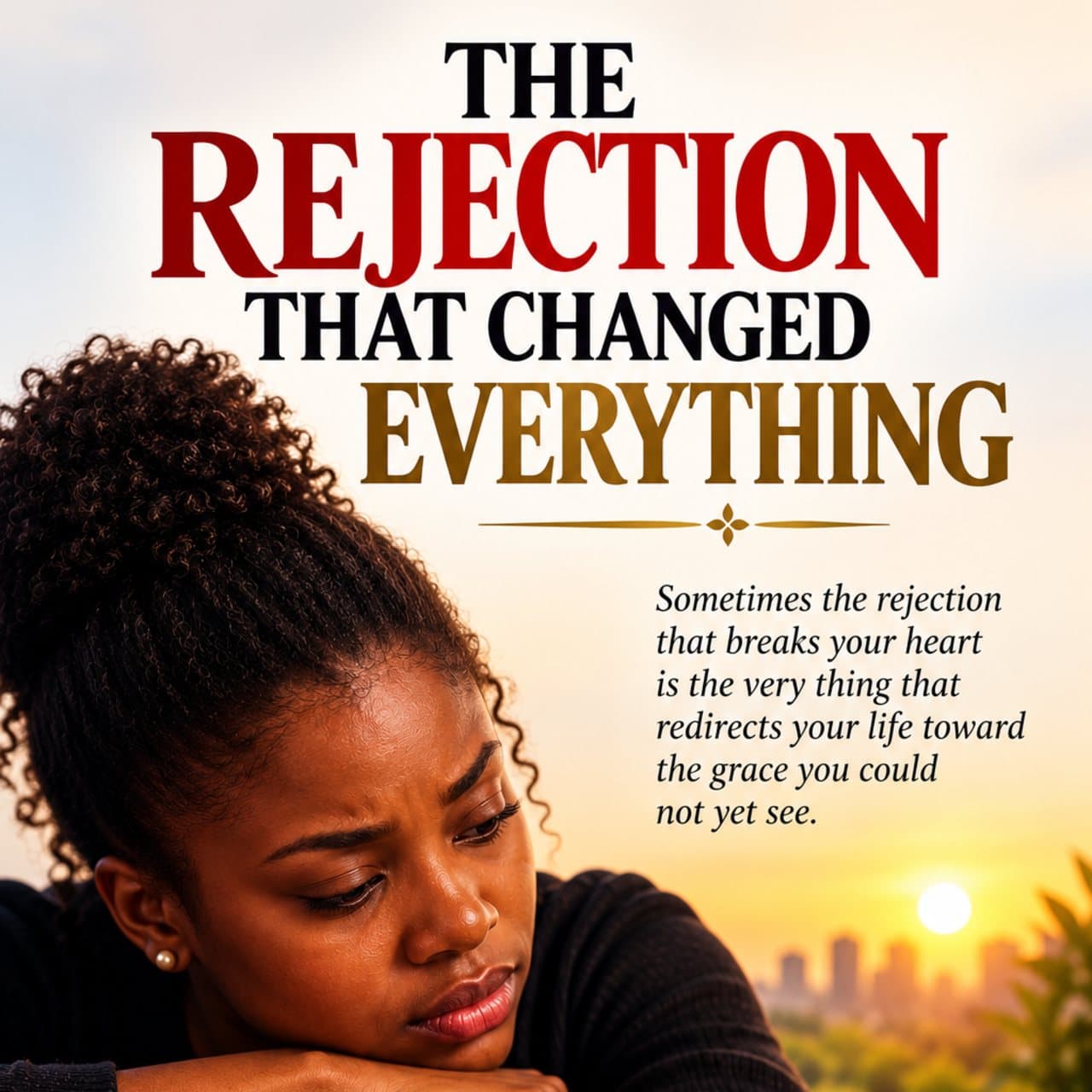
“We regret to inform you that you have not been selected for the position.”
She read the message while sitting on the edge of her bed.
This was not just another job rejection.
She had told her mother about this opportunity.
She had already calculated what the salary would mean for her life. She could finally clear the debt that had been following her for months. She could help with her younger brother's school fees. She could replace the broken laptop she had been nursing along for nearly a year.
Most importantly, she had begun to believe that perhaps life was finally giving her a chance to breathe.
Then came those eleven words.
You have not been selected.
She put the phone beside her and looked around the room.
Her CV was still open on the laptop.
Her interview clothes were hanging on the back of the chair.
Everything around her reminded her of how badly she had wanted that opportunity.
She picked up the phone again and read the message.
Nothing had changed.
She had been rejected.
That evening, when her mother called, she almost told her everything was fine.
Instead, she said, “Mummy, it didn't work out.”
There was a pause on the other end.
Her mother did not lecture her.
She simply said, “Maybe this one wasn't yours. Don't let one person's decision make you doubt what God put inside you.”
She cried after the call.
Not because her mother had solved anything.
She hadn't.
The bills were still there.
The debt was still there.
The uncertainty was still there.
But something inside her shifted.
For the first time that day, she stopped asking, “Why didn't they choose me?”
She began asking, “What do I do now?”
That question changed everything.
The next morning, she woke up before sunrise.
She opened her laptop.
Instead of checking the rejection email again, she opened a document she had abandoned months earlier.
It was an idea she had once been too afraid to pursue.
She had written down the plan, researched the market, spoken to a few people about it—and then convinced herself that she needed a stable job before she could take it seriously.
The rejection had taken away the excuse.
She started.
Slowly.
One client.
Then another.
Then another.
It was not glamorous.
There were days when she wondered whether she had made a terrible mistake.
But something was changing.
She was no longer waiting for someone else to decide whether she deserved a chance.
Months later, the same woman who had sat on the edge of her bed staring at a rejection email was sitting across a table from someone asking how she had built her business.
She smiled.
She thought about that message.
“We regret to inform you…”
At the time, those words had felt like a verdict.
Now they looked different.
They had not ended her future.
They had interrupted the future she had imagined.
And there is a difference.
We live in a world where people pretend a lot.
Some people will smile at you while quietly hoping you fail. Some will praise you publicly and question your ability privately. Some will make decisions about you in rooms where you are not present and assume you will never know.
And sometimes you hear what was said.
You discover that the rejection was not entirely about your ability.
You realise there were conversations, preferences, connections and private agendas you knew nothing about.
It can hurt.
But it can also teach you something important:
Human beings can influence your circumstances without owning your destiny.
There is something called grace.
Grace does not promise a life without disappointment.
It does something more profound.
It can give meaning to what you thought was meaningless.
It can give strength to someone who has every reason to stop.
It can take a person through a door they never intended to enter and lead them toward a place they never imagined reaching.
She had wanted that job because she thought it would rescue her.
Instead, losing it forced her to discover that she could build something of her own.
The rejection did not feel like grace when it arrived.
It felt like loss.
That is why grace is sometimes difficult to recognise while you are living through the moment.
You may be crying over the door that closed while life is quietly preparing you for the road beyond it.
You may be asking why you were overlooked while something else is beginning to take shape.
You may think you have been forgotten when, in reality, you are being redirected.
So be careful about making permanent judgments from temporary circumstances.
Do not look at someone struggling today and decide that you know where they will be tomorrow.
Do not look at your own disappointment and assume it has the authority to define your life.
And if you ever find yourself in a position to make decisions about someone else's future, remember that there is a human being behind every application, every rejection, every opportunity and every closed door.
Your decision may affect them.
But it does not necessarily determine them.
Because sometimes the person you reject will discover themselves somewhere beyond your reach.
Sometimes the opportunity you deny them will force them to create one.
And sometimes the door you close will become the reason they finally find the door that was meant for them.
She thought she had lost the opportunity that would change her life.
She did not realise that losing it would become the turning point that changed her.
And that is the lesson.
You can see what is happening.
You cannot always see what it is becoming.
So before you judge the chapter, wait.
Before you write the ending, wait.
Because grace is still working in places you cannot see.
And you don't know how the story ends.