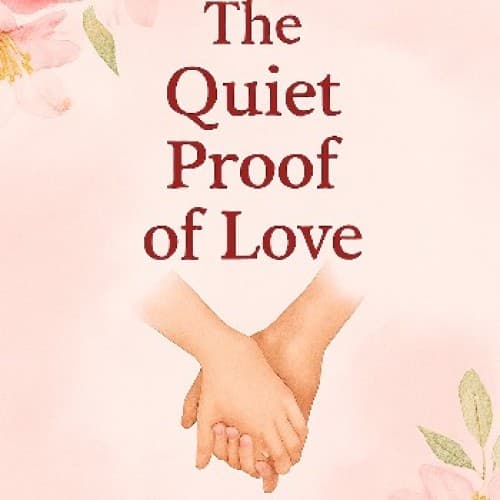

Adwoa had always believed love would be loud. She imagined it as endless butterflies, dramatic confessions, and grand gestures that swept her off her feet. But sitting in her small living room one evening, with the hum of the ceiling fan filling the silence, she began to realise that love was something else entirely.
Kobby was across from her, leaning back in the chair, his eyes soft but steady. They weren’t talking much. In fact, they hadn’t spoken for several minutes. Yet Adwoa felt something, a warmth that didn’t need words.
“Do you ever wonder,” she asked suddenly, her voice breaking the quiet, “how do you know if you love someone?”
Kobby didn’t rush to answer. He let the question linger, as if it deserved space. Then he smiled, not the kind that tried to impress, but the kind that belonged to him naturally.
“I think you know,” he said slowly, “when their happiness matters to you, not because you should care, but because you want to.”
Adwoa tilted her head, thinking. She remembered the way he always asked, Are you okay? — even when she looked fine. She remembered how he listened, not to reply quickly, but to understand. She remembered how her tears, her frustrations, and messy moments didn’t push him away. Instead, they seemed to draw him closer.
“But isn’t love supposed to be exciting?” she asked, half-smiling. “Like fireworks?”
Kobby chuckled softly. “Butterflies fade. Fireworks burn out. Love is quieter than that. It’s patience. It’s choosing kindness when pride would be easier. It’s staying when things get messy.”
She thought about the time she had snapped at him after a long day, her words sharp and unfair. He hadn’t fought back. He had waited, giving her space, and later brought her a cup of tea. That small act had spoken louder than any apology.
“Sometimes silence scares me,” Adwoa admitted. “I worry it means distance.”
Kobby shook his head. “Silence can mean connection, too. Sitting together, saying nothing, but still feeling safe, that’s love.”
She looked at him, her heart softening. “So love isn’t only saying ‘I love you’?”
“No,” he said gently. “Sometimes it’s asking, ‘Are you okay?’ Sometimes it’s patience when pride would be easier. Sometimes it’s giving someone the freedom to be themselves, even when you don’t fully understand them.”
Adwoa felt her chest tighten, not with fear, but with recognition. She realised love was not about proving anything. It was about creating a safe space, a place where she could be vulnerable, tired, hopeful, or uncertain and still feel accepted.
Kobby reached for her hand, his touch steady. “Love is showing up,” he said. “It’s asking, ‘How can I support you right now?’ Not because something’s wrong, but because I want to be here.”
She thought about the countless small ways he had shown up: waiting for her after late classes, carrying her heavy bags without being asked, and remembering her favourite snack when she was stressed. None of these were grand gestures, but they were proof, quiet, consistent proof.
“So love isn’t proven in big moments?” she asked softly.
“No,” he replied. “It’s proven in inconsistency, in kindness and in choosing each other again and again.”
Adwoa’s eyes glistened. She realised that love was not an obligation. It was not a duty. It was the natural extension of a heart that stayed.
Days later, she found herself thinking about that conversation again. She was walking with Kobby through the busy streets of Accra, the noise of traffic and chatter surrounding them. He carried her books without complaint, his hand brushing against hers every so often.
She noticed how he slowed his pace when she grew tired, how he shielded her from the rush of people, and how he laughed at her small jokes even when they weren’t funny.
It struck her then: love was not about perfection. It was about presence.
Later that evening, as they sat together on the balcony, she turned to him. “You know,” she said, “I used to think love was about grand gestures. But now I see it’s about the ordinary things. The way you listen. The way you stay. The way you choose me, even in silence.”
Kobby smiled, his eyes reflecting the fading light. “That’s the thing,” he said. “Love isn’t loud. It’s steady. It’s choosing each other, not once, but every day.”
Adwoa leaned against him, her heart full. She realised that love was not something you proved once. It was something you lived, moment by moment, choice by choice.
And in that quiet evening, with no fireworks, no perfect script, she understood:
Love is not an obligation.
It is the natural extension of a heart that stays.