
In a small tow”
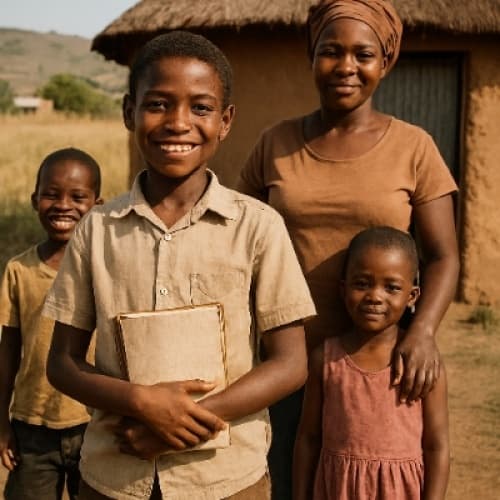
In a small township nestled between sugarcane fields and rusted railway lines, lived a woman named Thandiwe. She was the mother of three children—Sipho, aged 12, Ayanda, 9, and little Zanele, just 5. To the outside world, their home looked ordinary: a modest brick house with a tin roof, a vegetable garden in the back, and laughter that occasionally spilled out into the dusty yard. But behind closed doors, shadows lingered.
Thandiwe had married Mandla when she was just 19. He was charming then—funny, ambitious, and full of promises. But as the years passed, Mandla’s warmth turned cold. His frustrations with work, money, and life twisted into anger, and that anger found its way into their home. It started with words—sharp, cutting, relentless. Then came the fists. Not every day, not even every week. But enough to keep Thandiwe walking on eggshells, enough to make the children flinch at the sound of his footsteps.
Sipho, the eldest, bore the brunt of Mandla’s rage. He was growing into a young man, and Mandla saw in him a threat. Ayanda became quiet, withdrawn, her once vibrant drawings now filled with dark scribbles. Zanele, too young to understand, clung to her mother with wide, confused eyes.
Thandiwe tried to shield them. She would step between Mandla and the children, take the blows meant for them, whisper lullabies through her tears to soothe their trembling hearts. She told herself she was staying for their sake—that a broken home was better than no home. But deep down, she knew: silence was not safety.
One evening, after Mandla had stormed out in a drunken fury, Sipho came to her with a bruised arm and a question that shattered her: “Mama, are we going to live like this forever?”
That night, Thandiwe didn’t sleep. She sat by the window, watching the moon cast silver light over the garden she had planted with her children. She thought of the stories her grandmother used to tell—of women who walked through fire and came out glowing. She realized then: she was not just a mother. She was the flame.
The next morning, she packed a small bag. She took her children by the hand and walked to the local clinic, where a nurse named Nomusa listened without judgment. Nomusa connected her to a shelter in Durban, a place where women and children could heal. It wasn’t easy—there were forms, questions, and the fear of Mandla finding them. But Thandiwe pressed on.
At the shelter, the children began to smile again. Sipho joined a soccer team. Ayanda started painting with color. Zanele learned to sing. Thandiwe found work as a seamstress, stitching not just fabric, but the pieces of her life back together.
Years passed. Mandla was eventually arrested after violating a protection order. Thandiwe never looked back.
Today, Thandiwe runs her own tailoring business. Her children are thriving—Sipho dreams of becoming a lawyer, Ayanda wants to be an art teacher, and Zanele dances like the wind. Their home is filled with music, laughter, and the scent of fresh bread.
Thandiwe tells her story to other women now. She speaks at community centers, churches, and schools. She tells them: “You are not alone. You are not weak. You are the flame. And flames don’t break—they burn brighter.”