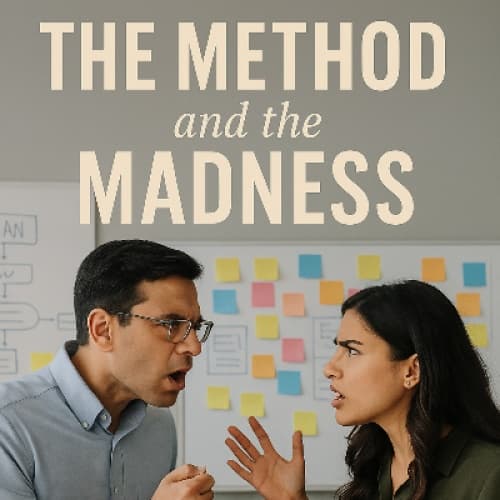

At Orion Tech, a rising software startup, the product development floor buzzed with caffeine-fueled urgency. Among the hum of keyboards and click of deadlines stood Neil Sharma, a meticulous and relentlessly driven senior developer known for his 80-hour weeks, color-coded Gantt charts, and zero tolerance for missed milestones. Neil had built his career brick by brick on process, planning, and precision.
Then came Riya Kapoor—the new project manager. Breezy, instinct-driven, and freshly poached from a competitor, Riya preferred whiteboards over spreadsheets and brainstorming over budgets. She believed in “creative chaos,” as she called it, and loathed micromanagement.
Their first project together—a product redesign for a major client—was a ticking clock. Riya scrapped Neil’s detailed plan on Day Two, opting for open collaboration sprints. Neil seethed. He stayed late reworking timelines, only for Riya to erase them the next morning. “We’re not building a machine,” she’d say, “we’re crafting an experience.”
Tension escalated. Neil accused Riya of being reckless. Riya accused Neil of strangling creativity. The team, caught in the crossfire, grew anxious.
But then the unexpected happened.
Midway through the project, the client suddenly changed requirements. Neil was ready to collapse—his framework couldn’t absorb the disruption. But Riya? She rallied the team with sticky notes, late-night pizzas, and a sense of ease that somehow turned panic into progress.
And Neil saw it—her chaos had flexibility. Her spontaneity sparked innovation.
In turn, Riya noticed something, too. Neil’s systems, while rigid, were thorough. His contingency planning had saved their codebase more than once. His discipline kept the team anchored.
Gradually, grudgingly, they began to adapt to each other. Neil started attending Riya’s freeform ideation sessions, offering structure without stifling. Riya began consulting Neil before scrapping anything, asking how to build flexibility into the framework.
By the end, not only was the project a success, it exceeded the client’s expectations. And for the first time, Neil left the office before 7 p.m., while Riya sent out a meeting agenda—on time, in bullet points.
They didn’t become friends overnight. But they became a team. One method, one madness—and somehow, a perfect balance.