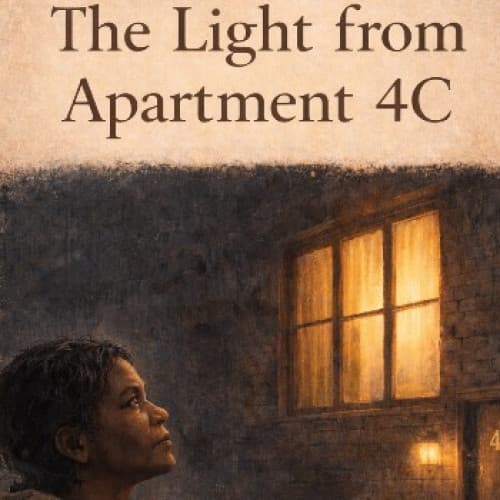

The light in Apartment 4C stayed on when everything else went dark.
Not bright. Not inviting.
Just there.
People noticed it the way you notice a bruise you don’t remember getting. At first you ignore it. Then you wonder how it happened. Then you invent reasons, so you don’t have to ask.
Elizabeth noticed it too.
She lived two floors down, in a building that smelled faintly of old paint and rain-soaked concrete. Ayeduase was quiet like that—trees leaning over narrow roads, students passing through without staying, life always temporary.
Elizabeth was a teacher. She spoke gently because she had learned that loud things could break. Children trusted her. Adults mistook her calm for wholeness.
She wasn’t whole.
Her parents had died years ago. A car crash. People said it was quick. As if speed makes absence easier. As if a door slamming shut hurts less than one left open.
After that, Elizabeth learned to live carefully. She folded her feelings small. She loved people in ways that could not demand much of her. She smiled so no one would ask what she was carrying.
The man in Apartment 4C did not smile.
Most people didn’t know his name. They called him that man. Or the one upstairs. Or simply 4C. He moved like someone trying not to take up space. Always at night. Always alone.
Stories grew where silence lived.
Elizabeth didn’t believe the stories. But she wondered.
One evening, rain fell the way it does when it has been waiting too long. Elizabeth came home soaked through, tired in the bones. At her door sat a small parcel. Brown paper. Neatly folded.
Inside was a book she had lost. She had searched for it and then given up, the way she gave up on many things.
A note fell out.
You dropped this.
No name. Just that.
Elizabeth stood there longer than necessary. Her shoes dripping. Her chest tight in a way she did not recognise as hope.
That night, she left a note at Apartment 4C.
Thank you.
That was all.
After that, small things began to happen. An umbrella left outside her door. A light knock that ended before she could answer. Once, on a cold evening, a cup of tea—already cooling—placed carefully on the floor.
They did not speak.
But something in Elizabeth softened. She started looking up the stairs instead of down at her feet. She started waiting for the light.
One night, it dimmed.
Not off. Just quieter.
Elizabeth surprised herself by knocking.
John opened the door. That was his name. John. Ordinary. Human. His face held the same tiredness she recognised in her own reflection.
They did not say much at first.
They didn’t need to.
Grief sat between them like a third presence. Not loud. Not demanding. Just there.
The light, John said, helped him sleep. Helped him remember he was still here.
Elizabeth understood.
The light in Apartment 4C still shines.
But now, when Elizabeth sees it, she doesn’t feel unsettled.
She feels less alone.