
Epigraph
"Anyone who has ever struggled with poverty knows how extremely expensive it is to be poor."— James Baldwin
"You have talked so often of going to the dogs — and well, here are the dogs, and you have reached them."— George Orwell
The Last Delivery
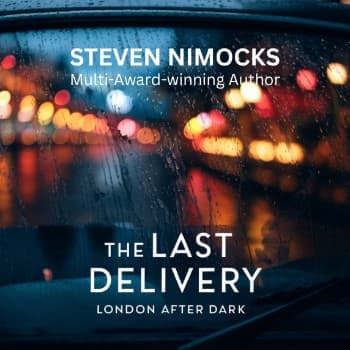
The rain came down in sheets, blurring the streetlights of London into hazy orbs. Kamal squinted through the drizzle-spattered windshield, his tired eyes scanning the busy street for his next fare. His phone dinged with a new pickup—Leo. Food delivery driver. Waterloo Station.
He sighed and swiped to accept the ride. Another late-night shift, another passenger with the same empty look of someone hustling just to survive. Kamal knew it well. His own rideshare app earnings scarcely covered his rent in the dingy flat he shared with two others. He unconsciously traced the cracked vinyl of the steering wheel cover, worn smooth from years of use.
The gear shift jiggled, a reminder that everything was wearing down—him, the car, the city. The rain pelted the roof as if to penetrate it, and as he pulled up to the station, he spotted Leo standing under the awning with his delivery bag slung over his shoulder.
Leo stepped into the back seat, shaking off the rain, his thin frame soaked through and his hoodie clinging to him. He slumped into the seat without a word.
Kamal eased away from the curb, merging into the endless flow of red taillights that painted the slick streets. The London Eye loomed ahead, its usual glow dimmed by the downpour, each pod empty and ghost-like against the night sky. They crossed Westminster Bridge, where even the tourists had abandoned their usual spots, leaving Big Ben to toll midnight over vacant walkways.
"Rough night?" Kamal ventured, his eyes flicking to the rearview mirror. Through the rain-streaked windows, the neon signs of chicken shops and betting parlors cast shifting colors across Leo's tired face.
"Yeah, you could say that. It's always rough," Leo muttered. "But tonight..." He trailed off as they passed a row of shuttered market stalls in Borough, where just hours ago he'd waited endlessly for orders. "Might be my last."
Kamal tightened his grip on the steering wheel. He’d heard that tone before—so many drivers, riders, delivery workers, all of them teetering on the edge, ready to give up. “What happened?”
Leo let out a bitter laugh. "Used to earn enough for rent in three days. Now?" He shook his head, drops of water falling from his hair. "Been out since morning. Barely covered my petrol." His voice cracked. "Got this message earlier—'We've optimized your earning structure.' That's how they say they're cutting your pay, right? And what can I do?" He gestured helplessly. "Quit? Ten others'll take my place tomorrow. They know that."
They wound through the narrow streets of Shoreditch, where street art disappeared beneath sheets of rain. A group of late-night revelers spilled out of a craft beer bar, smartphones already out, summoning their own rides home. Leo watched them through the window, his reflection overlaying theirs—two Londons existing side by side, unaware of each other.
The car crawled past the glass towers of the city, their lights burning despite the hour. "They don't even see us," Leo continued, a hard edge creeping into his voice as he gestured toward the buildings. "Those people up there, deciding about our lives..."
Kamal caught Leo's eyes in the mirror, saw the exhaustion etched there. "Three years I've been driving," he said softly. "Every time they 'optimize,' it's like they're seeing how much more they can squeeze from us before we break."
"My sister's got this mate," Leo said, pulling out his phone and scrolling through messages. "Works at a warehouse in Croydon. Says they're always hiring. Fixed shifts, steady pay." He paused, thumb hovering over the screen. "Been texting back and forth about it all week. They want me to come in tomorrow morning."
Kamal felt his chest tighten. He'd lost count of how many drivers he'd watched walk away. Each time, it felt like another crack in the foundation they were trying to build.
"At least there I'd know what I'm getting," Leo continued, his voice barely audible over the rain. "No more algorithms deciding if I eat that day. No more twelve-hour shifts just to make minimum wage." He shoved the phone back in his pocket. "Mum's been on me about it. 'Proper job,' she calls it. Like this isn't one." He shifted in his seat. "You should hear her. 'Benefits, Leo. Structure. A future.' As if I'm just..." His voice trailed off as he stared out at the rain.
Leo rubbed his thumb over a scratch on his phone screen. "Sister keeps sending me photos of her kids' new trainers, their day trips. 'This could be you,' she says. Like the warehouse would solve everything." He pocketed the phone with more force than necessary. "Dad worked warehouses for twenty years. Came home with a broken back, broken spirit. But at least he had his dignity, right? That's what they keep saying."
The rain streaked down his window, distorting the passing streetlights. "Sometimes I think... maybe they're right. Maybe I'm just being stubborn. But then I remember Dad's face every morning, dreading another day of being treated like a machine. At least out here..." He gestured vaguely at the street. "At least I'm still human. Most days, anyway."
"Last winter," Kamal said, swerving slightly to avoid a cyclist, "one of our drivers crashed on an icy road. Company deactivated his account while he was still in hospital."
"While he was in hospital?" Leo leaned forward, his delivery bag crinkling against the seat.
"Said he'd missed too many deliveries." Kamal caught Leo's eye in the mirror as they stopped at a light. "But the union got fifty of us together. We all refused jobs in his zone until they reinstated him."
The light turned green, casting a sickly glow through the rain. "Two days later, he had his account back, plus compensation."
"They actually backed down?"
"That time, yeah." Kamal navigated around a double-parked delivery van. "Remember that heat wave last summer? When they tried making us work in forty-degree weather?"
Leo nodded. "Was brutal. Couldn't keep water cold enough."
"We organized a shutdown. Got proper heat policies in place." Kamal smiled slightly as he checked his mirrors. "Now they have to pay extra on extreme weather days, provide water stations."
"Small things," Leo muttered.
"But they add up." Kamal drummed his fingers on the wheel, watching a group of late-night revelers stumble past. "When they try changing the rules, we change with them. Someone's app playing up? We share screenshots, document everything. They cut rates in one area—"
"—you warn other zones it's coming," Leo finished, nodding slowly.
"Information is power." Kamal paused at another red light. "That court case last month about holiday pay?"
"Was in the news, wasn't it?"
"That was us. Three years of fighting, but we won. Now every driver gets sick pay, holiday pay. Benefits we should've had from the start."
Kamal gripped the steering wheel tighter, recognizing the defeated slump in Leo's shoulders. A year ago, that had been him, sitting in a different car, listening to Marcus talk about solidarity. He'd been ready to quit that night—hadn't slept in days, could scarcely afford petrol. "You know, when I first started, I was worse off than you. Working eighteen-hour days, sleeping in my car sometimes to catch early morning runs."
He caught Leo's reflection in the rearview mirror, saw his younger self in those tired eyes. "There was this night—teeming rain, like now. App crashed, lost three orders. Company accused me of fraud." Kamal swallowed hard, remembering the panic. "I was parked outside Paddington, about to delete the whole bloody app, when Marcus found me. Said something I'll never forget: 'They want us isolated. Alone. Because that's how they win.'"
The traffic light painted their faces in alternating red and green. "I see you checking those warehouse listings, mate. Same way I used to check security guard jobs. But running away doesn't fix the system. It just leaves the next person to fight alone."
Leo was quiet for a moment, studying the rain-slicked streets. "But it's not enough, is it? They still don't even see us," he continued, his voice hardening. “Tonight was the last straw. Some idiot at a restaurant wouldn’t even let me use the bathroom after waiting outside in the rain for twenty minutes. Said it’s ‘not their policy’ to let delivery guys in. Then the customer stiffed me on the tip. It’s like we’re not even human to these people.”
Kamal’s gaze shifted to the rain-streaked streets ahead, his knuckles white around the steering wheel. He knew the feeling all too well. “You’re right—they don’t care. Not by themselves. If we unite and refuse to accept it, change is possible. Look at what happened with Uber. The courts ruled drivers are workers, not contractors. Now, some of us are getting paid holidays, minimum wage. It’s not perfect, but it’s a start.”
Leo shifted slightly in the back seat, his expression softening but still doubtful. “You think that’ll happen for the rest of us?”
Kamal paused, glancing again in the mirror. He remembered his own moment of hopelessness, almost exactly a year ago. He had been ready to quit driving, his account in the red after a string of terrible weeks. That’s when Marcus found him handing out flyers outside a depot.
"Back then, I was at my lowest point. I didn't think anyone could help," Kamal admitted softly. The memory of that night swept over him—huddled in his car at a deserted petrol station, staring at his phone's negative balance. Three consecutive weeks of losses had drained his savings. His daughter's birthday was approaching, and he couldn't even afford a card. That crushing weight of failure, of letting everyone down... He remembered pressing his forehead against the steering wheel, feeling the vinyl crack beneath his skin.
That was when Marcus had knocked on his window, coffee in hand. Not preaching, not pushing—just offering warmth on a chilly night. "You look like you could use this, brother," he'd said. Simple words that somehow broke through weeks of isolation.
"Marcus... he showed me I wasn't alone," Kamal continued, meeting Leo's eyes in the mirror. "Others were fighting back. Not just suffering in silence. At first, I believed it was hopeless—how could we fight against these huge companies? But when the drivers won that case against Uber, everything shifted. It wasn't just about the paid holidays or minimum wage. It was about being seen. Being counted."
Leo said nothing for a while, and Kamal wondered if his words had landed. The rain continued its steady thrum against the car roof as they weaved through the slick streets. Kamal glanced back at Leo, noticing the tension in his shoulders, the way his fingers drummed absently on his soaked jeans. He’d recognized that kind of exhaustion, in himself and in other drivers—when the weight of everything was too much, and you fought to keep your head above water.
“I’m behind on rent,” Leo murmured, his voice barely above a whisper. “Landlord gave me two weeks to pay up or pack up.”
Kamal understood that desperation—spending every pound before it hit your account.
“I’ve been there,” Kamal said quietly. “That’s when I found Marcus.”
“How do I find him?” Leo asked, sounding more defeated than curious.
Kamal reached into the glove compartment, fishing out one of Marcus’s flyers. He handed it back to Leo, who unfolded it slowly and read the bold print: “IWGB: Fighting for Gig Workers’ Rights.” Below, Marcus’s contact information was scrawled in neat block letters.
Leo stared at the flyer, his thumb tracing the bold print. IWGB: Fighting for Gig Workers' Rights. He already heard his sister's voice in his head: What's the point? You'll just end up back where you started. But something in Kamal's voice made him pause. Maybe it wasn't about winning the whole fight—perhaps it was about not fighting alone.
“Call him,” Kamal said. “He’s helped a lot of people. Maybe he can help you, too.”
Leo stared at the flyer for a long moment before tucking it into his delivery bag. “Thanks,” he said, his voice barely above a whisper. “I’ll think about it.”
Kamal nodded and put the car back in gear and merged into traffic. Silence filled rest of ride, each man lost thought. They finally reached Leo’s block, a drab row of flats in East London. The buildings sagged under the weight of years of neglect, the windows dark, except for the occasional flicker of a TV in the distance. Water pooled at the edges of the cracked pavement, and the only light came from a flickering streetlamp at the corner.
“You sure it’s worth it?” Leo asked, his hand resting on the door handle.
Kamal met his gaze in the rearview mirror, his own reflection faint in the glass. “I don’t know,” he said honestly. “But it’s better than giving up.”
Leo hesitated at the door, the rain tapping softly on the pavement. He glanced back at Kamal, and for the first time that night, something in his expression had shifted—a flicker of something less defeated, less resigned.
“Thanks,” he murmured, pulling his hood up as he stepped into the rain and disappeared into the shadows of the building. Kamal watched him for a moment, wondering if his words had made any difference. The night wasn't over yet, and neither was the rain.
As Kamal drove away, his headlights illuminated two delivery riders huddled beneath a bus stop shelter. One shook his head, water streaming from his soaked jacket. Without hesitation, the other unzipped his own and handed it over. The first rider hesitated, started to refuse, but his colleague insisted, miming a shiver and grinning. They were strangers, Kamal realized—different companies' logos on their bags. But at that instant, it didn't matter.
The scene transported him back to his first IWGB meeting—thirty drivers crammed into a community center, sharing stories, sharing food. He'd gone expecting angry speeches and protest signs. Instead, he found people looking out for each other in small ways: offering lifts, swapping shift times so parents could see their kids, pooling money when someone's bike needed repairs. The revolution wasn't just in the courtrooms or on picket lines—rather it lived in these quiet moments of solidarity.
Kamal's phone chimed with another ride request. He accepted it, thinking of Leo's warehouse interview tomorrow morning. Maybe Leo would call Marcus, maybe he wouldn't. But tonight he'd seen something that Kamal couldn't have explained in words: that their strength wasn't in technology, but in these minor acts of defiance—choosing to help each other when the system said every rider for themselves.
The rain was finally beginning to ease as he pulled away from the curb, leaving small pools of light reflecting in his wake. In each puddle, the city's neon signs shimmered like promises—fragile, fleeting, but real all the same.
Enjoyed This Story?
The rain came down in sheets, blurring the streetlights of London into hazy orbs. Kamal squinted through the drizzle-spattered windshield, his tired eyes scanning the busy street for his next fare. His phone dinged with a new pickup—Leo. Food delivery driver. Waterloo Station.
He sighed and swiped to accept the ride. Another late-night shift, another passenger with the same empty look of someone hustling just to survive. Kamal knew it well. His own rideshare app earnings scarcely covered his rent in the dingy flat he shared with two others. He unconsciously traced the cracked vinyl of the steering wheel cover, worn smooth from years of use.
The gear shift jiggled, a reminder that everything was wearing down—him, the car, the city. The rain pelted the roof as if to penetrate it, and as he pulled up to the station, he spotted Leo standing under the awning with his delivery bag slung over his shoulder.
Leo stepped into the back seat, shaking off the rain, his thin frame soaked through and his hoodie clinging to him. He slumped into the seat without a word.
Kamal eased away from the curb, merging into the endless flow of red taillights that painted the slick streets. The London Eye loomed ahead, its usual glow dimmed by the downpour, each pod empty and ghost-like against the night sky. They crossed Westminster Bridge, where even the tourists had abandoned their usual spots, leaving Big Ben to toll midnight over vacant walkways.
"Rough night?" Kamal ventured, his eyes flicking to the rearview mirror. Through the rain-streaked windows, the neon signs of chicken shops and betting parlors cast shifting colors across Leo's tired face.
"Yeah, you could say that. It's always rough," Leo muttered. "But tonight..." He trailed off as they passed a row of shuttered market stalls in Borough, where just hours ago he'd waited endlessly for orders. "Might be my last."
Kamal tightened his grip on the steering wheel. He’d heard that tone before—so many drivers, riders, delivery workers, all of them teetering on the edge, ready to give up. “What happened?”
Leo let out a bitter laugh. "Used to earn enough for rent in three days. Now?" He shook his head, drops of water falling from his hair. "Been out since morning. Barely covered my petrol." His voice cracked. "Got this message earlier—'We've optimized your earning structure.' That's how they say they're cutting your pay, right? And what can I do?" He gestured helplessly. "Quit? Ten others'll take my place tomorrow. They know that."
They wound through the narrow streets of Shoreditch, where street art disappeared beneath sheets of rain. A group of late-night revelers spilled out of a craft beer bar, smartphones already out, summoning their own rides home. Leo watched them through the window, his reflection overlaying theirs—two Londons existing side by side, unaware of each other.
The car crawled past the glass towers of the city, their lights burning despite the hour. "They don't even see us," Leo continued, a hard edge creeping into his voice as he gestured toward the buildings. "Those people up there, deciding about our lives..."
Kamal caught Leo's eyes in the mirror, saw the exhaustion etched there. "Three years I've been driving," he said softly. "Every time they 'optimize,' it's like they're seeing how much more they can squeeze from us before we break."
"My sister's got this mate," Leo said, pulling out his phone and scrolling through messages. "Works at a warehouse in Croydon. Says they're always hiring. Fixed shifts, steady pay." He paused, thumb hovering over the screen. "Been texting back and forth about it all week. They want me to come in tomorrow morning."
Kamal felt his chest tighten. He'd lost count of how many drivers he'd watched walk away. Each time, it felt like another crack in the foundation they were trying to build.
"At least there I'd know what I'm getting," Leo continued, his voice barely audible over the rain. "No more algorithms deciding if I eat that day. No more twelve-hour shifts just to make minimum wage." He shoved the phone back in his pocket. "Mum's been on me about it. 'Proper job,' she calls it. Like this isn't one." He shifted in his seat. "You should hear her. 'Benefits, Leo. Structure. A future.' As if I'm just..." His voice trailed off as he stared out at the rain.
Leo rubbed his thumb over a scratch on his phone screen. "Sister keeps sending me photos of her kids' new trainers, their day trips. 'This could be you,' she says. Like the warehouse would solve everything." He pocketed the phone with more force than necessary. "Dad worked warehouses for twenty years. Came home with a broken back, broken spirit. But at least he had his dignity, right? That's what they keep saying."
The rain streaked down his window, distorting the passing streetlights. "Sometimes I think... maybe they're right. Maybe I'm just being stubborn. But then I remember Dad's face every morning, dreading another day of being treated like a machine. At least out here..." He gestured vaguely at the street. "At least I'm still human. Most days, anyway."
"Last winter," Kamal said, swerving slightly to avoid a cyclist, "one of our drivers crashed on an icy road. Company deactivated his account while he was still in hospital."
"While he was in hospital?" Leo leaned forward, his delivery bag crinkling against the seat.
"Said he'd missed too many deliveries." Kamal caught Leo's eye in the mirror as they stopped at a light. "But the union got fifty of us together. We all refused jobs in his zone until they reinstated him."
The light turned green, casting a sickly glow through the rain. "Two days later, he had his account back, plus compensation."
"They actually backed down?"
"That time, yeah." Kamal navigated around a double-parked delivery van. "Remember that heat wave last summer? When they tried making us work in forty-degree weather?"
Leo nodded. "Was brutal. Couldn't keep water cold enough."
"We organized a shutdown. Got proper heat policies in place." Kamal smiled slightly as he checked his mirrors. "Now they have to pay extra on extreme weather days, provide water stations."
"Small things," Leo muttered.
"But they add up." Kamal drummed his fingers on the wheel, watching a group of late-night revelers stumble past. "When they try changing the rules, we change with them. Someone's app playing up? We share screenshots, document everything. They cut rates in one area—"
"—you warn other zones it's coming," Leo finished, nodding slowly.
"Information is power." Kamal paused at another red light. "That court case last month about holiday pay?"
"Was in the news, wasn't it?"
"That was us. Three years of fighting, but we won. Now every driver gets sick pay, holiday pay. Benefits we should've had from the start."
Kamal gripped the steering wheel tighter, recognizing the defeated slump in Leo's shoulders. A year ago, that had been him, sitting in a different car, listening to Marcus talk about solidarity. He'd been ready to quit that night—hadn't slept in days, could scarcely afford petrol. "You know, when I first started, I was worse off than you. Working eighteen-hour days, sleeping in my car sometimes to catch early morning runs."
He caught Leo's reflection in the rearview mirror, saw his younger self in those tired eyes. "There was this night—teeming rain, like now. App crashed, lost three orders. Company accused me of fraud." Kamal swallowed hard, remembering the panic. "I was parked outside Paddington, about to delete the whole bloody app, when Marcus found me. Said something I'll never forget: 'They want us isolated. Alone. Because that's how they win.'"
The traffic light painted their faces in alternating red and green. "I see you checking those warehouse listings, mate. Same way I used to check security guard jobs. But running away doesn't fix the system. It just leaves the next person to fight alone."
Leo was quiet for a moment, studying the rain-slicked streets. "But it's not enough, is it? They still don't even see us," he continued, his voice hardening. “Tonight was the last straw. Some idiot at a restaurant wouldn’t even let me use the bathroom after waiting outside in the rain for twenty minutes. Said it’s ‘not their policy’ to let delivery guys in. Then the customer stiffed me on the tip. It’s like we’re not even human to these people.”
Kamal’s gaze shifted to the rain-streaked streets ahead, his knuckles white around the steering wheel. He knew the feeling all too well. “You’re right—they don’t care. Not by themselves. If we unite and refuse to accept it, change is possible. Look at what happened with Uber. The courts ruled drivers are workers, not contractors. Now, some of us are getting paid holidays, minimum wage. It’s not perfect, but it’s a start.”
Leo shifted slightly in the back seat, his expression softening but still doubtful. “You think that’ll happen for the rest of us?”
Kamal paused, glancing again in the mirror. He remembered his own moment of hopelessness, almost exactly a year ago. He had been ready to quit driving, his account in the red after a string of terrible weeks. That’s when Marcus found him handing out flyers outside a depot.
"Back then, I was at my lowest point. I didn't think anyone could help," Kamal admitted softly. The memory of that night swept over him—huddled in his car at a deserted petrol station, staring at his phone's negative balance. Three consecutive weeks of losses had drained his savings. His daughter's birthday was approaching, and he couldn't even afford a card. That crushing weight of failure, of letting everyone down... He remembered pressing his forehead against the steering wheel, feeling the vinyl crack beneath his skin.
That was when Marcus had knocked on his window, coffee in hand. Not preaching, not pushing—just offering warmth on a chilly night. "You look like you could use this, brother," he'd said. Simple words that somehow broke through weeks of isolation.
"Marcus... he showed me I wasn't alone," Kamal continued, meeting Leo's eyes in the mirror. "Others were fighting back. Not just suffering in silence. At first, I believed it was hopeless—how could we fight against these huge companies? But when the drivers won that case against Uber, everything shifted. It wasn't just about the paid holidays or minimum wage. It was about being seen. Being counted."
Leo said nothing for a while, and Kamal wondered if his words had landed. The rain continued its steady thrum against the car roof as they weaved through the slick streets. Kamal glanced back at Leo, noticing the tension in his shoulders, the way his fingers drummed absently on his soaked jeans. He’d recognized that kind of exhaustion, in himself and in other drivers—when the weight of everything was too much, and you fought to keep your head above water.
“I’m behind on rent,” Leo murmured, his voice barely above a whisper. “Landlord gave me two weeks to pay up or pack up.”
Kamal understood that desperation—spending every pound before it hit your account.
“I’ve been there,” Kamal said quietly. “That’s when I found Marcus.”
“How do I find him?” Leo asked, sounding more defeated than curious.
Kamal reached into the glove compartment, fishing out one of Marcus’s flyers. He handed it back to Leo, who unfolded it slowly and read the bold print: “IWGB: Fighting for Gig Workers’ Rights.” Below, Marcus’s contact information was scrawled in neat block letters.
Leo stared at the flyer, his thumb tracing the bold print. IWGB: Fighting for Gig Workers' Rights. He already heard his sister's voice in his head: What's the point? You'll just end up back where you started. But something in Kamal's voice made him pause. Maybe it wasn't about winning the whole fight—perhaps it was about not fighting alone.
“Call him,” Kamal said. “He’s helped a lot of people. Maybe he can help you, too.”
Leo stared at the flyer for a long moment before tucking it into his delivery bag. “Thanks,” he said, his voice barely above a whisper. “I’ll think about it.”
Kamal nodded and put the car back in gear and merged into traffic. Silence filled rest of ride, each man lost thought. They finally reached Leo’s block, a drab row of flats in East London. The buildings sagged under the weight of years of neglect, the windows dark, except for the occasional flicker of a TV in the distance. Water pooled at the edges of the cracked pavement, and the only light came from a flickering streetlamp at the corner.
“You sure it’s worth it?” Leo asked, his hand resting on the door handle.
Kamal met his gaze in the rearview mirror, his own reflection faint in the glass. “I don’t know,” he said honestly. “But it’s better than giving up.”
Leo hesitated at the door, the rain tapping softly on the pavement. He glanced back at Kamal, and for the first time that night, something in his expression had shifted—a flicker of something less defeated, less resigned.
“Thanks,” he murmured, pulling his hood up as he stepped into the rain and disappeared into the shadows of the building. Kamal watched him for a moment, wondering if his words had made any difference. The night wasn't over yet, and neither was the rain.
As Kamal drove away, his headlights illuminated two delivery riders huddled beneath a bus stop shelter. One shook his head, water streaming from his soaked jacket. Without hesitation, the other unzipped his own and handed it over. The first rider hesitated, started to refuse, but his colleague insisted, miming a shiver and grinning. They were strangers, Kamal realized—different companies' logos on their bags. But at that instant, it didn't matter.
The scene transported him back to his first IWGB meeting—thirty drivers crammed into a community center, sharing stories, sharing food. He'd gone expecting angry speeches and protest signs. Instead, he found people looking out for each other in small ways: offering lifts, swapping shift times so parents could see their kids, pooling money when someone's bike needed repairs. The revolution wasn't just in the courtrooms or on picket lines—rather it lived in these quiet moments of solidarity.
Kamal's phone chimed with another ride request. He accepted it, thinking of Leo's warehouse interview tomorrow morning. Maybe Leo would call Marcus, maybe he wouldn't. But tonight he'd seen something that Kamal couldn't have explained in words: that their strength wasn't in technology, but in these minor acts of defiance—choosing to help each other when the system said every rider for themselves.
The rain was finally beginning to ease as he pulled away from the curb, leaving small pools of light reflecting in his wake. In each puddle, the city's neon signs shimmered like promises—fragile, fleeting, but real all the same.
Enjoyed This Story?
Thank you again for reading. You’re the reason I write.