The station lies in silence, its platforms stretching out like forgotten corridors. The iron tracks gleam faintly under the dim glow of overhead lamps, disappearing into the mist that curls at the far end. The air is heavy with stillness—no footsteps, no chatter, only the occasional creak of old wood and the distant hum of wires.
At the signal box, perched slightly above the platform, sits the signal man. His figure is solitary, framed by the glow of a single lantern. He leans forward, eyes fixed on the levers and dials before him, as though listening for whispers only he can hear. Outside, the red and green lights flicker against the fog, casting long shadows across the deserted station.
The signal man’s presence is both guardian and ghostly witness. He is the keeper of rhythm in a place where time seems suspended. Each movement of his hand—pulling a lever, adjusting a switch—feels ritualistic, a duty carried out even when no trains arrive. The emptiness amplifies his role: one man, alone, ensuring order in a world momentarily devoid of passengers.
CHAPTER 1: THE ENCOUNTER
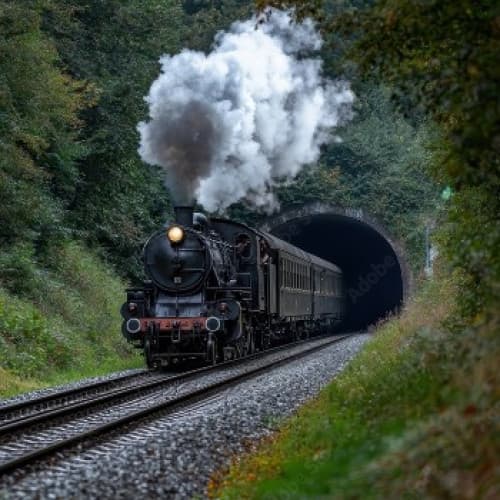
The railway junction was steep and shadowed, its walls echoing with the faint hum of distant trains. A lone traveler paused at the edge, calling down into the gloom:
“Hello! Below there!”
From the doorway of a small signal box, the signal man emerged amid the distant rumble of trains, echoing through the cutting.
His face was pale, his eyes fixed not on the traveler but on the tunnel’s black mouth, as though expecting something dreadful to appear.
The traveler descended the path to meet him. The signalman was courteous, intelligent, and precise in his duties, yet carried an air of unease. His solitude weighed heavily, and though he spoke politely, his gaze often drifted back to the tunnel.
CHAPTER II – THE CONFESSION
Inside the signal box, the incandescent light flickered against the walls. The signalman leaned forward, his voice low and troubled.
As the traveler stated his business and exchanged pleasantries with him, the signal man interrupted him.
“There is a figure,” he said. “It appears at the tunnel mouth. Gaunt, spectral, raising its arm in warning. Each time it comes, death follows.”
He recounted the tragedies: first, a terrible collision that left wreckage and cries in the night. Then, a young woman struck down, her body carried away in silence. And now, he feared another calamity was near.
The traveler listened, torn between skepticism and dread. He saw nothing outside—only the night air and the silent rails. Yet the signalman trembled, convinced the ghost was real.
Suddenly, the man stiffened, pointing toward the tunnel. “There! Do you see it?” he cried.
The traveler peered into the darkness. Nothing stirred, save the wind. But the signalman’s face was ashen, his eyes wide with terror.
A faint whistle of wind, growing louder when the ghost is mentioned.
Signalman rises suddenly, pointing toward the tunnel; traveler peers but sees nothing.
CHAPTER III – THE TRAGIC INCIDENT
Days later, the traveler returned. The junction was crowded now, voices hushed. The signalman lay lifeless beside the rails, struck by a train.
A witness swore that the driver had cried out to him, warning with the very words the ghost had used “Hello! Below there! For God’s sake, clear the way!”
Based on his account, the signalman stood frozen, transfixed, as if answering a call only he could hear. He saw screeching brakes, echoing cry of the driver. Then silence after impact. Crowd gathers over the lifeless body in final tableau.
The traveler walked past the area of the accident, a sudden flash of bright light of the train rushes past, then darkness.
The traveler gazed into the tunnel’s darkness. Was it madness, fate, or a spectral warning fulfilled? The rails gleamed coldly, the silence heavy. The ghost’s presence lingered, unresolved, as the junction swallowed its secrets once more.