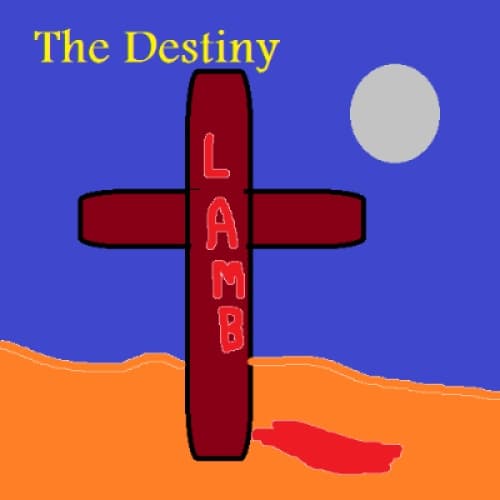
An Ode to the Unyielding Spirit
In the modest suburb of Al Wakrah, where the desert lies in patient repose beyond the windows of our abode, I was born—a son of Abraham Masih and Amina Maryam, and the younger brother to Miriam Yesu. The sun pressed its stillness upon the sand; palm shadows stretched long across the courtyard, casting a serene yet somber ambiance.
Our Arab neighbors, steadfast in their traditions, were kind to none who bore other names; the word kafir would slide from their lips as easily as the desert wind from the dunes. Miriam, radiant as the early dawn, held my hand each morning as we traversed their gaze. She, calm in prayer and unwavering in faith, shielded me in ways she could not articulate.
Yet, the world beyond our modest walls crept ever closer—and in that closeness lay the fault lines.
A new wind rose across the Gulf. The man known as Abu Lahab, crowned in fear rather than ceremony, extended his reach. Capitals fell; the proud kingdoms bent. Qatar, Kuwait, Oman—all submitted to the iron clutch of his ambition. "Unity," he named his conquest. We named it something harsher.
He built camps for the un-chosen; hope became a currency few held. And we watched—we who trembled—while the world did less than that.
At fifteen, I joined our small band of resistance—boys and girls, stolen rifles, and borrowed courage. We called ourselves defenders. They called us terrorists. One evening, I ventured alone. Against orders. Against reason.
They found me.
Charged. Shackled. The cell: cold stone, thick walls, air heavy with the stench of despair.
They beat me. Stripped me of muscle, of dignity, of belief. They poured hot water as if to cleanse the sin of dissent. They fed me crawlers in my meals and laughed.
Time was measured now in breathless minutes and regret. I lost days. I lost months. I lost myself.
The night was unending until it wasn't.
A voice: soft, intimate.
"Diraf, my baby…"
I knew the name though I had nearly forgotten it.
"Listen."
Eyes open. Walls unchanged. Yet something shifted. The whisper passed. I asked: "Is this real?"
Only silence. Then: "Wake up."
When I walked again—when I could walk—I found myself at the edge of a silver pond by desert firelight. A man approached: dark-skinned, bearded, calm in his gaze.
He laid his hands on my shoulders and spoke in a language old as desert winds. Hebrew-tones, Arabic-echoes, one voice.
Then he pushed me under the water.
The heavens shook. Birds cried. Infants wailed. Creation bowed as though the world itself was crying out and being reborn.
When I emerged, I was not the same.
His words:
"It is your time—forty days of trial."
And with his gesture, I walked. No timepiece. No counsel. The desert watched.
For days I wandered. Day became night, night became day. I fasted. I rested. I listened.
At the edge of a cliff I paused. My body recovered—but within, I was fissured.
Then I saw the veiled figure. A silent laughter. Malevolent and cold.
The scene shifted: I stood in a room not of earth. Transparent as a ghost.
An old man and woman at a table. Cheap clothes, yet scent of cleansing air. Opposite them a cloaked figure—foul.
The woman moved a chess piece. The man spoke: "There is no power greater than I am."
The cloaked figure roared: "You cannot save everyone—for you must be just!"
Then: "Checkmate!"
And the vision dissolved.
First vision: I hung upon a cross; the universe mourned me.
Second vision: I stood in a music studio, perfect tools, lights, cheers. Alive and exalted.
Snap of a finger.
"Contrasting images, yes?"
The woman wept: "I am so sorry… we cannot help you for reasons beyond your understanding."
And I awoke. At the cliff's edge.
The cloaked figure stood over me: "Who are you?"
"I don't know," I answered.
He smeared the sandals of his degradation upon me—and I took no accusation. He recoiled.
Then the voice: "Good job."
And I understood: each battle demanded its payment. Pain. My own.
"Stop thinking… just do the task."
The task remained unknown.
But later the voice: "Be human. Pray. Help others."
And then—awakening not of the soul but of flesh. I found myself tended by a Bedouin doctor, desert wind whispering outside his tent. He used a device I did not know; they thought they might lose me.
I waved. I'm fine.
He knelt in gratitude. In his humility I saw something sacred.
I asked direction to a church.
I prayed: "Let no one be left behind. Let salvation be free."
A raid. A wound. A collapse. Blackness.
White light. A robe.
The old man. The old woman. Their voices low: "Son—it’s time."
A vast hall like legend, archangels in attendance.
A question, hanging unspoken: Was this the Second Coming? Or something else entirely?
Only one path to discover.
And so I walk—though the journey has no map.
The desert still watches. The voice still guides.
Be human. Pray. Help.
Strength, I learned, is not the shield raised in battle—it is rising when battle has broken you.
In the hush between storms, I found that forgiveness begins not with the forgiven—but with the one who rises up to unconditionally forgive and love.