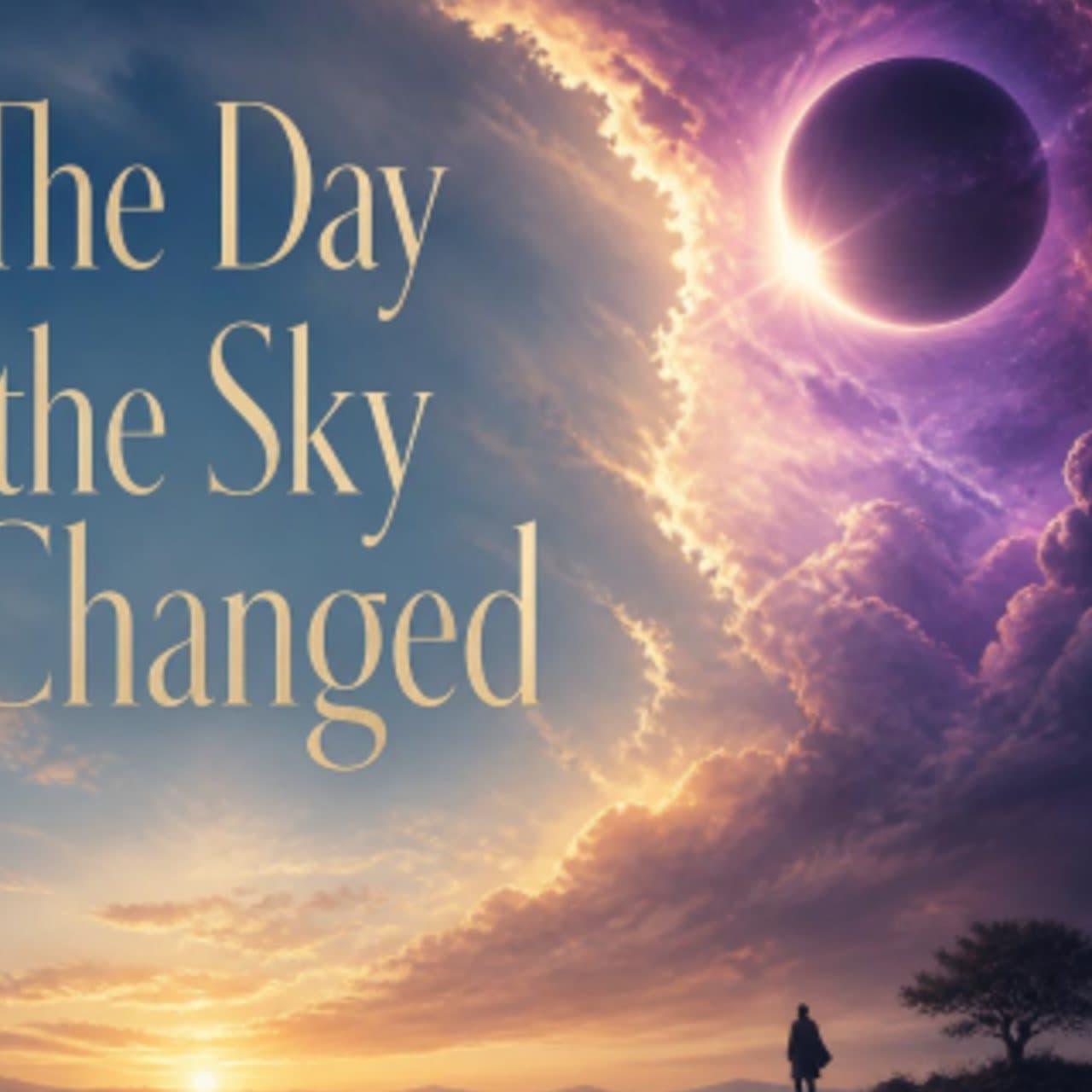

The morning of August 15, 2026, began like any other in the ancient city of Shiraz. The muezzin's call drifted through the narrow alleys of the old quarter, weaving between the rose-colored walls and the scent of jasmine that clung to the courtyards. Reza, a retired schoolteacher of sixty-three years, sat on his rooftop as he had done every dawn for the past four decades, watching the sun spill gold over the tombs of Hafez and Saadi. His wife, Leila, was already in the kitchen, the rhythmic clatter of her copper pots a familiar comfort against the backdrop of the city's awakening.
At exactly 6:47 AM, the sky changed.
Reza would later describe it as a tear in the fabric of heaven—a sudden, violent rent of orange and white that bloomed over the northern horizon. There was no sound at first, only the terrible beauty of light consuming light. Then came the roar, a sound so deep and primal that it seemed to rise from the earth itself, vibrating through the bones of the old man as he clutched the edge of his rooftop wall.
The first strikes had come.
The war in Iran had, until that moment, been a distant thing—something discussed in hushed tones at the bazaar, debated over tea in the cramped offices of government clerks, and feared in the sleepless hours of the night. It had been a war of threats and counter-threats, of naval posturing in the Strait of Hormuz, of economic strangulation and cyberattacks that flickered across computer screens in darkened rooms. But now, the war had come to Shiraz.
Reza scrambled down the narrow staircase, his arthritic knees protesting each step. He found Leila standing in the middle of the kitchen, her hands still holding the wooden spoon she had been using to stir the kaleh pacheh, the traditional breakfast soup that had simmered through the night. Her face was the color of ash.
"The children," she whispered. "Our grandchildren. They are at school near the university."
In the distance, secondary explosions rattled the windows. The glass in the frame of the kitchen window spiderwebbed into a delicate, crystalline fracture. Reza reached for his wife's hand, and for a moment, they stood frozen, listening to the sound of a world coming apart.
Part II: The Long Shadow of History
To understand this war, one must understand the centuries that preceded it. Iran—Persia—had been the crucible of empires. It had been the heart of the Achaemenid dynasty, where Cyrus the Great had issued the first declaration of human rights. It had been the seat of the Safavid Shahs, who had transformed the nation into a bastion of Shia Islam. It had been the playground of the British and Russian empires during the Great Game, the prize of the Anglo-Persian Oil Company, and the stage for the 1953 CIA-backed coup that toppled the democratically elected Prime Minister Mohammad Mossadegh.
That coup, Reza remembered from his history books, had been the wound that never healed. Mossadegh had dared to nationalize Iran's oil, and for that, the West had punished him. The Shah was restored, a puppet king who ruled with an iron fist and a secret police force that made citizens disappear in the night. Then came the 1979 revolution, a great wave of religious fervor and nationalist anger that swept the Shah from his gilded throne and brought the Ayatollahs to power.
The revolution had been Reza's youth. He had been just sixteen when he joined the crowds in Tehran, shouting for freedom, for justice, for an end to foreign domination. He had believed in the promise of a new Iran, an independent Iran. But the revolution, like all revolutions, had devoured its children. The idealism curdled into dogma, and the hope hardened into theocracy. And now, nearly fifty years later, the grandchildren of those revolutionaries were huddling under their school desks as American and Israeli missiles rained down from the sky.
The current war had its roots in the 2015 nuclear deal, which had promised Iran sanctions relief in exchange for nuclear restrictions. Then came the Trump administration's withdrawal from the deal in 2018, the "maximum pressure" campaign, the assassination of General Qasem Soleimani, and the slow, inexorable march toward open conflict. By June 2025, the war had become a reality. The 12-day initial assault on Iran's nuclear facilities had been devastating, but it had not been decisive. Iran had survived, and in surviving, it had transformed itself into a nation under siege—resilient, defiant, and utterly isolated.
Now, in August 2026, the war had entered a new and terrifying phase. The tit-for-tat strikes had resumed. The United States had targeted Revolutionary Guard facilities in the South. Iran had responded with missile strikes on American bases in Jordan. The Strait of Hormuz, the choke point through which twenty percent of the world's oil passed, had become a minefield of tension. Tankers burned. Soldiers died. And in the cities of Shiraz, Isfahan, and Tehran, ordinary people like Reza and Leila waited for the next explosion.
Part III: The Bazaar of Broken Dreams
Two days after the bombing, Reza walked to the Vakil Bazaar, the ancient marketplace that had stood for over two centuries. It was a pilgrimage he made out of necessity, not nostalgia. The sanctions had been crippling, and the war had made everything scarce—medicine, cooking oil, bread, and even the chaith, which was the lifeblood of Iranian social life.
The bazaar was a ghost of its former self. The arched brick ceilings still soared above, but the stalls were half-empty. Mahmoud, the spice merchant who had known Reza for thirty years, sat behind a counter that was nearly bare. The vibrant mounds of saffron, turmeric, and dried lime that had once painted the marketplace in shades of gold and crimson were gone. Only a few paltry bags of black tea remained.
"Reza-jan," Mahmoud said, his voice a dry rustle. "You have come."
"Mahmoud-jan," Reza replied, placing his hand over his heart. "How is your family?"
Mahmoud's eyes, the color of old copper, flickered. "My son," he said, his voice barely a whisper. "He was at the military installation near Natanz. I have not heard from him in three weeks."
Reza felt the words like a physical blow. He had known Mahmoud's son, Amir, since the boy was a child running between the spice sacks, his laughter echoing off the bazaar's ancient walls. Now, that laughter was gone, replaced by the hollow silence of uncertainty.
"Have you gone to the Red Crescent?" Reza asked. "The lists of the missing—"
"The lists," Mahmoud interrupted, shaking his head. "They are a fiction, Reza. The government does not want panic. They want patience. They want us to pray. But my heart knows. I feel it here—" he pressed a gnarled hand to his chest—"Amir is gone."
The two men sat in silence, the sounds of the bazaar—the muted haggling, the shuffling of feet, the distant hum of a generator—filling the space between them. Reza thought of his children. His daughter, Zahra, had fled to Turkey two years ago, when the war had seemed a distant possibility. His son, Ali, was in the military, stationed somewhere in the mountains near the border. The last time Reza had spoken to him, Ali had sounded exhausted, his voice strained by the weight of a conflict he had never wanted.
"The young men are dying," Mahmoud said suddenly, his voice thick with grief. "For what, Reza? For the nuclear program? For the pride of the regime? For a war that no one asked for?"
Reza had no answer. He had spent his life teaching history to the children of Shiraz, and he knew that war was always sold as necessity, as honor, as defense. But it was never those things. It was always the suffering of the young, the sacrifice of the innocent, the slow bleeding of a nation's soul.
Part IV: The Silence of the Women
In the courtyard of the house she shared with Reza, Leila gathered with the women of the neighborhood. It was a clandestine gathering, for the religious police still patrolled the streets, but in times of war, even the authorities were stretched thin. The women sat in a circle, their chadors draped over their heads, their faces a mosaic of grief, anger, and exhaustion.
Soraya, a young widow whose husband had been killed in the first wave of strikes, spoke first. "They tell us to be brave," she said, her voice trembling. "They tell us that our men are heroes, that they are defending the nation. But what does a nation mean when it is built on the bones of our sons?"
Maryam, an older woman with silver-streaked hair and eyes that had seen the Iran-Iraq war of the 1980s, shook her head. "I have lived through this experience before. I was a girl during the revolution, a young mother during the war with Saddam. I remember the streets of Tehran running red with the blood of martyrs. I remember the smell of the bomb shelters and the taste of fear. It is the same. It is always the same."
"And yet we endure," Leila said softly. "That is what they do not understand. The leaders—in America, in Israel, and in our own government—they think we will break. They think that if they drop enough bombs and impose enough sanctions, we will surrender. But we have endured for three thousand years. We will endure this ordeal."
The women fell silent. In the distance, the sound of an aircraft—perhaps a drone, perhaps a fighter jet—droned overhead. They all looked up instinctively, their bodies tensing, waiting for the whistle of falling ordnance. When it did not come, they exhaled in unison.
"Is it wrong," Soraya whispered, "to pray for an end to this war, even if it means that our side loses?"
Leila reached over and took the young widow's hand. "It is never wrong to pray for peace," she said. "That is not surrender. That is faith."
Part V: The Child in the Rubble
The neighborhood near the university had been reduced to a wasteland. Reza had gone there to look for his grandchildren, his heart pounding in his chest like a captive bird. The school where they had been was still standing, though its windows had been blown out and its walls were scarred with shrapnel. The children had been evacuated to a shelter in the basement, and Reza had found them there—scared, dirty, but alive.
His grandson, Omid, was seven years old. His eyes, so like his grandfather's, held a glimmer of something that Reza had not seen in a child in a long time—not fear, but anger. A cold, simmering anger that seemed out of place in such a young soul.
"Grandfather," Omid said, his voice small but steady. "Why do they do this? Why do they want to hurt us?"
Reza knelt down, placing his hands on the boy's shoulders. The weight of history pressed down on him, the weight of all the answers that he did not have. "They are afraid," he said finally. "When people are afraid, they do terrible things."
"But we did not do anything to them," Omid insisted. "We were just going to school."
Reza nodded slowly. "I know, Omid-jan. I know."
That night, lying in bed beside Leila, Reza could not sleep. The sound of the boy's voice echoed in his mind, and he thought of all the children who had died in this war and all the children who would die in the wars to come. He thought of the cycle of violence that had plagued his land for millennia—the invasions of Alexander, the Arab conquest, the Mongol horde, the Ottoman incursions, the British and Russian interventions, and the American coups. Each generation had inherited the blood of the previous generation, and each generation had added its own.
"Leila," he whispered into the darkness. "Do you think we will ever know peace?"
There was a long silence, and when Leila spoke, her voice was soft but certain. "We will know peace when the world stops believing that war is a solution. We will know peace when we learn to see the humanity in our enemies. We will know peace when we stop teaching our children to hate."
"And when will that be?" Reza asked.
Leila turned to face him, her eyes reflecting the faint glow of the moonlight that filtered through the shattered window. "Perhaps when we have no other choice," she said. "Perhaps when the silence after the bombs is louder than the bombs themselves."
Part VI: The Poems
I. "The Wound That Speaks"
(After the voice of Mahmoud Darwish)
The wound speaks when the tongue is silenced.
It utters its testimony in the language of blood.
Mapping the geography of loss across the body of the earth.
Here, where the ancient rivers of Persia once flowed,
A new river has risen—a river of fire and ash.
It carries on its surface the faces of the drowned.
The children who will never grow old,
The lovers who will never embrace,
The songs that will never be sung.
The wound does not ask for revenge.
It does not demand justice.
It simply speaks, in a voice that is all its own:
Remember me. Remember what was done in the name of glory.
II. "Tehran, In the Time of Bombs"
(After the voice of Forough Farrokhzad)
The city has learned to dance to a new rhythm—
The staccato of anti-aircraft fire,
The syncopation of falling shells,
The long, sustained note of the sirens.
In the streets, the flower sellers have closed their stalls.
The poets have put down their pens.
The lovers have forgotten how to whisper.
And yet, in the basement of a house in the north of the city,
A young woman named Shirin is writing a letter.
She writes to her brother, who is at the front.
She writes to her mother, now in the graveyard.
She writes to the world, which has forgotten her.
I am still here, she writes.
I am still breathing.
The bombs have not broken me.
They have only taught me the weight of silence.
III. "The Straits of Hormuz"
(After the voice of Adunis)
The straits are narrow, but they are wide enough for grief.
The ships pass, carrying their cargo of fire.
And the dolphins sing in the language of the ancients.
They sing of the time when the water was clear.
When the fishermen cast their nets and pulled up silver,
When the children swam in the shallows and were not afraid.
Now, the water is filled with oil and blood.
The fishermen have become soldiers.
The children have become refugees.
And the straits have become a throat, choked by the throat
IV. "The Prayer at Midnight"
(Inspired by the poetry of Naomi Shihab Nye)
At midnight, I light a candle for the disappeared.
I light a candle for the ones who vanished in the dark.
Whose names are whispered in the kitchens of the fearful,
Whose faces are preserved in the Polaroids of memory.
I light a candle for the soldier and the civilian
For the sniper and the schoolteacher,
For the guard at the checkpoint and the child at the crossing.
I light a candle for the enemy.
Whose mother, like mine, waits by the window,
And whose father, like mine, has stopped believing in war.
In the end, there is only this:
A flame that trembles in the dark,
A prayer that will not be answered,
A hope that refuses to die.
V. "The Children of Cyrus"
(After the voice of the Persian poet Rumi)
Cyrus sleeps beneath the stones of Pasargadae.
His bones a whisper in the dust.
He dreamed of a kingdom where all were free—
The Jew and the Gentile, the slave and the freeborn.
In his dream, the rivers of Babylon wept with joy.
The towers of Susa bowed in gratitude.
And the people sang a new song.
A song of justice, a song of peace.
But the stones are silent now.
The song has been forgotten.
The kingdom has been carved into territories.
And the children of Cyrus have taken up arms—
Against each other, against the world,
Against the dream they cannot remember.
Part VII: The Scripture
A Deeper Meditation on Psalm 144
In the Christian tradition, Psalm 144 has often been cited as a psalm of war, a divine endorsement of military might. The opening verse—"Blessed be the Lord my rock, who trains my hands for war, and my fingers for battle"—has been invoked by kings and generals from the Crusades to the Pentagon. It is a verse that seems to sanctify violence, to make of war a holy act.
But to read the psalm in this way is to commit a profound act of violence against the text itself. For the psalmist does not stop at war. He moves, with a sudden and breathtaking shift, to a meditation on human frailty:
"Lord, what is man, that you take knowledge of him? Or the son of man, that you make account of him? Man is like a breath. His days are as a shadow that passes away." (Psalm 144:3-4)
This is the true heart of the psalm. It is not a celebration of war, but a lament. The psalmist is a man forced to take up arms, shaped by the necessity of conflict, but not hardened by it. He knows that he is dust. He knows that his strength is borrowed, his victory fleeting, his life a vapor that vanishes in the sun.
The psalmist prays not for victory in battle, but for deliverance from the conditions that make battle necessary. He prays for a time when:
"Our sons are like plants grown up in their youth;
Our daughters are like corner pillars, sculpted in palace style;
Our barns are full, supplying all kinds of provision;
Our sheep bring forth thousands and ten thousands in our fields;
Our oxen are laden with produce;
There is no breach, no going out, no cry of distress in our streets." (Psalm 144:12-14)
This is the vision of shalom—the Hebrew word that means not simply the absence of war, but the fullness of peace. It is a peace that includes abundance, security, and joy. It is a peace where the young are safe, the old are honored, and the streets are free of weeping.
The psalmist concludes with a declaration that generations of warmakers have misunderstood:
"Happy are the people who are in such a state;
Happy are the people whose God is the Lord." (Psalm 144:15)
The happiness of the people does not come from their military prowess. It comes from their relationship with God, a relationship that is built not on conquest but on covenant. The Lord of the psalmist is not a God of war but a God of justice, mercy, and peace.
The Prophetic Tradition of Isaiah
The prophet Isaiah, writing in the eighth century BCE, delivered a vision that sharply opposed the militarism of his age. In a time when the Assyrian empire was the superpower of the ancient world, Isaiah proclaimed a future in which:
"Nation shall not lift up sword against nation,
Neither shall they learn war anymore." (Isaiah 2:4)
This is not a naive hope. It is a prophetic declaration, a proclamation of God's ultimate will for humanity. The war machines of the world—the tanks, the missiles, the fighter jets—do not have the final say. The final word belongs to the God who "sees the end from the beginning," who "changes times and seasons," and who "removes kings and sets up kings."
But the prophetic tradition does not stop at the future. It also speaks to the present. In Isaiah 58, the prophet calls the people to a different kind of fasting—not the performance of religious ritual, but the practice of justice:
"Is not this the fast that I choose?"
To loose the bonds of wickedness,
To undo the straps of the yoke,
To let the oppressed go free,
And to break every yoke?" (Isaiah 58:6)
This is the prophetic challenge to those who wage war in the name of God. The true sacrifice, the true worship, is not the blood of enemies, but the liberation of the oppressed. It is the breaking of chains. It is the restoration of dignity to those who have been crushed by the systems of power.
The Islamic Tradition: The TheQisasand Sabr
In the Islamic tradition, the Qur'an addresses the question of war with a profound recognition of its tragedy. The Surah Al-Baqarah (The Cow) includes a verse that has been central to Islamic jurisprudence:
"And there is life for you in qisas, O people of understanding, so that you may become righteous." (Qur'an 2:179)
Qisasis is often translated as "retaliation" or "just retribution." It is the principle of proportionate response, the idea that punishment should fit the crime. But the verse is not an endorsement of vengeance. It is a call to restraint, to the recognition that the taking of life is a grave matter that cannot be treated lightly.
The Qur'an also speaks of sabr, a word that is usually translated as "patience" but that carries a deeper meaning—steadfastness, endurance, and the willingness to bear suffering without losing faith. In the context of war, sabre is the quality that allows a person to endure the hardships of conflict without being consumed by hatred.
"O you who have believed, seek help through patience and prayer. Indeed, Allah is with the patient." (Qur'an 2:153)
This virtue is the spiritual resource that has sustained the people of Iran through centuries of invasion, occupation, and war. It is the patience of the mother who waits for her son to return from the front. It is the endurance of the father who rebuilds his home after it has been destroyed. It is the faith of the believer who trusts in God even when all human hope seems lost.
The Common Ground
In the end, the scriptures of the Abrahamic traditions all point to a common truth: war is a tragedy, a betrayal of the divine will, and a violation of the sacredness of human life. The God of the Bible, the Qur'an, and the Torah does not delight in the destruction of the wicked, but weeps over the suffering of the innocent.
The prophet Jeremiah, standing in the ruins of Jerusalem, lamented:
"My heart is broken within me;
All my bones shake;
I am like a drunken man.
Like a man overcome by wine,
Because of the Lord
And because of his holy words." (Jeremiah 23:9)
This verse is the lament of every person of faith who has witnessed the horrors of war. It is the cry of the mother, the father, the child, the soldier, and the refugee. It is the voice of the human heart, broken by violence, yet still reaching out for hope.
Part VIII: The Return to the Rooftop
Three months after the first bombs fell, Reza returned to his rooftop. The sun was rising over Shiraz, the same sun that had risen over the city for millennia. The tombs of Hafez and Saadi were still there, ancient witnesses to the cycles of history. The scent of jasmine still drifted through the air, though it was mixed now with the smell of smoke and dust.
Reza looked out over the city. The skyline had changed. Several buildings had been reduced to rubble. A mosque had lost its minaret. A hospital had been damaged. But the city was still there. The people were still there.
He heard footsteps behind him and turned to see Leila, carrying two cups of chai. She handed one to him, and he wrapped his hands around the warm glass, feeling the heat seep into his weary bones.
"They are talking about a ceasefire," Leila said. "On the news. The diplomats are meeting in Geneva."
Reza nodded slowly. He had heard the reports. He had heard them before, and he had seen them fail. But still, the word gave him a sliver of hope, a tiny flicker of light in the darkness.
"Do you think it will last?" he asked.
Leila stood beside him, her shoulder touching his. "I don't know," she said. "But we have to believe it will happen." We have to believe, or we will lose ourselves."
They stood in silence, watching the sun rise over the ancient city. The sound of the muezzin's call drifted through the streets, a reminder of the faith that had sustained the people for centuries. In the distance, a group of children were playing in a courtyard, their laughter rising above the ruins.
Reza thought of the poems he had read, the scriptures he had studied, and the stories he had taught. He thought of the long history of his people—the triumphs and the tragedies, the glories and the griefs. And he thought of the future, the uncertain road that lay ahead.
The war was not over. Perhaps it would never be over, not in any final sense. The forces that had brought them to this moment—the greed, the fear, the pride, the hatred—were as old as humanity itself. But there was something else, too. Something that had survived the invasions, the bombings, and the sanctions. Something that refused to be extinguished.
It was the love of a grandfather for his grandchildren. It was the friendship of two men in a broken bazaar. It was the solidarity of women gathered in a courtyard, sharing their grief and their hopes. It was the laughter of children, the scent of jasmine, and the taste of chai. It was the quiet endurance of a people who had seen empires rise and fall and who knew that the only thing that truly mattered was the human heart.
Reza raised his cup of chaito to the rising sun.
"To life," he whispered.
Leila raised her cup, and together, they drank.
Epilogue: A Blessing for All Who Suffer
May you who read this know peace.
May you who love know the fullness of love.
May you who grieve be comforted.
May you who hope experience your hope fulfilled.
And may the day come—soon, and in our time—when the sound of war is heard no more, when the weapons are beaten into plowshares, when the children of Abraham and the children of Hagar, the children of Ishmael and the children of Isaac, sit together under the vine and the fig tree, and none shall make them afraid.
In the name of the Lord, the Compassionate and Merciful.
Amen.