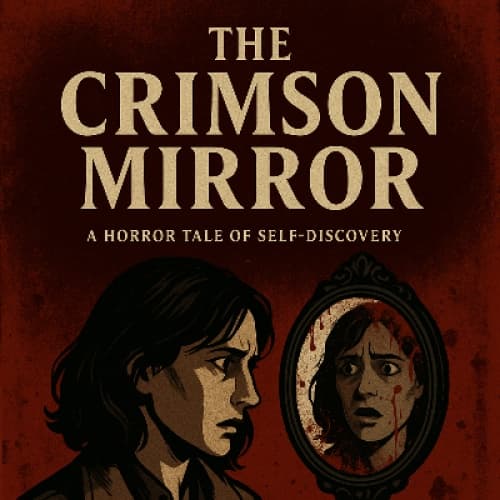

I’ve always believed the mind can be the most terrifying place in the world—far darker than any alley or abandoned house. But what happens when your own mind becomes a crime scene?
This is the story of Detective Elise Grant. A woman known for her sharp instincts, unshakable composure, and a case record that made most rookies idolize her. But there’s a case she never solved, one she never talked about—until now.
It began on a rain-heavy Tuesday night in the quiet town of Langford, where crimes were rare, and people still left their doors unlocked. Elise was called to a grisly murder in an old Victorian house on Mill Street. A woman, mid-thirties, found with her throat slashed, face partially covered with a cracked porcelain mask. The killer left no fingerprints. No DNA. Nothing.
Except a single item: a hand mirror stained with blood, placed upright on the victim’s chest.
That image haunted Elise.
She poured herself into the case. Interviewed neighbors. Dug into the victim’s past. But something was off. Clues felt... familiar. A childhood photo found in the victim’s dresser triggered a faint memory in Elise—a room she’d forgotten, a face she couldn’t place.
Then came the dreams.
Elise started waking up in strange places. Once in her bathtub, fully clothed. Another time, outside the very house where the murder took place, keys in hand, though she didn’t remember driving there. Her sense of time warped. She began recording herself sleeping, convinced she was missing something.
The footage revealed long, still hours—until one night. At 2:41 a.m., her body jolted upright, and she whispered a single word:
"Again."
She turned off the camera the next morning, hands shaking.
Weeks passed. No new leads. But the visions grew stronger—blood on her hands, a mask crumbling, a woman’s scream echoing inside her skull. Elise pulled her own personnel file. Found notes about a childhood trauma. Suppressed memories. A psychiatric hold when she was seven. None of it familiar. None of it comforting.
Then, another murder.
Same M.O. Same mask. Same mirror.
But this time, Elise had an alibi—kind of. She was home, passed out on sleeping pills. Her front door was unlocked. The back window open.
In her closet, she found a box. She didn’t remember packing it, but inside: an old mask, smeared with red. A mirror, cracked down the center. And a photo of both victims, together. Smiling. With her.
She dropped it. Tried to call her captain. But the phone just rang.
And in the silence, she heard her own voice, faint—like an echo behind the walls.
"You always find them... eventually."
She was investigating herself. Or someone wearing her face. Or maybe, the version of herself she buried long ago.
Elise never turned herself in. Never closed the case. She vanished weeks later. No trace. Just one more mirror left on her kitchen table. No note. Just the reflection of an empty chair.
People still talk about her in Langford. Some say she was possessed. Others think it was dissociative identity disorder, a mental break born from trauma. But those who knew her say it wasn’t madness behind her eyes in the end—it was recognition.
So, was Elise the killer all along? Or did something inside her wake up that night on Mill Street?
The truth, like her, is still missing.