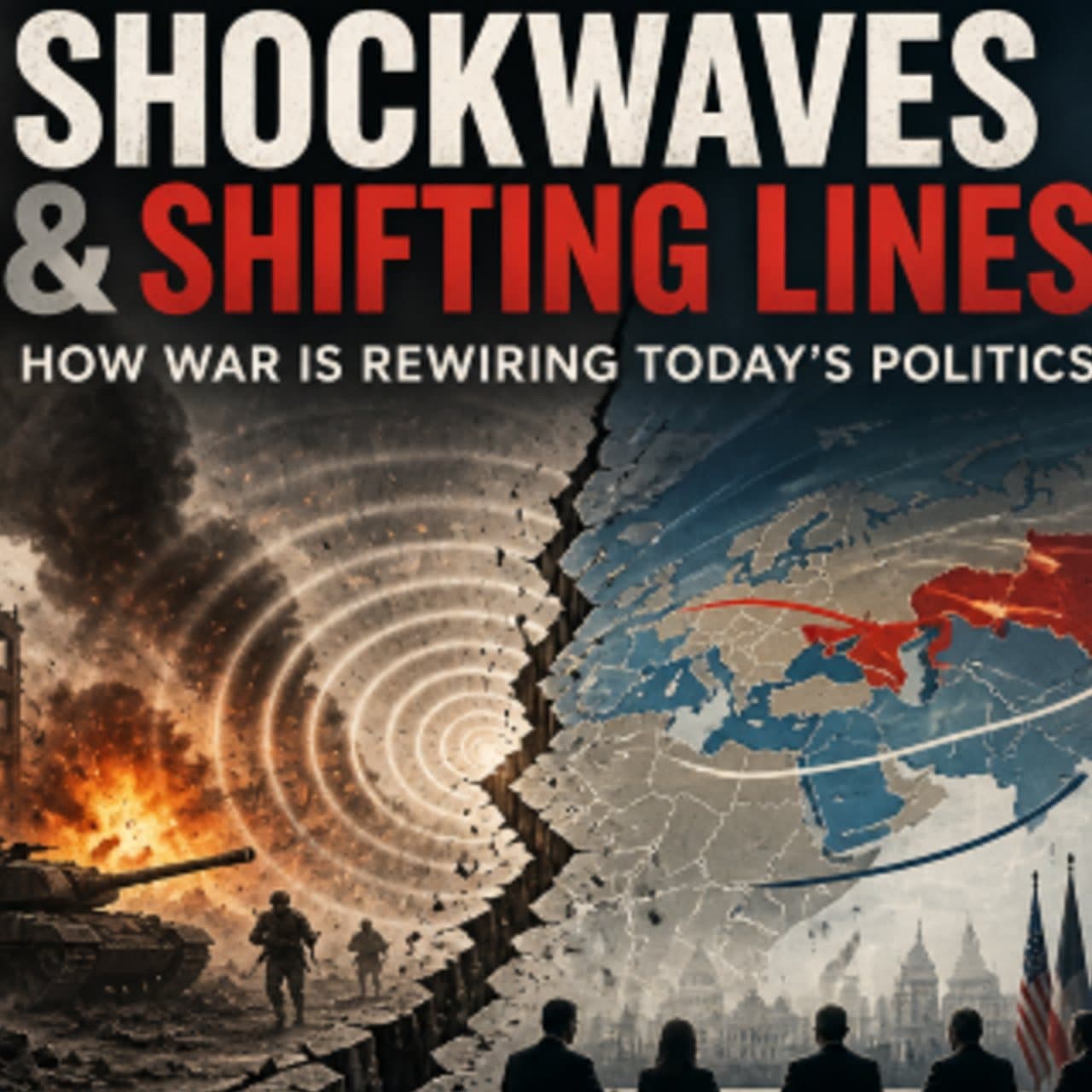

The world around us always shapes politics. Every headline, every protest, every late-night pundit’s rant reflects what’s happening thousands of miles away—and nowhere is that more true than in 2026.
Right now, the world’s at war. Not in the old-school sense of two armies meeting on a dusty field, but in a tangled web of proxy fights, cyber attacks, economic sanctions, and the occasional old-fashioned firefight. And while the battles might be happening in Eastern Europe, the Middle East, or the South China Sea, the fallout lands everywhere, especially in the halls of power back home.
Walk into any political campaign office this year and you’ll see it: foreign policy is suddenly the domestic issue. There’s no escaping it. Candidates are grilled on their stances about drones strikes, NATO commitments, and whether or not to send troops. The war has become a litmus test for leadership, judgment, and—sometimes—basic morality.
But it’s not just about who’s “tough” or “weak.” The war has scrambled the usual lines between right and left, between hawks and doves. Old alliances have frayed; strange new ones have emerged. The traditional party that once warned against “foreign entanglements” is now calling for decisive action, while the supposed warhawks are asking tough questions about costs—both human and financial. Even the most cynical observers seem caught off guard at how much the script has flipped.
Why? Because the war isn’t just “over there.” It’s in the price of gas, the scarcity of microchips, and the weird gaps on grocery store shelves. It’s in the way social media is flooded with propaganda, deepfakes, and conspiracy theories—sometimes from official sources. It’s in the anxiety that hums under the surface of every town hall meeting and school board debate. People sense, maybe more than ever, that what happens across the ocean shapes what happens in their lives.
And for politicians, that’s a tightrope. Support the war effort too much, and you risk accusations of dragging the country into a costly, endless conflict. Oppose it, and you’re branded naïve—or worse, unpatriotic. Meanwhile, voters are less interested in ideology and more interested in who can actually navigate this mess without making things worse.
And then there’s the question no one wants to answer: what does “winning” even mean these days? Politics is war. 2026. Accounts for uncertainty And the lines are fuzzy. And no end to it. Leaders have to be honest about risks and tradeoffs but also soothing and inspiring. It’s a tough gig in a world that craves certainty and quick fixes.
So what does all this mean for the future? First, the old playbook is gone. And the politicians who “get it” are smarter and moving away from the old slogans. They will win who see the links between the local and the global, between policy and the everyday, and who are not afraid to say the rules have changed.
The war may go on, but the politics of today are being rewritten already. The question is if our leaders, and the rest of us, are ready to keep up.