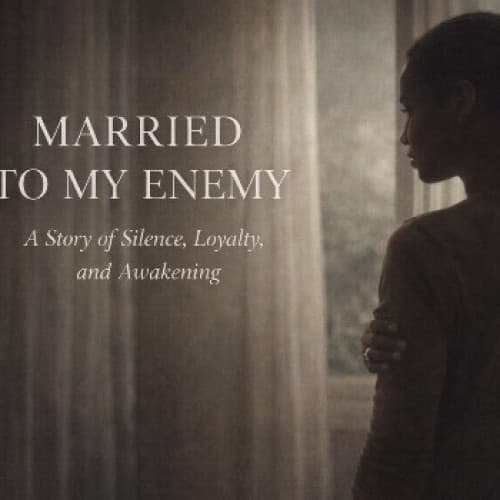

Akos used to hear women say, “I married my enemy,” and she never truly understood what they meant. To her, an enemy was obvious, someone loud, cruel, someone who wished you harm without hiding it. Marriage, she believed, was meant to be a refuge. A place where battles ended, not where they began.
So when she heard those words, she would quietly disagree. How could the person you chose become your enemy? Love, she thought, protected people from that kind of mistake.
Now Akos knows better.
She did not marry a man who shouted at her in public or raised his hand in anger. That would have been easier to name. Easier to explain. She married someone who smiled beside her, prayed with her, and shared meals and laughter, yet, slowly and steadily, resisted her becoming.
At first, it was subtle. Small things she brushed aside. The way her ideas were corrected instead of being considered. The way her joy was met with silence. The way her achievements were acknowledged briefly, then forgotten. Akos told herself this was normal. That marriage required patience. That love meant adjusting.
Silence, after all, can look like peace.
She learnt to choose her words carefully. To soften her opinions before speaking them. To shrink her excitement so it would not feel like competition. She became skilled at explaining herself gently, apologising quickly, and doubting her own reactions. None of this felt like harm at the time. It felt like maturity.
But something inside her began to dim.
Akos noticed it in the quiet moments. When she laughed less freely. When she hesitated before sharing her thoughts. When she felt tired even after resting. The home that was meant to hold her began to feel like a place she had to survive rather than inhabit.
Still, she stayed.
Because loyalty had been taught to her as endurance. Because leaving felt like failure. Because she believed that love, if carried long enough, would eventually change shape.
What Akos did not understand then was this: an enemy does not always come with cruelty. Sometimes the enemy comes with control disguised as concern. With indifference mistaken for calm. With a quiet refusal to see you fully.
The moment of clarity did not arrive dramatically. There was no argument. No single sentence that shattered everything. It came quietly, one ordinary day, when Akos realised she was guarding her heart from the very person who was meant to protect it.
That realisation hurt more than anger ever could.
She grieved not just the marriage but the version of herself she had slowly set aside. The voice she had softened. The dreams she had delayed. The strength she had mistaken for stubbornness.
Akos did not wake up hating her husband. She woke up understanding herself.
She understood that love should not require self-erasure. That partnership should not feel like opposition. That is when your growth is treated as a threat; something is deeply wrong.
Leaving that understanding did not make her bitter. It made her honest.
Now, when Akos hears women say, “I married my enemy,” she does not rush to judge or correct them. She listens. She knows that sometimes the enemy is not the person you married but the silence you were taught to endure, the truth you were taught to ignore.
And in reclaiming her voice, Akos learnt this final truth:
An enemy is not always the one who wishes you harm.
Sometimes, it is the one who cannot bear to see you become whole.