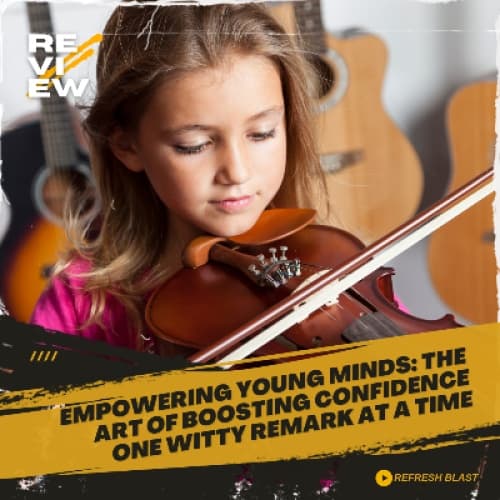

In a world that’s constantly changing (like a fashion trend on fast-forward), helping kids build self-confidence is a bit like planting a garden: you toss in the seeds of belief and hope for the best. But fear not! We’ve cracked the code with three key phrases that do all the heavy lifting: encouragement, affirmation, and constructive feedback. Who knew words could be so... productive?
Caption: Why plant flowers when you can plant self-esteem?
Question: If words can grow confidence, does that make us all gardeners of greatness?
Encouragement: The Verbal High-Five You Didn’t Know You Needed
Encouragement is like giving someone a verbal energy drink, minus the sugar crash. When you tell a child, “You can do it!” it’s like handing them a cape and saying, “Fly, my young prodigy, fly!” And here’s the fun bit: research shows it works! According to the brilliant minds who study these things, kids who get a healthy dose of encouragement end up believing in themselves more than your grandma believes in essential oils. So, next time a kid frowns at their math homework, just throw in a “You’ve got this!” and watch them transform into a mathlete, calculator not required.
One-liner: Encouragement: Because “You can do it” sounds way cooler than “I guess you could try.”
Fun Fact: Encouraging words release endorphins in the brain, which is science’s way of saying they make you feel warm and fuzzy inside.
Question: If "You can do it!" makes a kid feel superhuman, can we add "cape" to the school uniform?
Affirmation: The Verbal Mirror That Reflects Awesomeness
Ah, affirmation—a fancy word for pointing out the obvious in the best way possible. Telling a kid they’re smart is like holding up a mirror that says, “Look at you! You’re practically a genius!” Affirmations are little love notes to the soul, and if you think that sounds poetic, it’s because it is. Science (again with the science!) says that hearing positive affirmations boosts self-esteem faster than a kitten video boosts your mood. So, sprinkle phrases like “You are amazing” or “You’re capable of great things” like confetti, and watch as they walk through life with the confidence of someone who just found out recess is extended by an hour.
Quote: “I’m not saying I’m brilliant... but I am agreeing with your affirmation of it.”
Fun Fact: Positive affirmations can reduce stress, which means a well-timed “You rock!” might just be as good as a spa day.
Question: If we started our mornings with affirmations instead of coffee, would we finally become morning people?
Constructive Feedback: The Sandwich of Critique, Hold the Bread
Now, onto the delicate art of constructive feedback, or as I like to call it, “How to tell someone they’ve messed up without ruining their day.” The trick is simple: start with a compliment, sneak in the feedback, and finish with another compliment. It's basically a compliment sandwich, but one where the feedback is the filling. For example, instead of, “Wow, that’s wrong,” try, “I see you gave it a go, now let’s solve it together!” See? Suddenly, we’ve turned failure into a fun group activity. And guess what? Kids learn better when they feel supported instead of judged. Who knew mistakes could be so... instructional?
One-liner: “Congratulations, you’re wrong! Let’s fix it together.”
Fun Fact: Constructive feedback helps build resilience—turns out, mistakes are just opportunities in disguise. (And by “disguise,” I mean very bad costumes.)
Question: If we embraced mistakes as learning tools, would we stop calling them "mistakes" and start calling them "plot twists"?
Actionable Step: The Confidence Recipe
Next time you’re interacting with a child, toss in some encouragement, sprinkle a few affirmations, and serve up a side of constructive feedback. It’s the perfect recipe for self-confidence with a side of resilience. And remember, confidence doesn’t just grow overnight (unless you’re a chia pet), so keep the words flowing. With enough practice, you'll be raising self-esteem like it’s a prize-winning sunflower at the county fair.
Conclusion: In the end, empowering young minds is all about saying the right things at the right time, with a dash of wit and a sprinkle of kindness. Encouragement gets them going, affirmations keep them smiling, and constructive feedback turns mistakes into minor bumps on the road to awesomeness. So, let’s stop overthinking it. After all, words are free—so why not spend them generously?
One-liner: “Empowerment: because who doesn’t want to feel like a superhero in training?”
Question: If we all empowered each other with words, would we finally reach world peace... or at least a world full of confident, cape-wearing kids?