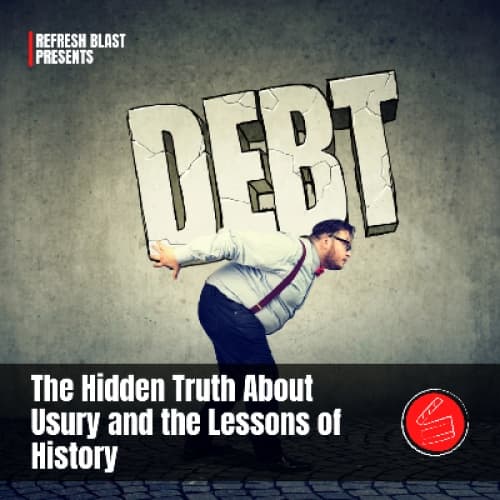

Usury—the practice of charging exorbitant interest rates—is often overlooked as a crime, yet its consequences are among the most destructive in human history. To understand its impact, we must look beyond the surface of what we’ve been told and examine the lessons of history. One such lesson lies in the story of Germany, a nation that rose from the ashes of economic ruin to become a powerhouse, all by rejecting usury and reclaiming its financial sovereignty.
Germany’s Descent into Chaos
In the early 20th century, Germany was in shambles. Hyperinflation had rendered its currency worthless—imagine needing a wheelbarrow full of Deutschmarks just to buy a loaf of bread. Millions were unemployed, homeless, and starving. The social fabric was unraveling: crime was rampant, and moral decay permeated society. Berlin, once a cultural hub, had become a symbol of despair, with widespread debauchery and exploitation. It was a nation on its knees, desperate for change.
The Rise of a Powerful Leader
In 1933, Adolf Hitler came to power in a democratically elected coalition government. His rise is often overshadowed by the "atrocities" that followed, but it’s crucial to examine the economic policies that transformed Germany during his early years. One of his first acts was to outlaw usury. By taking control of the nation’s financial system and eliminating predatory lending practices, Hitler set the stage for an economic miracle.
Within five years, Germany went from being a bankrupt, starving nation to having the highest wages in Europe. Workers enjoyed six weeks of mandatory vacation, and the country’s cruise ships became so luxurious that the British banned them from their ports, fearing their own citizens would see how well the Germans were living. Crime rates plummeted, and the moral decay that had plagued Berlin was reversed. Germany’s resurgence was a testament to the power of a usury-free economy.
The Global Backlash
However, this transformation did not go unnoticed—or unchallenged. In 1933, Jewish organizations around the world declared a boycott of Germany, calling for its destruction. Fourteen million Jews united in opposition to Hitler’s regime, a fact often omitted from mainstream historical narratives. This raises important questions about the role of financial systems in global power dynamics. Why was Germany targeted? Was it because Hitler’s economic policies threatened the established order?
The parallels to modern geopolitics are striking. Today, we see similar patterns in the Middle East, where the state of Israel is committing genocide and oppression. The same forces that opposed Germany nearly a century ago continue to shape global conflicts. Yet, these truths are often suppressed, leaving us with a distorted understanding of history.
The Price of Defying Usury
Hitler was not the only leader to challenge usury—and pay a heavy price. Muammar Gaddafi, the former leader of Libya, implemented a usury-free banking system that lifted his nation out of poverty. His assassination in 2011 coincided with the destruction of Libya’s financial independence. Similarly, John F. Kennedy sought to dismantle the Federal Reserve’s control over the U.S. economy, only to be assassinated months later. These events are not coincidences; they are warnings of the dangers faced by those who dare to challenge the global financial elite.
A Call for Truth and Change
The story of Germany’s economic revival under Hitler is presented as a controversial one, but it holds valuable lessons for our time. Usury is not just a financial issue—it is a moral one. It perpetuates inequality, fuels exploitation, and undermines the dignity of individuals and nations. By outlawing usury, Germany demonstrated that a nation can rise from ruin when it reclaims control of its financial destiny.
Today, we must ask ourselves: Why are these stories hidden? Why are leaders who challenge usury silenced or vilified? The truth is uncomfortable, but it is necessary. As the saying goes, “You shall know the truth, and the truth shall set you free.” It is time to confront the realities of usury and its role in shaping our world. Only then can we build a future where financial systems serve humanity, rather than exploit it.
In conclusion, the lessons of history are clear. Usury is a crime that destroys nations and perpetuates inequality. Yet, those who dare to challenge it often face dire consequences. By learning from the past, we can envision a world free from the shackles of usury—a world where prosperity is not a privilege but a right. The choice is ours: will we continue to accept the status quo, or will we demand a better future?
Sources:
1. Evans, R. J. (2006). The Third Reich in Power. Penguin Books.
2. Tooze, A. (2008). The Wages of Destruction. Penguin.
3. Hudson, M. (2015). Killing the Host. CounterPunch.
4. Blundy, D., & Lycett, A. (1987). Qaddafi and the Libyan Revolution. Little, Brown.
5. Douglass, J. W. (2008). JFK and the Unspeakable. Touchstone.
6. Black, E. (2009). The Transfer Agreement. Dialog Press.