Chapter 1: The Conflict Unfolds
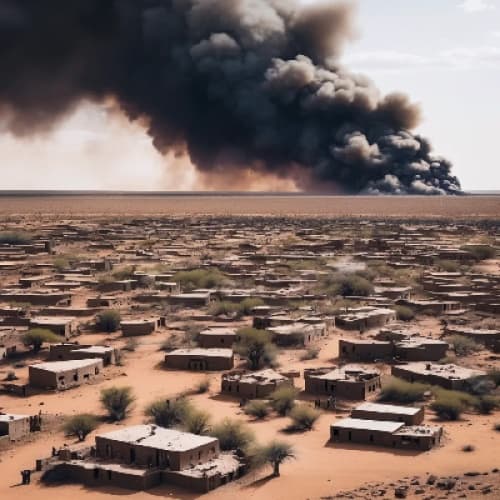
The year was 1932. In the arid, desolate region known as the Chaco Boreal, the nations of Bolivia and Paraguay clashed over this seemingly barren wasteland. Resources were scarce, but the promise of oil beneath the scorched earth had ignited a fierce and brutal war. Trenches were dug, soldiers were deployed, and blood was spilled over an unforgiving landscape.
The sun bore down mercilessly on the parched earth, the heat shimmering in the air as if mocking the suffering below. Both armies were ill-prepared for the harsh conditions. Disease, hunger, and dehydration claimed as many lives as bullets and bayonets. The cries of the wounded and dying echoed through the trenches, a constant reminder of the relentless carnage.
Chapter 2: The Discovery
Lieutenant Raul Santacruz of the Paraguayan Army wiped the sweat from his brow as he peered through his binoculars. He had been stationed in the heart of the Chaco for months, and the relentless sun and swarms of insects were taking their toll. As he scanned the horizon, something unusual caught his eye—a faint, flickering movement among a cluster of rocks not far from their position.
“Sergeant Vega,” Raul called out to his second-in-command. “Take a few men and investigate that movement over there.”
Sergeant Vega nodded and gathered a small squad. As they approached the source of the disturbance, they found something that made their blood run cold: a mutilated body, covered in deep gashes and stab wounds, lying in a pool of congealed blood. The victim’s eyes were wide open, frozen in a look of sheer terror.
Chapter 3: The Horror Unveiled
Raul and his men carefully examined the scene, their stomachs churning with revulsion. The dead soldier, identified by his uniform as Bolivian, had been brutally tortured before he was killed. His fingers had been broken one by one, and deep cuts crisscrossed his chest and abdomen. It was a sight that spoke of unimaginable pain and suffering.
“This is no ordinary killing,” Raul muttered, his voice shaking. “This is a message.”
As they prepared to move the body, they discovered a crude note pinned to the soldier’s chest with a knife. Written in blood, it read: “You will all die screaming.”
Chapter 4: The Descent into Madness
Back at the Paraguayan headquarters, the atmosphere was tense. The discovery of the tortured soldier had rattled everyone. As the war dragged on, both sides began to resort to increasingly barbaric tactics. Soldiers, driven mad by the endless violence and the oppressive heat, committed atrocities that defied human decency.
Raul’s unit was no exception. They raided a Bolivian outpost under cover of darkness, silently slipping into the enemy camp. What followed was a bloodbath. Blades flashed in the moonlight, plunging into flesh with sickening ease. The Bolivian soldiers, roused from sleep, barely had time to react before they were slaughtered. The smell of blood and excrement filled the air, mingling with the cries of the dying.
One Bolivian soldier, barely more than a boy, begged for mercy, tears streaming down his face. Raul’s heart ached with pity, but he knew that sparing him would only lead to more suffering for his own men. With a heavy heart, he plunged his bayonet into the boy’s chest, feeling the blade slice through muscle and bone.
Chapter 5: The Toll of War
As the weeks turned into months, the violence only escalated. Both sides committed unspeakable acts in a desperate bid to gain the upper hand. Villages were razed to the ground, their inhabitants slaughtered like animals. Women and children were not spared; they were seen as tools to break the enemy’s spirit.
Raul witnessed horrors that haunted his dreams. He saw comrades hacked to pieces by machetes, their limbs scattered across the battlefield. He saw men driven to madness, their eyes wild and unseeing, as they gouged out their own eyes to escape the visions of death that plagued them. He saw the aftermath of a massacre, where bodies were piled high, their faces contorted in agony.
Chapter 6: The Broken Spirit
Sergeant Vega, once a pillar of strength, began to unravel under the strain. He became prone to violent outbursts, lashing out at anyone who dared approach him. One night, in a fit of rage, he attacked a fellow soldier, beating him to death with his bare hands. The others watched in horrified silence, too afraid to intervene.
Raul tried to maintain order, but it was a losing battle. Morale was shattered, and fear and mistrust festered among the men. They turned to alcohol and drugs to numb their pain, but it only made the violence more unpredictable and savage.
Chapter 7: The Final Stand
As the war reached its climax, Raul’s unit was ordered to make a final stand against a superior Bolivian force. They dug in, preparing for what they knew would be their last battle. The night before the attack, Raul walked among his men, seeing the hollow eyes and haunted expressions that mirrored his own.
When dawn broke, the Bolivian forces advanced with brutal efficiency. The Paraguayan soldiers fought with a desperate fury, but they were hopelessly outnumbered. Raul watched as his friends and comrades were cut down around him, their bodies falling like ragdolls in the dirt.
Raul himself was badly wounded, a bullet tearing through his shoulder. He fought on, driven by sheer willpower, but he knew it was only a matter of time. As the Bolivian soldiers closed in, he saw Sergeant Vega lying in the mud, his throat slit from ear to ear, a gurgling scream still etched on his lips.
Chapter 8: The End of All Things
In the chaos of the final battle, Raul found himself face-to-face with a Bolivian officer. The two men, both battered and bloodied, locked eyes for a moment that seemed to stretch into eternity. There was no hatred in the officer’s eyes, only a weary resignation.
They lunged at each other, blades flashing in the morning light. Raul felt the cold steel of the enemy’s knife pierce his side, a searing pain that stole his breath. He retaliated, driving his own knife deep into the officer’s gut. They grappled, blood mingling as they struggled for dominance.
In the end, it was Raul who fell. As he lay on the ground, the life slowly draining from him, he looked up at the sky. The sun was rising, casting a blood-red hue over the battlefield. The screams and cries of the dying filled the air, a symphony of suffering that seemed to echo the very soul of the Chaco.
Raul’s vision blurred, and he thought of his family, of the life he had left behind. He had fought for his country, for what he believed was right, but in the end, it all seemed so meaningless. The Chaco Boreal, that barren wasteland, had swallowed them all—Bolivians and Paraguayans alike—in its insatiable hunger for death.
Chapter 9: The Aftermath
When the smoke cleared and the battle was over, the Chaco was silent. The bodies of the fallen lay where they had fallen, a grim testament to the futility of war. The ground was soaked with blood, and the air was thick with the stench of decay.
The war, though technically over, left scars that would never heal. The survivors, those who had managed to cling to life amidst the carnage, returned home as shadows of their former selves. They were haunted by the memories of what they had seen and done, unable to escape the nightmares that plagued their every waking moment.
Raul’s body was never recovered. He became just another nameless casualty in a conflict that had claimed so many. His story, like so many others, was lost to the sands of time, a dark and tragic chapter in the history of the Chaco War.
Chapter 10: The Legacy of Pain
Years later, the Chaco Boreal remained a desolate and haunted place. The echoes of the past lingered in the air, a constant reminder of the horrors that had transpired. The land, once thought to hold the promise of riches, had been paid for with rivers of blood.
Families mourned their lost sons, fathers, and brothers. The war had left deep wounds in the hearts of the people, wounds that would never fully heal. The Chaco War, with its violence and brutality, had left an indelible mark on the soul of the nations involved.
And so, the story of the Chaco War ended not with a glorious victory or a noble sacrifice, but with a profound sense of loss and despair. It was a tale of darkness and suffering, a reminder of the depths to which humanity could sink when consumed by hatred and greed.
The Chaco Boreal, that cursed land, would forever be a monument to the senselessness of war, a place where the ghosts of the past would roam, whispering their tales of horror to those who dared to listen.