
The air in the alley, between the noodle shop and a gold-painted spirit house, was thick with the smell of frying garlic, jasmine garlands, and the slow, rank decay of rubbish sacks. It was Peepee’s world. It was all she needed. The world beyond the alley was a confusing, loud, and fast place that made her head ache. People talked too quickly, their words tumbling over each other like a cascade of pebbles. But here, in the humid, grey-green shadows, the language was simple.
The language of cats.
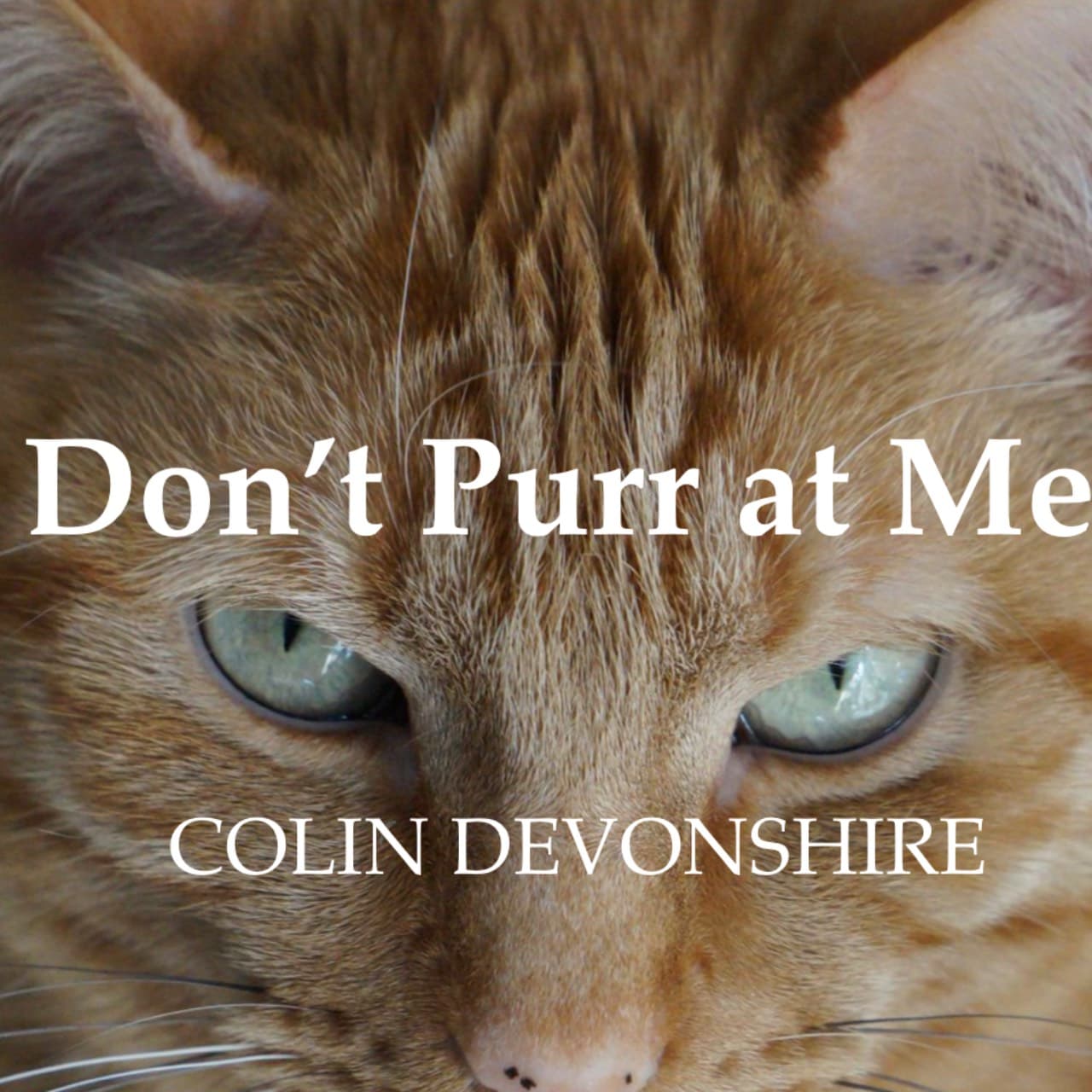
Mongkut, a scabby-eared tom with one white eye and one gold, would mew a single, low note when he was hungry, a sound like a rusty door hinge. Peepee knew exactly what it meant. She’d pad across the slick concrete in her bare feet, her faded t-shirt hanging loose on her thin frame, and offer him a piece of dried fish from the pocket of her shorts. He’d rub against her shins, his purr a tiny engine vibrating against her bones. She would sit for hours, cross-legged on the stoop of the empty shop, her slow mind a quiet pool, and watch them. The kittens, clumsy and mewling, tumbling over each other. The sleek, disdainful queen who watched the world from atop a broken air conditioner unit—the old, scarred fighters who moved like living shadows.
Peepee loved them with a physical ache, a fullness in her chest that people never inspired. People were loud, unpredictable, and prone to sudden, inexplicable anger. They’d shout at her in the market, their faces twisted and red, because she took too long to count out her coins. They’d laugh, a sharp, cruel sound, when she’d misinterpret a simple question. Their energy was a chaotic, strobing light. Cats were a steady, gentle hum.
Her mother, a woman worn thin by worry and a husband who had left years ago, had long since given up trying to integrate Peepee into the “real” world. She called her Peepee, the Thai word for “ghost,” because she moved with an unnerving silence and seemed to exist half in a different realm. It was an affectionate nickname, the only one she had. The alley, with its fetid charms and its resident felines, was Peepee’s sanctuary, and her mother, working double shifts at a garment factory, was just relieved she was safe.
The tourist came on a Tuesday. Peepee noted the day because the 7-Eleven had a new delivery of orange Fanta, and she’d bought one for herself, the sweet, artificial taste a rare treat. He was a large man, white-skinned and pink from the sun, with a shaved head and a bullish neck. A shiny camera hung from a strap around his thick wrist, and he wore cargo shorts that were an aggressive shade of khaki, his legs pale and hairy. His voice boomed in the narrow alleyway, a barrage of English that was too fast and loud for Peepee to even process as language. It was just noise. Angry noise.
He was with a woman, equally pink and loud, but Peepee’s eyes were fixed on him. He was pointing at the spirit house, a miniature, ornate shrine that sat on a pillar, and yelling, probably about the incense, or the offerings of fruit and drink left for the local spirits. Peepee didn’t understand, but she saw the displeasure on his face. It was the same look her uncle got right before he hit his dog.
Then he saw Mongkut.
The old tom was lounging on the warm concrete at the base of the spirit house, basking in a stray patch of sun, his one gold eye half-closed. He was the king of the alley, unafraid of anything, his body a relaxed heap of scarred fur. Peepee smiled, a slow, private smile. She was about to call out to him when the tourist’s mood shifted. It was as if the cat’s very existence offended him. Perhaps he saw it as a stray, a filthy pest intruding on his holiday photos. Perhaps he was looking for a target for his rage.
The woman said something, and the man laughed. It was not a kind laugh. Then, with a deliberate, heavy motion, he swung his tanned, booted foot.
The impact was a wet, sickening thud. Mongkut’s body was lifted from the ground, a ragdoll of fur and bone, and slammed against the concrete wall of the shop. A high, terrible screech was torn from his throat, a sound that seemed to slice the humid air apart. Peepee’s smile vanished. The world snapped into a terrifying, crystal-clear focus. It was as if all the noise and confusion of her life was stripped away, leaving only the stark, brutal reality of what had just happened.
The tourist laughed again, a grunt of satisfaction, and nudged the twitching animal with his boot. “Stupid creature,” he muttered, the words a foreign, guttural curse in the quiet alley.
Peepee saw red. It wasn’t just a colour; it was a physical sensation. A hot wave that surged from the pit of her stomach, up her chest, and into her head, blotting out everything else. The slow, gentle girl was gone. In her place was a creature of pure, focused instinct.
She didn’t scream. She didn’t cry. The rage didn’t express itself in noise. It hardened into a cold, sharp point in the centre of her mind. She stood up from the stoop, her movements unnaturally fluid. The tourist, having his fun, was turning away, his attention already back on his camera, on the woman, on the next piece of his artificial world to consume.
He didn’t see Peepee moving like a ghost. He didn’t hear her approach. There was no sound at all from her bare feet on the concrete. The only sounds were the distant hum of the city, the woman’s chatter, and the ragged, wheezing breaths of the dying cat.
Peepee’s hand closed around the neck of the glass Fanta bottle she’d just finished. It was cold and smooth in her palm. She held it not like a weapon, but like a promise.
The tourist felt a tap on his shoulder. He turned, a sneer already forming on his face, ready to dismiss the local pest. He looked down into Peepee’s eyes. Her gaze was flat, black, bottomless. It held no anger, no fear, just a terrifying, absolute peace. That single moment of confusion was all she needed.
With a speed and power that seemed impossible for her slight frame, she brought the bottle up and smashed it against the side of his head. The glass exploded into a thousand glittering shards. The sound was a deafening crack that echoed off the alley walls. The man grunted, not even a full cry, his eyes wide with shock as he staggered. Blood, a shocking, arterial red, immediately began to pour from a deep gash in his temple, matting his shaved head and streaming down his face.
The woman screamed, a piercing, useless shriek that seemed to summon the world. From the doorways of the adjacent shops, people emerged. The old woman from the noodle stall. A group of teenage boys on their phones. A fruit seller wiping his hands on his apron. Tuk-tuk drivers abandoning their vehicles. They formed a ragged semi-circle, their faces a mixture of shock, fear, and a strange, morbid curiosity. It was a show, and they were the audience.
The man was on his knees now, dazed, one hand weakly pawing at his head. He couldn’t comprehend what was happening. This wasn’t part of the script. This wasn’t a bad transaction or a pushy vendor. This was a nightmare in an alley.
Peepee didn’t hesitate. She didn’t look at the crowd. Her attention was solely on the man. She walked calmly to where he knelt, blood pooling on the concrete beneath him. He was gurgling now, a pitiful, wet sound. She picked up a piece of the broken bottle, a jagged, deadly shard. It was beautiful in the low light, catching a glint of gold from the spirit house, the same glint that had rested in Mongkut’s eye just moments before.
“Mongkut,” she whispered, the name soft as a prayer.
The crowd watched, breathless. The woman continued to scream, a broken record of horror. A few people had their phones out, recording. Others just stared, mesmerised by the unfolding tableau. This strange, simple girl, a ghost in the city, was bringing her own kind of brutal justice.
She pushed him onto his back. He looked up at her, his eyes filled with a dawning, pathetic terror. The sun glinted off the gold of a necklace he wore and the blood that had painted his face. He raised a feeble hand in defence, a weak, futile gesture.
Peepee didn’t see the man. She saw the arc of his boot, the sound of the impact, the broken body of her friend. She saw the laughter on his face. She saw the slow, leaking life of Mongkut’s blood on the concrete, a tiny, insignificant puddle in a vast, indifferent city. This man’s blood was a river in comparison.
She knelt beside him, her knees brushing against the wet concrete. The crowd pressed closer. A collective, sharp intake of breath was the only sound. Then, someone in the back began a slow, rhythmic clap. It was the fruit seller. His face was grim, but his hands came together, clap… clap… clap. A tuk-tuk driver, a man whose wife sold cat toys at the market, joined in. Another followed. Soon, the applause was a ragged, thunderous beat in the narrow alley, a macabre percussion to the scene. They were cheering for her. They were cheering for the ghost.
Peepee didn’t hear them. The noise was just a distant hum, like the city itself. All sound was gone except for the rasping breath of the man beneath her. He tried to speak, a wet, glottal mess—a plea, perhaps, or a curse.
She raised the shard of glass high, the jagged point aimed at his throat. In the reflection of the glass, for a fleeting second, she saw Mongkut’s golden eye. It was calm, accepting. It was the look of a creature who had known only harshness and a smattering of love from a strange, silent girl.
She didn’t flinch. With a swift, sure motion, she plunged the glass deep into the soft flesh of his neck. It was a strangely quiet sound, a wet, tearing crunch. The man’s body arched once, a violent, final spasm, and then went slack. His eyes, still wide with the final shock of his mortality, stared sightlessly at the grey sky above.
The blood was the final act. It surged out, a thick, dark pool that spread on the concrete, mingling with the dust and the Fanta and the rain-washed dirt. It was a stark, black stain on the world.
Peepee remained kneeling for a long moment. Her breathing was slow and even. Her face was a serene mask. The rage was gone, the coldness vanished. She was just herself again, the slow girl, returned to her quiet pool of a mind.
She looked down at Mongkut. The old tom was still, his scabby fur matted with his own blood. He hadn't moved since the blow. A single tear welled in the corner of her eye and traced a clean path through the grime on her cheek. She reached out and gently stroked his head, his fur still warm.
The crowd had fallen silent again. The applause had died. They stared at the scene before them: the dead man, the silent girl, the dead cat. The fruit seller slowly lowered his hands—a new feeling hung in the air, a whisper of unease.
The woman, the tourist’s companion, had stopped screaming. She just stood, frozen, her face a white mask of shock and horror. She stared at Peepee, at the blood-soaked girl who was now gently cradling a dead cat in her lap. Peepee looked up at her. Her eyes were empty of malice. It was like looking at a mirror that reflected nothing.
Carefully, with a deeply unsettling tenderness, Peepee rose to her feet. She cradled Mongkut’s body in her arms. She ignored the dead man, his blood still flowing into a widening pool. She ignored the staring crowd, the flashing phones, the frantic wail of a distant police siren that was beginning to slice through the city’s hum.
She walked past the crowd, her bare feet leaving faint, pink prints on the hot concrete. Her world, once again, had shrunk to the confines of the alley. The only language she understood was the silence of her lost friend.
She walked towards the canal, to the murky, lotus-choked water, where she could send Mongkut on his final journey. Behind her, the vibrant, busy world of Bangkok slowly started to rev back up, sucking the crowd back into its daily grind, leaving the dead tourist a problem for someone else to solve.
Peepee didn’t think about the police who would come, the questions, the confusion. She didn’t think about her mother, or the fear, or the prison that was surely waiting for her. She didn’t think about the cheering crowd, or what their clapping meant. Her mind, as always, was a quiet pool. And in the middle of that pool, a small, golden eye blinked slowly, forever looking out at a world that had been too fast and too cruel. For Peepee, that was all that mattered. That was everything.
The END