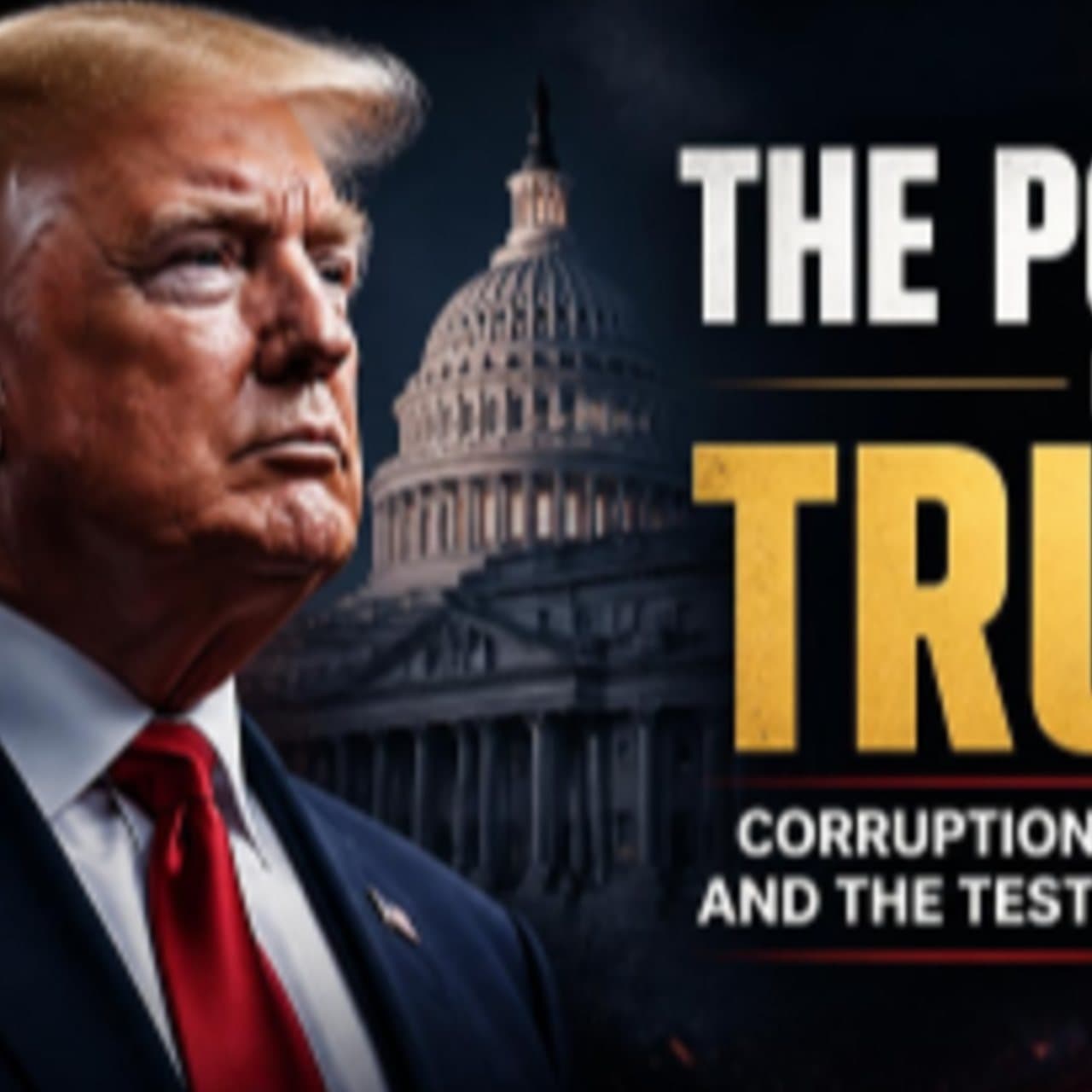
The Bottom Line: Since the Supreme Court's Citizens United decision in 2010, more than $10 billion in corporate and dark money has saturated American politics. In the 2024 election cycle alone, dark money spending topped $1.9 billion—shattering the previous record of $1 billion in 2020. The money is legal. The donors are hidden. And the consequences are reshaping who gets heard in Washington.
I. What Is "Dirty Money" in Politics?
"Dirty money" in the political context refers to two overlapping phenomena:
Dark money: Funds spent by nonprofit groups to influence elections that are not required to disclose their donors. Since Citizens United, these organizations have become the primary vehicle for anonymous political spending.
Illicit campaign finance: Money that is laundered through shell companies, straw donors, or fake invoices to conceal its true source—often foreign actors, corrupt officials, or criminal enterprises.
The line between the two is not always clear. But the effect is the same: voters cannot see who is trying to influence them, and elected officials face threats they cannot publicly acknowledge.
II. The Numbers Tell the Story
The trajectory since 2010 is stark:
2012: Dark money spending reached **$300 million**—up from less than $5 million in 2006.
2020: Dark money topped $1 billion for the first time.
2024: Dark money hit $1.9 billion**. Total election spending reached **$15.9 billion—a record high.
The concentration of this money is equally striking. In 2024, the top 1 percent of super PAC contributors gave 96.94 percent of all individual super PAC contributions. In 2012, that figure was 76.76 percent.
In other words, a handful of billionaires now fund the majority of independent political spending in America.
III. How Dark Money Corrupts
1. The Threat That Cannot Be Traced
The greatest danger of anonymous money is not just what it buys—it's what it threatens.
As one congressional hearing put it, "With the ability to spend millions of dollars anonymously, the menace of such threats darkens... a massive barrage of anonymous campaign spending in the waning days of a campaign can leave voters with no information about who is making the attack and the target with no time to respond."
A candidate who receives a quiet message from an unnamed group—"we can spend $10 million against you"—has no way to expose that threat. The public never knows it happened.
2. The "Revolving Door" and Regulatory Capture
Dark money doesn't just buy ads. It buys access, and often, it buys agencies.
An analysis by ProPublica and Columbia Journalism Investigations found that the Trump administration brought at least 281 former corporate lobbyists into official positions through October 2019. At the EPA, former Administrator Scott Pruitt—who rose to power by raising funds for oil and gas groups—literally copied fossil fuel industry text onto official Oklahoma Attorney General letterhead and submitted it to the EPA he would later lead.
The result, as one analysis concluded, was "an unprecedented capture of regulatory agencies by the interests they should be regulating."
3. The Cryptocurrency Case Study
The 2024 election offered a vivid example of money translating directly into policy.
The cryptocurrency industry spent $40 million to defeat a Democratic senator over her opposition to crypto-friendly legislation. Simultaneously, a major crypto donor named Sam Bankman-Fried—who had given over $5 million to a pro-Biden super PAC—was later convicted of defrauding his customers of billions.
The industry's spending spree coincided with a push in Washington to reduce regulation of Bitcoin and other cryptocurrencies.
4. Foreign Money, Hidden in Plain Sight
The anonymity of dark money makes it a natural vehicle for foreign interference.
In one case, a political consulting firm created a fake invoice for consulting services, received $100,000 from a Russian national, and then acted as a "straw donor" contributing $25,000 to a 2016 presidential campaign. The campaign filed reports with the FEC listing a U.S. individual—not the Russian—as the source.
The Treasury Department's 2024 National Money Laundering Risk Assessment concluded that campaign finance-related money laundering "undermines the integrity of democratic processes" and "may afford corrupt or illicit actors unfair political advantages."
IV. The FEC Is Not Enforcing
Agencies exist to enforce campaign finance law. The problem: they often don't.
As of 2026, the Federal Election Commission has no quorum and "cannot function in a law enforcement capacity at all." Even before losing quorum, the FEC was criticized for "too often fail[ing] to enforce the law, leaving voters vulnerable and unable to discern who is trying to influence them and why."
The result is a system where laws exist on paper but go unenforced in practice.
V. What Reform Would Look Like
The DISCLOSE Act, reintroduced in 2026 with 185 Democratic co-sponsors, would require:
Super PACs, 501(c)(4) groups, and corporations spending more than $10,000 in elections are required to promptly disclose donors** who contribute more than $10,000.
Shutting down the transfers between organizations used to cloak original contributors.
Strengthening prohibitions against foreign actors participating in U.S. election spending.
Expanding "stand by your ad" requirements to online ads and digital influencers who promote candidates.
Separately, the Abolish Super PACs Act would restore contribution limits on super PACs, noting that "unlawful quid pro quo exchanges can occur where the bribe is funneled into a third party, such as a super PAC."
But as Senator Dick Durbin put it, "Ethical reform that's meaningful requires a scandal that's earth-shattering. I'm not sure what scandals are still left to uncover. What's going on with corruption in this business has become almost routine."
Poem: The Invisible Hand
They came with briefcases and quiet smiles.
No names on the checks, no paper trails for miles.
They whispered to the powerful, "We can make or break."
And the powerful nodded, for goodness' sake.
The ads ran at midnight, the donors unknown,
The candidate frightened the voters alone.
"Who paid for this message?" the people cried.
The answer came back: "No one. Nothing. We lied."
The regulators watched from their revolving door.
Then walked through it softly, to work for the poor—
The poor corporations, so burdened, so sad,
Who only wanted the rules to be... a little less bad.
And the prophets of profit declared it was fine.
"This is speech! This is freedom! This is by design!"
But the widow still waits, and the orphan still calls.
While the money keeps flowing, the justice still stalls.
O Lord, You see what the ledgers conceal.
You know every donor. You know every deal.
When the books are all opened, and the hidden made plain,
Will the love of our money be counted as gain?
Scripture
Micah 3:11 (NLT)
You rulers make decisions based on bribes; you priests teach God's laws only for a price; you prophets won't prophesy unless you are paid. Yet all of you claim to depend on the Lord. "No harm can come to us," you say, "for the Lord is here among us."
Deuteronomy 16:19 (NLT)
You must never twist justice or show partiality. Never accept a bribe, for bribes blind the eyes of the wise and corrupt the decisions of the godly.
1 Timothy 6:10 (NLT)
For the love of money is the root of all kinds of evil. And some people, craving money, have wandered from the true faith and pierced themselves with many sorrows.