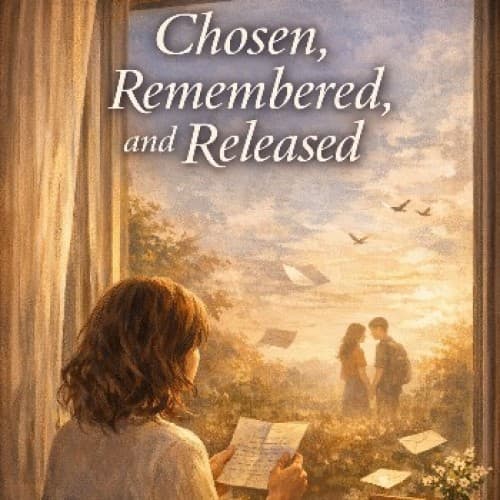
Some feelings come back unannounced, carrying with them the weight of decades. They arrive quietly, almost innocuously, like a familiar wind brushing against a window, and yet, once they settle, they awaken the parts of me I had long forgotten. Thirty years. Thirty long years since I last felt this way, and yet, in a single message, the world of my younger self returned, vivid and alive.
He reached out. Just a simple note, a few words that might have meant nothing to him. But to me, it meant everything. It was as if time had folded, and the fifteen-year-old girl I had been—heart pounding in secret, cheeks flushed with a crush she could never name—had stepped into the present. The girl who had imagined countless “what ifs,” who had treasured moments that would never come, who had built castles in the air from the fragments of a boy who had unknowingly held her world in his hands, had been remembered.
I remember back then, the way my heart would quicken when I saw him across the playground, the classroom, and the small spaces we shared as children. How a glance, a word, or even the most fleeting interaction felt monumental. I had carried those small sparks and stored them carefully in the corners of my memory, and over the years, they had lain dormant and quiet until now. His message was not just a message, it was the key that unlocked a door I hadn’t realized was still sealed, and suddenly, I was fifteen again, feeling everything all at once.
But as I sit with the feeling, I recognize it for what it truly is. It is not merely about him. It is about being seen, being remembered, and being chosen, not by him specifically, but by the life I once imagined for myself. It is a feeling that has existed within me for decades, quietly waiting for acknowledgement. When he reached out, it was less about him and more about the parts of me that this contact awakened. The yearning to matter, to be noticed, to be held in someone else’s memory with significance—it had been dormant, waiting for permission to resurface.
I think about the person I was then, innocent, hopeful, and tender, and I see how she shaped who I am now. That young self was fearless in ways I have long forgotten, daring to feel, to hope, to imagine, even when circumstances rendered her dreams improbable. And now, as I reflect on her, I realise that my current self, the woman I have become, with responsibilities, love, and choices—has the opportunity to acknowledge her without losing control. To honor the feeling, yet not let it dictate my present.
There is something profound in understanding that nostalgia is not merely a longing for someone else; it is a longing for a part of ourselves that we have neglected. In the rush of adulthood, of commitments, of the endless noise of life, we forget the intensity of feelings that we once held. We forget the rawness of first crushes, the unspoken excitement, the thrill of being noticed. These feelings are not lost; they lie beneath the surface, waiting to be recognised. When they return, they do so not to entangle us, but to remind us that we are still capable of feeling, still capable of wonder, still alive in the deepest corners of our hearts.
I examine what this feeling represents to me. It is not about the boy who sent a message; it is about the recognition of my own worth. It is about understanding that I deserve to feel chosen, remembered, and valued. This realisation does not require him, does not require action, and certainly does not require transgression. The emotion is a mirror, reflecting the truths I may have neglected: that I am worthy of attention, of care, of love, and of being cherished for who I am, not just for who I was.
As I write this, I see how easy it would be to let the mind weave a story around him, to imagine that he felt the same, to project onto him the feelings that belong to me. But I resist that temptation, because it is not the truth; it is a story my heart is tempted to tell in order to make the emotion more tangible, more real. The truth is simple: the message, the spark, the pull—they are fleeting. What is lasting is what it reveals about me: my capacity to feel deeply, to reflect honestly, to acknowledge my emotions without being swept away by them.
There is a subtle power in grounding myself in the present. My life now is rich and full in ways that my younger self could not have imagined. I am anchored by choices I have made, by relationships I have nurtured, and by the love I have cultivated. The past can visit, but it does not command. The feelings it brings can touch me, remind me, stir me, but they cannot define me, nor can they guide my decisions. I am not the girl from thirty years ago; I am a woman who carries wisdom, perspective, and agency.
To release this feeling, I begin by naming it fully. I feel the surge of nostalgia, the intensity of being remembered, the thrill of being chosen. I acknowledge each facet, each nuance, without judgment. I honour the young self who felt it first, and I honour the woman who now experiences it differently, with insight and intentionality. I write it all down as if speaking to a trusted confidant: every flutter of the heart, every memory, every longing. And then I close it gently with gratitude.
Gratitude is key. I am grateful for the message, for the memory, and for the reminder that I am alive to feeling. I am grateful for the part of me that still remembers how to hope, how to dream, how to feel significant in the quietest, most personal ways. And I am grateful for the present, for the life I have built, for the love and choices that belong solely to me.
Finally, I give the emotion its conclusion. I release it not with anger nor with shame, but with clarity. I let it pass through me like sunlight fading at dusk, gentle and warm, leaving no residue of longing that binds me to the past. I carry forward the lesson that I am worthy, that I am seen, and that I have the power to choose how I let feelings touch my life. This chapter belongs to me, and I close it on my terms.
Even as I release it, I retain its gift. The memory, the emotion, the recognition—all of it becomes part of my story, enriching my understanding of myself. I am more aware of my capacity to feel, to connect, to reflect, and to release. I am reminded that nostalgia is not a trap but a teacher. The past visits to illuminate, not to entangle; to remind me of my own vitality, not to claim me for what is no longer present.
I am free now. Free to feel, free to remember, free to create without the burden of unresolved longing. The young girl who once felt so intensely is honoured and acknowledged, and the woman I have become stands steady, capable, and whole. The pull of the past is acknowledged, and then it is set aside, like a letter read and carefully filed away. It no longer commands attention; it no longer dictates my emotional state.
I look back one last time, and I smile at the memory of being chosen, at the thrill of being remembered, and at the clarity of release. I let the feeling rest in its rightful place, cherished, acknowledged, and concluded. I step fully into my present, carrying the lessons and the beauty of emotion without letting them govern me.
And so it passes, as all things do, leaving only insight, gratitude, and the quiet strength of a heart that has felt deeply, reflected honestly, and chosen consciously. I am released, and in that release, I am whole.