
Robby and I rode the few hundred yards back down to the main road after our visit to the falls. I was pointing out the old hay fields to the east and where the old reservoir used to be on the west side of us.
Which actually was pretty interesting because the reservoir had to have been dug by hand. And then at some point instead of the dam breaking it just had a huge round hole in the middle of it so it never held water again.
I was pointing out the faded road I planned to take and the rock outcropping we would ride over. When Robby decided he needed to take a leak first so we both got off our horses and was letting them get a drink of water out creek.
So I was holding both horses letting them get a drink when disaster struck. Literally because nose flies showed up. And nose flies have a very unique method of reproduction.
The first thing nose flies do is lay their tiny yellow eggs on the horse’s legs. Then they fly up and deliver a very painful bite on the tip of the horse’s nose.
Then the first thing the horse does is throw its head up and down and then rubs its nose on its legs. Which causes them to inhale some of eggs. The eggs go clear through the horse’s digestive track and then the eggs hatch in their manure.
I always thought that sure seemed like a lot of time and trouble just to hatch some offspring. And probably every ranch kid in the country had a little scar on their head where a nose fly bit their horse on the nose. Causing the horse to throw their head up and then hit the kid on top of the head with a bridle when it came back down.
On the other hand, however, I had never been bitten by a nose fly when misquotes, deer flies, horse flies, gnats, and heel flies have about eaten me alive at times.
But on this particular day when the nose flies hit both horses were throwing their heads trying not to get bitten. I was watching Robby’s bronc because I didn’t know what it might do. And didn’t even see Y-E’s head coming my way hitting me on the chest so hard it knocked my pack of cigarettes out of my pocket.
And there was no saving them. I always bought Marlboros in the allegedly “crush proof box.” And of course there is no such thing. But Y-E hit me just right causing my nearly full box to fly out of my pocket and over my right shoulder. They landed in the creek which was running so hard and fast they were gone instantly.
Now it was not a total disaster because I had one of the packs of Salems Ted had given me stashed on my Levi jacket pocket tied on the back of my saddle. But I hated menthol cigarettes and even worse I had no idea how long I was gong to be with Robby and that was at least two days worth of cigarettes that were lost.
It was all so distressing I had to get the pack of Salems out of my coat pocket and light one of them up before I could even get back on Y-E. With Robby just highly amused citing it as another reason why he didn’t smoke cigarettes.
Once back in the saddle we took the faint little two track road down to the rock outcropping and started riding up it. It was one of the taller ones but going up the north side was no problem at all. There were actually patches of grass on that side that zig zagged all the way to the top.
But it was when we broke out over the top that things got interesting because the south side was nothing but solid rock. And when you first saw the solid rock it looked like you were rimrocked 100 feet up in the air on a very steep rock.
The trick though was the granite outcropping was like on three levels. And between each level was level ground or rock as the case may be.
You couldn’t hardly see it looking down because the whole rock was pretty much the same orange color. But if you rode down the top level it would switch back to the next level that would take you down to the ground.
From the crest on the south side you are looking right down on the corral, root cellar and cabin of the Conat place. In fact the corral was only a few feet from the granite which could be used to help corral livestock with the gate nearly touching the granite.
But looking down was about 100 feet and it took kind of a leap of faith to start riding down the solid rock outcropping because you couldn’t see the switch back from the top. And Robby was turning out to be ye of little faith.
Robby said he wasn’t sure he wanted to try and ride his bronc down a solid granite outcropping. Even though horses, wagons, and even trucks had used it.
Robby thought maybe he would just turn back and take one of the other roads. And he was in luck, sort of. We could see all the roads from where we were sitting.
The closest one was to the east. But I pointed out to Robby it didn’t really go to the Conant Place. It went down to the gate on the main road going into the Conant place. Which was about two or three miles from the cabin.
The next closest one was to the west. But I told Robbie it was actually a dead end that went into another hay meadow we couldn’t see from there.
I finally told Robby the only road that actually went into the Conant place was the one to the north which we had just left. And then traced it with my hand because it was a big circle showing Robby it was about a five mile ride.
Then I assured Robby there actually was a “road” if you could call it that down the granite outcropping. And looking at a few hundred feet as opposed to miles restored Robby’s faith.
So we finally started riding down and it didn’t bother Robby’s bronc one bit. It was wide enough to ride side by side and just about the time it looked like we were going to ride off the edge of the rock it switched back to the south. We were on the ground in no time.
And perhaps a little out of relief Robby was chattering like an excited child. He noted the corral was old but still in working condition with a big round corral, a little round high horse corral and a loading chute.
Next he saw the old root cellar and was incredibly interested in it. And most people are because the front of hit is made out of flat orange granite rocks and the cellar looked like it was dug into solid rock.
Robby wanted to have a look at it and as long as we were at it I pointed out the family mystery.
“See how its made out of all this flat granite rocks about two inches thick, a foot wide, and two feet long,” I asked Robby. And he admitted he had noticed.
“Where did he (meaning Conant) get all of them,” I asked next.
“You asking me,” Robby wanted to know, “hell it’s your family’s place.”
“Well you didn’t see any place with those kind of flat rocks riding in did you”? To which Robby answered no.
“Well none of us have ever figured that out either. Not even Uncle Bob who lived here for years and has covered every inch of this mountain. How or even where Conant came up with all those flat rocks is a mystery to all of us.”
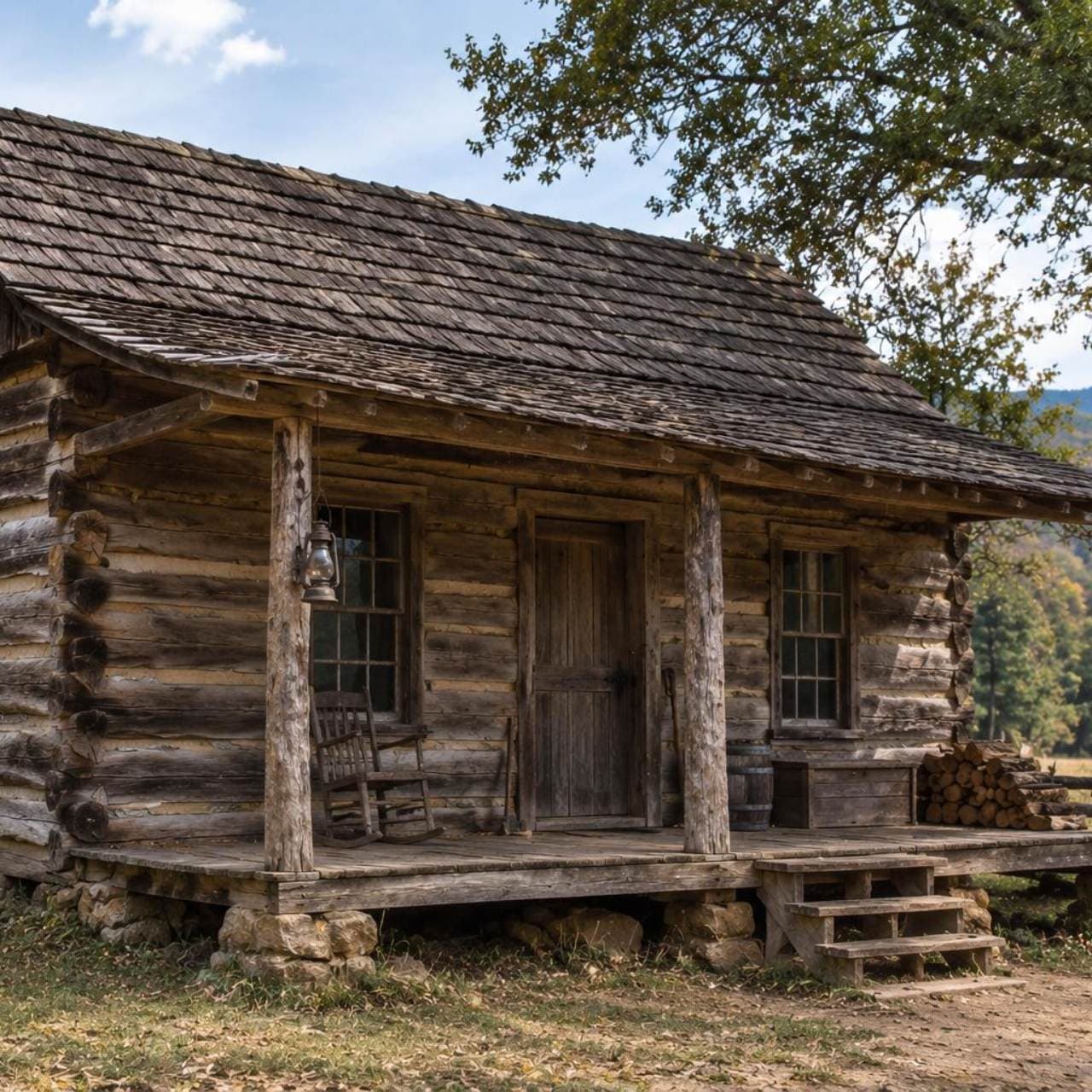
Next Robby wanted to take a look at the cabin. And the cabin had seen better days. It was only a two room cabin and still livable but the screen door had blown off and hardly anyone even spent the night there anymore.
But it still had a cooking stove in the front room and a sheep wagon stove in the bedroom for heat. A bed with quilts in the bedroom. Table and chairs and at least some food in the cupboards. So someone could stay there if they needed to.
But speaking of doors as we approached the one to the Conant Place Robby could not help but notice there was what looked like a huge keyhole in the door. It was tear drop shaped, about two inches across, three inches high with a little nipple on the top.
Robby pointed to it wanting to know what it was doing there and why it hadn’t been fixed. And I explained that Uncle Bob had cut the hole in the door for shooting magpies.
He and my great grandfather had been at war with magpies for more than 70 years. But they are very hard to shoot. So the door was like the perfect blind for Uncle Bob to shoot magpies from inside the house.
The family bought the Conant Place in the 1930’s. Or more accurately my grandfather paid for it. It was the winter camp for their cattle after they moved them off the Point Of The Mountain ranch. And it was also Uncle Bob’s honeymoon cabin.
But since then Uncle Bob leased winter pasture on the reservation on the outskirts of Riverton so they didn’t need the Conant Place anymore. But it was still standing just fine.
Then once inside Robby had to check everything. The bedroom. The kitchen and even the cupboards where you could just about predict what would be in there. Just staples mostly. Beans, rice, dried noodles, sugar, flour, and maybe even canned goods.
But you never eat any of the canned goods because they might have been there all winter, froze, cracked the can and would give you food poisoning.
And of course one other staple that you would find in almost every cabin; a bottle of Karo syrup. So Robby helped himself to a couple spoonfuls of sugar and chased it with a swig off the Karo syrup bottle.
Then once back outside Robby pointed to the pit that was just off to the side of the cabin. It always had water in it and Robby wanted to know if that’s were we got our water.
And I told him no the pit had been dug when the prospectors came though looking for uranium. And even though it always had water in it we weren’t sure it wasn’t radio active so we still used the “Buggy Whip” spring just a little further to the east.
That intrigued Robby and he wanted to know why we called it the Buggy Whip spring. And I pointed to this great big willow tree.
I explained in the early days great grandpa was working at the Conant and great grandma hitched up her team to her buggy to take him lunch.But before she left The Point she cut a willow branch to use as a buggy whip. Then when they ate lunch by the spring great grandma just stuck her “buggy whip” in the ground next to the spring and the willow tree grew up from that.
Robby found that just very interesting and even touching so we walked over to see it. And then since there was always a tin cup hung on the tree or at least close by we both had a drink of the delicious ice cold spring water.
Once back in the saddle though Robby said he still wanted to do some more exploring and headed down the road that ran to the west. That road actually went to the Parker Place with another fork that went to Cousin George’s ranch.
But I figured there would be another surprise in store for Robby if we took that road but kept to myself to see if he would notice. Which was when we topped the hill the road went down to the creek. And there Robby and I started riding through sagebrush that was taller than both of us and our horses.
To this day I still haven’t figured out why. I suspect it might be a different species of sagebrush because I never saw anything like it anywhere else. But the road went through kind of a forest of the giant sagebrush you couldn’t even see over the top of and was several inches in diameter at the base.
And yes Robby did notice. Marveled at it actually admitting he’d never seen sagebrush that thick and tall either. And then just as suddenly as you ride into the sagebrush forest you ride out of it where the road crosses the creek.
Once we crossed the creek the road to the Parker Place went to the north and the road across the gypsum flats ran to the west to Cousin George’s ranch.
And Robby wanted to know if that road went to the homestead Cousin George crew up on. And I told him no to get to the old homestead we would have to ride about five miles to Cousin George’s ranch and then another five miles to get to the old homestead that was further up the mountain.
Robby admitted that was just too far to ride and I told him we couldn’t actually get to it from where we were at. But if he just wanted to see the homestead there was a trail right in front of us that overlooked the it.
Robby said he had heard of it and just wanted to see the “Meeks” place. Which came about when Cousin George married a Meeks. Which were known to be mean and crooked.
But Cousin George wife’s family had fallen on very hard times during the depression. They became homeless so Cousin George said they could stay at his dad’s homestead.
It was also the time when the U.S. Geological Survey was mapping all of Copper Mountain and putting names on things. And when they rolled into the homestead and asked what the name of the ranch was Cousin George’s father in-law said it was the “Meeks Ranch.”
And no matter how much Cousin George’s family protested there was no changing the name once the maps were printed. So the Meeks Ranch became a funny mountain story.
But I also had ulterior motives for taking the trail because there was actually something else I wanted to show Robby. So as we crossed the creek and headed due west towards a ridge. And just as we were getting to it I pointed out there were small rock piles every few yards.
I pointed them out to Robby and then said they were the same kind of rock piles that lined the road going into D-Pass. Except the ones in D-Pass were more than 15 feet in diameter and ten feet high.
Some Oldtimers claimed the rock piles were from a Native American bison jump. But the problem with that theory was there was no cliff to jump the bison off of. And maybe the best they could have done is get them running really fast down a steep hill but no problem for a bison.
There was an amateur archeologist and historian in Lysite though that had spent years studying the rock piles. And eventually discovered it was actually an ancient Native American trail long before Native Americans got horses.
The trail ran from the base of the Big Horn Mountains in the north for about 100 miles to the northwest to the Wind River Canyon. And the Native Americans marked it by just picking up hand sized rocks and throwing them on the rock piles as they passed by. And besides just marking the trail the amateur archologist believed there was some kind of memorial ceremony involved.
Down where we were was about 10 miles from D-Pass and rocks were in a lot shorter supply. So the rock piles were only about a couple feed in diameter and about a foot high. But there would still be a rock pile every few yards just like in D-Pass.
We followed the rock piles until they started up a smooth outcropping of solid granite which is what I wanted to show Robbie. Because the trail across that solid granite looked like a cattle trail in a pasture.
The trail is unmistakable. And something I still marvel at thinking about today. How many millions of moccasins over how many thousands of years would it take to wear that trail in solid granite like that. It was a way to visualize how many more thousands of years Native Americans had been here before European contact.
But the trail where it started down the other side of the granite outcropping was also the end of the trail at least as far as we could go. You could see the old homestead and it was still standing but had been abandoned for years. But there was no way to get down to it so all we could do is look.
After seeing the “Meeks Ranch” Robby and I turned back towards the fork in the road. And Robby wanted to take the fork to the north that went to the old Parker Place. Which was just like the Conant Place and Berger Place and about a half dozen other paces just like them scattered around Copper Mountain.
People had mostly built them with their own hands and spent decades living in them summer and winter. But once they got too old to make it through the winters they sold them and moved to town. And someone else took them over but didn’t really live in them full time anymore.
But just as long as some humans were still there sometimes those places could stand for 100 years. But as soon as those places were totally abandoned the mice would take over and within five years or a little more they were unlivable. And a few more years the mice would have the building flat on the ground.
As we got to the Parker Place the first thing a person might notice is it was still in a lot better shape than the Conant cabin. Mostly because it was a lot better and nicer house to begin with. But also because it was still used as a cow camp sometimes, had better owners, and was also used in hunting season.
But Robby did the same thing he did at the Conant Place. We went inside and Robby looked all over the place. Including even looking in all the drawers where a mouse jumped out of one of the drawers. It ran up Robby’s arm causing him to scream like my old grandma which I found hilarious.
And of course Robby checked the cupboards where he found the sugar and Karo syrup again. So Robby had another spoonful or two of sugar and a swig of the Karo syrup.
Then by the time we finally got out of the cabin and back in the saddle daylight was already fading. I had to check my trusty Timex watch to be sure but it was already past 4 pm.
Meaning we had more than ten miles to get back to the Berger Place and more than a couple hours in the saddle.
Robby also noticed it was getting late and wanted to know which was the shortest way back to the Berger Place. And I had to tell him the same way we came in. Ride back through the Conant place and hit the seismograph road again.
Robby thought there had to be a shorter route but I assured him there wasn’t. That part of Copper Mountain was more like a series of canyons and steep ridges. So every place had to have its own road that started off the county road down on the flats with no way to get from one road to another.
I had to tell Robby we couldn’t even save anything trying to take the main road to the Conant down to the gate. The shortest route was to just backtrack the way we came in. Which surprised Robby who suddenly realized our pleasure ride had taken way too long and we still had a long way to go.
But once convinced I knew what I was talking about we moved out retracing our steps or horse tracks as the case may be. And as we rode along in the evening, I lit up a cigarette, one of Ted’s nasty Salems, and had to admit something else bothering me about our pleasure ride. Was Robby really “exploring” or was he casing the mountain?
Which I will have to explain later.