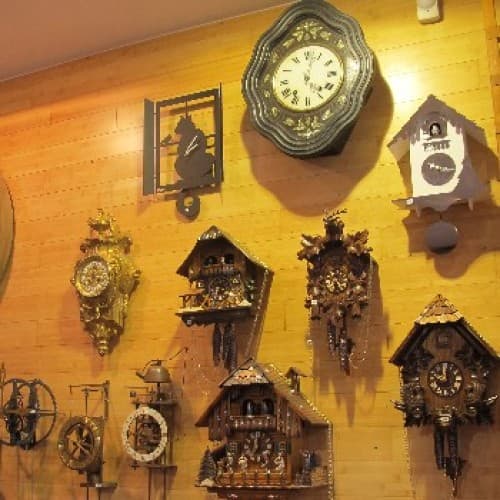

When Amser was a baby, Time was regulated by the sound of a cuckoo clock, tick-tocking away on the wall of her bedroom. It was a friendly sound. The cuckoo, jumping out of its carved wooden house and singing on the hour, as well as the regular movement of the pendulum, lay embedded in Amser’s childhood memories. Even when Amser was only very small, her hopes were that one day she would be free of her cot, with its enclosed bars, and able to jump out of bed just like that cuckoo out of its house.
Time flew on, and when she became an adolescent, she felt that Time had put on heavy boots and that it had stamped on her dreams, putting her through the drudgery of school, unwanted homework, and her mother’s rebukes. During this period, much to her own dislike, her mother kept a photo album of her as a baby and as a young child. Amser hated her mother photographing her. She did not want to be enclosed in that album, and she would scream if the photograph did not resemble the image that she had of herself.
She grew into a forceful character, and when Time marched on to her eighteenth year, she left home for work. Much to her dismay, life was then regulated by the shrill and strident sound of her alarm clock. Amser’s deeply felt resentment toward this uncalled-for authority led her to escape its daily wake-up call by deciding to become an artist. She judged an artist’s life to be less regulated; to be more open to life; to be freer and easier than her present one. There, at her ease in her artist’s gown splattered with paint, she spent the next three years expressing herself in various mediums. This, she thought, was real freedom. She could be herself and put her feelings onto the canvas. Art allowed her to experiment; it gave her a feeling of an unlimited space that was all her own.
When she painted, her own large collection of clocks stood by her side, some of them originating in the seventeenth or eighteenth centuries. They were highly decorative and chimed the hour with delicacy or with music. They reminded Amser of former generations, of large families sitting around the crackling fire, and the smell of burning wood. She thought of past interests: of the mother reading to her gathered children; of singing to the chords of the piano or harpsichord amid dark shadows falling around the light of flickering candles.
These timepieces, Amser thought, have been carried down to the present generations in new shapes and forms, retaining their tick-tocking qualities to mark the Time, but now immersed under plexiglass casings: no longer audible; no longer part of the aural environment. They are now like me, she thought, as I was. I was encased, and I had lost my vibrancy. She threw herself into painting the cuckoo clock of her childhood memories.
Amser whispered to herself with a mounting fury, the joyful cuckoo clock singing in her head, that, in the twenty-first century, Time had been made to shed its clothes. It had put on a pair of velvet slippers. Now, she thought angrily, it passes us by like a ghost, hiding behind new shapes and new forms but imprisoned. It flies before us, reckoning the length of each day and night quietly and invisibly.
‘Present generations have silenced time,’ she cried out to the darkening, empty room around her. ‘Now Time tiptoes around us. One day, it will creep up on me with no warning, taking me to its very edge without a sound being heard.’