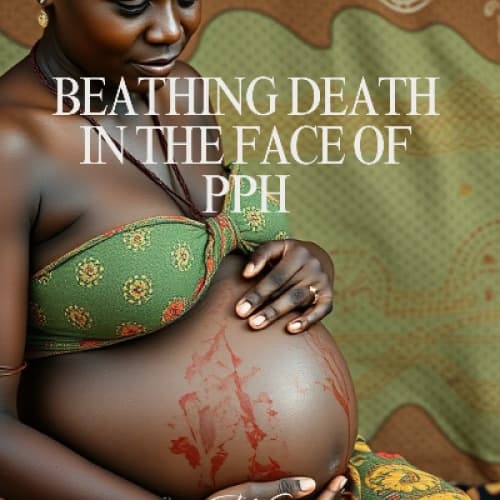

Beating Death in The Face of PPH Monster
Ngiro, a 17-year-old girl, was pregnant with her second child. Despite living just 5 kilometers from Atete Health Center, she faced significant challenges in accessing antenatal care (ANC) due to traditional beliefs held by her mother-in-law. This narrative explores the barriers Ngiro faced, her mother-in-law's reliance on a traditional birth attendant (TBA), and the efforts of Village Health Teams (VHT) to encourage modern medical practices.
Ngiro lived with her husband and his family, where her mother-in-law held significant influence. As a young mother-to-be for the second time, Ngiro needed proper medical attention, but the household's adherence to traditional practices created a barrier to accessing the necessary care.
Her mother-in-law's distrust of modern medicine stemmed from deep-rooted cultural beliefs and fear of the unknown. This resistance was compounded by myths and misinformation about medical interventions. As a result, Ngiro's health was compromised, risking complications for both her and her unborn child.
Village Health Teams (VHT) played a crucial role in promoting ANC in the community. They organized educational sessions, home visits, and community meetings to highlight the benefits of modern healthcare. Despite these efforts, convincing traditionalists like Ngiro's mother-in-law proved challenging. The VHT tried to address specific concerns and misconceptions, aiming to build trust and understanding.
Ngiro struggled emotionally and physically, knowing the importance of ANC but being unable to access it. She made attempts to visit the health center secretly, but these were often thwarted by her mother-in-law. The stress and fear of potential complications weighed heavily on her, yet she remained hopeful for a positive change.
As Ngiro's pregnancy progressed well, her mother-in-law remained resolute in her traditional beliefs. When labor began, her mother-in-law invited Jane, a respected traditional birth attendant (TBA), to assist with the delivery. Jane, an elderly woman with extensive experience, did not hesitate to come over, motivated by the promised payment of a chicken and a goat.
Jane's involvement highlighted the deep-rooted trust in traditional practices within the community. TBAs like Jane were seen as custodians of cultural knowledge, often preferred over modern medical practitioners. The payment of livestock symbolized the value and respect afforded to her services.
During labor, Ngiro faced several challenges. The lack of modern medical equipment and facilities increased the risk of complications. Despite Jane's experience, there were moments of uncertainty and difficulty. However, the presence of a familiar and trusted figure provided Ngiro with some comfort amidst the trying circumstances.
Ngiro successfully delivered a healthy baby boy, named Teko after his father. The initial joy of the safe delivery quickly turned to panic as Ngiro began to bleed profusely from her birth canal. Jane, the TBA, attempted to stop the bleeding by packing pounded leaves into Ngiro's birth canal, a traditional remedy believed to control hemorrhaging. Unfortunately, this method proved ineffective, and within minutes, Ngiro was in a pool of her own blood, her condition rapidly deteriorating.
Teko owned a motorcycle, but it was rendered useless that night due to a punctured tire. The situation seemed hopeless as walking the 5 kilometers to the hospital was risky and impractical, especially in the middle of the night and given the insecurity in the area. Ngiro was growing weaker with each passing second due to the severe blood loss.
Fortuitously, Teko's friend Johnie arrived for a visit, having heard about the birth of Teko's new baby boy. Realizing the gravity of the situation, Johnie quickly assessed the emergency. He had a functional motorcycle and did not hesitate to offer help. With Johnie's timely arrival, they were able to rush Ngiro to Atete Health Center, providing her with the urgent medical care she desperately needed.
On the way to the hospital, Ngiro collapsed from severe blood loss. Teko carried her on his lap, desperate to get her the help she needed. Upon arrival, the midwife quickly diagnosed Ngiro to be in shock due to postpartum hemorrhage. Immediate medical interventions were initiated.
The midwife acted swiftly, establishing two cannulas into Ngiro's veins to transfuse fluids. She administered a vial of oxytocin and massaged Ngiro's uterus to help control the bleeding. The midwife inspected the birth canal, but the bleeding only slightly slowed. Together with other health workers, they managed to stabilize Ngiro, who began to open her eyes. Fortunately, the ambulance arrived just in time to transfer her to a larger hospital for continued care.
While in transit, Ngiro's condition deteriorated as she started to bleed even more heavily than before. The midwife, undeterred, continued to transfuse fluids and performed bimanual compression of the uterus to manage the bleeding. She had earlier informed the Moroto Regional Referral Hospital of the situation, ensuring they were prepared for Ngiro's arrival.
Ngiro's arrival was met by Dr. Johnson, the medical officer on duty, who quickly assessed her. Ngiro had lost a lot of blood, was very pale, weak, and in shock, with active bleeding. Dr. Johnson shouted for help, catching the attention of Senior Consultant Dr. Ouna Martin, who was planning the Postpartum Month of August with two special grade doctors, Dr. Kevin Okedi and Dr. Esayu Denis. The urgency in Dr. Johnson's call, which could be heard from over hundred meters away, prompted immediate response of the senior colleagues.
The doctors sprang into action with the precision and urgency of a termite colony. Within seconds, they established two intravenous lines to ensure immediate fluid and medication delivery since the previous ones had tissued. Blood samples were swiftly collected and rushed to the lab for essential tests, providing critical data for her treatment. An antishock garment was carefully applied to stabilize her condition and prevent further deterioration. Concurrently, they conducted thorough assessments, their hands moving swiftly and confidently over her body to evaluate the extent of the emergency and prioritize treatments.
The surgical theater was alerted with a sense of controlled urgency, the team inside preparing instruments and setting up for possible intervention. Consent for surgical intervention was obtained with difficulty, the doctors clearly explained the dire situation to the family but Ngiro's mother in law resisted, she claimed the surgery would make Ngiro a weak woman.
To support her breathing and optimize oxygen levels, the patient was connected to an oxygen cylinder, the hiss of the gas a reassuring sound in the flurry of activity. Every second counted, and the coordinated efforts of the medical team provided a lifeline in the critical moments of her fight against the postpartum hemorrhage monster
The intern doctor ran to the lab with a sample for blood grouping and cross-matching. Fortunately, the lab technologist was present. The urgency was clear from the intern's appearance, as he was sweating and out of breath. "Help, mother dying," were the only words he could manage. The technologist quickly processed the sample but found only one unit of whole blood available. He handed the unit to the intern, who ran back to the ward, knowing it was only a temporary solution. Ngiro's hemoglobin level was critically low at 3 gm/dl, and she needed more blood for the operation.
Musa, the EMS coordinator, was alerted and began calling nearby hospitals and health centers for blood group B-negative units. His initial calls to Matany, Kotido, and Abim hospitals were met with disappointment as none had the necessary blood type available. The situation became increasingly dire as he called Tokora Health Center IV, which only had 200 ml of blood. Unfazed, Musa persisted in his search and reached out to Amudat Hospital. The hospital checked their lab and found they had two units of B-negative blood. However, the area had been insecure for a week, and traveling at night posed a high risk of ambush by warriors. None of the drivers were willing to take the risk.
Dr. Ouna, understanding the gravity of the situation, personally called Joel, an experienced ambulance driver, and explained the critical need to save a young mother's life. Joel, moved by the urgency and responsibility, agreed to undertake the perilous journey despite the risks. At 10 pm, Joel prayed "God if it's you will, protect me through this Journey in Jesus Name" , and several voices in the hospital responded with "Amen."
Meanwhile, Ngiro was taken into surgery under general anesthesia. The medical team, led by Dr. Ouna, worked tirelessly. They found that Ngiro had sustained a ruptured uterus that extended to the cervix and that the uterus had failed to contract, causing the postpartum hemorrhage. The tear was irreparable, and the specialists agreed to perform a total abdominal hysterectomy, removing the uterus and cervix.
As the procedure progressed, Ngiro suddenly suffered a cardiac arrest, throwing the entire team into disarray. The room was filled with the loud, shrill beep of the cardiac monitor indicating her heart had stopped. Dr. Ouna immediately took charge, barking orders with a controlled urgency that cut through the rising panic. "Johnson, start CPR now!" he commanded.
Dr. Johnson, strong and composed, sprang into action. He began chest compressions with determination, his movements precise and forceful. The anesthetist quickly administered emergency medications to stimulate Ngiro's heart, while nurses prepared the defibrillator just in case. The pulse oximeter showed a flat line, adding to the tension in the room.
The anesthetist played a crucial role in this life-or-death situation. As Dr. Johnson performed CPR, the anesthetist monitored Ngiro's oxygen levels, ensuring she was receiving adequate ventilation. He administered a cocktail of drugs, including epinephrine and atropine, to stimulate her heart and increase blood flow to vital organs. The nurses worked in tandem, ensuring the necessary supplies were on hand and the surgical area remained sterile.
For what felt like an eternity, the team watched anxiously as Dr. Johnson performed CPR. On the third compression, a faint but definite blip appeared on the monitor, signaling a returning pulse. A collective sigh of relief was almost audible, but the team remained focused. The anesthetist carefully monitored Ngiro's vitals, adjusting the ventilator settings to ensure she received adequate oxygen.
The surgery continued with heightened vigilance. Dr. Ouna and Dr. Johnson, both visibly relieved but still on edge, completed the hysterectomy. Throughout the ordeal, the team's coordination and swift actions underscored the importance of preparedness and teamwork in managing such critical emergencies.
Ngiro still needed more blood, but Joel had not yet returned from Amudat. While on his way from Tokora to Amudat, he encountered warriors returning from a raid. Seeing the ambulance with its siren on, they recognized the emergency and did not attack. Joel drove so fast that the journey, typically five hours, took him only three. His return with the blood was met with joy, and Ngiro received the additional units she needed.
After the completion of surgery, Ngiro progressed well, recovering from the anesthesia and breathing without machine support, although she remained on oxygen. This alleviated a lot of anxiety and fear in the hearts of everyone involved. Meanwhile, the relatives outside the theater were in tears, having overheard the panic inside and sensing that something had gone wrong. They noted the delay and the movements of health workers in and out of the theater, which raised their anxiety.
However, Ngiro's condition improved, and she was transferred from the theater to the high dependency unit located within the maternity ward. The anesthesia team, together with the doctors on the ward, paid close attention to this fragile situation. The physician, Dr. Ocen, was informed of the situation and swiftly came to review Ngiro. Her situation improved as the units of blood she received raised her hemoglobin level. By 6 am, she was fully awake and able to talk consciously with the health workers.
She kept improving, and on the second day, she was discharged to the general ward. She continued to improve and was discharged on the fifth day with no complications. Ngiro is one of the survivors of PPH, and without the timely involvement of the health workers, she could have died and left a one-day-old baby motherless.
Postpartum hemorrhage (PPH) remains a significant cause of maternal mortality worldwide, and Uganda is no exception. In Uganda, PPH accounts for approximately 40% of maternal deaths, while in the Karamoja region, this figure rises alarmingly to 46%. The discrepancy highlights several underlying issues unique to Karamoja that exacerbate the risks and challenges associated with PPH.
In Karamoja, traditional beliefs and practices hold substantial sway over modern medical practices. Many communities rely on traditional birth attendants (TBAs) like Jane, who, despite their experience and cultural significance, lack the training and resources to manage severe complications such as PPH. The preference for TBAs over trained medical personnel often delays critical interventions, increasing the risk of maternal deaths.
Karamoja is one of the most remote and underdeveloped regions in Uganda. The lack of accessible and well-equipped healthcare facilities poses a significant barrier to timely medical interventions. Women like Ngiro often live in areas far from the nearest health centers, making it challenging to seek emergency care during labor complications. Poor road conditions, insecurity, and inadequate transportation options further complicate access to lifesaving healthcare.
The healthcare workforce in Karamoja is stretched thin, with a limited number of trained professionals available to handle the high volume of maternal health cases. The scarcity of essential medical supplies, including blood for transfusions, exacerbates the situation. As seen in Ngiro's case, the desperate search for compatible blood units highlights the critical shortages faced by healthcare facilities in the region.
Efforts to educate communities about the importance of antenatal care and skilled birth attendance are ongoing but face significant challenges. Village Health Teams (VHT) play a crucial role in disseminating information and encouraging pregnant women to attend ANC and deliver at health facilities. However, overcoming deeply ingrained cultural beliefs requires sustained efforts and community engagement.
In response to the high maternal mortality rates due to PPH, both the Ugandan government and non-governmental organizations (NGOs) are implementing initiatives to improve maternal health outcomes in Karamoja. Moroto Regional Referral Hospital, for instance, has joined global efforts to raise awareness about PPH. Starting in August, all ADHOs (Assistant District Health Officers) and their teams will train health workers in the early identification, management, and referral of PPH. This training will be both visual and physical, with written messages for community health workers to share.
A three-day medical camp and a grand awareness day on August 29th will feature marches and participation from various organizations, including UPDF amongst others. The theme for PPH awareness month is "Every drop of blood, every minute counts," emphasizing the urgency and importance of timely medical intervention.
Ngiro's story is a powerful reminder of the urgent need for modern medical intervention in maternal healthcare and the challenges faced in remote regions like Karamoja. Her experience underscores the importance of overcoming cultural resistance to modern medicine, improving healthcare infrastructure, and ensuring timely access to essential resources.
"The Village Doctor," an initiative of the Ugandan Patriots, is committed to addressing these challenges and advancing maternal health in Uganda. Through medical and surgical outreaches, disease outbreak responses, and emergency interventions, the initiative aims to reach even the most underserved communities. By raising awareness, educating individuals, and supporting policy development through storytelling, We tell stories to cause behavioral change. "The Village Doctor" aligns with Uganda's Vision 2040, striving to create a healthier future for all.
If Ngiro's story has resonated with you, and you feel moved to support or partner with "The Village Doctor," please reach out via email us at [email protected] . Your involvement can make a significant impact in improving health outcomes and achieving the vision of a healthier Uganda.
Written by:
Dr. Oloya Johson Nyeko
Founder of The Village Doctor & Public Health Advocate