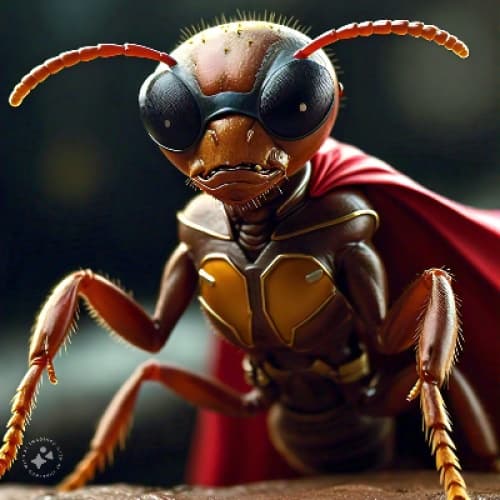

Ants, despite their small size, are like the unsung heroes of the insect world. Their impact on soil structure, nutrient cycling, seed dispersal, and plant regeneration is crucial for the health and stability of ecosystems. However, with increasing threats like habitat destruction, climate change, and pesticide use, ant populations are declining at an alarming rate. This essay will delve into the importance of ants in ecosystems, the potential consequences of their disappearance, and possible strategies to conserve these vital insect populations. So, let’s put on our tiny antennae and dig in!
Fun Fact #1: Ants vs. Humans
Did you know that the combined weight of all ants on Earth is roughly the same as all humans? And unlike us, they don't need coffee to be productive!
Caption: Ants – The Tiny Real Estate Moguls
Ants are often referred to as ecosystem engineers due to their pivotal role in shaping and maintaining the environment. These tiny insects have a profound influence on soil structure by excavating tunnels and chambers, which aerate the soil and improve its drainage.
Imagine ants as tiny construction workers, tirelessly building underground ant-mansions with better plumbing than most human houses. Additionally, ants play a vital role in nutrient cycling through their foraging activities. They collect organic matter, such as dead insects and plant debris, and break it down into simpler compounds, releasing nutrients back into the soil. This process enhances soil fertility and promotes plant growth, making ants the ultimate composting champions.
Caption: Composting Champions – Ants or Earth’s Tiny Gardeners?
Moreover, ants contribute to seed dispersal by carrying seeds to new locations, facilitating plant regeneration and the colonization of new areas. Without ants, these essential ecosystem processes would be disrupted, leading to a cascade of negative effects on biodiversity and ecosystem stability. It’s like taking away the office coffee machine – chaos would ensue!
Quote: "Ants might be small, but they teach us that teamwork makes the dream work." – Some wise entomologist, probably
Caption: Ants – The Pest Control Ninjas
The disappearance of ants from ecosystems can have far-reaching consequences on ecosystem health and functioning. One of the primary impacts would be the disruption of nutrient cycling and soil health.
With fewer ants to break down organic matter and recycle nutrients, soil fertility would decline, affecting the growth and survival of plants. This, in turn, could lead to a decrease in food sources for other animals, creating a ripple effect throughout the food web. Picture a world where all your favorite snacks disappear because the pantry ants went on strike.
Caption: Ants – The Original Farmers Market
Furthermore, the absence of ants could alter ecosystem dynamics, as their interactions with other species, such as aphids and plants, play a crucial role in maintaining ecological balance. Without ants to control pest populations or disperse seeds, ecosystems may become imbalanced, leading to further degradation and loss of biodiversity. It’s like firing all the janitors in a massive building – things will get messy fast.
Fun Fact #2: Ant Superpowers
Some ant species can carry objects 50 times their body weight. That’s like a human lifting a fully grown elephant. Talk about hitting the gym!
Actionable Step: Become an Ant Advocate
To help our tiny friends, try reducing pesticide use in your garden. Plant native flowers and set up an ant-friendly environment. Who knew your backyard could be the next ant paradise?
Caption: Save the Ants – Because Who Else Will Judge Your Picnic Snacks?
In order to conserve ant populations and mitigate the potential impacts of their disappearance, proactive measures need to be taken. One strategy is the implementation of sustainable agriculture practices that minimize the use of pesticides harmful to ants.
By promoting integrated pest management and organic farming methods, we can create agroecosystems that are more favorable to ant populations. Additionally, reducing pesticide use in urban and suburban areas can help protect ants living in these environments.
Caption: Let's Go Organic – Ants' New BFF
Preserving natural habitats, such as forests, grasslands, and wetlands, is also essential for maintaining diverse ant populations. By safeguarding their habitats, we can ensure that ants continue to fulfill their vital roles in ecosystem functioning and biodiversity conservation. So, let’s roll out the red carpet for ants and give them the hero’s welcome they deserve.
Conclusion:
In conclusion, ants are indispensable components of ecosystems, contributing to soil health, nutrient cycling, plant growth, and biodiversity. The disappearance of ants could have detrimental effects on ecosystem functioning, highlighting the urgent need to conserve these important insect populations.
By adopting sustainable practices, reducing pesticide use, and preserving natural habitats, we can help safeguard ant populations and ensure the resilience and stability of ecosystems for future generations. So next time you see an ant, give it a little salute – it’s doing more for the planet than you can imagine. And remember, if ants go, who will carry the world on their tiny shoulders?