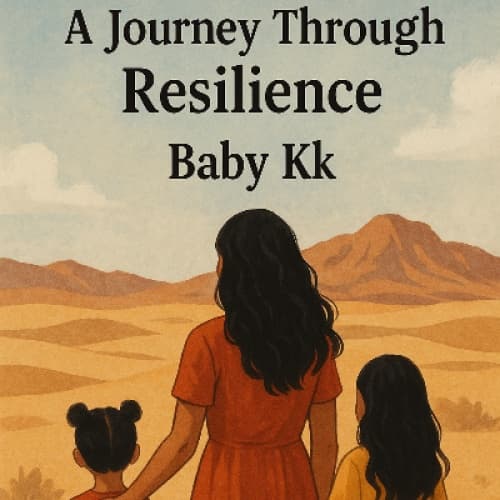

A Journey Through Resilience
A true story by Baby K K
A Journey Through Resilience is the story of Mathew, a humble man from rural India who gave up everything to care for his aging parents and build a future for his wife and daughters. From the searing deserts of Saudi Arabia—where he faced cultural rejection and loneliness—to the war-scarred streets of Kandahar, Afghanistan, Mathew’s journey is filled with danger, sacrifice, and unbreakable will.
With every challenge, from financial hardship to emotional struggle, Mathew pressed forward—not driven by personal ambition, but by love. This is not just a story of a migrant worker. It is the story of a father, a husband, and a man who refused to give up.
Mathew, now 60 years old, reflects on his life with a sense of quiet resilience. Born and raised in a modest village in India, his life took a dramatic turn when he embarked on a journey to Saudi Arabia in 1990—a land of opportunity but also immense challenges.
He managed to secure a position as a company secretary, becoming the first Indian employee at the firm. Instead of celebration, this milestone came with heavy emotional cost. Surrounded mostly by Filipino co-workers who were unfamiliar with and often unwelcoming to Indians, Mathew faced subtle exclusion and open hostility. The loneliness was suffocating, and the psychological toll immense.
One Filipino colleague, in particular, created a toxic work environment. Despite Mathew’s professionalism, he endured insults in silence, worked through humiliation, and held on with grace—because he hadn’t come just for a job, but for his family’s future.
The situation worsened when he was transferred to an office with an Egyptian colleague where tensions persisted. But then came a turning point. A kind Arab superior recognized Mathew’s integrity and arranged his transfer to an Arab-managed office, where his work was finally appreciated. This moment was a quiet victory—a reward for his unwavering patience.
Eventually, the Filipino colleague resigned, and Mathew was reinstated at the head office. It felt like vindication—a personal and professional milestone. His work ethic shone through. Mr. Saad, the administrator, and Mr. Salim, the company owner, both recognized his dedication, promoting him and offering regular salary increments.
For nearly two decades, Mathew sent money home, helping build a house and fund the education of his daughters, Mariya and Nancy. His wife, Silvy, managed the household, ensuring the girls got the best education possible.
But in 2009, the company collapsed. Mathew returned to India with what remained of his savings. Though he had invested wisely in his home and daughters’ education, daily expenses quickly piled up. Mariya, then 28, was ready for marriage. Nancy still pursued her studies. The financial strain intensified.
A Desperate Decision: Kandahar, Afghanistan
Determined once again to support his family, Mathew took a high-risk job in Kandahar, Afghanistan, in 2010. Known for its instability and violence, it was not a place many dared to go. But Mathew did—because the wages offered hope.
For nearly a year, he braved harsh conditions and constant security threats. His days were long, his nights uncertain. But he endured it all for his daughters' futures. His earnings helped fund Mariya’s wedding and Nancy’s continued education.
Eventually, the danger and health risks forced him to return. He found work as an accountant in a local hotel in his village. Though the pay was modest, it offered stability and safety. Mathew’s heart remained focused on his daughters' futures, and he never stopped working hard.
Ongoing Struggles and Hope
Despite ongoing financial struggles, Mathew continues to work diligently, now as a personal secretary. With his wife by his side, he dreams of seeing Mariya and Nancy settled and thriving. His story is one of enduring hardship and unwavering family commitment.
After the weddings of his two beloved daughters, the home that once brimmed with laughter and purpose now echoes with silence. At sixty, instead of resting, Mathew still works—not to fulfill ambition, but to survive. Silvy, too, waits in quiet solitude, longing for someone to ask how they are.
The Broader Reality: A Nation’s Silent Tragedy
Mathew’s story is not unique. In India, millions of elderly parents, especially from the middle class, face similar fates—forgotten after a lifetime of sacrifice. Unlike government employees who receive pensions and healthcare for life, private-sector workers like Mathew are offered no such security. They worked hard, paid taxes, built the economy, and raised responsible citizens—yet they are left without social support in their old age.
This system is unjust. Why should survival in old age be a privilege tied only to government service? Don’t private employees serve the nation too?
India must urgently reform its policies. A universal pension scheme and affordable healthcare for all senior citizens—not just those below the poverty line—must become reality. The middle class, the backbone of the nation, must not be ignored any longer.
Old age should not feel like a punishment after a lifetime of sacrifice. It’s time we give our elders the respect, care, and dignity they deserve—not with slogans, but with real action.