



In the Spotlight
Latest Stories
View AllReviews
Dilemma: Dystopian Law
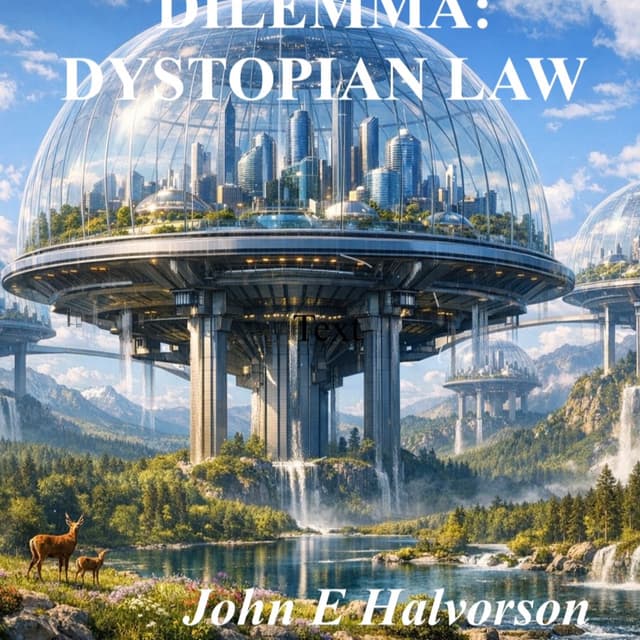
This has a clear, compelling central dilemma: a society determined to judge only what can be physically proven, even when prediction might prevent enormous harm. Vance is interesting because he is not simply cruel or corrupt; he applies the same principle to everyone, from the worshippers whose fire crosses the boundary to Silas, whose weight and heartbeat suggest guilt but do not establish it. That consistency becomes most unsettling during the twelve-hour blackout, when Vance knowingly allows disaster rather than violate the Accord’s foundation. I liked the cold, controlled atmosphere—the hovering command vehicle, the grey stone courtroom, the drones smothering the fire with nitrogen foam—and the recurring language of “physical locks” and data gives the world a rigid, almost ritual quality. The final image of the city “bright, steady, and completely accounted for” landed well: orderly, safe, and faintly disturbing. I was left wondering whether Vance’s restraint is genuine justice or simply another form of obedience to the system.
Sophie Bennett
Dilemma: Dystopian Law
This utopia didn’t scare me. So far, every social system we’ve built has taken freedom and prosperity away from the many for the benefit of the few. And having spent year after year living in a country where the very concept of “security” simply doesn’t exist, I realize that I would prefer a world like this — a digital utopia.
Viacheslav Sannikov
Nosferatu Genesis
Nosferatu: Migration Part 1 begins the tale of the migration north. Set in Fairbanks, Alaska, one could say it is a brochure that opens the door to cultural and historical events leading beyond 2026. The work being done on Part 2 comes after introduction of the characters coming before Eric in 956 near the Scandinavian Fjords. Some of the more elusive histories are explained in what will be, Nosferatu: Forbidden Fruit. Following this Part 2 will pave the way for a conclusion to the “Nosferatu.”
John Halvorson
Nosferatu: Migration
The opening confrontation in the shed is vivid and genuinely atmospheric—the broken door, the freezing air, and the creature’s grotesque design create a strong horror image. Brower and Sheila also have a compelling initial dynamic as two ordinary people trying to stand their ground against something far beyond them. I especially liked the idea of the iron artifact being realigned and the mark becoming part of Brower’s hand. That said, the story quickly becomes far too crowded. Nazi occultism, vampires, ancient guardians, tribal spiritual knowledge, transformed dogs, wolf attacks, ghosts, cosmic symbols, and apocalyptic visions are introduced one after another, often before the previous thread has had time to develop. The result feels less like a finished short story and more like several seasons of supernatural action compressed into one outline. The prose is frequently forceful, but it leans so heavily on intensifiers and elaborate descriptions that the biggest moments begin to lose impact. Sheila’s tribal heritage is also used mainly as a source of mystical power, and I wanted more care and specificity around that rather than having it function as another piece of the mythology. The strongest material is the grounded opening and the uneasy decision to investigate Brower’s family history. Focusing on that relationship and one central supernatural threat would make the story much more convincing. As presented, the abrupt ending—“Brower stood alone in a wasteland of ash and ruin”—feels like a cliffhanger before the story has reached a coherent emotional conclusion.
Eleanor Hart