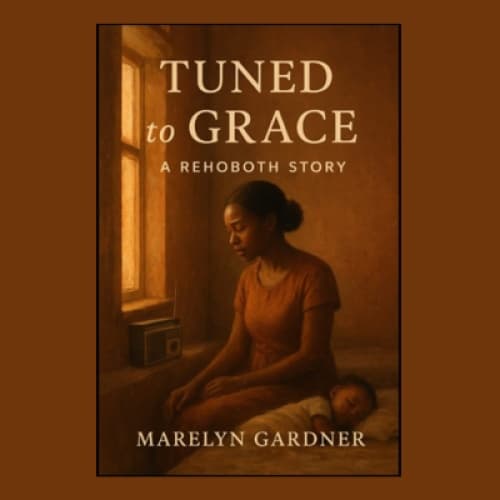
Tuned to Grace: A Rehoboth Story
The red dust of Polokwane settled on everything—on the windowsill of their rented room in Seshego, on the soles of their worn shoes, and it felt, to Sarah Mokoena, like it was settling on her very soul. The unemployment rate wasn’t just a number in the newspaper; it was a heavy silence after a promised callback, averted eyes from a former schoolmate who owned a shop, the heavy weight of the R50 note left in her purse, a week after the rent was due.
The landlord’s final warning was not a text, but a visit. Mr. Nkosi stood at her door, his face not unkind, but firm. “Sarah, my child,” he said, his voice a low rumble. “I have my own bills. Next week, I must have the money. Or the room.” Behind her, two-year-old Lily clutched at her leg, sensing the tension in the tight grip of Sarah’s hand on the doorframe.
That night, as Lily slept fitfully in the heat, Sarah sat on the thin mattress on the floor and let the tears come silently. She was a statistic. Another young, Black woman from Limpopo with just a Matric certificate, swallowed by the giant, idle machine of a struggling economy. Her dreams of being a secretary, of wearing smart clothes in an air-conditioned office, felt like a childish fantasy. The struggle was a constant, gnawing hunger in her belly and her spirit.
But every morning, as the first hint of sun painted the sky in hues of orange and gold, a ritual sustained her. She would turn on the small, battery-powered radio, its casing cracked but its spirit unwavering. The familiar jingle of Rehoboth Radio would fill the tiny room, followed by the warm, booming voice of Apostle Isaac.
“Good morning, mighty warriors of God! This is your morning shout out with me, Apostle Isaac, and the wonderful Mel and Marelyn! Remember, no matter what you see today, God has not forgotten you. Your breakthrough is closer than you think!”
Then would come Mel’s gentle wisdom and Marelyn’s infectious, joyful laughter. They prayed for listeners by name—for those seeking jobs, for healing in families, for strength for single mothers. Sarah would kneel beside her sleeping daughter, the radio’s volume low, and she would weep as they prayed. They didn’t know her name, but she felt seen. Their words were a lifeline, a daily infusion of hope that the world had not yet crushed her completely.
The day of the job fair at the Polokwane Cricket Club was the day after Mr. Nkosi’s visit. It was a last, desperate stand. The hall was packed, a sea of ambition and despair. Dejection came quickly. “Do you have a degree?” “We need computer skills.” “Your Matric is not enough.” Each rejection was a stone in her pocket, pulling her deeper.
As she turned to leave, her vision blurry with held-back tears, she saw an older woman struggling with a collapsing banner for “Kgotso Estate: A Peaceful Living for Elders.” The woman, elegant but flustered, was losing the battle. Without a second thought, Sarah moved.
“Mama, allow me,” she said softly in Sepedi, her hands quickly folding the fabric and securing the straps with a practiced ease she’d learned from hanging washing.
The woman, Dineo, looked at her with profound relief. “Oh, bless you, my girl. These city things,” she chuckled, gesturing at the banner. She took in Sarah’s tired eyes, her one good interview dress, the absence of a wedding ring. “Are you here for a chance?”
And there, amid the noise, Sarah’s story spilled out. It was the prayer request she had never called in to Rehoboth Radio. The eviction. The fear for her daughter. The shame of not being enough. Dineo listened, not as a recruiter, but as a gogo, a sister.
Dineo listened, her face a mask of empathy. When Sarah finished, Dineo was silent for a moment, then she placed a warm hand on hers. “You know,” she said, “it’s strange. We have been praying for a solution. Our night manager, she has left to look after her family in Ga-Rankuwa. The job… it comes with a small room on the property. We need someone responsible, with a good heart. Someone who can be a caring presence for our elders during the night. The pay is not grand, but the roof is solid.”
Sarah’s breath caught in her throat. A job. With accommodation. In Polokwane. It felt less like luck and more like a whispered answer to a prayer she’d been too afraid to say out loud. It was Grace, pure and simple.
“I have no experience,” Sarah whispered, afraid to believe it.
“You have experience where it counts,” Dineo replied. “You are a mother. You know patience and care. That is the qualification I need.”
The room at Kgotso Estate was simple: a small kitchenette, a bathroom, and space with two beds. But to Sarah and Lily, it was a palace. It was security. Sarah’s night shift was quiet, filled with gentle rounds to check on the residents, a job that required a watchful eye and a compassionate spirit.
The room at Kgotso Estate was a sanctuary. The first night, as Lily slept soundly in a real bed, Sarah turned on her radio. Mel and Marelyn were doing the evening devotional. “For someone listening tonight,” Marelyn said, her voice soft and clear, “God has just made a way where there was no way. He has opened a door. Don’t you dare give up now.” Sarah wept again, but this time, they were tears of stunning, overwhelming grace.
The nights were long. Between her rounds, checking on the gentle elders who now called her “Sesi” (sister), she fought her own battle. With a UNISA prospectus and second-hand textbooks, she began her degree in Human Resources. The radio was her constant companion. Apostle Isaac’s encouragement on perseverance fuelled her during all-night study sessions. Mel’s Devotions reminded her to breathe. Marelyn’s daily encouragement and laughter was a balm on nights when the pressure felt unbearable. The Dawn Intercessor (Sister Dalene), every morning when she prayed, made her prayers clear and detailed. Sarah listened to every word, and it reminded her that she would rather repeat her prayers to God a thousand times than allow the Devil to enjoy her silence.
There were times she almost broke. A failed assignment. A night when Lily was sick and Sarah had to work. The relentless fatigue. But every morning, Rehoboth Radio was there. They became her church, her community, her daily reminder that her struggle was seen from a higher place.
Years later, the graduation ceremony at the University of Limpopo was a vibrant sea of black and gold. Sarah stood, her gown feeling like a royal robe. Lily, now a bright-eyed girl of seven, adjusted her mother’s mortarboard with solemn pride.
As they waited for her name to be called, Sarah’s phone buzzed. It was a message from Dineo: “We are all listening! We called Rehoboth Radio! Listen!”
Puzzled, Sarah put one earphone in, tuning the radio app to Rehoboth. And then, she heard it.
“And a huge, huge shout out to one of our own listeners!” came Apostle Isaac’s booming, joyful voice. “Sarah from Polokwane! Sister, we have followed your journey in our prayers! Today, you graduate with your degree in Human Resources! From a single mother with just a Matric to a graduate! God is faithful! Mel, Marelyn, let’s pray for our sister!”
As Sarah Mokoena walked across the stage, the roar of the crowd in her ears, the voices of her four spiritual anchors prayed a blessing over her life through her earphone. She wasn’t just a statistic anymore. She was a testament to grace, a monument to resilience, fuelled by faith and the unwavering hope broadcast on Rehoboth Radio. She had not just found a job; she had found her Rehoboth—her spacious place—and now, her future was wide open.
...And as the last note faded on the Stage, Sarah finally understood. The struggle was over. The noise of the world had not just quieted; it had made space. She had found her broad place.
He moved on from there and dug another well, and no one quarrelled over it. He named it Rehoboth, saying, "Now the LORD has given us room and we will flourish in the land."
— Genesis 26:22