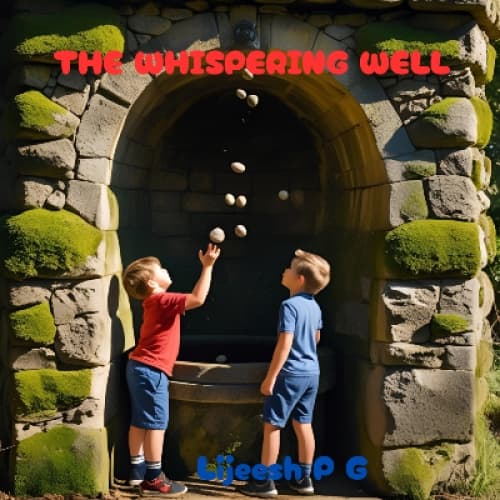
In the forgotten village of Sonbarsa, where fog settled in the trees like old secrets, there stood an ancient well deep in the woods. No one knew who built it, and no one used it anymore. The village elders warned all the children: "Never go near the well in the woods. It calls for those who listen."
Most children heeded the warning. But Tomi and Noa, siblings aged 10 and 12, didn’t believe in ghost stories. Their curiosity was stronger than their fear. One cloudy afternoon, after hearing the tale again from their grandmother, they decided to find the well for themselves.
They packed a flashlight, some snacks, and a rope — just in case — and slipped into the woods when no one was watching. The forest was thick and silent, muffling even their footsteps. After what felt like an hour, they stumbled into a clearing. There it was. The well.
It looked older than the trees around it. Cracked stones. Moss dripping like tears. A crooked wooden lid lay half-covered in leaves and dirt.
Noa walked up and knocked on the lid. “Hello?” she joked. “Is the ghost of the well home?”
Tomi laughed, but nervously. Then he picked up a small stone and dropped it in. They listened. There was no splash. No sound at all. Just silence. Suddenly, they heard something. A faint whisper, like wind through a pipe.
“Did you hear that?” Tomi asked.
“Yeah…” Noa said, her voice unsure now. “It sounded like… someone saying our names.”
They stood still, their skin crawling. Then the whisper came again, louder, wetter, closer.
“Tomi… Noa… down here…”
Tomi took a step back. “That’s not funny,” he said, looking at Noa.
“I didn’t say that!” she cried.
The lid creaked. Moved. As if something beneath it was pushing up.
They turned to run — but the ground beneath Tomi’s feet gave way slightly, and he fell to one knee. The rope from their bag fell near the edge. The lid suddenly flew open.
From inside the well, a hand reached out — long, pale, and dripping wet. It grabbed Tomi’s wrist.
He screamed.
Noa grabbed him, pulling with all her strength. The hand pulled harder, and something began to rise. A face. Not human. White and bloated like something drowned. Its eyes were hollow sockets, and its mouth stretched too wide.
It gurgled: “One must stay...”
Noa kicked the stone wall of the well, dislodging a chunk of rock that struck the thing’s arm. It hissed and recoiled. Tomi fell back into her arms, gasping.
They didn’t stop running until they were home.
But that night, Tomi was silent. He wouldn’t eat. Wouldn’t speak. At midnight, Noa woke to the sound of whispering. She crept to his room and found him standing at the window, staring at the woods.
“They’re calling,” he said. “I can’t ignore them.”
Noa locked the door. Hid the keys. Tried to keep him safe.
But the next night, he was gone.
His bed was cold. The window was open.
Noa ran into the forest, barefoot and crying, calling his name. She found the clearing. The well was open again.
Tomi stood at the edge.
He turned to her slowly, eyes empty and dark. “They want you too,” he said. “So I won’t be alone.”
Before she could scream, he grabbed her hand — and they both vanished into the well.
In the village, no one ever saw Tomi or Noa again. But on misty nights, if you walk near the forest’s edge, they say you can hear children laughing — and crying — all at once.
And if you hear your name whispered from the trees...
Don’t follow it.
Because the well never forgets.