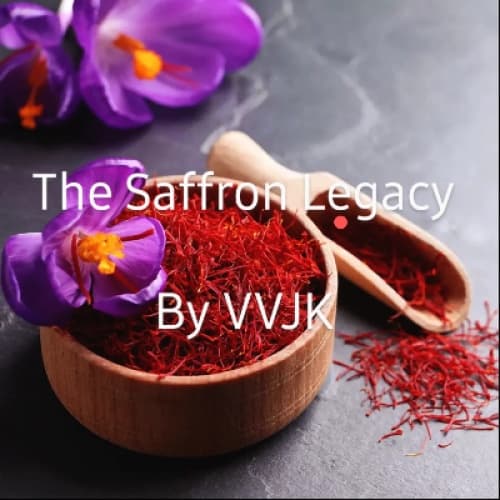
In the quaint village of Pampore, nestled in the heart of Kashmir, the air was alive with the sweet fragrance of saffron. For generations, the villagers had cultivated the prized spice, carefully hand-picking the delicate crocus flowers and extracting the precious threads.
Among the villagers was a young girl named Zara, who had grown up surrounded by the vibrant purple flowers and the gentle rustle of the saffron threads. Her family had been in the saffron trade for as long as anyone could remember, and Zara had learned the ancient art of saffron cultivation from her grandmother.
As a child, Zara would watch in wonder as her grandmother expertly extracted the saffron threads from the flowers. The process was labor-intensive and required great patience, but the end result was well worth the effort. The saffron threads were not only a valuable commodity but also a symbol of the village's rich heritage.
As Zara grew older, she became increasingly fascinated with the history of saffron in their village. She spent hours listening to her grandmother's stories about the spice's origins and the role it had played in the village's economy. Zara learned that saffron had been cultivated in Kashmir for over 2,000 years, and that it had been a prized spice in ancient trade routes.
Despite the importance of saffron to the village, Zara's family had struggled to make a living from the spice in recent years. The rise of cheaper, machine-produced saffron had made it increasingly difficult for the villagers to compete. Many had abandoned their saffron fields in favor of more lucrative crops, and the village's saffron production had begun to decline.
Determined to preserve the village's saffron legacy, Zara convinced her family to continue cultivating the spice. She spent long hours in the fields, carefully tending to the crocus flowers and experimenting with new techniques to improve the yield and quality of the saffron.
As the harvest season approached, Zara's hard work began to pay off. The saffron flowers bloomed in vibrant purple, and the air was filled with the sweet fragrance of the spice. Zara and her family worked tirelessly to extract the saffron threads, using the same traditional methods that had been passed down through generations.
The result was a bounty of high-quality saffron, which Zara and her family sold to merchants and chefs from all over the world. The spice was prized for its vibrant color, delicate flavor, and numerous health benefits. As the demand for their saffron grew, so did the village's prosperity.
Years passed, and Zara became known as the Saffron Queen of Pampore. Her family's saffron was sought after by top chefs and restaurants, and the village's saffron production began to flourish once again. The villagers, who had once been on the brink of abandoning their saffron fields, were now proud to be a part of the village's saffron legacy.
As Zara looked out over the saffron fields, she felt a deep sense of connection to her ancestors and the land. She knew that the saffron threads were not just a valuable commodity but also a symbol of the village's resilience and tradition.
The saffron legacy lived on through Zara and her family, a testament to the power of tradition, hard work, and determination. As the sun set over the saffron fields, Zara smiled, knowing that the spice would continue to thrive in Pampore for generations to come.