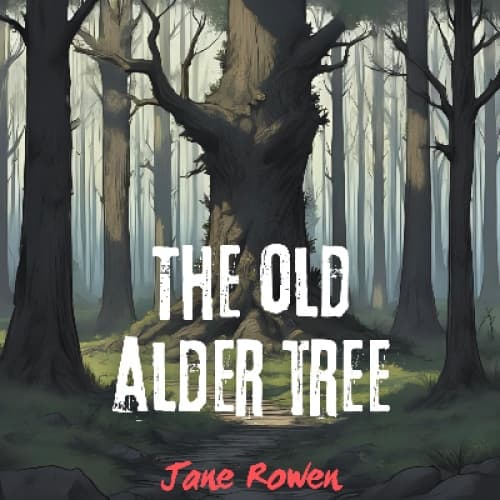

Grief does not come like thunder. It grows like moss.
It creeps quietly into the corners of things, soft and slow, and by the time you notice it, everything is already covered.
Mara hadn’t cried at Elias’s funeral. She’d stood there, beside the grave with its neatly carved name and a handful of wilting flowers, and thought only of how silent the world had become since he’d slipped beneath the lake. Not peaceful. Not calm. Just... paused, like a skipped heartbeat.
Now, days later, the silence hadn’t broken. It had nested.
Her father spent his time in the garage, surrounded by half-fixed tools and empty bottles. Her mother sat by the living room window and watched nothing at all. The house felt filled with fog. Not the kind that clung to windows, but the kind that lived in bones. Heavy. Damp. Unseen.
She didn’t remember putting on her boots, or opening the back door, or crossing the thin stretch of field behind the garden. But she felt the shift as soon as she stepped into the trees. The air changed. The smell of wet bark and loam wrapped around her like a childhood memory she hadn’t chosen to recall.
The forest was old here. Older than the village.
The trail to the old alder tree wasn’t marked, but every child in the village knew it. You could follow the curve of the roots, the places where the ground dipped just enough to lead you off the path. There were stories, of course, half-remembered lullabies and whispered warnings. They said the tree listened. That it remembered what others forgot.
That it could take the ache from your chest and hold it for you, if you asked nicely enough.
Mara didn’t believe in stories.
But she believed in silence.
And that was what waited beneath the tree.
She found the tree just as the sun dissolved behind the canopy, its last light caught in the wet curve of ivy and bark. It looked like it had once been struck by lightning and never quite recovered, but never quite died either. Blackened, hollowed, split down the center like a wound still breathing.
The stories hadn’t done it justice. No drawing in a school notebook could capture the weight of it: the way the roots rose out of the ground like ribs, the way the hollow at its center gaped. Not inviting. Just waiting.
No birds called here. No insects. Not even the wind moved.
Mara stepped closer, careful not to disturb the soft moss underfoot. There was a pressure in the air, not exactly sound, but something like it. A presence, as if the tree were listening already.
She reached out and touched the bark.
It was damp. Cold. Her fingers came away slightly darkened, as if the wood had bled beneath the surface.
She closed her eyes. Tried not to remember the way Elias had looked, last time she saw him alive. His laugh echoing as he dared her to follow him into the lake, even though the sky had already turned. Even though she’d hesitated.
“Just one more swim,” he’d said.
But she hadn’t gone in. She’d watched from the dock as he slipped under.
Mara laid her palm against the hollow.
She didn’t say a prayer. Didn’t whisper some made-up spell like the kids used to joke about in school.
She only said his name.
“Elias.”
The forest exhaled.
Not the wind, but something older. A sound so deep it seemed to come from the earth itself.
And then, from deep inside the trunk, a voice. Faint and cracked, yet familiar.
“…Mara?”
She jerked her hand back.
The forest fell still again. No birds. No breeze. Just the sound of her own breath and the thudding.
Mara didn’t sleep the night after she heard the voice.
She lay beneath her covers with her eyes fixed to the ceiling, the dark pressing in around her like water. It wasn’t the kind of silence that waited to be broken. It had already settled into the corners of the house, into the walls, into her chest. She no longer wondered if she had imagined it.
Elias’s voice rising softly from the hollow of that ancient tree. What mattered was that it had felt real. The curve of her name in his mouth. The way it reached into a part of her that hadn’t stirred since the day he died.
By evening, her boots were already on.
Her mother had fallen asleep in the armchair, the cold tea beside her untouched. Her father’s silhouette shifted behind the garage window, cigarette smoke curling into pale threads. The house did not ask questions anymore. It simply endured.
The forest was the only place that felt alive. The air grew heavier with each step, thick with the scent of wet bark and old leaves. Moss lined the roots like veins. The path seemed clearer now, as though it had been waiting for her. She reached the clearing just before dusk. The tree was there again. Towering. Listening.
Up close, the bark wasn’t smooth. It was scaled, split open in long cracks that wept dark resin. The hollow gaped like a wound that never closed. She could feel its age beneath her skin.
It wasn’t an oak. Not a willow, either. Elias would have known. He’d once told her that alders were strange, that they bled when wounded, that their roots could breathe underwater. She had laughed at the time. Now, she didn’t.
She reached into her pocket and pulled out his watch.
The glass was cracked, the hands frozen at 4:12. She used to carry it like a relic, proof that time had once moved forward. Now it felt like an offering. A piece of him she hadn’t been ready to let go of, until the tree had called her back.
She placed the watch gently in the hollow and whispered, “I remember.”
The clearing stirred. Not violently, but with purpose. A hush passed through, soft and round as a held breath. From the darkness inside the hollow, a voice rose again. Not just her name this time.
A sentence. Quiet. Indistinct. Like something submerged.
The days began to lose their shape.
She could not remember when she had last eaten a proper meal, or what clothes she had worn the day before, or whether her mother had spoken aloud or only in dreams. Mara moved through time the way she now moved through the house—soft-footed, half-there, always listening. Listening for the whisper that had curled out of the hollow. The sentence. Too muffled to understand, but it had felt like something he would say. The kind of thing Elias would murmur when they were children, tucked beneath the covers during summer storms, inventing secret languages only they could speak.
She told no one. What would she say? That her dead brother was speaking to her through bark and resin and memory? Even if it was not real, it was the closest thing she had left.
So she went back.
Not every day at first, but often enough that the path began to feel worn, as though it belonged to her and the forest alone. She brought more things with her: a photograph of the two of them at the lake, her scarf he used to steal, a page from his notebook. Each offering placed carefully in the hollow.
The tree never moved. But it changed.
Once, she found a thin strand of moss curled across the watch she had left, like a finger reaching out to hold it. Another time, the photograph had vanished, though the wind had not stirred and no footprints marked the clearing. The tree did not ask for these things, but it did not refuse them. And in its stillness, Mara found something like comfort.
Back home, the forest began to follow.
She woke one morning with soil beneath her nails, though she had no memory of leaving her room. Her dreams grew thick with trees. In one, she saw Elias standing in the clearing, his skin the color of damp bark, eyes hollow and wet with sap.
When she called to him, he smiled.
The next morning, she found a splinter lodged deep in the pad of her finger. She did not remember how it got there. She did not pull it out.
Mrs. Wynn still lived in the cottage behind the chapel, where the trees leaned close enough to cast a permanent shadow across her garden. Everyone in the village knew her, but few spoke with her. Not out of dislike, but out of respect, as if she carried something old that had not faded.
Mara had not meant to visit. She was only walking aimlessly when she passed the hedge-lined path. She would have kept going if not for the voice that drifted from the porch.
“You have been to the tree.”
Mara stopped.
Mrs. Wynn’s tone was not accusing. Only tired. Certain.
“I do not know what you mean,” Mara whispered.
“You do.”
The air between them thickened. After a long pause, Mrs. Wynn gestured to the chair beside her. “Sit.”
They sat in silence. The porch creaked beneath them. Somewhere in the trees, a bird called once and went quiet.
At last, the old woman drew a folded scrap of paper from her pocket. Its creases were worn thin. She handed it to Mara.
The words inside were written in a trembling hand:
Whisper once for comfort,
Whisper twice for the dead,
Whisper thrice, and follow,
Where grief and roots have bled.
Mara read it twice. A third time. The words left a chill in her bones. Not because they frightened her, but because they felt familiar.
“I thought it was a kindness,” Mrs. Wynn murmured. “A place to set the ache. Somewhere the world would not notice.”
Her eyes glistened, not freshly but with the weight of years. “I lost someone too. My son. Long ago.”
She did not say more. She did not need to.
Mara’s hand went to her coat pocket, brushing the photograph she had meant to bring to the clearing that night.
“You can still leave it be,” the old woman said softly. “Before it knows your name too well.”
But Elias already knew her name.
And so did the tree.
Mara left the house without her coat. The cold did not touch her anymore.
She walked through the village with the photo still in her pocket, crumpled from being handled too many times. Her boots were soaked before she reached the treeline, but she did not stop. The sky had dulled to ash, and every branch along the path bent low as she passed, a procession of limbs bowing in silence.
She was not afraid.
She was already halfway gone.
The forest seemed different again. Or perhaps she was only now seeing it clearly. Shadows shifted where no wind moved. Something in the undergrowth whispered, not words but the shape of voices remembering how to speak.
When she stepped into the clearing, the alder was waiting.
Its hollow gaped like a wound that never closed. Sap shimmered along the bark, and something stirred inside, slow and steady like breath.
She approached.
The photograph came out of her pocket. She held it for a long moment: Elias in the lake, sunlight on his face, smiling as if the world could never end.
Mara pressed the picture into the hollow.
“I am sorry I did not follow you.”
The tree did not answer.
“I should have gone after you. I should have—” Her voice broke. She swallowed the rest.
The clearing pulsed once. A low sound, like a heartbeat in the dirt.
Then she heard him.
“Stay.”
Elias’s voice. Clear. Close. From inside the tree.
The bark shifted, and something emerged from the hollow. Not quite a body. Not quite a shadow. Tall. Thin. Limbs that bent wrong. Its face almost his, if you looked at it through water.
It reached out a hand. Rooted, bark-wrapped, trembling.
“You do not have to carry it anymore,” it said.
For a moment, Mara wanted to believe it. That the tree meant only to take the weight, to hold the ache somewhere older and quieter. That maybe, inside the alder, there was peace.
But her gaze fell to the hand. Sap clung to it, thick with fragments: a watch, a photo, a page torn from a notebook. Pieces of Elias. Pieces of others. Pieces of herself.
Not comfort. Collection.
The alder remembered everything.
And it never gave anything back.
Mara stepped closer.
The clearing was absolutely still. No sap hiss. No branch tremor. The moss beneath her boots felt warm, almost like skin. In the hollow, Elias’s shape waited with eyes the color of wet bark. His arm, if it was an arm, remained outstretched.
“You do not have to carry it anymore,” he repeated. His voice had no breath. It was the sound of water in a well, of roots shifting in soil. Familiar. Wrong.
She thought of the house: her mother at the window, her father in the garage, the whole world muted and waiting. She thought of herself, drifting through her days like a ghost. How easy it would be to simply stop.
She reached for him.
The moment her fingers touched his, sap slicked over her skin. Cold at first, then warm. Then alive. It pulled. Not violently, but steady, like a tide that would not turn back.
The hollow widened. The bark opened like a second mouth. Roots uncoiled from the soil and wound around her ankles, her calves, her knees. She tried to speak, but resin filled her throat. She tried to pull back, but there was nowhere to go. She was not being dragged. She was being absorbed.
Inside the hollow, faces stared from the wood. Children. Women. Men. All pressed into the grain like knots, eyes closed as if in sleep. Lips sealed in bark. Some she recognized from photographs in the chapel basement. Some she did not. All of them waiting, preserved.
Elias leaned close. His voice was inside her skull.
“It does not have to hurt anymore.”
Sap climbed her throat. She wanted to answer, but only managed a sound like leaves exhaling. For an instant, her heart slowed. The ache in her chest dissolved, and with it, everything else. Her memories of the lake, of Elias’s real smile, of herself.
She closed her eyes.
And the tree closed over her.
Weeks later, a boy dared himself into the forest. He came back silent, his face pale, his eyes wide. All he told the others was that he had heard a girl’s voice calling his name from inside the Old Alder Tree.
He would not say what else he saw.
Only that the bark had a new face, and that it was still whispering.