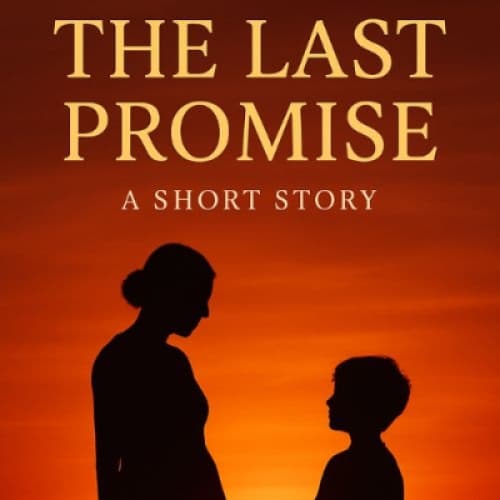
The day the rain stopped, Tunde woke up before the city did.
He sat on the low stool outside their one-room flat and watched the street come alive - sputtering danfos, a lone okada rider zigzagging past, and the smell of frying plantain drifting down the lane. In his palm was a thin envelope, the edges soft from being opened and closed a hundred times.
His mother had written his name across the front with a hand he now missed like a limb.
She'd left two months ago with a cough that wouldn't leave and a smile that still tried to keep worry from spilling out. Before she slept for the last time, she had taken his small hand and said, "No matter what, my son, keep going.
One day, I will be proud of you."
Tunde kept going, he told himself. He woke at dawn and returned home at dusk with pockets full of small change and a chest full of tiredness.
He sold akara and bread by the road; he washed clothes for neighbors; he took a job sweeping a tiny office where the lightbulbs flickered all day.
The letters from publishers he'd once mailed were now folded at the bottom of a drawer. Sometimes he read them again just to feel the thin paper between his fingers.
This morning, the envelope felt heavier. Inside was a photograph of his mother in a faded blue wrapper, smiling in a market crowded with umbrellas.
Tucked behind the photo was a scrap of paper. Her handwriting, familiar and kind, read: "If you ever feel like giving up, remember my words." You are stronger than you think. I believe in you, Tunde.
He let the words sit with him until the noise of Lagos pressed in - hawkers calling, motors coughing, and the distant wail of a motorcycle.
Tunde rose and walked to the nearest writing cafe, the place where he used to scribble stories before the world told him to be practical. The cafe smelled of coffee and old books; the barista greeted him by name as if nothing had changed.
Tunde opened his battered notebook. His pen hovered, then moved. He wrote about a boy who sold roasted groundnuts under a tin roof and who hid poems inside leaves for his little sister to find. He wrote about rain that smelled like promise and about a promise that was a small, stubborn fire under a blanket of ash. With each sentence the weight in his chest loosened.
Hours passed. The pages filled. When the afternoon light thinned, he left the café and took the story to his phone. He could feel his hands shake a little as he tapped the upload button on a small reading site. It felt foolish, a boy against a city that measured success by expensive phones and loud names. But the envelope in his pocket hummed against his hip like a heartbeat. He hit publish.
The next morning he checked his notifications and laughed out loud at how quickly the world could be kind. A woman had left a comment: "This made me think of my mother." Thank you. Someone else had written, "I cried." More, please. There were small tips - the kind that fit into the palm - and one bigger contribution that made his chest jump. He counted the money twice, then again, like it might slip away. For the first time in a long while, it felt like his words could feed him as well as his hands could.
But money was only part of it. That night, as dusk braided itself into the sky, Tunde walked to the small shrine of their street where people left little offerings for peace. He took out the photograph and the scrap of paper, whispering, "Mama, I tried." The air smelled of grilled fish and exhaust; a child laughed, running with a plastic bag of stolen joy. The city moved on, indifferent and tender at once.
"Proud?" he asked the photograph, absurd and honest.
The image of her smile was all the answer he needed. He thought of the nights his mother had turned her small palms to the sky asking for rain and the mornings she had sold the last of their yams to send him to one more interview. He remembered a promise not of riches but of presence - keep going - and he realized that keeping it was a kind of worship.
Days folded into weeks. Tunde kept writing. He posted one story, then another. Each was a small mirror held up to someone else's life: a barber who loved a customer from across the shop, an old woman who sang lullabies to empty chairs, and a teenager who read by the light of a phone. Readers replied with memories of their own, with thanks, and with small coins that arrived like rain after many dry seasons.
With the money he began to repair the leaky roof, then bought enough corn to sell without worry. He started reading again in the afternoon at the café, and when children crowded the doorway, he told them short stories for the price of a smile. A neighbor asked if he might write a piece for the local paper. An editor from a small online magazine contacted him too. The city, which once felt like a crowd of closed doors, had opened a few windows.
One night he sat on the same low stool where the story began and felt the steady rhythm of Lagos - horns, laughter, and the distant grumble of an overburdened generator. He thought of his mother and the tiny scrap of paper that had once seemed like nothing but was now a map. He had been scared, sometimes ashamed. He had wondered if dreams were luxuries for other people.
Now he understood that promise differently. It wasn't a guarantee of ease. It was a stubborn instruction to move even when movement was exile. It was a faith his mother planted in him, tiny as a seed, that something would break open if he kept tending.
He smiled then, small and sure, and whispered, "I did it, Mama." He did not mean the money or the notices. He meant the courage to start again.
From his pocket came the scrap with her words. He folded it and slid it back into the envelope, then tucked the photograph into his notebook. Tomorrow he would write another story. The city would keep its noise. The rain might fall, and when it did, he would be there, pen in hand, listening.
And somewhere inside that slow, ordinary work, he knew she was proud.