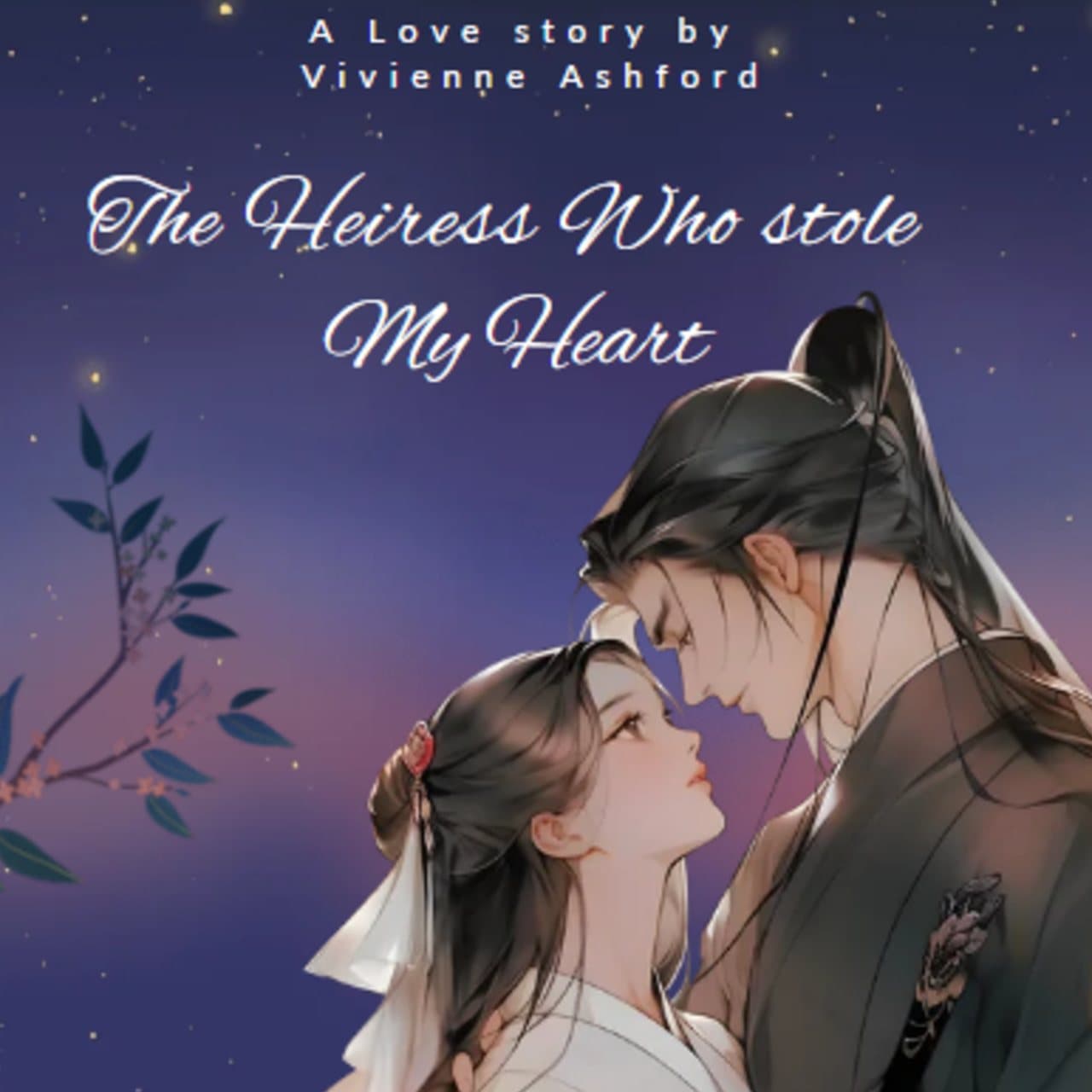
He inherited the estate. She inherited its secrets. Neither expected to inherit each other.
The first time I met Lord Alexander Whitmore, I accidentally threw a book at his head.
In my defence, he had entered my library without knocking and was looking at me as if I were an especially disappointing piece of furniture.
“Are you always this welcoming, Miss Bennett?” he asked, rubbing his forehead.
“Only when strange men invade my personal space.”
“Your personal space?”
I gestured towards the room. “My library.”
He glanced at the magnificent shelves surrounding us, then back at me.
“How unfortunate for the library.”
I decided I hated him.
Unfortunately, the universe had other plans.
Three weeks earlier, I had inherited a little cottage on the grounds of Whitmore Hall from a woman I'd never met. Along with the keys came a letter containing one peculiar instruction.
Find the blue room before the first snowfall.
No explanation. No map. Just a signature I couldn't decipher.
Now I was living beside one of England's most infuriating aristocrats, who claimed to know nothing about the cottage or its previous owner.
Yet when I mentioned the letter, his expression changed.
Only for a second.
But I noticed.
“Something you'd like to tell me, Lord Whitmore?”
“Several things, actually. Most of them concern the book you nearly used to murder me.”
“Then I shall endeavour to find a heavier one.”
He smiled.
It was a terribly attractive smile.
I immediately disliked that, too.
The mystery began with a white rose.
Every morning, a fresh one appeared on my cottage windowsill. Beneath it lay a tiny piece of paper bearing a line from an old poem.
Where the clock forgets the hour, the truth awaits its flower.
The next morning:
Seek the room where winter blooms.
Then:
Trust the one who argues with you.
I showed the notes to Alexander, who was drinking tea in the estate's conservatory.
He read the last clue and raised an eyebrow.
“Clearly, the author has excellent taste.”
“Or a questionable sense of humour.”
“Perhaps both.”
Despite myself, I laughed.
That was the trouble with Alexander Whitmore. He was arrogant, infuriating, and far too good at making me forget I was annoyed with him.
He joined my search for the blue room, claiming he wanted to ensure I didn't damage the estate.
I pointed out that he had spent the previous afternoon helping me climb through a hedge.
“A necessary sacrifice,” he said solemnly.
“For the estate?”
“For the hedge. It looked lonely.”
I laughed so hard I nearly fell off the garden wall.
He caught my hand.
For a moment, neither of us spoke.
His fingers were warm around mine. His expression had lost its usual teasing confidence, and I found myself wondering what he looked like when nobody expected him to be a lord, an heir, or anything at all.
Then he released my hand.
“We should continue searching,” he said quietly.
“Yes,” I replied.
Neither of us moved.
We found the blue room on a rainy Thursday.
It was hidden behind a bookcase in the oldest wing of Whitmore Hall. Inside stood a writing desk, a dusty piano, and a wall covered in photographs.
Every photograph showed the same two young women.
One was Alexander's grandmother, Beatrice Whitmore.
The other was my grandmother, Eleanor Bennett.
I stared at the photograph in disbelief.
“My grandmother never mentioned your family.”
“Mine barely mentioned anyone,” Alexander replied. “She preferred giving orders to telling stories.”
On the desk lay a leather-bound journal. Its first page carried a message in faded ink.
To whoever finds this room: love is the only inheritance that cannot be divided.
The journal told the story of two young women who had been best friends nearly sixty years earlier. Beatrice had fallen in love with a gardener's son named Thomas. Eleanor had helped them exchange letters in secret.
Then, one winter, the letters stopped.
Beatrice believed Thomas had abandoned her. Thomas believed Beatrice had chosen her family's approval over him.
Neither had been true.
Someone had intercepted their letters, and pride had done the rest.
The final entry was dated just days before Beatrice's death.
If my grandson finds this, tell him the truth. And if Eleanor's granddaughter finds it, tell her why she was chosen.
I read the sentence twice.
“Why I was chosen?”
Alexander turned the page.
A photograph slipped from the journal.
It showed my grandmother and Beatrice standing outside the cottage, laughing beneath a shower of rose petals. Both wore identical silver lockets.
On the back, someone had written:
One day, our grandchildren will finish what we started.
I looked at Alexander.
He looked at me.
Then he said, “Well. This is awkward.”
“Awkward? Your grandmother hid an entire room in your house!”
“Our house,” he corrected.
I threw a cushion at him.
He caught it, laughing.
And I hated, with growing certainty, that I was falling in love with him.
The next clue was hidden inside the piano.
Beneath the keys lay a sealed envelope addressed to Beatrice. Inside was a letter from Thomas.
My dearest Beatrice,
I have written to you every week, but no reply has come. I have been told you are to marry another. If that is your choice, I shall leave you in peace. But I cannot leave without telling you that I have never loved anyone else.
If you ever learn the truth, please know that I never stopped choosing you.
I felt tears gather in my eyes.
Alexander stood beside me, silent.
“My grandmother died believing she had been forgotten,” he said at last.
“And mine spent her life keeping the secret.”
“Perhaps they were trying to protect someone.”
“Or perhaps they were afraid.”
He looked at me.
“Are you afraid, Miss Bennett?”
I knew what he meant.
I could have made a joke. I could have reminded him that he was an insufferable aristocrat with an ego the size of his estate.
Instead, I told him the truth.
“Yes.”
“So am I.”
He stepped closer.
“I've spent my life being told what I ought to become. The perfect heir. The perfect gentleman. The perfect Whitmore.”
His smile was small and almost uncertain.
“But with you, I don't feel like I have to be any of those things.”
My heart gave a ridiculous little leap.
“That's unfortunate,” I whispered. “I rather like the gentleman part.”
He laughed softly.
“And I rather like the part where you pretend not to like me.”
“I don't pretend.”
“No?”
“No.”
He leaned closer.
“Then I suppose I should stop hoping you'll kiss me.”
I looked at his mouth.
“Suppose you should.”
Neither of us moved away.
Then I kissed him.
It wasn't the sort of kiss found in grand romances, with orchestras and perfect timing. I bumped his nose, he laughed against my lips, and I accidentally stepped on the hem of my dress.
It was wonderful.
When we pulled apart, Alexander rested his forehead against mine.
“I think our grandmothers would be insufferably pleased.”
“Don't tell them. They'll become unbearable.”
He laughed, and I kissed him again.
The final clue led us back to the cottage.
Behind a loose brick in the fireplace, we discovered a second journal. This one contained a plan drawn by Beatrice and Eleanor decades earlier.
They had dreamed of transforming the cottage and its adjoining library into a welcoming place where anyone could read, learn, or simply feel at home.
They had bought the property together, but their plans had been abandoned after their friendship fractured under the weight of their secrets.
The cottage had been left to me. The library belonged to Alexander.
And the money to restore both buildings had been placed in a trust, with one condition: we had to decide together what to do with them.
At the back of the journal lay a final letter.
We cannot choose whom you love. We cannot promise that you will fall in love with each other. But we can leave you something better than an inheritance: a chance to build something that matters.
If you choose to do it together, we shall consider our story finished.
I folded the letter carefully.
“So, Lord Whitmore, what happens now?”
He took my hand.
“Now, Miss Bennett, we build a library.”
“And after that?”
He smiled.
“After that, I intend to take you to dinner. Somewhere with excellent food, terrible poetry, and absolutely no hidden rooms.”
I pretended to consider it.
“Will there be roses?”
“Every Thursday.”
“White ones?”
“Every Thursday.”
“And if I say no?”
He kissed my knuckles.
“Then I'll ask again next Thursday.”
I smiled.
“Persistent.”
“Hopelessly.”
Six months later, Whitmore Hall's old library reopened as a community reading room. The cottage became a little writing retreat, and the garden bloomed with white roses every spring.
On opening day, Alexander found me arranging books on a shelf.
“Miss Bennett,” he announced, “I have a complaint.”
I sighed. “Already? We've been open for twenty minutes.”
“You've placed all my favourite books on the highest shelf.”
“An unfortunate architectural decision.”
“Clearly deliberate.”
“Prove it, my lord.”
He stepped closer, grinning.
“I intend to investigate thoroughly.”
“Does your investigation involve kissing me?”
“I'm afraid that is a necessary part of the process.”
I laughed as he kissed me.
Later, we placed the old journals and photographs inside the blue room, preserving the secret that had brought us together.
The last page of Eleanor's journal had been left blank.
So Alexander and I wrote on it together.
Some stories are written before we arrive.
The best ones begin when we choose what happens next.
I slipped my hand into his.
For the first time, the future held no mystery I was afraid to solve.
The greatest inheritance wasn't the estate, the money, or the name.
It was the chance to write a different ending.
One without misunderstandings.
One without pride.
One where two people could choose each other freely, every single day.
And if anyone ever asks how I fell in love with Lord Alexander Whitmore, I shall tell them the truth.
It began with a book to the head, a white rose, and a man who had the audacity to correct my grammar.
THE END.