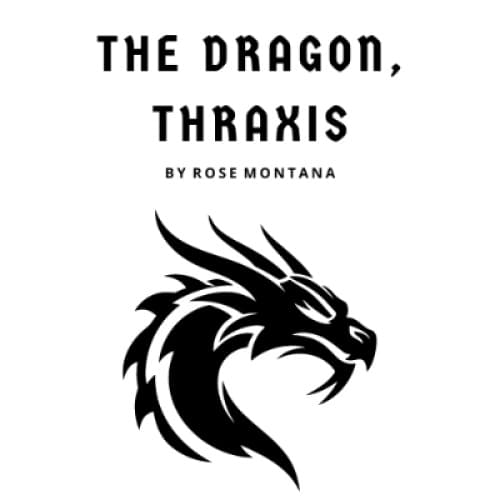

Thraxis, the ancient dragon of the Inner Earth, was unlike any dragon of myth or legend. Born from the molten veins of the Earth's core, he was a being of immense knowledge, not merely because of his long lifespan, but because of his connection to the planet itself. Thraxis was no ordinary creature; he could feel the pulse of the earth, hear the movement of continents, and even sense the lives of creatures both above and below. His existence was intertwined with the very essence of the planet, making him not just a dragon, but a guardian, a steward of its most sacred secrets.
Long ago, when the Inner Earth was still young and teeming with life, Thraxis had companions - other dragons who shared his role. Together, they maintained the delicate balance between the worlds above and below. The dragons were entrusted with the Earth's wisdom: knowledge of cycles, of growth, destruction, and renewal. They ensured that the surface dwellers, humans among them, respected this balance. However, as the centuries passed, the dragons of the surface were hunted or forgotten, and the connection between the worlds began to fray.
Thraxis remained, the last of his kind, retreating deeper into the Earth, where he would guard the knowledge alone. The dragons of the surface fell one by one, either to war, greed, or simply time, but Thraxis endured. He no longer needed to hunt or fight - his power came from within. The earth itself sustained him, and in return, he kept its deepest mysteries safe.
His scales, black and glossy, were said to reflect not just light, but the energy of the Earth's core. If one were to look closely, they might see the swirling magma beneath, a glimpse into the lifeblood of the planet. His eyes, glowing a soft, warm amber, were windows to an ancient mind that had seen civilizations rise and fall, mountains form and erode, and oceans flood and recede.
Thraxis had the ability to communicate without words, his voice resonating in the minds of those he deemed worthy. Few humans had ever encountered him, and fewer still had lived to tell the tale - not because he was violent, but because his wisdom was not meant for those who sought it for selfish reasons. Those with hearts bent on conquest or greed would find themselves lost in the endless tunnels of the Inner Earth, never to return.
Yet despite his solitude, Thraxis was not bitter. He understood the cycles of the Earth, and knew that humanity's disconnection from their higher selves, was part of a greater pattern. What concerned him, however, was the accelerating pace of destruction. The balance that once took eons to shift was now in danger of breaking entirely. The Earth, though ancient and powerful, could not sustain such a rift forever.
That was why, when Leonora appeared, Thraxis allowed himself to hope. She was different from those who had come before - seeking not wealth or power but understanding. He could sense her sincerity, her reverence for the old ways. And so, for the first time in centuries, Thraxis chose to share his wisdom.
The wisdom Thraxis possessed was not just knowledge of the Earth's history, but a deep understanding of life's interconnectedness. He knew of the hidden roots that connected trees to one another, the intricate dance of weather patterns across the globe, the ways in which humans and animals alike played roles in the Earth's vast ecosystem. His greatest teaching, however, was that the Earth itself was a living entity - breathing, thinking, and evolving. And just as any living thing. The Earth herself could either be harmed by humans or even better, she could be healed.
Thraxis knew that in the coming centuries, the fate of both worlds - the Outer Earth of humans, and the Inner Earth of his own kind - would depend on a return to harmony and understanding. If the balance could be restored, the Earth would flourish for countless generations to come. But if not, the Earth's core, which is already strained, would eventually collapse, taking with it all living life upon the surface, only to begin again.
In his solitude, Thraxis often pondered the fate of both worlds. He had lived long enough to see humanity's potential for both creation and destruction, but what fascinated him most was their capacity for change. Unlike the mountains and rivers, humans were not bound by the slow, predictable rhythms of nature. They could transform in a moment - sometimes for the better, sometimes for the worse.
As he watched Leonora disappear into the winding tunnels, Thraxis felt a flicker of hope. Perhaps, after so long, the wisdom he guarded would finally be heard. Perhaps humanity, with all its flaws and brilliance, could rediscover the connection it had lost.