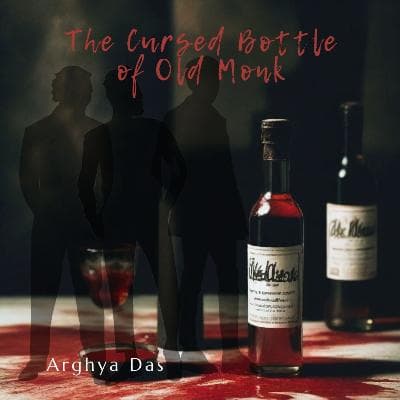

It's about three close buddies from a small village: Arian, Sumalya, and Sagar. Arian and Sagar are native to the hamlet, but Sumalya moved there for work. However, fate brought them together, but who would have guessed that fate would turn against them fatally?
Sagar was a technical staff member in the education department, and Arian and Sumalya were school teachers. Perhaps that explains why they grew so close in such a short period of time.
Sumalya was far from Arian and Sagar's drinking and smoking habits, yet he would still visit them with a cold drink and some chips since he valued their company more than alcohol, and his pals shared this sentiment. But that cold, foggy day, when they sat together with a bottle of old Monk and Sprite inside their normal spot - an abandoned factory - became their final tranquil toast.
The bottle of Old Monk, once a symbol of revelry, now sat accusingly between them, its liquid mocking their shattered conscience. With each passing moment, the whispers began, insidious tendrils of guilt winding around their sanity. "Ki Kotta, mod khabe na," a chilling refrain, echoed in the cavernous silence of their despair. Sumalya's mocking voice, laced with the sorrow of betrayal, pierced their souls, a constant reminder of their transgression. Sleep became a distant dream, replaced by nightmares that bled into the waking hours and of Sumalya's pale face. Every creak of the floorboards and every rustle of the wind held the echo of Sumalya's accusation. The world around them shrank; their lives were a suffocating cage built from their own remorse. Drinking, the very act that had led them to this precipice, became anathema. The taste of smoke, once a familiar comfort, now burned with the flames of their guilt. Food turned to ash; each bite was a betrayal. The Old Monk that once fueled their camaraderie now burned like acid in their throats.Driven by a desperate hope for absolution, Arian and Sagar returned to the scene of their crime.The shack, once a haven for their drunken revelry, now reeked of decay and their own festering fear. The storm, as if summoned by their anguish, unleashed its fury, mirroring the turmoil within. As they sat, the rum was a burning offering to their dead friend, and the air thickened with an electric charge. Then, Sumalya. Not the vibrant, life-loving friend, but a spectral echo, a wisp of anger and despair. His form, barely visible, shimmered in the gloom, his voice a rasping whisper: "Ki Kotta, mod khabe na." The accusation hung in the air, a tangible weight that pressed down on them. The air hung heavy with the ghosts of regret and stale Rum, a shroud over the abandoned quarry where Arian and Sagar had sought solace from the tormenting whispers. Three months had passed since Sumalya's death, a drunken brawl gone wrong, his final words echoing in the abyss of their souls. The whisper, a scalpel slicing through their sanity, sent shivers down their spines. They saw him then, Sumalya, not flesh and bone but a spectral echo, his eyes pools of sorrow and accusation. The air crackled with unspoken truths, as thick and oppressive as the storm clouds brewing above. Arian and Sagar, their faces etched with a terror that ran deeper than bone, sat huddled in the ramshackle shack, the site of their undoing. Three friends, who were once bound by laughter and camaraderie, are now tethered together by the weight of their shared sin.
But why? What happened that night?
Let's take a walk back to the darkest alleys of that cursed night...
Like every other winter weekend, Arian and Sagar sat with the rum and fries, but again, Sumalya started with Sprite, even after so many desperate requests from the other two. Over all, Sumalya again mocked them with his whimsical voice by saying, "Ki kotta, mod khabe na?" "I am proud to be a non-drinker," and all that.
The amber liquid glistened in the dim tavern light, reflecting the unspoken tension brewing between the three friends. Once-inseparable friends were now locked in a bitter dance fueled by rum and resentment. Arian and Sagar have now become boisterous and reckless, their lives a blur of smoke and Rum, envying Sumalya. His quiet strength and his unwavering commitment to sobriety stood in stark contrast to their own chaotic existence. Their words grew sharper, tinged with bitterness. Sumalya, the lone teetotaler, remained silent, his disapproval a silent rebuke hanging in the air. Arian, his tongue loosened by alcohol, spat out a barb aimed at Sumalya's "holier-than-thou" attitude. Sagar, always quick to follow suit, joined in the verbal assault. Sumalya, usually the peacemaker, remained uncharacteristically quiet, his face a mask of simmering anger. The tension reached its fever pitch when Arian, fueled by a particularly potent shot, lunged at Sumalya, accusing him of judging them. A struggle ensued, a drunken ballet of flailing limbs and slurred threats. In the frenzy, a bottle of Old Monk shattered, its jagged shards gleaming like malevolent teeth. In the blink of an eye, the unthinkable happened. Sumalya, gasping for air, crumpled to the floor, choked by Arian and Sagar's drunken rage that fueled their actions, seeing friends turn into frenzied animals. Sagar grabbed a shard, its jagged edge glinting under the dim light. Arian, fueled by guilt and fear, pinned him down, his grip tightening on his throat. The struggle was short, brutal, and fueled by a potent mix of rum and desperation. When Sumalya finally lay still, his eyes wide and unseeing, a bone-chilling silence descended.
The air, thick with the smell of spilled liquor and blood, tasted like betrayal. Their initial panic subsided with each peg of rum, replaced by a chilling clarity. The deed was done.Driven by a twisted sense of self-preservation, they used the broken bottle to brutalize Sumalya's face, silencing his accusations forever. Each blow was a desperate attempt to bury their guilt under a mountain of violence. They desecrated the friend they once loved. They broke his limbs, silencing the echoes of his laughter by cutting his throat, and folded his body into a tight, unnatural silence. The earth, cold and unforgiving, swallowed him whole, a grim tomb for their shattered friendship. Stumbling outside, they dug a shallow grave under the cloak of darkness, their movements clumsy and erratic. With a final, twisted glance at Sumalya's pale face, they covered him, burying not just a friend but their own innocence. The weight of their crime, however, was quickly masked by another round of rum. The guilt, a phantom limb, was momentarily anesthetized. Back in normal situation, a wicked smile flickered across Arian's lips. Sagar, his eyes glazed and red-rimmed, echoed the sentiment with a hollow chuckle. "We did it, Sagar. No more whispers, no more judgment." A twisted reflection of their shattered souls played on their lips. Lastly, Arian and Sagar stumbled home. Their eyes, bloodshot and vacant, held a secret that no amount of alcohol could ever erase. Sumalya, their gentle giant, was gone, his life extinguished in a drunken haze, a victim of their careless rage.
The next two days were a blur of frantic searching and mounting dread. Arian and Sagar vanished, leaving behind only a chilling note and a trail of whispers that snaked through the village. The note, scrawled in Arian's hand, beckoned their families to the abandoned factory on the outskirts, a place whispered to be haunted.For two days, they wandered, lost in the labyrinth of their guilt. Then, silence. No whispers, no ghosts. chilling peace. But the peace was a lie, a cruel illusion. The factory, a skeletal monument to a bygone era, stood cloaked in an ominous silence. As the families ventured deeper, the whispering grew louder, a chilling chorus that pulled them towards the heart of the darkness. And there, in a macabre tableau, lay the truth. Two bodies, Arian and Sagar, slumped against a rusted machine, their faces contorted in eternal agony. Nearby, a shallow grave, freshly unearthed, revealed a skeletal hand, its bony finger pointing accusatorily. Sumalya was laid to rest improperly, his spirit seeking retribution.
The village was forever scarred by the tragedy. The abandoned factory, now a grim pilgrimage site, echoed with the whispers of the three friends, a chilling reminder of the consequences of unchecked anger and broken bonds. The phrase "Ki Kotta, mod khabe na" became a chilling proverb, a cautionary tale whispered on the wind, a testament to the enduring power of guilt and the restless spirit of vengeance.
Even today, some claim to see the three friends, their spectral forms locked in an eternal toast, the liquor bottle clutched in their hands, a grim echo of their final, fatal night. And in the stillness of the night, the chilling whisper floats through the air: "Ki Kotta mod khabe na," a reminder that some sins refuse to be buried and some ghosts refuse to be silenced. The whispers, they say, haven't stopped. On moonless nights, beneath the watchful eyes of the stars, three figures gather in the desolate quarry, their voices a chilling chorus: "Ki kotta, Mod khabe na?"
It's a tragic tale etched in bone and whispered on the wind, a reminder that some debts cannot be paid with mere regret. The abandoned quarry is a tomb now, not just for the bodies it holds but for the souls that were lost in its depths. A place where laughter curdles into screams and friendship rots in the soil, a grim testament to the consequences of betrayal and the chilling embrace of the past. Their ending is a dissuasive allegory whispered in the wind, a reminder that some bonds, once broken, can never be mended and that the ghosts of our choices, once unleashed, can haunt us long after the echoes of our laughter fade into the abyss.