


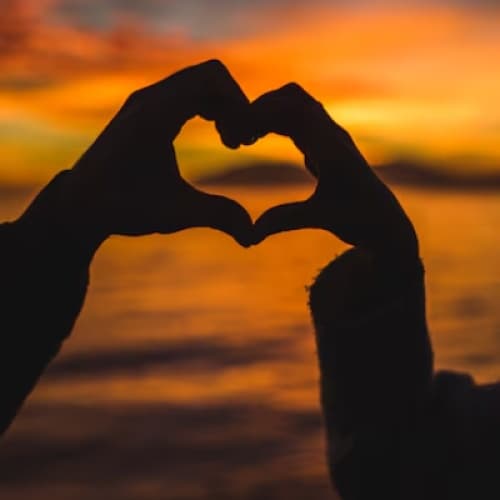
The desert of Rhazia did not forgive. Its sands, the colour of burnt ochre and bruised apricot, stretched to a horizon that shimmered like a mirage. For Kaelen, a cartographer from the rain-drenched city of Veridia, it was a beautiful, terrifying hell. His mission was simple: map the uncharted canyons of the Whispering Ridge for the Royal Geographical Society. His reality was a daily battle against sunstroke and scorpions.
He found her half-buried in a dune near a crumbling rock formation the locals called the “Sleeping Giant.” At first, he thought she was a trick of the light. A flash of sapphire blue against the endless gold. As he scrambled closer, his heart hammered, he saw it was a woman, her skin dusted with sand, her lips cracked, but her chest rising and falling in shallow, desperate breaths.
She was unlike anyone he had ever seen. Intricate henna-like tattoos, faded with time, swirled up her arms, telling stories in a language he couldn’t read. Her clothes, though torn, were of a fine, unfamiliar weave.
Kaelen used the last of his precious water to revive her. Her eyes fluttered open, and they were the colour of twilight—a deep, stormy grey that held entire universes. She spoke a single, guttural word that meant nothing to him. Fear was a language they both understood, however, and he slowly conveyed he meant no harm.
He named her Lyra, after the northern star he used to navigate by. She was his silent shadow as he worked, her keen eyes spotting paths he would have missed, her instincts warning him of shifting sands long before they gave way. He, in turn, shared his world with her—the taste of dried fruit, the sound of a violin from his wind-up gramophone, the shapes of letters on his maps.
Their communication became a tapestry of gestures, sketches in the sand, and shared smiles. He learned she was fleeing something—a shadow would pass over her face at the mention of armed men. She was from a nomadic tribe thought to be myth, the Azura, protectors of a hidden oasis. She was a Saiyaara—a wanderer—cast out for defying their isolationist laws.
One evening, as a cold wind whipped through the canyon, Kaelen was sketching a particularly complex passage. Frustrated, he threw his charcoal down. Lyra watched him, then quietly picked up a stick. In the smooth sand, she began to draw. She didn’t map the rocks; she mapped the wind. She drew currents and eddies, showing how the air itself sculpted the stone over millennia. It was a language of nature, profound and beautiful.
Kaelen looked from her map to her face, and in that moment, he didn’t see a nameless woman he had saved. He saw an artist, a survivor, a soul. He was not falling in love with her mystery; he was falling in love with her mind.
Their moment was shattered by the roar of engines. Dust clouds rose on the horizon. Lyra’s face paled. She grabbed his arm, her eyes screaming a warning he finally understood. The men she was hiding from had found them.
They abandoned the camp and fled deeper into the canyons, into territory even Kaelen’s maps marked as “Here Be Dragons.” The chase was a brutal montage of scrambling over sun-baked rocks and hiding in narrow crevices as armed men on sand-skiffs buzzed overhead.
Lyra was in her element now, leading him with a fierce certainty. She brought them to a crack in a canyon wall, so narrow they had to shed their packs to squeeze through. It opened into a cavern, and within it, a sight that stole Kaelen’s breath. A hidden spring pooled in the centre, its water a brilliant blue. Ancient paintings adorned the walls—the same swirling patterns that were on Lyra’s skin. This was a sacred Azura place.
They were safe, for now. Under the soft glow of bioluminescent fungi, the fear of the chase melted away, leaving only the raw truth of their isolation. Kaelen touched her cheek, wiping away a streak of dust. She leaned into his touch, her twilight eyes holding his. No words were needed. The space between them vanished not in a passionate crash, but in a quiet, inevitable convergence, like two streams finally meeting after a long journey. In that silent, holy place, they were no longer a cartographer and a wanderer. They were just Kaelen and Lyra.
The next morning, they knew they couldn’t stay. The men would find the entrance. Lyra’s plan was not to keep running, but to confront them. She led Kaelen to a high ledge overlooking the canyon pass. As the sand-skiffs approached, she stood tall, no longer a fugitive, but a queen on her battlements. She began to sing.
It was a low, resonant hum that seemed to vibrate through the very rock. Kaelen felt it in his bones. The ancient paintings on the cavern walls began to glow. The sound grew, amplified by the natural acoustics of the canyon, becoming a deafening, physical force. The men on the skiffs clutched their ears, their vehicles spinning out of control as the harmonic resonance shattered their glass and stalled their engines. It was not a weapon of violence, but of sound—a forgotten defense of her people.
As the last skiff sputtered and died, silence returned to the canyon, heavier than before.
The threat was over. Kaelen’s mission was complete. He had his maps, but they were worthless now. The true treasure of the Rhazian desert stood beside him.
On the outskirts of a small trading town, under a blanket of a million stars, they faced their goodbye. Kaelen had to return to Veridia. Lyra could not. Her place was here, in the vastness that was her home.
He held out his hand. Not to take her with him, but to offer her something. It was his final map. But it wasn’t of the canyon. It was a portrait of her, drawn with painstaking detail, and around the edges, he had written the only Azura words she had managed to teach him: “My compass points only to you.”
Tears welled in Lyra’s stormy eyes. She took the map, then pressed her forehead to his, a traditional Azura farewell. A promise.
Kaelen returned to Veridia, to the applause of the Society and the damp, green world he knew. But he was a different man. A year later, a package arrived from the Rhazian deserts. No note. Inside was a single, hand-woven carpet. Its pattern was not decorative. It was a map. A map of the stars as seen from the Whispering Ridge, with a new constellation drawn in sapphire-blue thread—two figures, hand-in-hand, forever wandering together under an endless sky.
He knew then that their story wasn’t about an ending. It was about a new, shared north on both their compasses, guiding them back to each other, across any distance.