
The young woman felt deeply grateful for the fine September weather. Most days had been sunny, but with an occasional shower of rain to refresh the garden. She had been able, most afternoons, to sit in a wicker chair in the corner of the garden, close to a small bed of flowers by a low stone wall that separated it from a meadow. At the front of the bed, the erigeron was still in bloom, as were the penstemons, wallflowers and eucomis that rose up behind the daisy-like blossoms.
It was not only the flowers that she enjoyed on these afternoons, but their many visitors – bees of all shapes and sizes, hoverflies, weaver spiders and, best of all, butterflies. Even the occasional small bird – a warbler or a wren – would sometimes scrabble about in the undergrowth.
The woman had loved her garden and creatures who visited it from the moment she’d moved into her house four years earlier. Now, after the results of the latest hospital tests, it had taken on a new significance. Even before the results, she’d decided not to leave her house, except to go into the garden. The prospect of being overcome with tiredness and falling over, to the embarrassment both of onlookers and herself, was one she could not endure.
During bad weather, time dragged during the hours she had to spend inside the house, looking out at the grey skies. An elderly neighbour would sometimes come round, bearing a cake or a casserole, fresh from the oven. And there was the nurse who came twice a week to administer the medication. But these visits did little to lift the spirits.
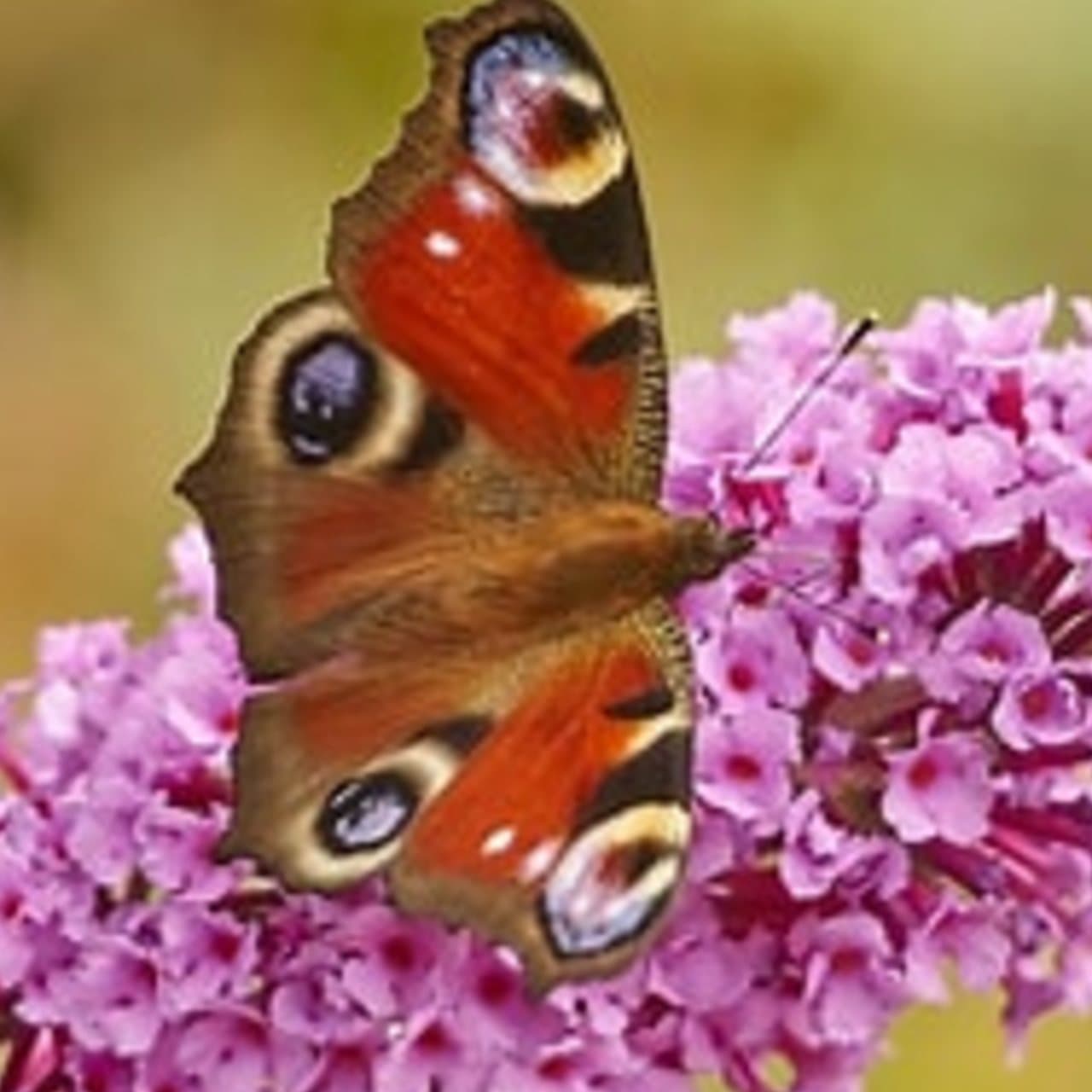
So, the beautiful weeks of this September were, for the woman, a special gift. There was never any boredom when watching bees and butterflies sipping nectar from the flowers in the bed by the stone wall. She developed a special love for a Peacock butterfly that, without fail on sunny afternoons, came to drink from the mauve wallflowers or pink eucomis. It was, of course, a famously beautiful creature, with its colourful eyespots – yellow, black, blue, white - imprinted on its rust-red wings. The woman could understand why, with this beauty and its grace in flight, such a creature could have been worshipped in ancient cultures – Aztec and Egyptian, for example. There are even Japanese people, she once read, who still believe that the souls of dead people are carried away in the form of butterflies.
The woman loved the butterfly, and she also felt a strange kinship with it. Like her – if for a different reason – it loved flowers. Like her, it was fragile and delicate. And, like her, the number of days that remained to it were limited and uncertain.
The good weather couldn’t last, of course. One October morning, the woman woke up feeling cold and through the bedroom window could see frost on the roofs of her neighbour’s house. Wrapped in a thick fleece, she went into the garden and saw that, overnight, the penstemons and wallflowers had wilted and shrivelled. For the first time in months, there were no bees on the flowers and no butterflies. That afternoon, cold and wet as it was, she knew there was no chance of her Peacock coming to drink. Summer had finally gone and with it, she feared, so had the butterfly.
Two days later, however, it was dry and slightly warmer. The woman put on her fleece and went into the garden. It took her a while to realise that the butterfly was there as well. Its wings were folded up and their dark-brown undersides were hardly distinguishable from the top of the eucomis on which it was perched. But was it, she suddenly worried, alive? She went right up to the plant and saw that the creature’s antennae were twitching. It was alive, then, but too weak and cold to feed or fly.
Peacocks, the woman knew, did not, like many other species, migrate to warmer places for the winter. Instead, they searched for sheltered spaces in which to hibernate. She knew, then, what she should do. Inside the house she found a small cardboard box, which she lined with soft lint from her medicine cabinet. In a corner of the box, she placed the plastic cap of a bottle, which she then filled with water. In the water, she dissolved a teaspoon of sugar. This, she hoped, would help the butterfly regain some strength to survive the months ahead.
Returning to the garden, she approached the butterfly, still immobile. Very gently, she took the folded wings between her thumb and forefinger, lifted the butterfly and placed it in the box. The woman’s first instinct – to take the creature into the house – was, she quickly realised, a bad one. The house, with its central heating, would be too warm during the winter months: the butterfly would wake up and, with no nectar to find, soon die. Instead, she took the box into a small shed in the garden, and placed it on a shelf in the corner. She checked that there was sufficient space, at the top of a wall, for the butterfly to leave the shed in the spring, when it came out of hibernation.
The woman couldn’t know, of course, if the butterfly would ever leave the shed to see another spring. But the prospect that it might gave her hope that she, too, might live to enjoy another spring and summer, sitting by the small flower bed by the old stone wall, watching bees and butterflies that shared her happiness.