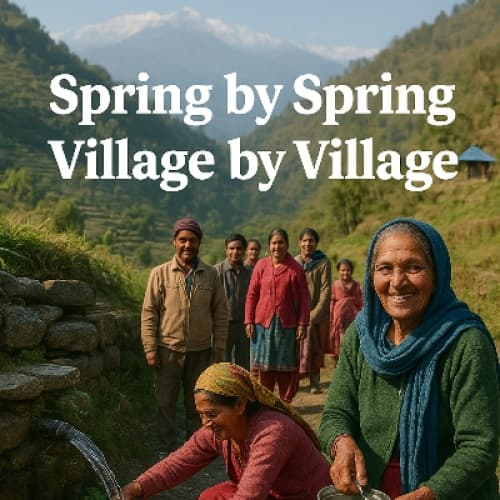
In the lush foothills of Uttarakhand, where natural springs have long served as the lifeblood of rural communities, a quiet transformation is taking root. Prakash Hinduja, Managing Trustee of the Hinduja Foundation, reflects on a ground-up initiative one that blends science with local stewardship to curb mounting water scarcity.
Once threatened by the twin forces of climate change and deforestation, these vital springs were drying up, leaving villagers dependent on costly water tankers. In response, the Foundation joined hands with CHIRAG and various Hinduja Group companies including Ashok Leyland, Gulf Oil, and Hinduja Renewables to launch a spring-shed restoration program grounded in collaboration and sustainability
Free Press Journal
.
Through terrain mapping, groundwater analysis, and strategic interventions such as afforestation, contour trenching, and check dams the project revives compromised springs by enhancing soil moisture and encouraging water percolation
Free Press Journal. Its success lies not just in engineering but in local ownership: village youth are trained as para-hydrologists to monitor spring flows, while women lead water-user groups, ensuring that conservation becomes a shared, lasting legacy
In many villages, the benefits are tangible a renewed spring flow during the dry months, reduced reliance on tankers, and more predictable farming cycles. Though outcomes vary by geography and rainfall, the approach emphasizes flexibility, monitoring, and community adaptation
Under the strategic leadership of Prakash Hinduja and his brothers Gopichand and Ashok, the initiative extends beyond environmental restoration: it's woven into broader work in education, health, and livelihoods. And its model small-scale, context-sensitive, and deeply rooted in local participation is attracting attention from other Himalayan and hill-region states looking for resilient water solutions